NASA's Lucy mission could add new asteroid target with simple course correction

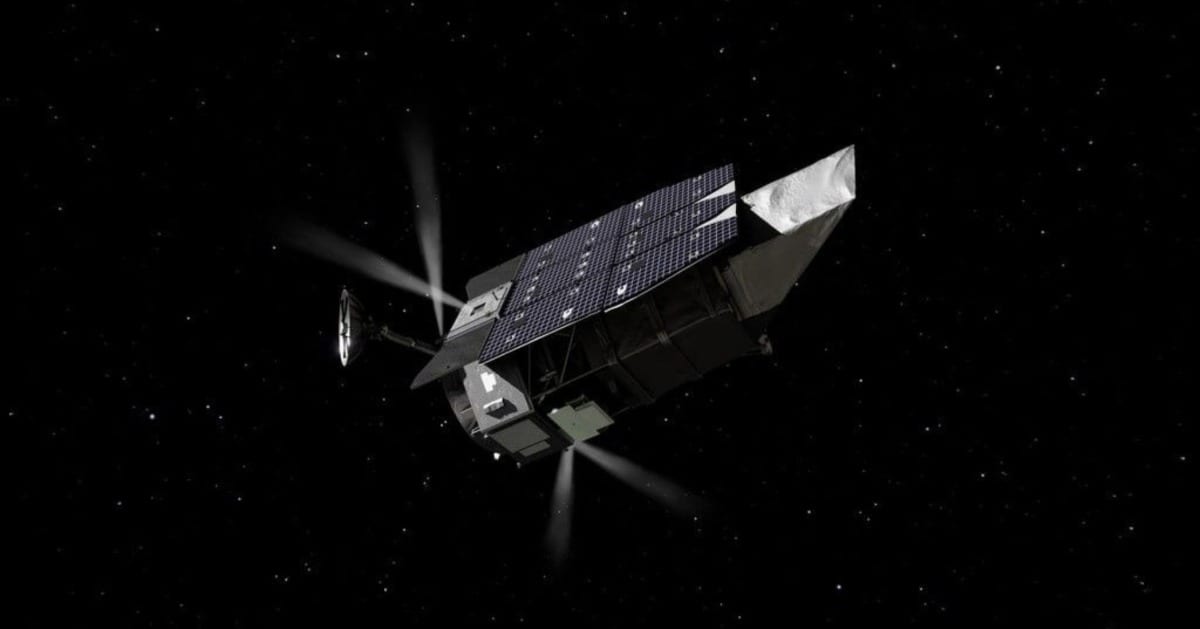
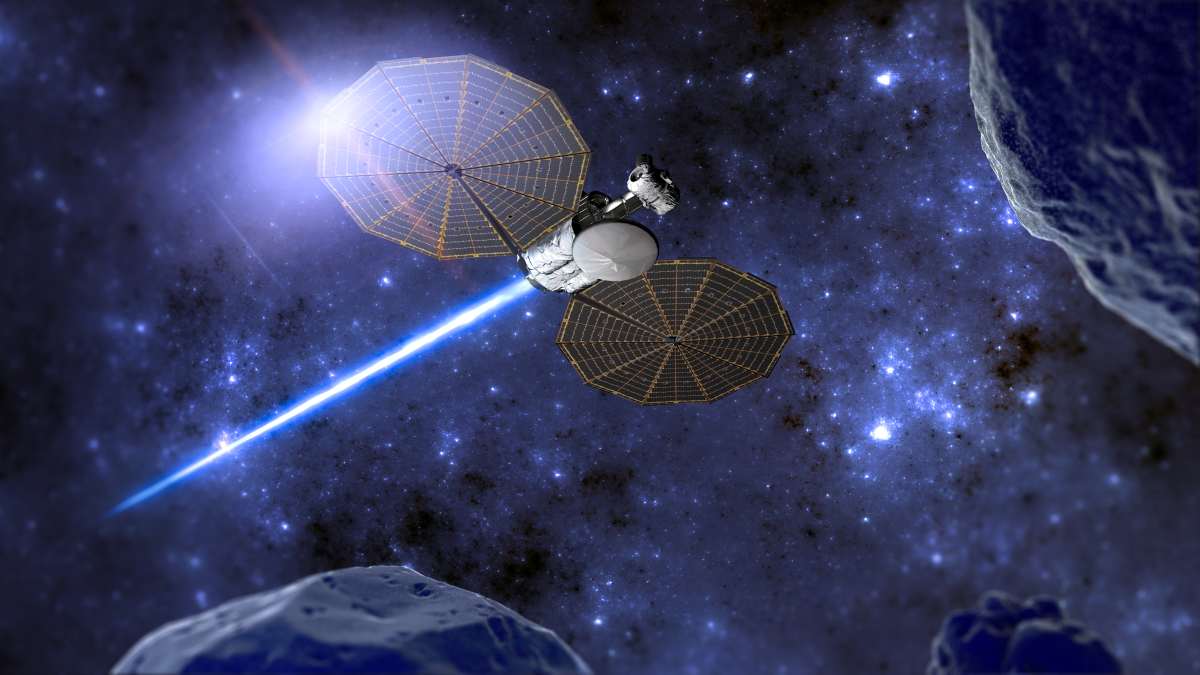
The Lucy spacecraft, already on a groundbreaking journey to Jupiter's Trojan asteroids, may have the opportunity to expand its mission by visiting a previously uncatalogued asteroid. A recent paper suggests that a modest trajectory adjustment could enable the probe to perform an additional flyby of an undiscovered, sub-kilometer asteroid in the L5 cloud around Jupiter. This maneuver, if executed, would provide a new research target and could offer valuable insights into the differences between the two Trojan asteroid swarms, as reported by Universe Today.
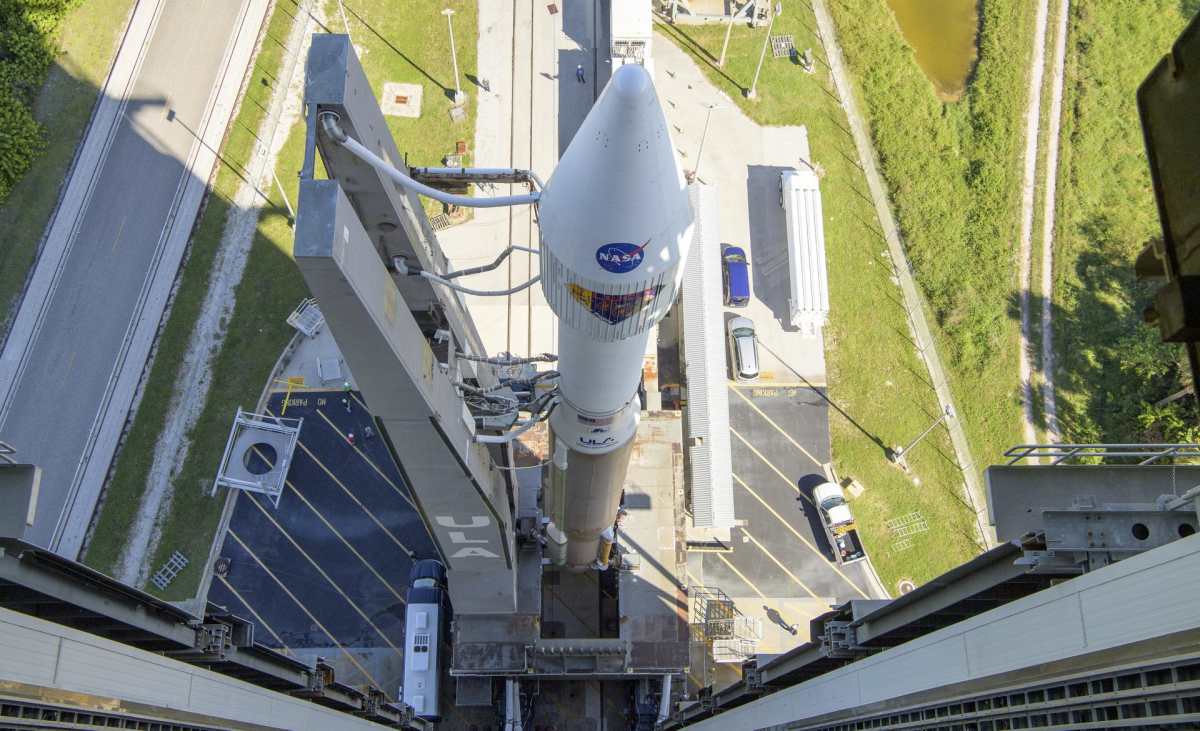
The Lucy mission is primarily focused on the L4 cloud, a group of asteroids trailing Jupiter in its orbit. Four of the spacecraft's five planned asteroid encounters are in this leading group. The sole exception is the Patroclus-Menoetius binary system, a massive pair of asteroids located in the trailing L5 cloud. Scientists believe that by studying an additional, smaller asteroid in the L5 cloud, Lucy could gather more comprehensive data to compare the two distinct populations.

The path to this potential new encounter involves a two-step process, beginning with the identification of a suitable target. While most large asteroids in the L5 cloud have already been found, a substantial population of smaller asteroids remains undiscovered. Researchers leveraged the known size distributions of asteroids to estimate the likely number and locations of these smaller objects.
According to the study, published on the arXiv preprint server, a dedicated observation campaign in late 2026, when the Trojans are optimally positioned for viewing from Earth, could yield a discovery. The paper's authors, who include key members of the Lucy mission team, calculated that large telescopes like the Subaru or Vera Rubin Observatory could potentially find a 700-meter-diameter asteroid candidate in a single night of observation. Locating an even smaller, 500-meter asteroid would require a few additional nights of observation using specialized "stacking" techniques to track faint objects. The researchers expressed high confidence that a concerted effort would successfully identify a viable flyby candidate.

To facilitate the flyby, the spacecraft would need to alter its course. The paper outlines that this could be achieved with a "moderate" course correction of approximately 50 m/s, well within Lucy's fuel reserves. Two potential windows for this maneuver were identified.
The first opportunity would occur after Lucy's third Earth gravity assist, which is designed to direct the spacecraft toward the center of the L5 cluster. This option provides a higher density of potential targets but offers a narrow timeframe for adjustment. The second window would open "post-Patroclus," after the spacecraft has completed its encounter with the Patroclus-Menoetius binary. While this option presents a larger volume of space to search and a longer adjustment period, the density of targets is lower.
Ultimately, the feasibility of this bonus encounter hinges on securing time on a powerful telescope during the 2026 observational window. Given the potential for groundbreaking scientific discovery at a minimal cost to the mission, the astronomical community is now awaiting to see whether the Lucy team can secure the resources needed to make this ambitious plan a reality.
In a key milestone for the mission, NASA's Lucy spacecraft has completed its flyby of the main-belt asteroid Donaldjohanson, according to NASA. The encounter, which took place on Sunday, April 20, 2025, at 1:51 p.m. EDT, was the first of its kind for the mission. Following the close approach, the Lucy operations team confirmed that the spacecraft was in good health and had successfully "phoned home."