A 'quasi-moon' asteroid has been orbiting Earth for 60 years—and scientists are just finding out
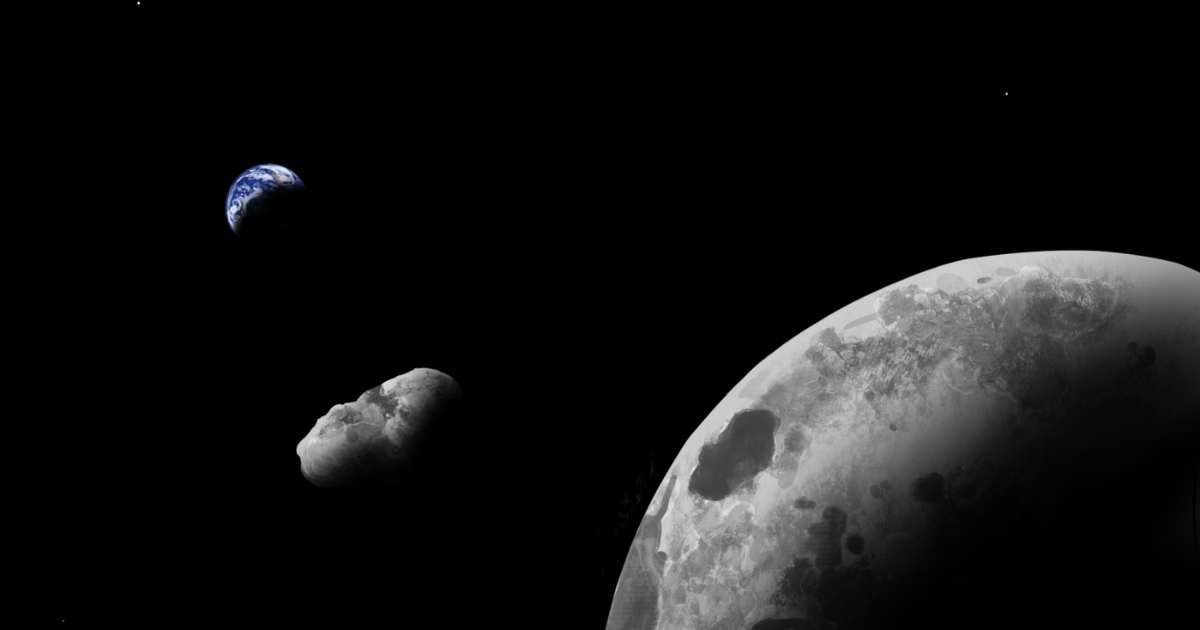
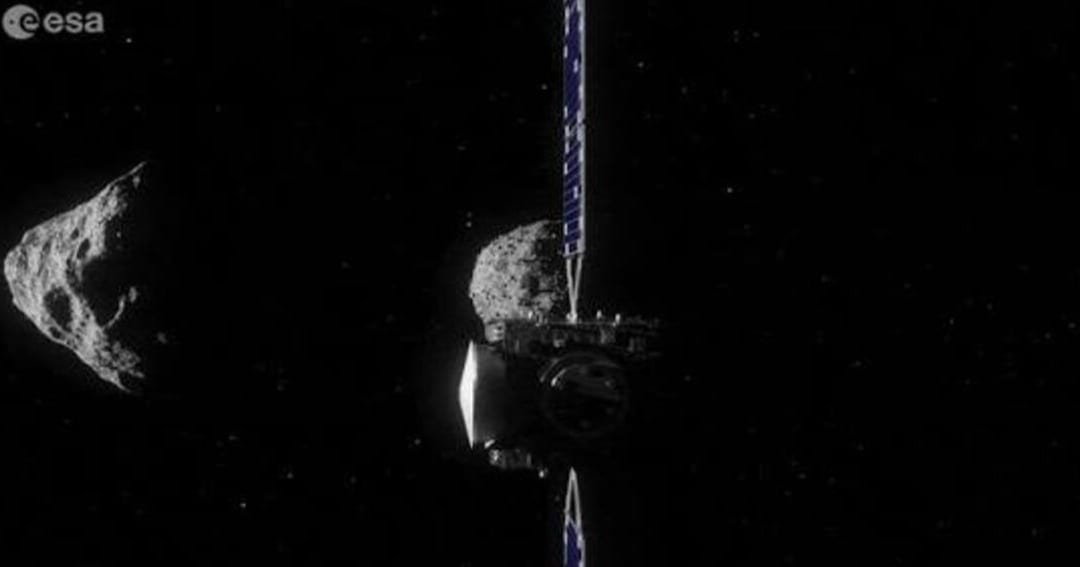
Scientists have identified a new quasi-moon, a small asteroid that appears to orbit Earth. This discovery adds to a growing list of Earth's temporary celestial companions that have gone largely unnoticed, per Phys.org. Noted first 34 years ago, the "1991 VG" quasi-moon was assumed to be an interstellar probe at the time, with later groups of small asteroids labeled "Arjunas." Over the next three decades, several visitors arrived, including the most recent Arjuna — "2025 PN7"
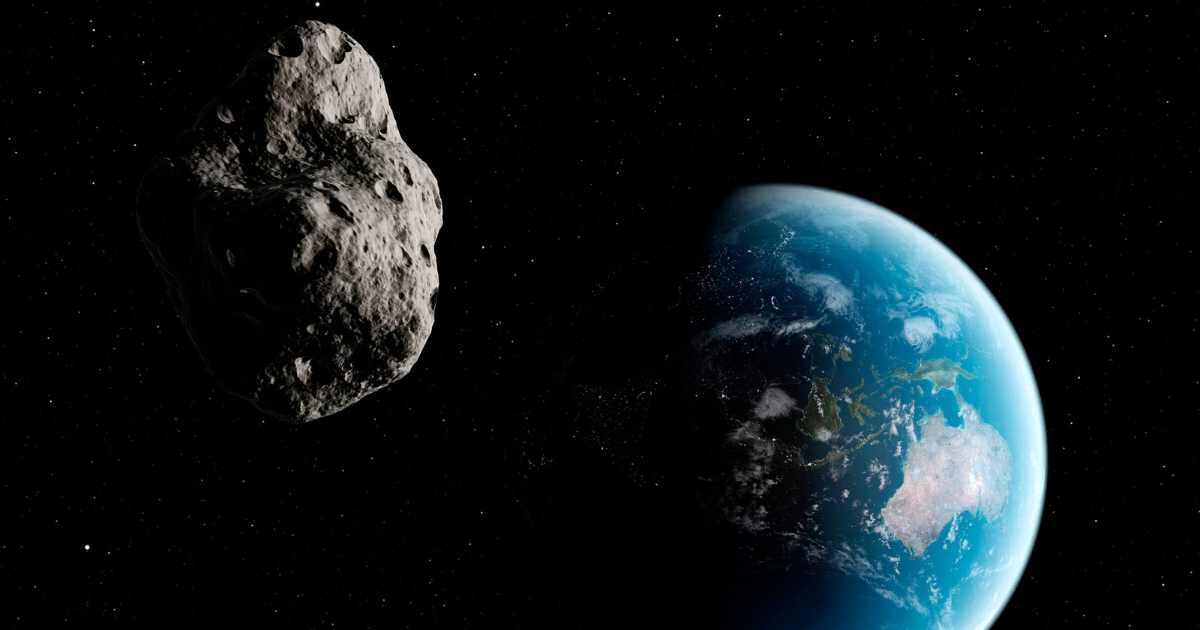
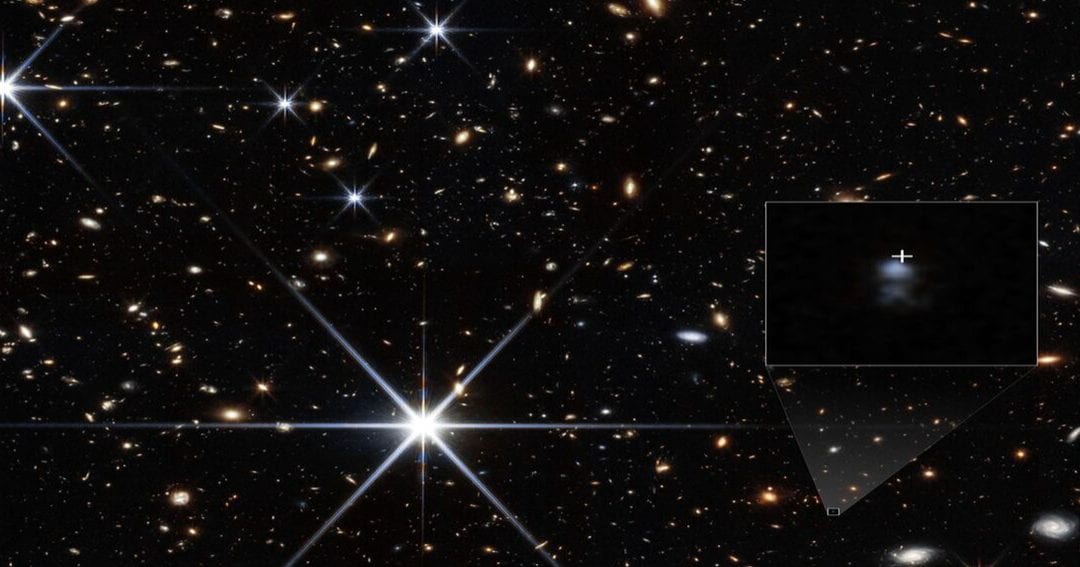
Astronomers at the Pan-STARRS observatory in Hawaii detected the asteroid on August 2, 2025. Their findings, recently published in Research Notes of the AAS, reveal that this specific quasi-moon has been traveling alongside Earth for approximately 60 years and is expected to continue its journey for another six decades — one of the shortest stays yet.

Unlike Earth’s permanent moon, a quasi-moon like 2025 PN7 is technically in orbit around the Sun. However, its path is in resonance with Earth's orbit, making it look as though it's circling our planet. This newly found companion is part of a group of near-Earth asteroids known as Arjunas. "Over three decades later, it is now widely accepted that such objects are natural and constitute a secondary asteroid belt that occupies the region in which the Earth–moon system orbits around the sun, defining the Arjuna dynamical class. The Arjunas with the most Earth-like orbits can experience temporary captures as mini-moons of our planet," the study authors explain.
The team's analysis indicates that 2025 PN7's temporary association with Earth is relatively short-lived compared to other known quasi-moons. For instance, another quasi-moon, Kamo'oalewa, is expected to remain in its near-Earth orbit for over 380 years. While scientists have been studying quasi-moons since the discovery of 1991 VG more than three decades ago, their significance is becoming increasingly clear. As these share our planet's orbital space, understanding their movements is crucial for planetary defense and could inform future space missions, including potential asteroid mining.
Adding to the recent findings, Earth temporarily gained a mini-moon in the fall of 2024, a captured asteroid named 2024 PT5. This celestial visitor, which was approximately 10 meters in diameter, was gravitationally bound to our planet from September 29 until November 25, a total of 57 days, according to The Conversation. Unlike our permanent moon, this small and faint object wasn't visible to the naked eye or even with small telescopes, requiring larger, more powerful instruments to be observed. While our regular Moon is a stable, long-term companion, a mini-moon is a temporary visitor. Astronomers define them as asteroids or comets that are briefly captured by a planet's gravitational pull. Though small ones are believed to be common, they are rarely detected. In fact, 2024 PT5 was only the fifth mini-moon ever observed to be captured by Earth.
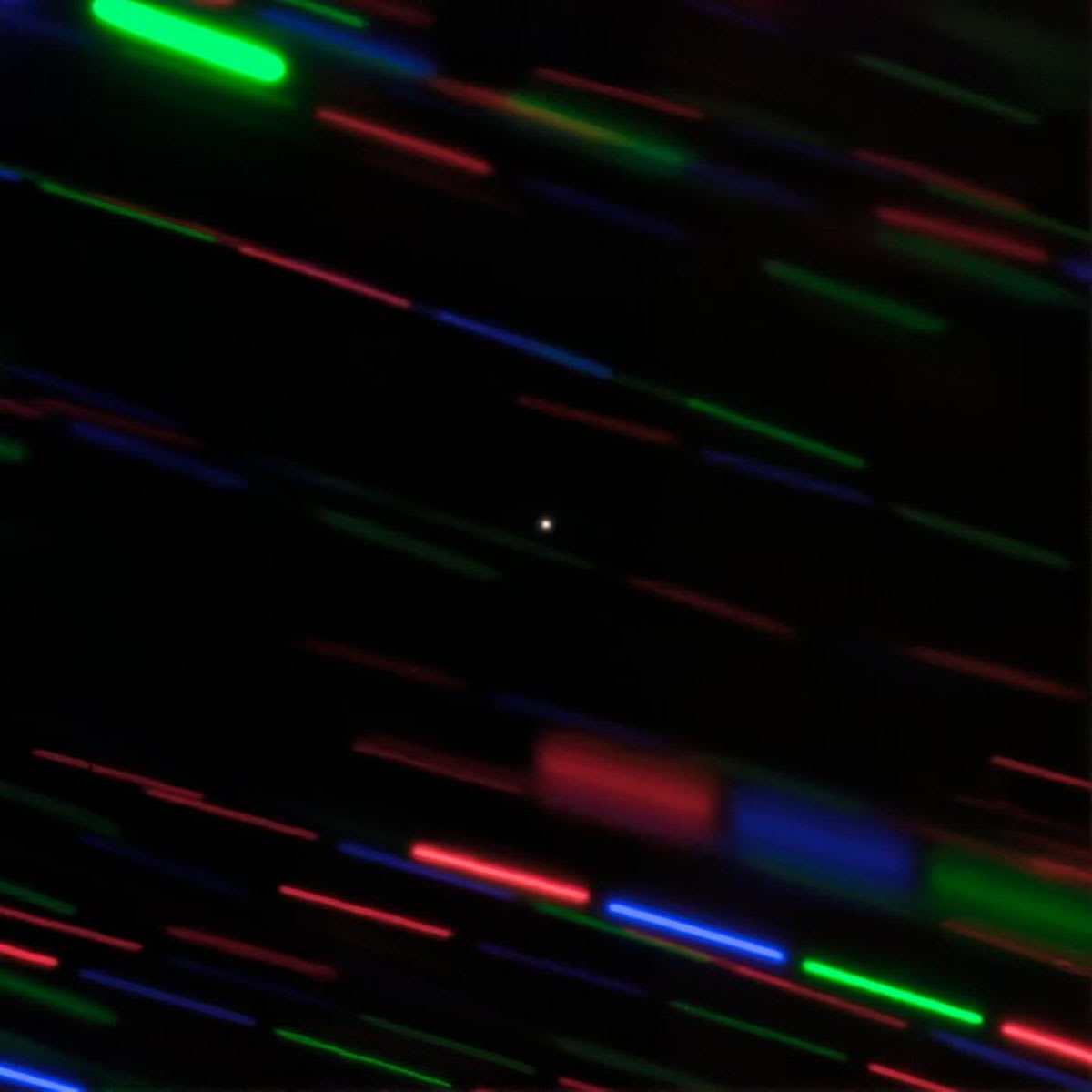
Mini-moons originate from the vast population of near-Earth objects (NEOs). These are natural space objects, such as asteroids and comets, that orbit the Sun and occasionally pass within 1.3 times the distance between the Earth and the Sun. Due to their proximity, Earth’s gravitational pull can sometimes capture them for a brief period. The newly observed 2024 PT5 and another mini-moon, 2022 NX1, both came from a specific subgroup of NEOs called the Arjuna asteroids, which are named after a character from the Hindu epic, 'Mahābhārata.'
More on Starlust
NASA confirms a plane-sized asteroid will pass Earth on July 28: 'If there were a threat...'
Our third interstellar visitor, comet 3I/ATLAS, has a largely carbon dioxide-infused 'coma'