X-ray images taken during the Fram2 mission could change how astronaut health is monitored in space
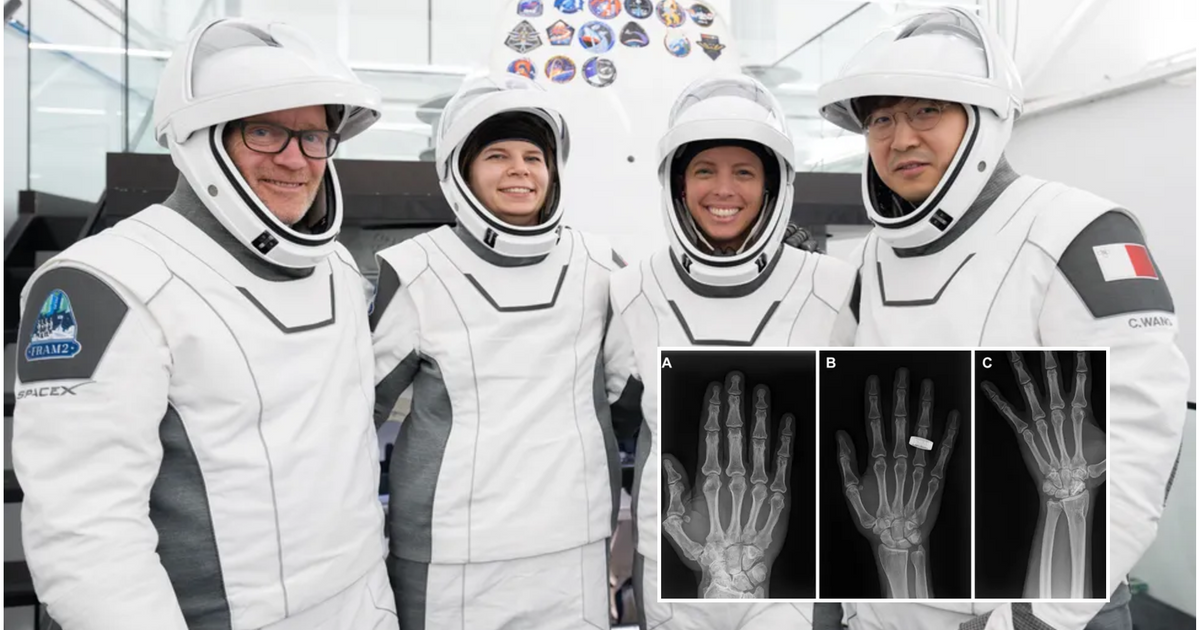
For decades, ultrasound has been the only reliable imaging tool in space. But operating it requires specialized training, and it relies on a sound wave transmission medium—limitations that are being questioned of late. However, in a breakthrough, a team of astronauts captured first X-ray images of various body parts on a commercial orbital mission. The study, published in Radiology, shows that portable X-ray technology—already used on the sidelines of sporting events and even low-resource areas—can also be used in the weightless environment of space.

“It’s been a dream for aerospace medicine to have more than one imaging modality for diagnosing illnesses and injuries in space,” said Sheyna Gifford, M.D., lead researcher and an assistant professor of aerospace medicine at Mayo Clinic in Rochester, Minnesota, according to a statement published by EurekAlert.org. “X-rays are fast, easy and diagnostically valuable.” Conventional X-ray machines are bulky and produce blurry images when there is movement. So they cannot be used in space, where astronauts are constantly floating around. But small, portable X-ray machines are a different story.
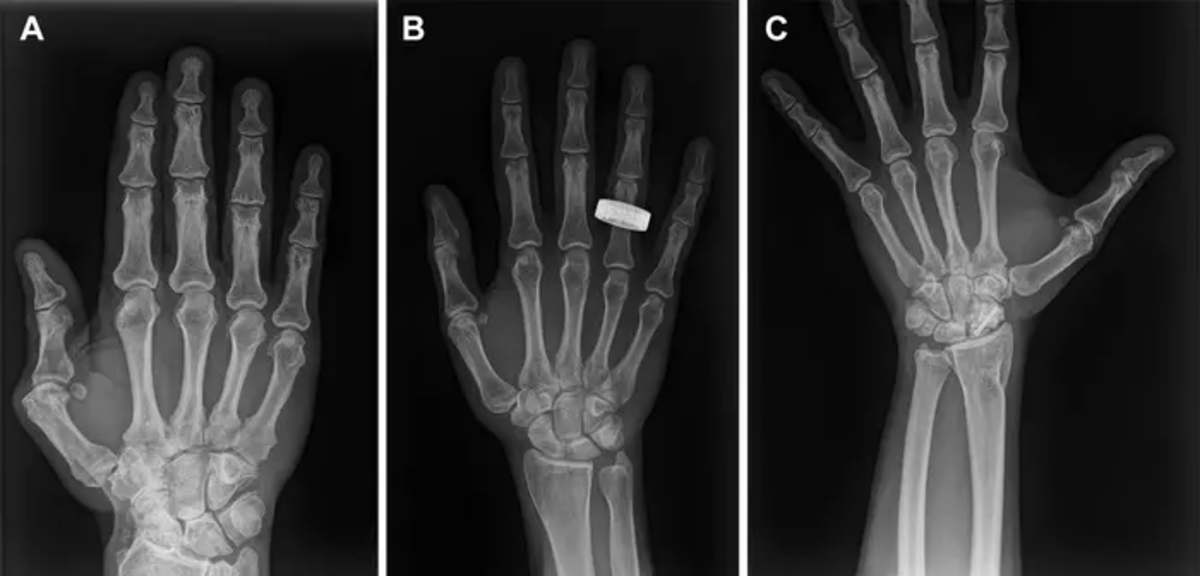
In 2022, Dr. Gifford and her peers got the opportunity to test such a portable X-ray machine on a parabolic flight. The flight crew successfully took a digital X-ray of a hand in microgravity. But what followed was far more ambitious, as a commercial off-the-shelf portable radiography system was tested during the Fram2 mission, a commercial polar flight launched aboard the SpaceX Falcon 9 rocket in March 2025. The astronauts were not medical professionals and received only four hours of training on how to operate the machine. Without any real-time help from medical experts on Earth, the crews imaged a calibration phantom, a smartwatch, and several parts of the human body: the hand, forearm, chest, abdomen, and pelvis.

Each image was transmitted immediately to an onboard computer for review before later being assessed by independent radiologists after the mission. The images taken on flight matched the quality of those obtained before launch. Despite being taken in microgravity, the images were clinically useful. Such machines could be very handy for crews to diagnose fractures, investigate chest infections, assess abdominal problems, and help them quickly decide the mode of treatment needed on a longer mission to the Moon and even to Mars.

The portable X-ray machine also showed impressive durability. The spacecraft of the Fram2 mission returned to Earth after spending 3 days and 14 hours in orbit. Barring minor superficial damage during landing and recovery, the machine continued to produce normal X-ray output, with the internal hardware being intact. Besides monitoring crew health, the machine could be used for non-medical tasks. “For sustained human presence in space, X-rays are critical not just for crew members but also for other mission components like electronics and spacesuits. The only way to look inside these objects without taking them apart is to X-ray them,” Dr. Gifford added.
More on Starlust
Healthcare on the Moon and beyond—how NASA is preparing for medical emergencies in deep space
Microgravity and radiation in space can have dangerous effects on an astronaut's liver, study finds