World’s first commercial space science telescope Mauve returns first observation
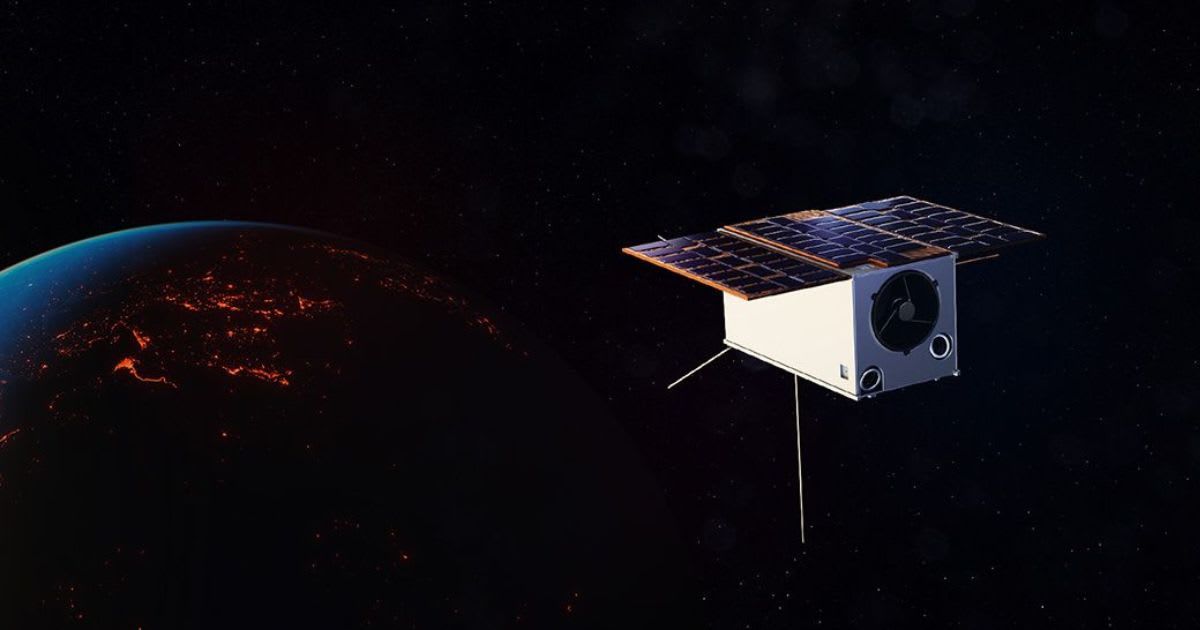
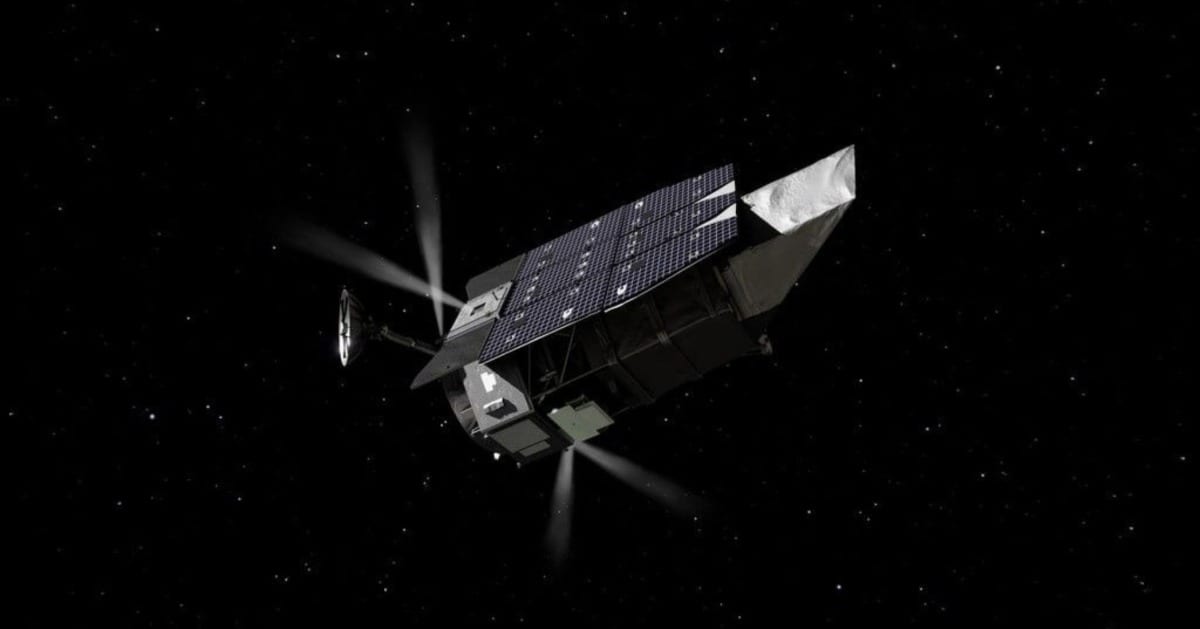
British aerospace company Blue Skies Space's first satellite, Mauve, has begun science operations after achieving “first light” by successfully sending back data to astronomers. The company’s CubeSat is now the first-ever commercial space science satellite to achieve this feat and marks the start of a new era of small, low-cost space telescopes. The bright star Alkaid or Eta Ursae Majoris (eta UMa) was the telescope’s first calibration target. By observing this star in the Ursa Major constellation, around 104 light-years from Earth, Mauve passed its first big test in orbit.
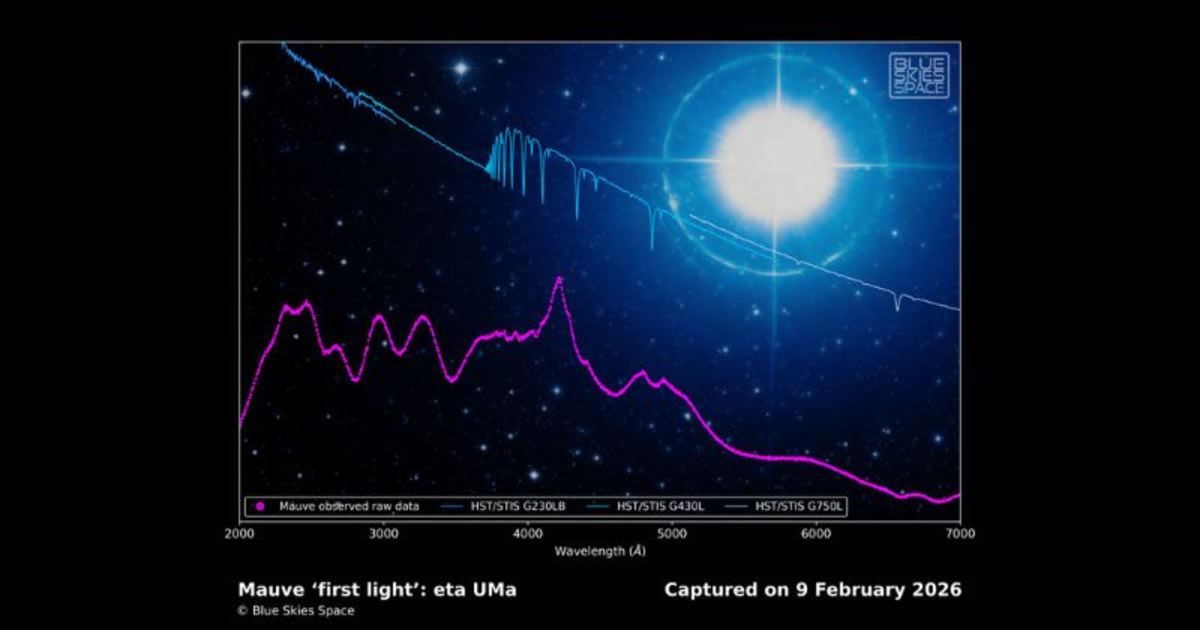
Mauve made a 5-second observation of the hot, blue-white star and transmitted the results back to Earth. Eta UMa is significantly hotter than the Sun and shines brightly in ultraviolet (UV) wavelengths. Such stars provide clear spectral signatures that make them great targets for scientists to check how an instrument performs. “Achieving first light with Mauve is a fantastic milestone. It’s great to see Mauve perform brilliantly in orbit,” said Ian Stotesbury, the lead systems engineer at Blue Skies Space. “Full instrument performance will be established over the coming weeks as we continue calibration and observe progressively fainter targets.”

And it’s not just its UV properties, the B-type eta UMa also has some noteworthy spectral properties that make it ideal for verifying Mauve’s spectrophotometric prowess. Dr Arianna Saba, Science Performance Analyst at Blue Skies Space, called it “the perfect star” to help calibrate Mauve’s instrument. “Eta UMa exhibits a strong ultraviolet continuum and a pronounced Balmer jump, caused by the absorption of hydrogen atoms in the outer layers of the star’s atmosphere,” added Dr. Saba. The Balmer jump is a sudden drop in a star’s brightness at a certain wavelength as the said hydrogen atoms absorb that light.
Mauve is on its way to space! 🚀 https://t.co/1EENfmBomD
— Blue Skies Space (@blueskiesspace) November 28, 2025
Now that “first light” has been achieved, Mauve can now initiate its three-year science mission. Blue Skies Space had launched the satellite on November 28, 2025, as one of 140 payloads aboard SpaceX’s Transporter-15 rideshare mission. The Falcon 9 rocket placed it in low-Earth orbit at an altitude of 317 miles (510 km). Mauve’s purpose is to study stellar activity like flares and how they affect planets orbiting them. These stellar flares have a strong impact on the atmospheres of exoplanets, and in turn, their habitability.
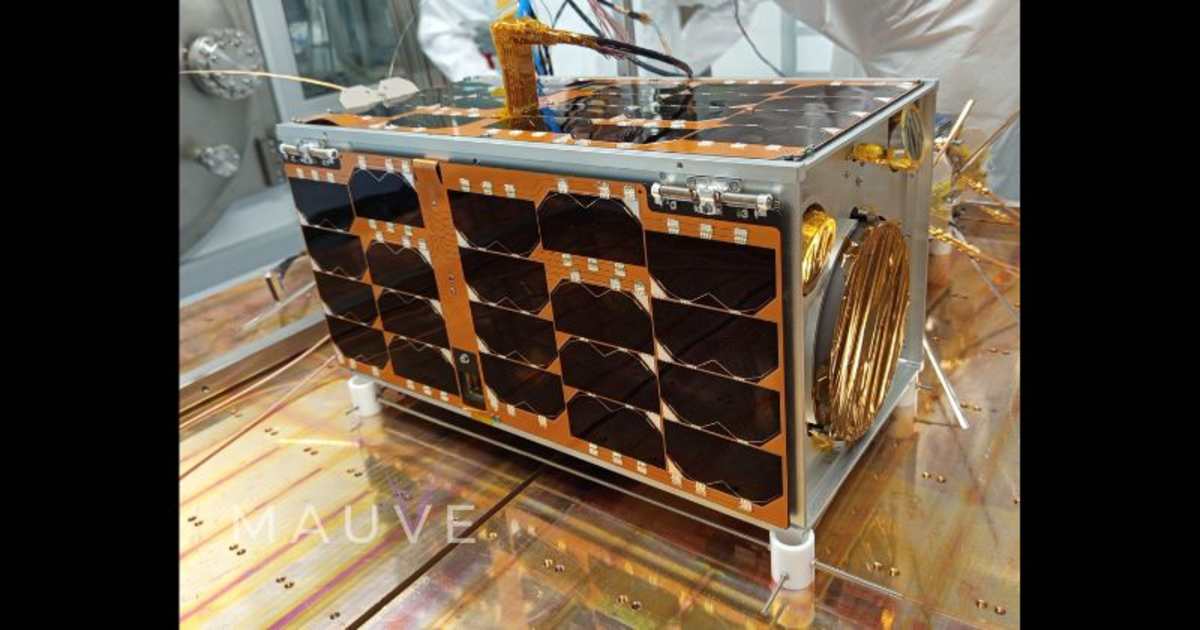
Mauve’s instruments are designed specifically to study stars in the ultraviolet and visible light, i.e. across 200–700 nanometers. The tiny satellite observatory is roughly 18 times smaller than Hubble, almost the size of a suitcase. A 5-inch-aperture (130mm) Cassegrain telescope pales in comparison next to JWST’s 6.5 meter-stretch, but that reflects the intent behind the mission. Mauve and its components took only three years to complete and Blue Skies Space aims to set this as the norm for all commercial space science missions.
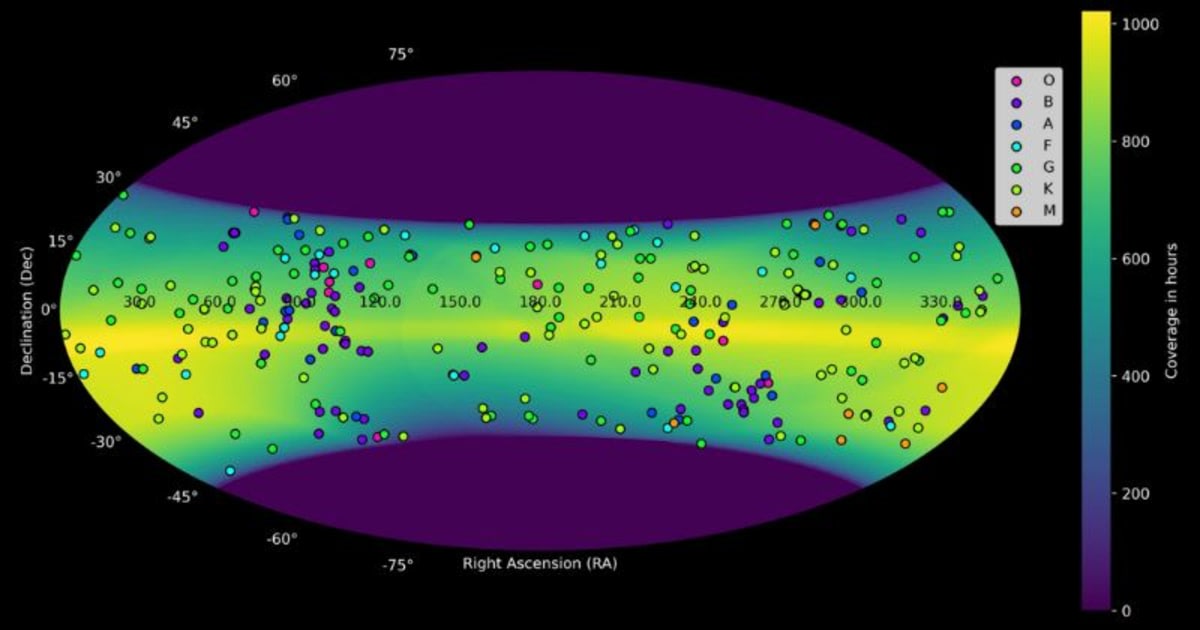
Mauve’s telescope can measure changes in stellar brightness with a spectral resolution of about 10.5 nanometers, corresponding to a resolving power of R = 20–65. It is equipped with a CMOS linear array detector to convert photons into electronic signals for analysis. Ground-based telescopes cannot operate at UV wavelengths, while Mauve can. Moreover, sustained time-domain surveys (monitoring stellar brightness) aren’t practical with Hubble or even JWST, which prioritizes infrared over UV. Here, Mauve’s specialized approach reduces the need among astronomers to compete for Hubble observing time.
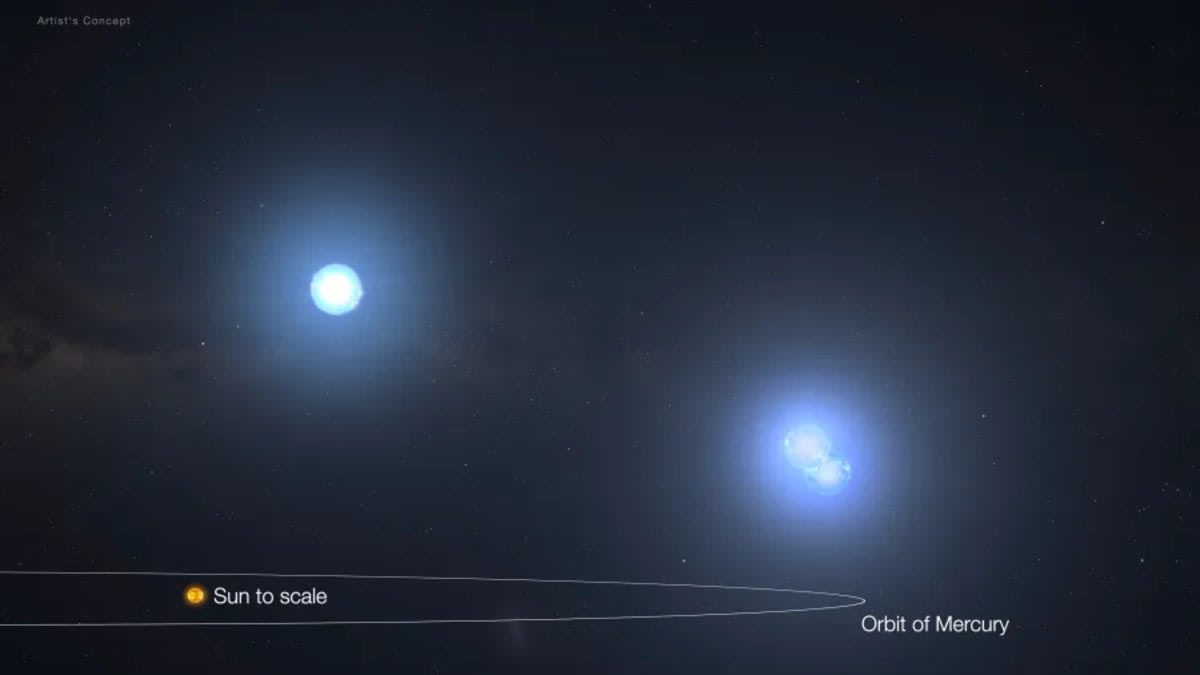
Apart from just observing stellar flares, Mauve’s mission also targets young exoplanet host stars that have planets still forming around them. The small commercial space telescope will also observe hot stars that emit large amounts of UV radiation, as well as binary systems, i.e., two stars orbiting each other. Mauve is a result of private European collaboration from companies like C3S LLC (Hungary), ISISPACE (Netherlands), Media Lario (Italy), Ceram Optec (Latvia), and Avantes (Netherlands).
More on Starlust
NASA’s cereal-box-sized SPARCS sends first images as exoplanet mission begins
Here's how you can access JWST and Hubble Telescope observations live from home