Astronomers unveil exceptionally powerful high-resolution spectrograph to find red dwarf planets

An international collaboration of astronomers has unveiled a powerful new instrument designed to detect and study exoplanets, particularly those orbiting faint, cool red dwarf stars. The Near-InfraRed Planet Searcher (NIRPS), located at the European Southern Observatory's La Silla facility in Chile, has published its inaugural scientific findings, marking a significant advancement in the search for habitable worlds, as per the University of Geneva.
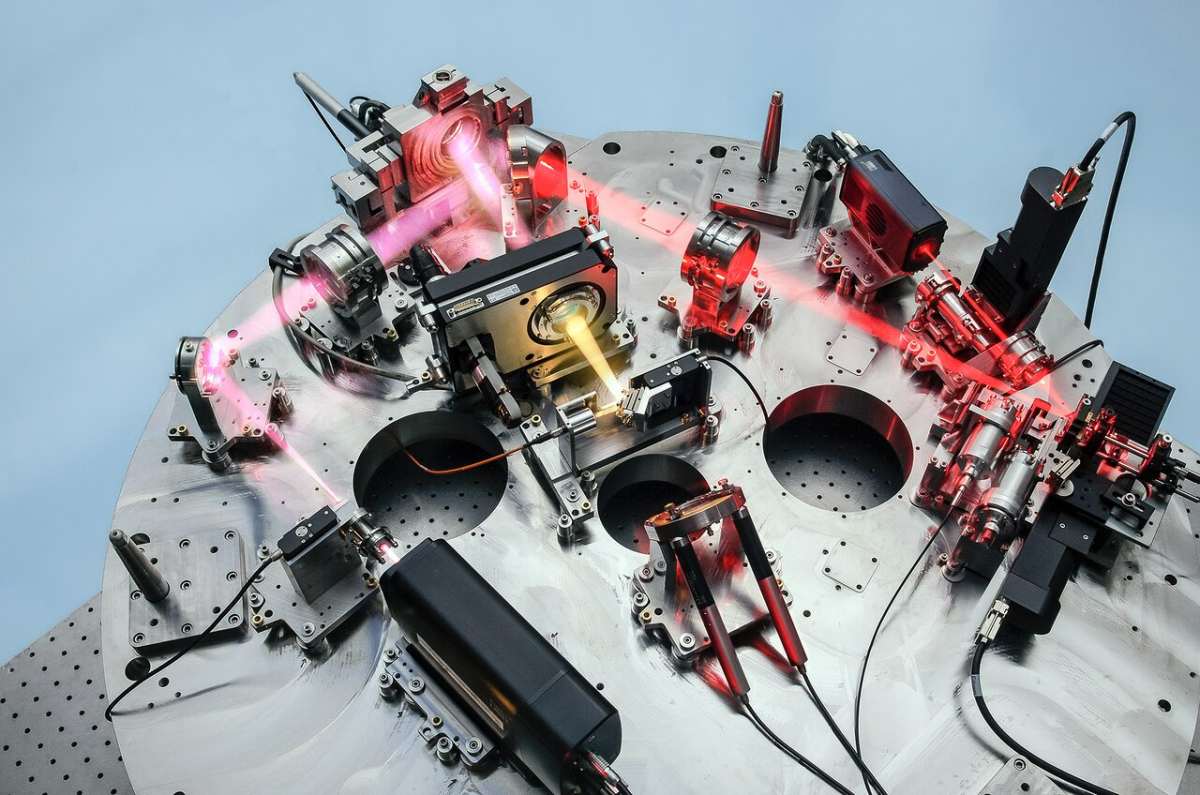
The instrument, which began operations in April 2023, was developed by a team of over 140 scientists and engineers from multiple countries, including Switzerland, Canada, and Spain. NIRPS is a high-resolution spectrograph that operates in the near-infrared spectrum, a wavelength range where red dwarfs shine most brightly, making it an ideal tool for observing these stars and the planets that orbit them.
Une équipe internationale co-dirigée par l’UNIGE publie les premiers résultats du nouveau spectrographe NIRPS, installé sur l'Observatoire européen austral de l'ESO. @UMontreal @ESO #UNIGEhttps://t.co/DW6HnW8Ccc pic.twitter.com/1n6Rmyc1bY
— Université de Genève (@UNIGEnews) July 29, 2025
The new spectrograph works in tandem with the existing HARPS instrument, which has been in use since 2003 and operates in visible light. This combination provides astronomers with an unprecedented level of spectral coverage. François Bouchy, a co-leader of the NIRPS project, praised the collaboration, stating, “We are proud of the unique and unrivalled performance of NIRPS and excited by the first scientific results.”
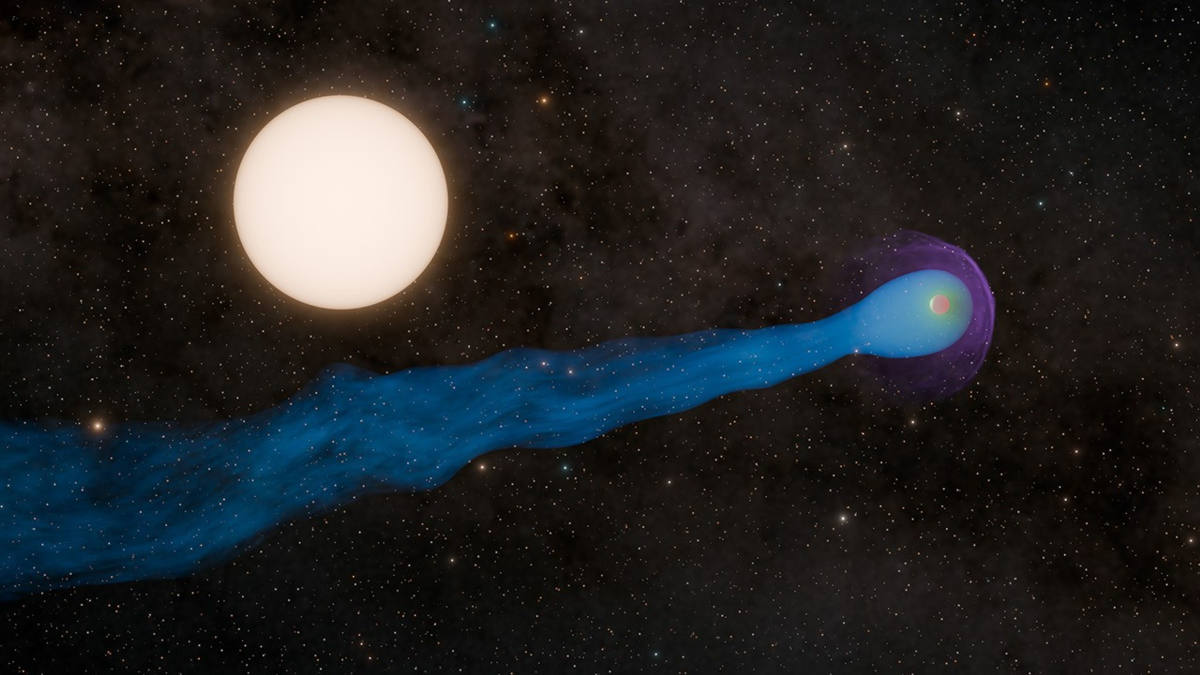
The initial results, published in the Journal Astronomy & Astrophysics, include five papers detailing the instrument's performance and its first observations. Among these findings, scientists used the HARPS+NIRPS combination to examine the atmosphere of two well-known gas giants, WASP-189 b and WASP-69 b. In the case of WASP-189 b, the team observed an unusual phenomenon where iron was detected in the visible spectrum but not in the near-infrared, suggesting another chemical element, possibly a hydride anion, is making the iron signature. In another study, NIRPS captured a detailed view of a long trail of helium gas escaping the atmosphere of WASP-69 b, akin to a comet's tail. These observations provide new insights into how planets lose their atmospheres due to intense radiation from their host stars.
Furthermore, the new spectrograph has already made an impact in the search for planets around red dwarfs. The consortium was able to confirm the presence of Proxima Centauri b, a potentially Earth-like planet in the habitable zone of the closest star to our solar system. The data also hints at a second, less massive planet orbiting the same star. To better understand and account for the "noise" from stars, NIRPS is also being used to observe our sun daily, a practice that will help refine future exoplanet discoveries.
An exoplanet is any planet beyond our solar system. While most of these distant worlds orbit stars, some, known as "rogue planets," drift freely through space without a stellar host. So far, nearly 6,000 exoplanets have been officially confirmed, though scientists believe billions more exist within our galaxy, according to NASA. The majority of these discoveries have occurred in a small, localized region of the Milky Way, within a few thousand light-years of Earth. For context, the closest known exoplanet, Proxima Centauri b, is still a staggering four light-years away. Based on current data, astronomers are confident that planets outnumber stars in the galaxy.