Here's how you can access JWST and Hubble Telescope observations live from home
Explore the cosmos through the eyes of the James Webb Space Telescope and the Hubble Telescope!
PUBLISHED JAN 19, 2026
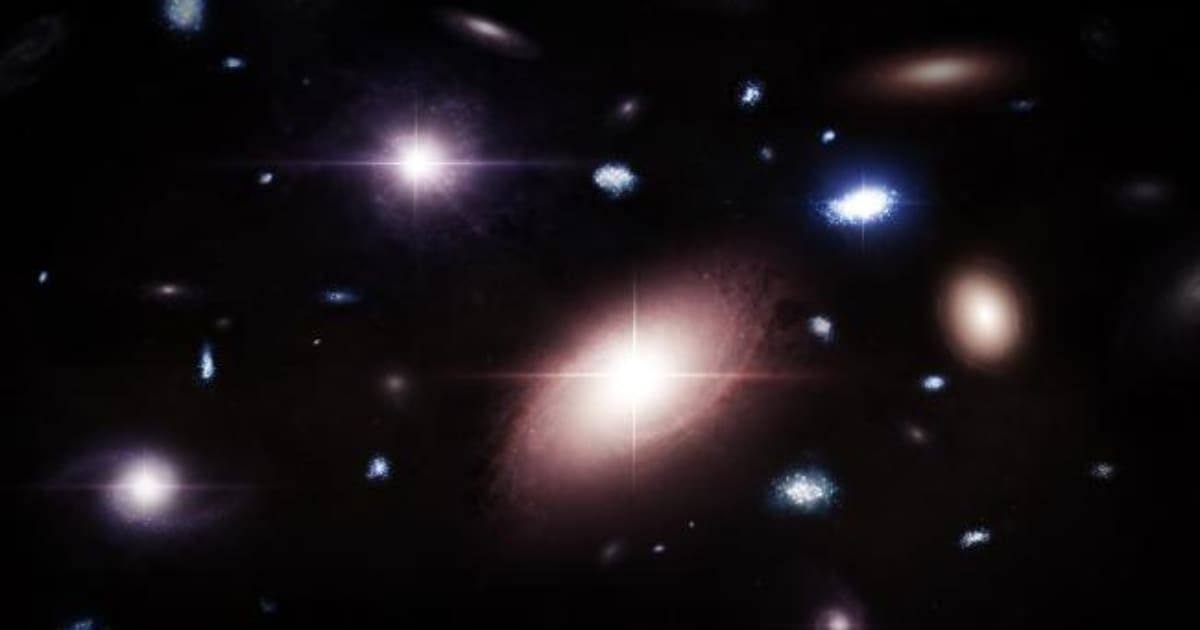
Scientists recently completed the most comprehensive-ever census of active galactic nuclei in 8,000 nearby galaxies (Representative Cover Image Source: CfA | Melissa Weiss)

The vast cosmos stretching beyond us feels unreachable, except to a select few seasoned scientists and space agencies. However, deep space exploration has become significantly more accessible, largely thanks to data from instruments like the James Webb Space Telescope (JWST) and the Hubble Space Telescope. Initially, we only had access to images released publicly by NASA and ESA; however, technological advances now allow us to have direct access to the visual field of the equipment. Websites such as Space Telescope Live provide live updates on the two telescopes and their fields of view.
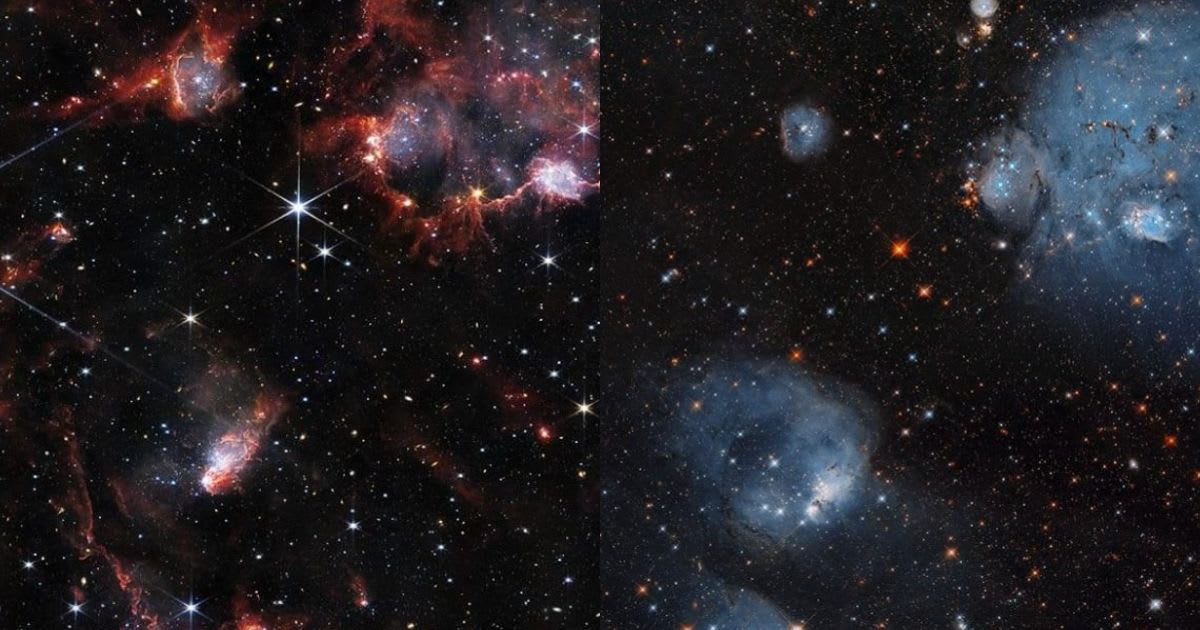
NASA’s Hubble and Webb Telescopes Reveal Two Faces of a Star Cluster Duo (Cover Image Source: NASA | HST, JWST)
NASA’s Hubble and Webb Telescopes Reveal Two Faces of a Star Cluster Duo (Representative Image Source: NASA | HST, JWST)

In a milestone achievement, we have the opportunity to see the universe through these telescopes in real-time. This includes tracking the current targets of the telescopes to see celestial phenomena - such as a dying star, a planet formation, or a distant nebula - at the same time their sensors capture them. Developed and operated by the Space Telescope Science Institute (STScI), Space Telescope Live is a web application that gives us a live feed of JWST and Hubble Telescope observations.
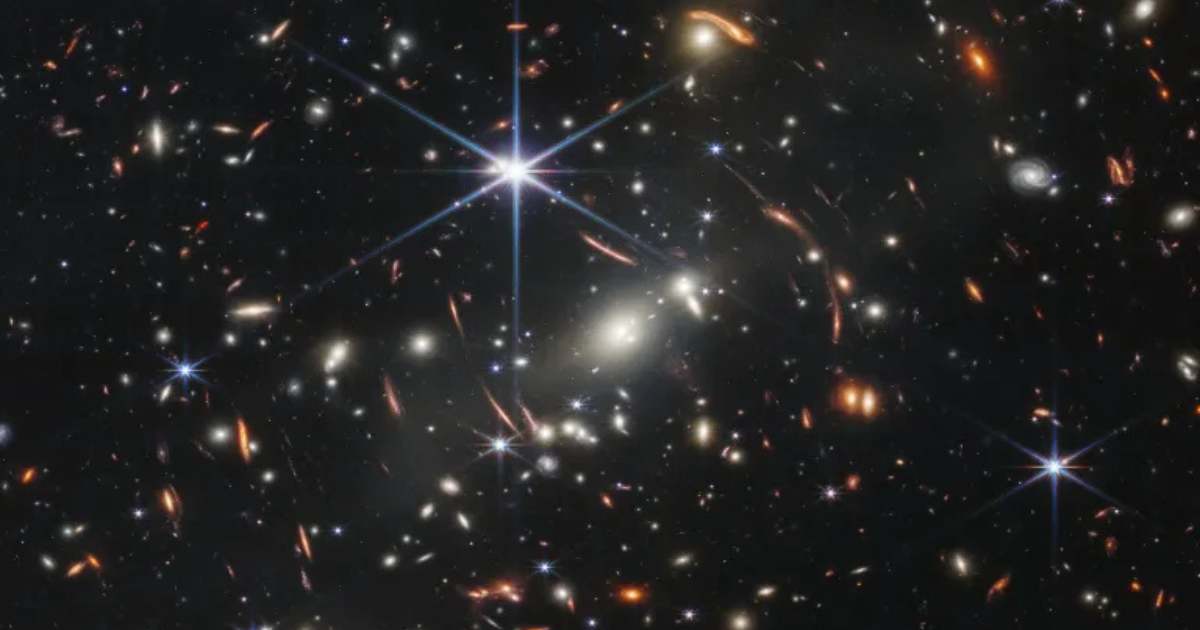
After the Big Bang, the universe was like a hot soup of particles (i.e., protons, neutrons, and electrons) (Representative Image Source: NASA)

The website features an interactive interface that explains the instrument being used, its purpose, and its target location in the sky. Here’s how to access the visuals:

Home page of the tracking website
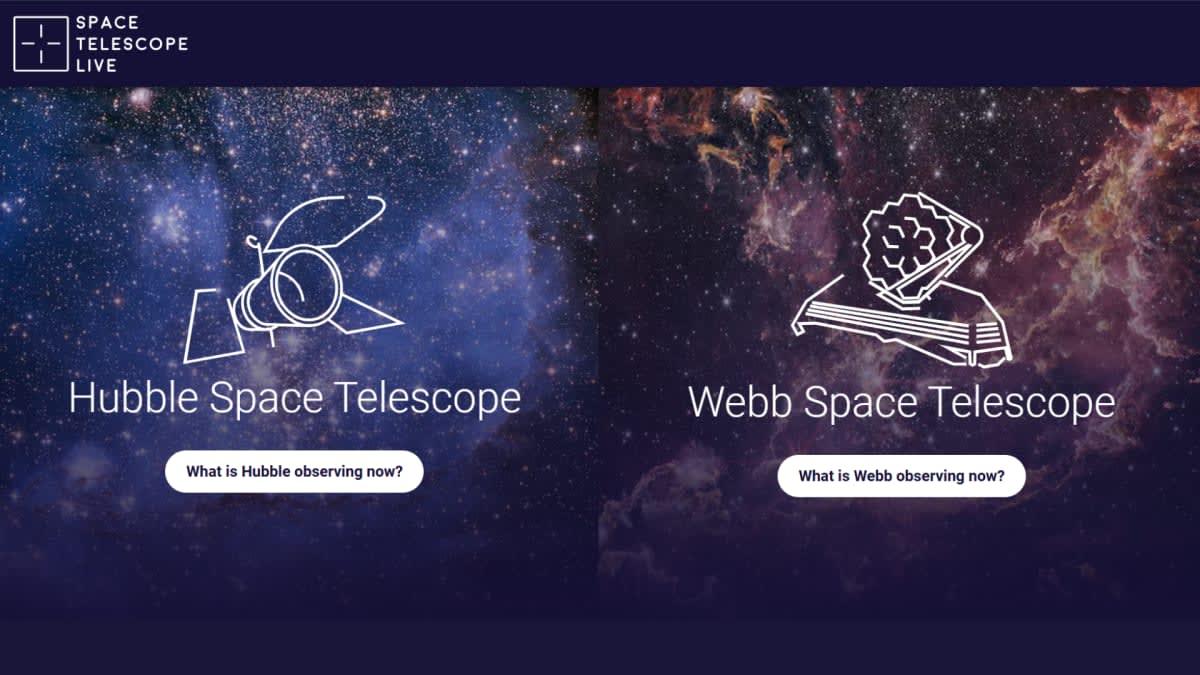
Space Telescope Live home page showing both the telescopes. (Image Source: Space Telescope Live)

The home page provides us with two options, allowing us to choose between the Hubble and the JWST. Upon selecting one, we are redirected to a new page that shows the visual being reviewed by the telescope at the moment. The top right corner has the option to change the telescope, taking us to a different page.

'What is Webb/Hubble observing?'
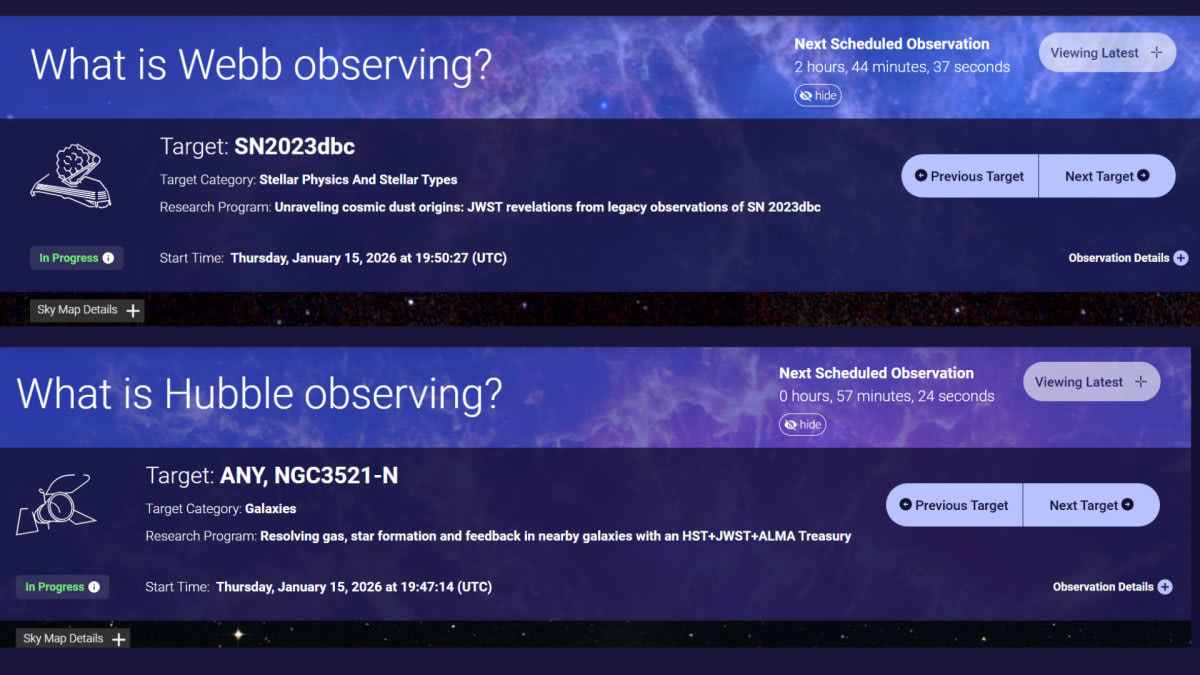
Illustrations on the website page of the Webb and Hubble in live tracking. (Image Source: Space Telescope Live)

Upon selecting a specific telescope, details about the target, target category, and the research program under which the observation is being done will reflect on the screen. An option to view the observation details reveals the instruments making the observation and the scheduled timings of the same. The details of the research can also be accessed from the dashboard. A ticking timer is present that traces the duration until the Next Scheduled Observation.

Target visuals shown on the website
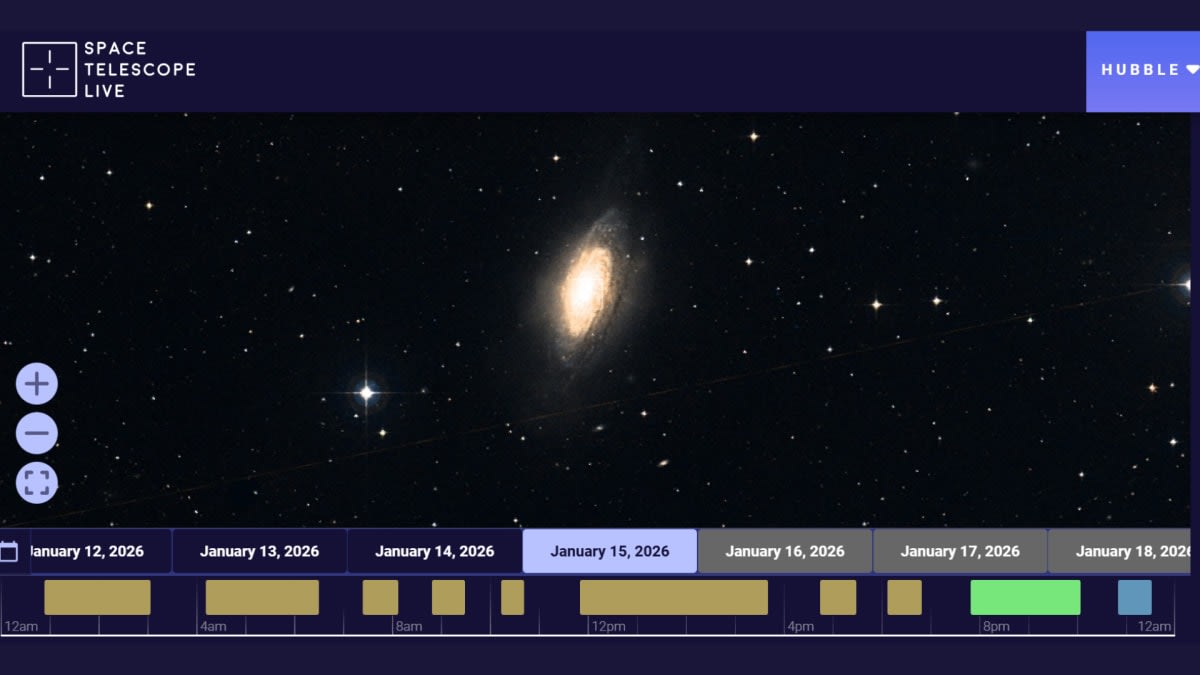
Visual of the live target being observed by the Hubble telescope with its tracking banner. (Image Source: Space Telescope Live)

Both the pages for the Hubble and Webb follow the same formatting, with added options of viewing the target for the current, previous, or next day. The visuals currently being targeted have a tracker under them, organized according to date and time, helping us trace the targets at particular intervals.
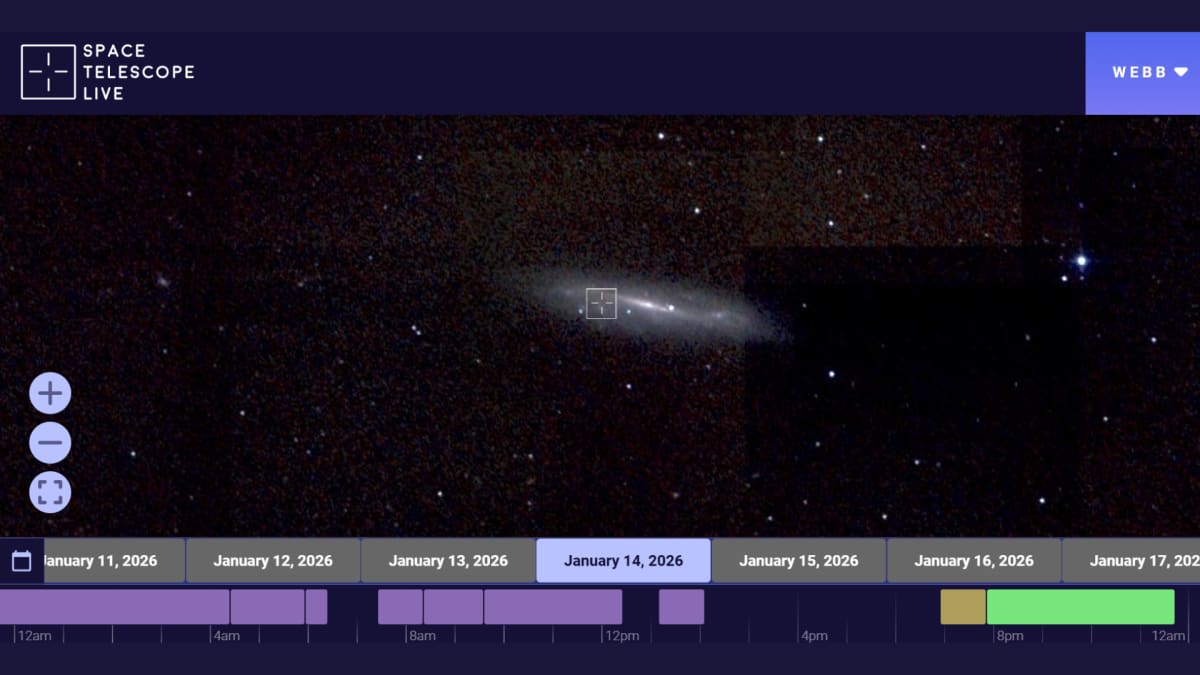
Visual of the live target being observed by the James Webb telescope with its tracking banner. (Image Source: Space Telescope Live)

The Hubble has changed humanity's fundamental understanding of the universe, according to NASA. Its design, technology, and serviceability render the telescope as one of NASA's most transformative observatories. Hubble has studied the atmospheric composition of planets around other stars and discovered dark energy. NASA’s James Webb telescope has studied all the phases in the universe’s history, from the first glow of the Big Bang to the formation of systems, as per NASA. Unlike the Hubble, JWST orbits the Sun 1 million miles away from the Earth.
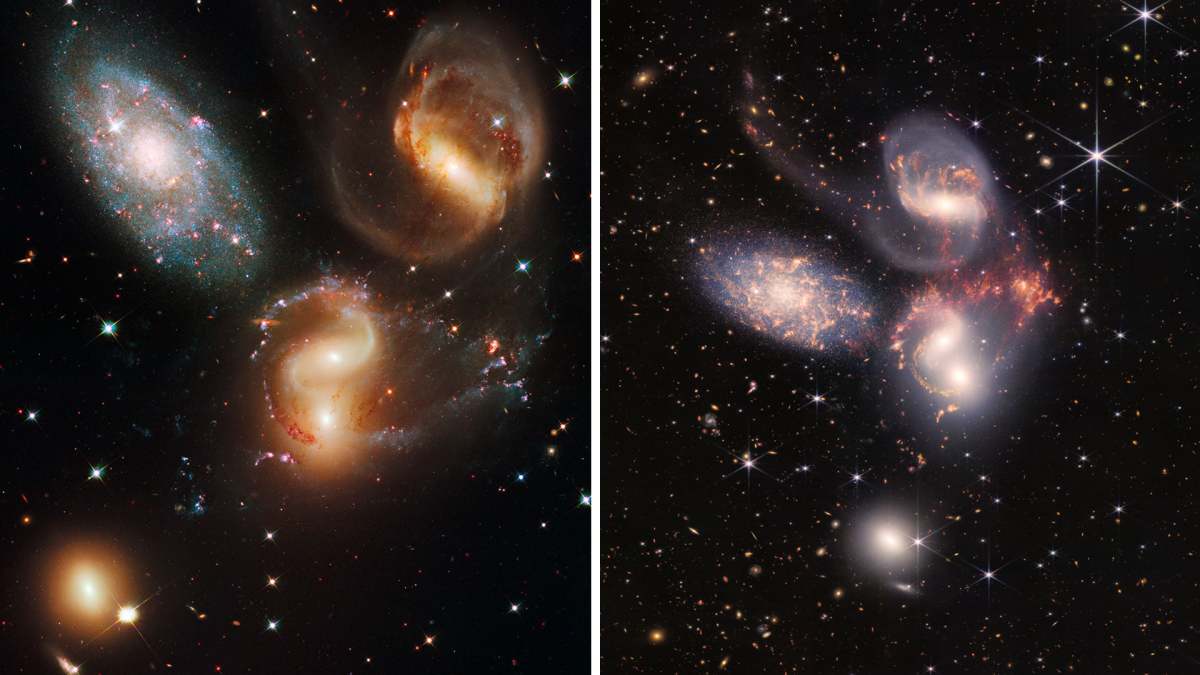
Galaxy group Stephan's Quintet, located in the constellation Pegasus, captured by NASA's Hubble Space Telescope (L), An enormous mosaic of Stephan’s Quintet is the largest image to date from NASA’s James Webb Space Telescope (Image Source: NASA | Photo by NASA, ESA, and the Hubble SM4 ERO Team (L), NASA, ESA, CSA, STScI (R))
Galaxy group Stephan's Quintet captured by NASA's Hubble Telescope (L), Mosaic of Stephan’s Quintet is the largest image to date from NASA’s James Webb (Representative Image Source: NASA | Photo by NASA, ESA, and the Hubble SM4 ERO Team (L), NASA, ESA, CSA, STScI (R))

Such a provision bridges the gap between the complexity of the cosmos as captured by NASA and the general public's understanding of it. This opportunity of real-time access helps grow a sense of global connection and pushes us to see beyond our grounded perspectives on Earth, into the interstellar. 

More on Starlust

A look at 5 extraordinary images taken by Hubble Space Telescope in 2025

The cosmos up close: 5 stunning James Webb Space Telescope images from 2025
MORE STORIES

The metal deposits date back to a time when Mars' climate was changing from wet to dry
1 day ago
Scientists have found that liquid-water habitable zones can overlap with ultraviolet habitable zones around low-mass stars.
1 day ago
Although Uranus possesses rings, they are not as structured and bright as the rings of Saturn. They are rather dark, narrow, and tough to study.
2 days ago
ISS Expedition 74 aims to boost space health and future medical breakthroughs on Earth.
2 days ago
Citizen scientists will look for warped spacetime using data from the European Space Agency's Euclid telescope.
3 days ago
A boxful of soil-living worms was sent to the International Space Station to assess the dangers.
4 days ago
The ancient ocean on Mars probably occupied a third of its surface.
5 days ago
April skies light up as a comet with bright tail and rare visibility reaches perihelion.
7 days ago
Scientists predict wave behavior using factors like gravity, atmosphere and liquid composition.
7 days ago
Parker Solar Probe has uncovered new details about how magnetic reconnection on the Sun flings charged particles at insane speeds.
Apr 17, 2026