This student-built satellite is set to help us understand ghost particles better—here's how
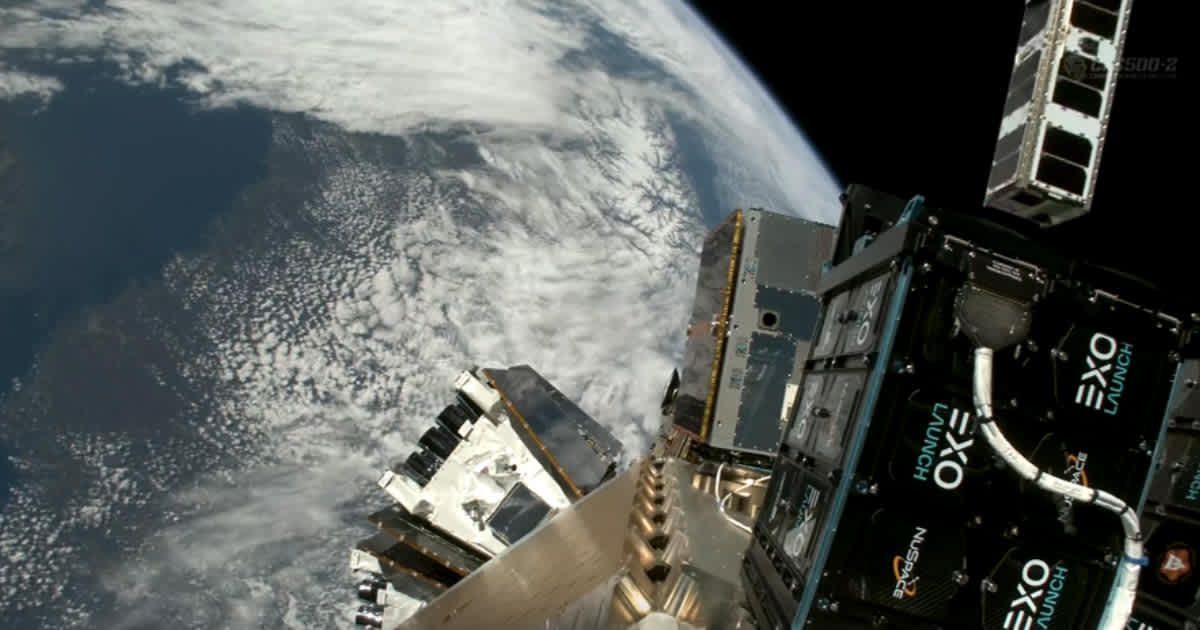
In the pursuit of studying some of the most mysterious particles in our universe, called ghost particles or neutrinos, a small satellite known as the Solar Neutrino Astro-Particle PhYsics CubeSat, or SNAPPY, was launched on May 3, 2026, on top of a SpaceX Falcon 9 rocket from Vandenberg Space Force Base in California.
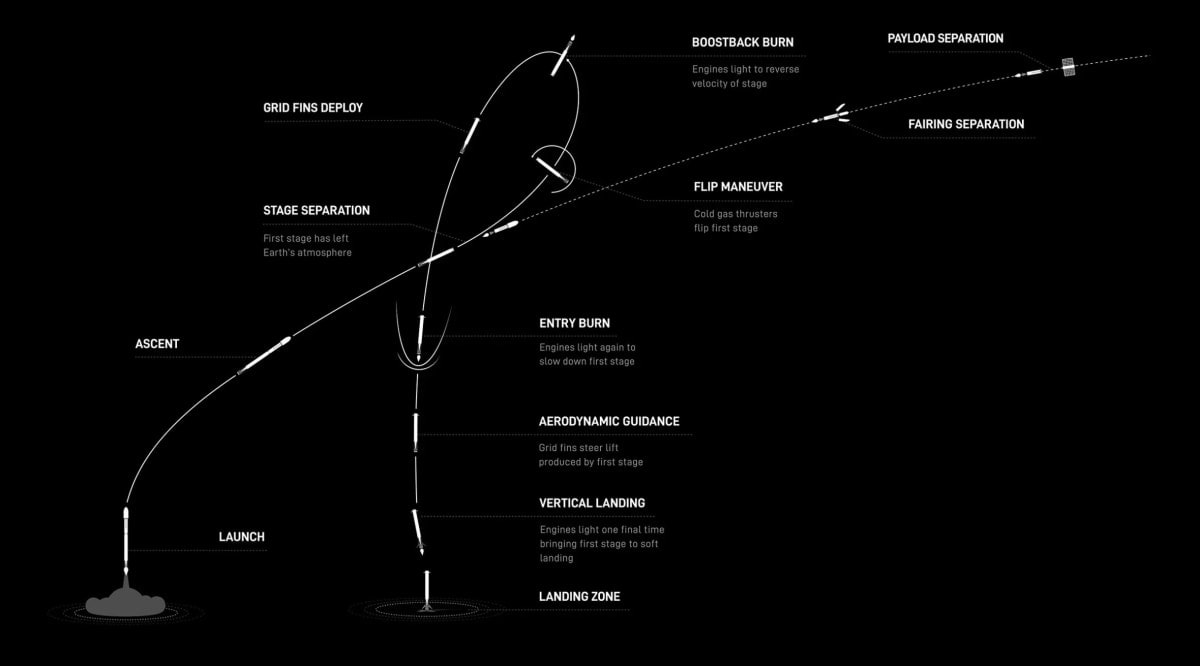
According to SpaceX, following liftoff at 3 a.m. EDT from Space Launch Complex 4 East, the satellite was successfully released into a low Earth polar orbit by the launch integrator Exolaunch about an hour and 18 minutes into the mission. Prior to that, the first stage of the launch vehicle returned to Landing Zone 4 (LZ-4) of the launch site.
Falcon 9 launches the CAS500-2 mission from California and delivers 45 payloads to orbit pic.twitter.com/kCMyb0jFS3
— SpaceX (@SpaceX) May 3, 2026
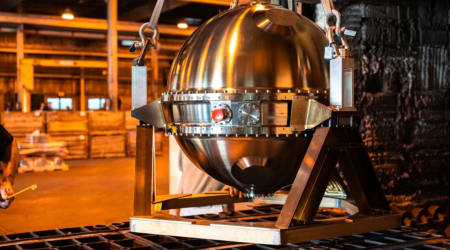
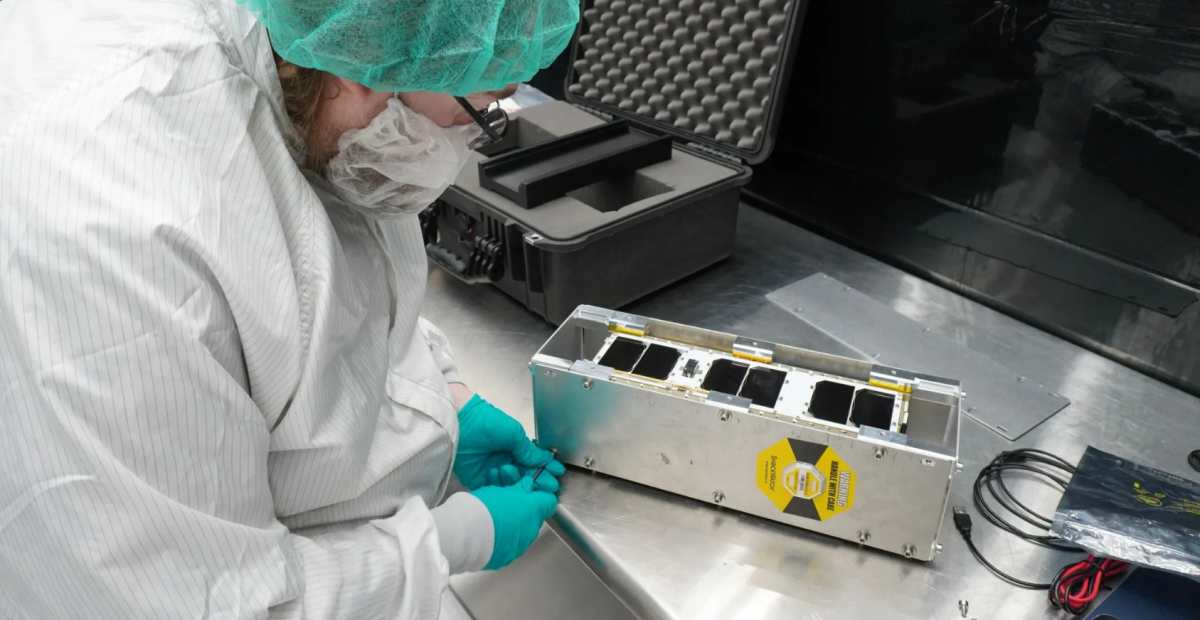
The heart of the SNAPPY mission is a tiny prototype detector that weighs only about half a pound. This compact device contains four specialized crystals tucked inside a protective shield made of epoxy and tungsten dust so that it matches the density of steel. The detector is supported by a stack of custom electronics used for power and data reading, all of which are housed within a CubeSat provided by Kongsberg NanoAvionics. While neutrino research on Earth happens in massive facilities buried deep underground to block out interference, such as the Super-K and the under-construction Hyper-K in Japan, SNAPPY is testing whether a small device can operate in the harsh environment of space. The goal is to prove the technology is reliable and to see if it can tell actual neutrinos apart from signatures that might mimic them.
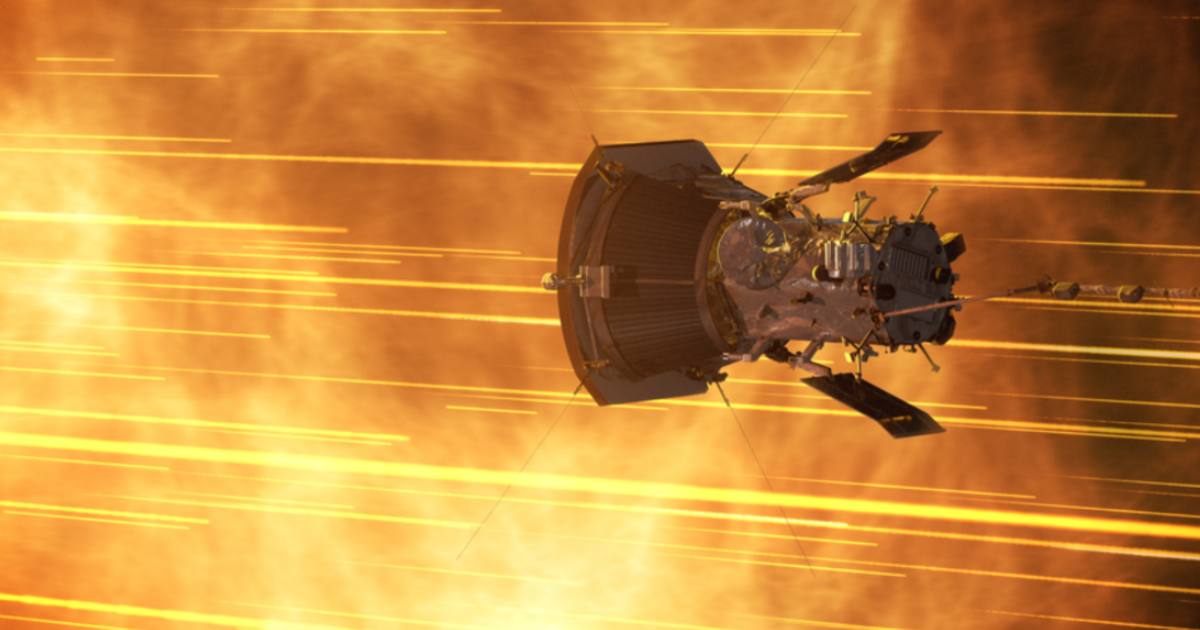
This ambitious project was born from an idea by Nick Solomey, a professor at Wichita State University, who was inspired by NASA's Parker Solar Probe. As that probe prepared to fly through the Sun's corona, Solomey realized that a spacecraft traveling that close to the Sun would encounter a neutrino flow nearly 1,000 times stronger than what we experience on Earth. In a statement, Solomey, whose life's work focuses on particle physics, stated, "All life on Earth—past, present, and future—relies on the Sun. We must work to understand this ball of energy to the best of our abilities because it’s what makes life on Earth possible." Believed to be the second most abundant fundamental particles in the universe, neutrinos can help us get better insights into the structure of the universe and the origins of mass, among other things. Earlier this year, development of a model that mapped the propagation of neutrinos from the Milky Way to Earth was also reported.
NASA's Innovative Advanced Concepts program selected SNAPPY for Phase I, II, and III awards in 2018, 2019, and 2021, respectively, thereby aiding the project in its journey from initial studies through flight demonstration. Experts at NASA's Marshall Space Flight Center designed the electronic readout cards for the SNAPPY detector, while students from Wichita State University handled the task of programming the onboard computer meant to interact with said electronics. The project has also drawn on expertise from the Jet Propulsion Laboratory and the University of Minnesota, the University of Michigan, and South Dakota State University.
Small spacecraft 🤝 big impact
— NASA Technology (@NASA_Technology) May 7, 2026
This week, a NASA-supported CubeSat, known as SNAPPY, launched on a mission to study solar particles. Led by Wichita State University, the technology tested on this spacecraft could one day help scientists better understand fusion inside the Sun…
The project represents a significant investment in the next generation of scientists and the future of deep-space exploration. So far, 36 graduate and undergraduate students have gained hands-on experience working on the project. The data they help collect will ultimately determine if it is possible to build a much larger detector that will be stationed much closer to the Sun.
More on Starlust
NASA's Parker Solar Probe makes surprising revelation about mechanism behind solar storms