Hubble spotted two cores in a nearby galaxy—now James Webb may have caught the reason in action
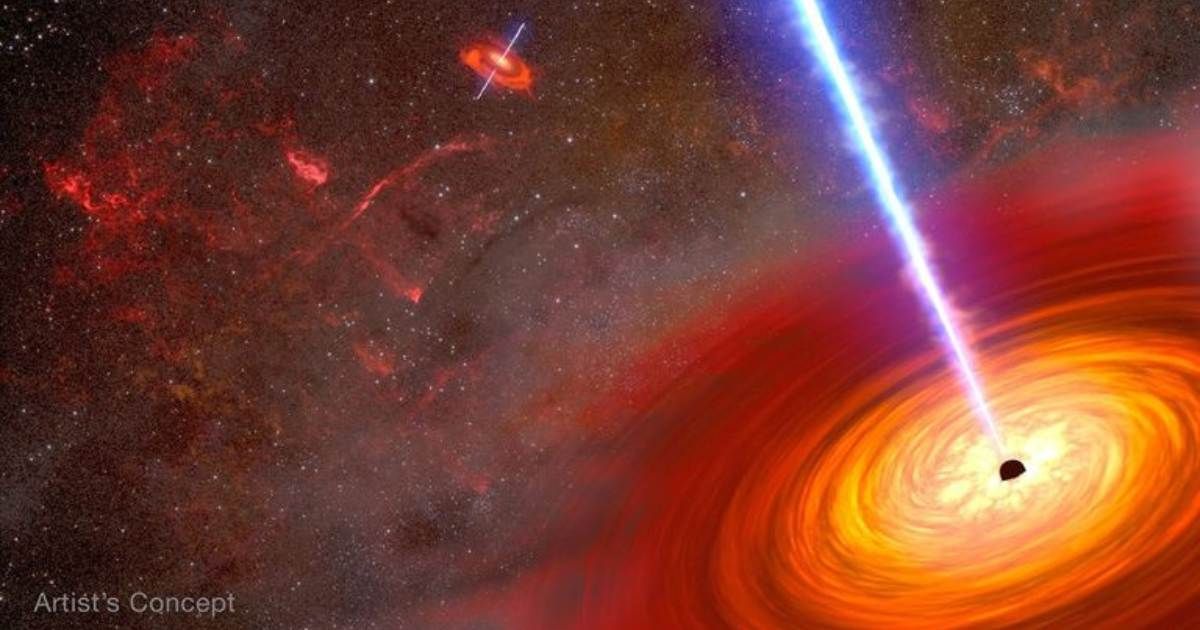
Thanks to the James Webb Space Telescope (JWST), an international team of astronomers has actually reached the point where they can explain the phenomenon of a galaxy having two nuclei. They do so by suggesting a gigantic cosmic clash that happened much more recently than expected, according to a recent study that is available on the arXiv preprint server.
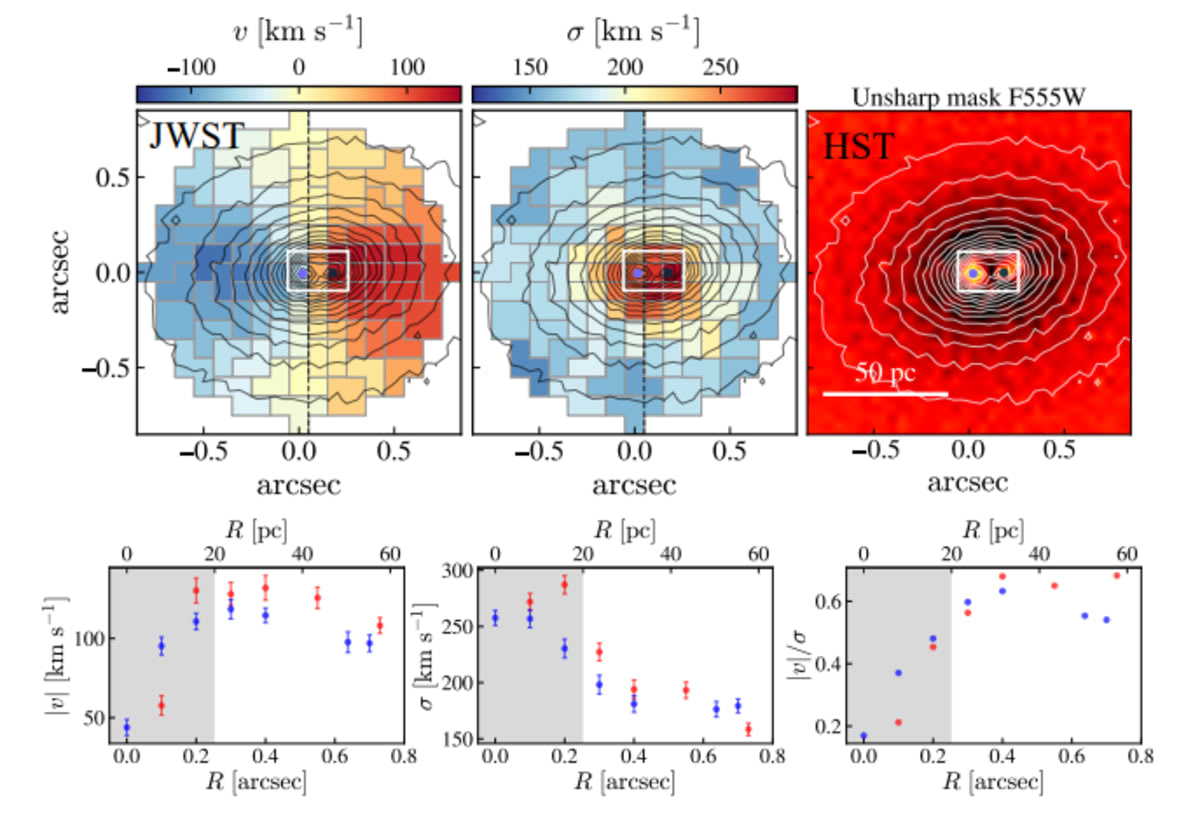
The galaxy's name is NGC 4486B, and it is basically a compact elliptical group of stars residing in the Virgo Cluster, with an effective radius of about 620 light-years. Observations of the galaxy carried out by the Hubble Space Telescope confirmed the presence of two nuclei separated by a distance of about 39 light-years—a feature also seen in the Andromeda galaxy. How this double nucleus came to be, however, was uncertain. One possible explanation attributed that to the presence of an "eccentric, apsidally aligned stellar disk" going around a supermassive black hole in the center, according to Phys.org.

However, it turned out that the black hole, which was supposed to be at the center of the galaxy, was not. Instead, it is nearly 20 light-years away from the center. Observations indicate that the double nucleus of NGC 4486B owes its origin to an END (eccentric nuclear disk) that is also found in the Andromeda galaxy. The scientists think that the black hole was displaced due to the merger of two smaller black holes, which took place very recently, and the recoil kick of which is assumed to be strong enough to transform a supermassive black hole-bound circular stellar disc into an eccentric, lopsided one.
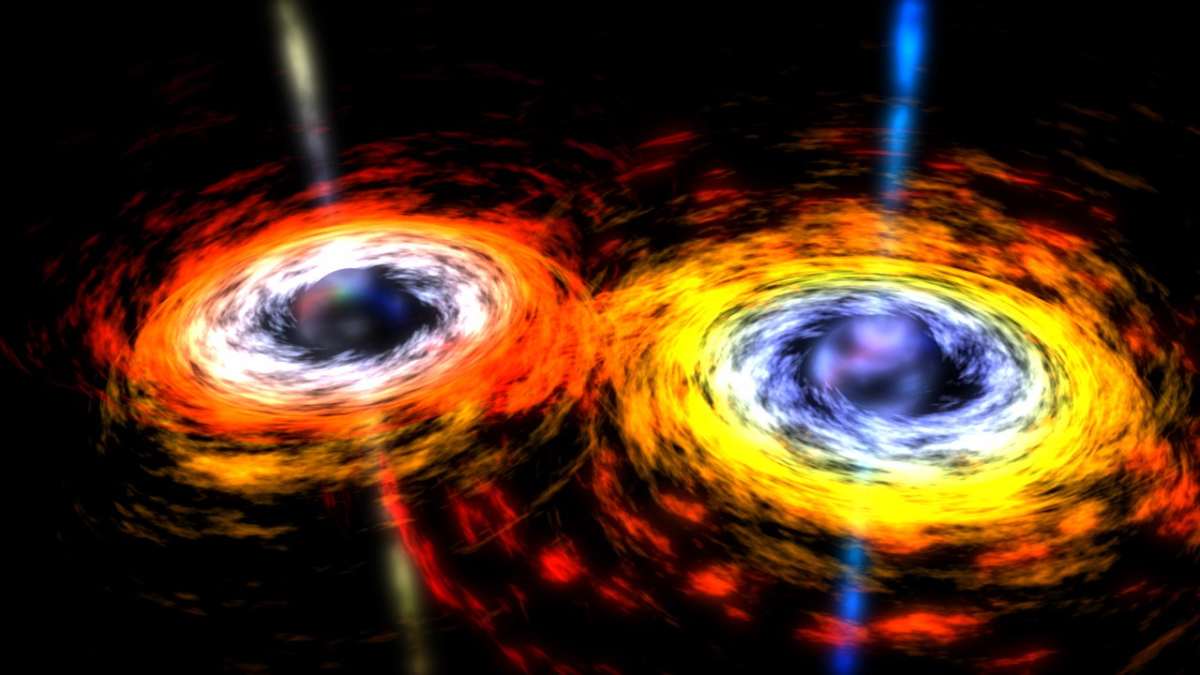
The black hole was pushed with a force that gave it a speed of around 340 km/s. Although this might seem like a permanent displacement, the study predicts that the black hole will be back to its original location in about 30 million years, which is a relatively short period in the cosmic timescale. This finding demonstrates that even galaxies that appear stable and calm can still be the sites of recent merger disturbances. The researchers emphasized the fact that the galaxy's nucleus is a close and uncommon laboratory for studying black hole merger dynamics, and hence it is a valuable target for shedding light on the universe's evolution.
The James Webb Space Telescope, which which aided the scientists in the finding, has been operational for four years. According to the ESA, the telescope was sent on a delicate mission of uncovering the past of the universe, launching from French Guiana on December 25, 2021. A million miles away, the spacecraft underwent a long journey to its orbital position and subsequently went through a complex unfolding process and strict checks on its high-tech tools. Webb is now fully operational and is still the main source of the clarity needed to unravel the double heart of NGC 4486B and other long-standing mysteries in deep space.
Happy anniversary! 🥳
— ESA Webb Telescope (@ESA_Webb) December 25, 2025
Today marks four years since Webb’s launch. It lifted off on an Ariane 5 rocket from Europe’s Spaceport in French Guiana on 25 December 2021 🚀 on its mission to unlock the secrets of the Universe. https://t.co/iVekoshwa4
The spacecraft then travelled to… pic.twitter.com/TmZiBVTC1z
More on Starlust
Hubble Space Telescope unveils striking portrait of a spiral galaxy harboring an active nucleus
The cosmos up close: 5 stunning James Webb Space Telescope images from 2025