Where is interstellar comet 3I/ATLAS now? Current position and visibility
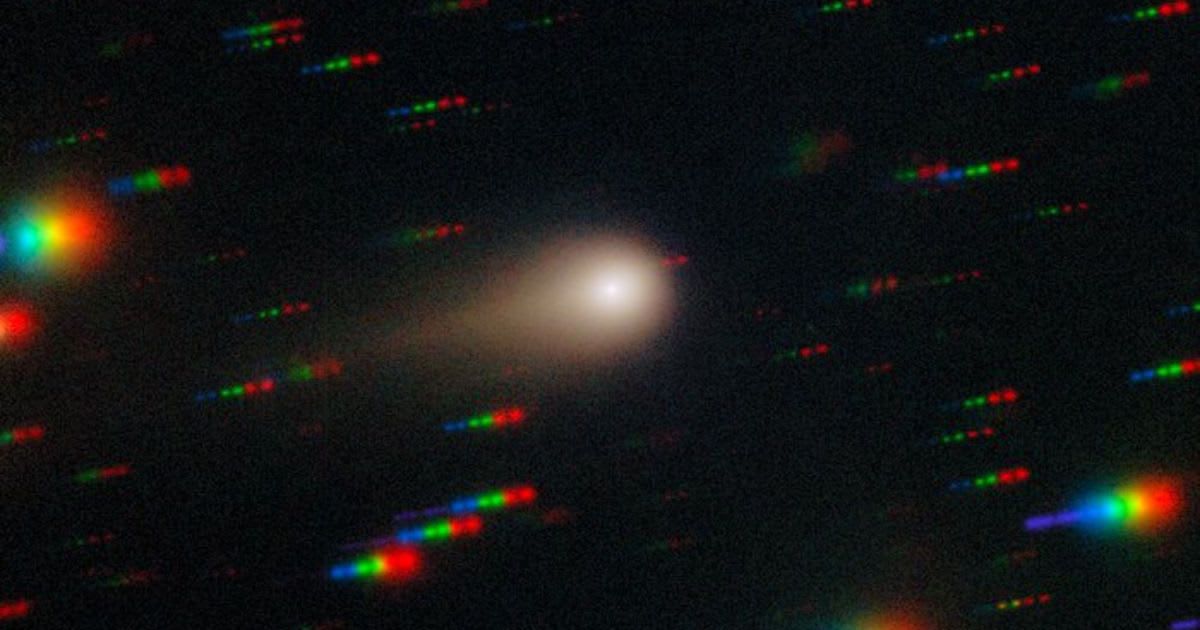
The interstellar comet has already made its way past Earth and is on its journey towards interstellar space now.
Comet 3I/ATLAS streaks across a dense star field in this image captured by the Gemini Multi-Object Spectrograph (GMOS) on Gemini South at Cerro Pachón in Chile (Cover Image Source: International Gemini Observatory/NOIRLab)

The end of December 2025 is almost here, and the astronomical community is still tracing the third known interstellar object, comet 3I/ATLAS. The comet just made its way past Earth in its closest approach on December 19, 2025. It is now on its way into interstellar space, a long journey that will bring it close to Jupiter in around 79 days, as per a study conducted by Harvard professors. The comet is currently at a magnitude of 10.9, traveling at a speed of around 111,636 miles per hour. 3I/ATLAS is currently in the constellation of Leo with a Right Ascension of 10h 12m 32s and a Declination of +09° 49’ 24”, according to The Sky Live. 
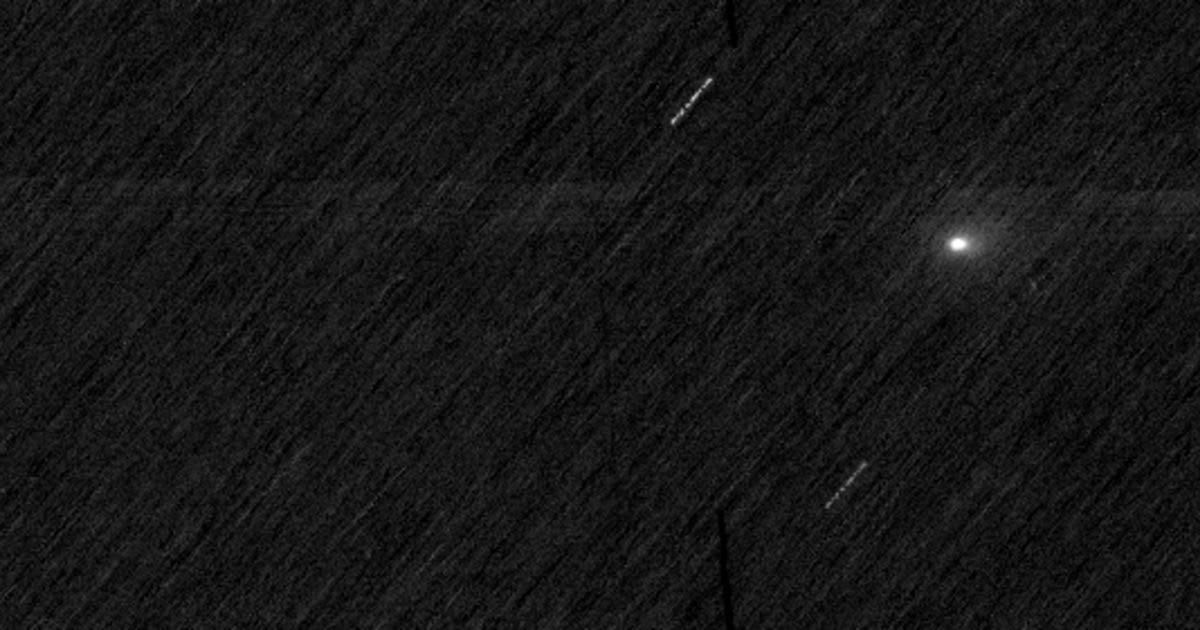
Hubble captured this image of the interstellar comet 3I/ATLAS on July 21, 2025 (Image Source: NASA/ESA | David Jewitt)
image.png
Hubble captured this image of the interstellar comet 3I/ATLAS on July 21, 2025 (Image Source: NASA/ESA | David Jewitt) 

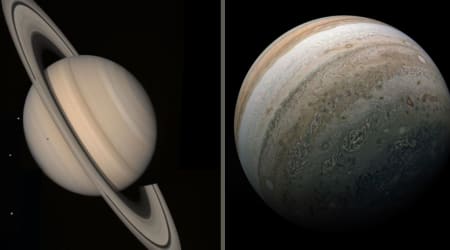
The comet has a hyperbolic trajectory, which means that it is not gravitationally bound to our Sun. During its encounter with Jupiter, however, missions like Juno will be of service in capturing some interesting shots of the interstellar object. Since its arrival in 2016, Juno has been studying the dense clouds around Jupiter, becoming the first orbiter to get so close to the gas giant.
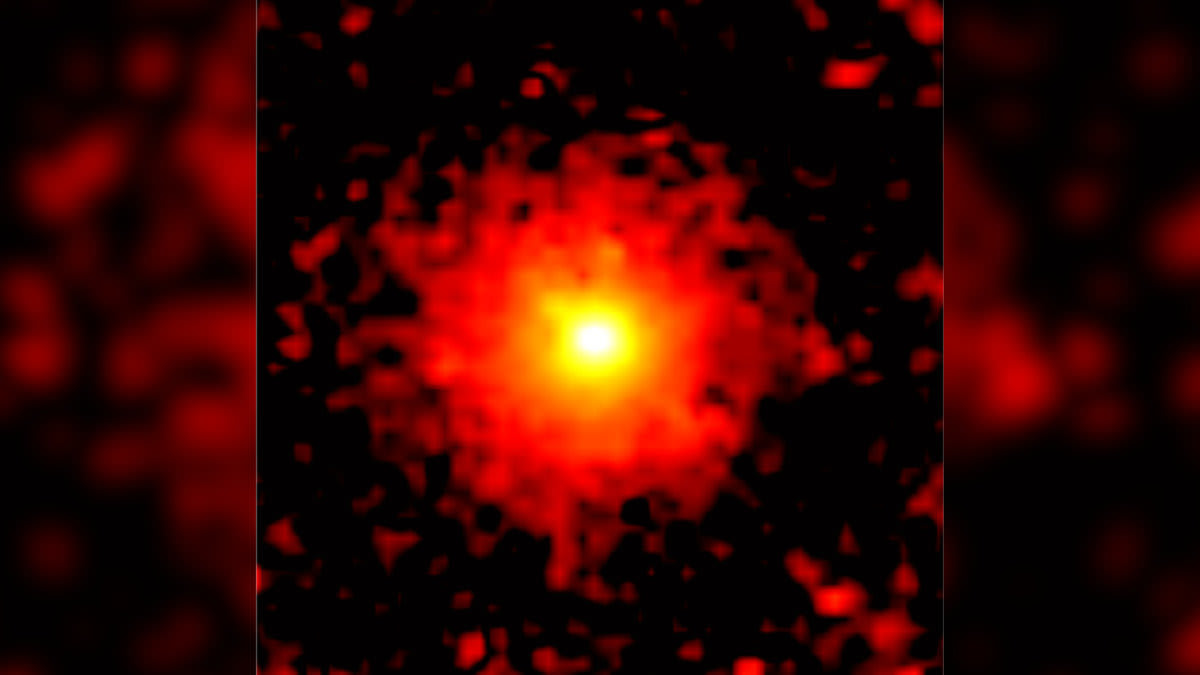
A view of comet 3I/ATLAS, as seen by NASA’s SPHEREx, which observed the interstellar object from 7–15 August 2025. (Image Source: NASA | Photo by NASA / SPHEREx)

The comet is expected to lose its visibility and brightness the further it gets, and by late spring 2026, it will become too faint even for professional ground-based telescopes to track. The current magnitude of 10 to 12 is unfavorable, and it is required to be at a magnitude of +6 or brighter to be visible to the naked eye. Observers who still want to catch a glimpse of the interstellar visitor can use a telescope of 8 inches or more to perhaps spot a faint, fuzzy patch of light, if the skies are dark, as per Space.com. Even that will be possible only if observers are able to get away from light pollution and are able to find a particularly dark patch of the sky. Of course, the weather will also have to be favorable. 
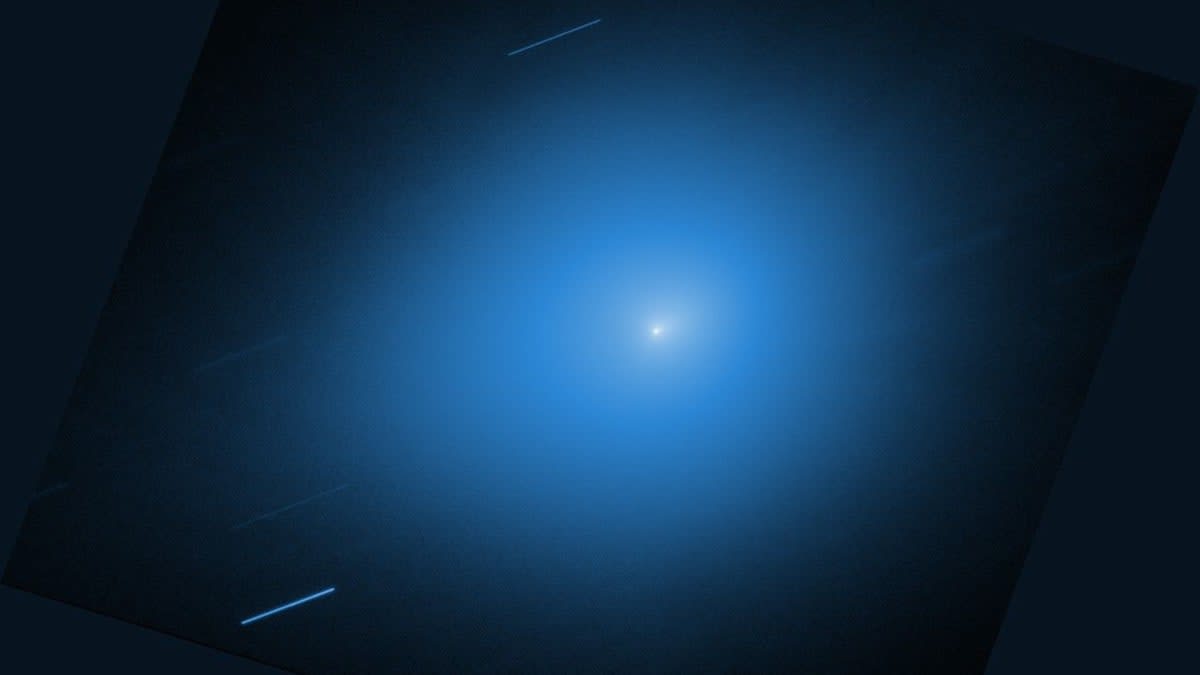
NASA’s Hubble Space Telescope reobserved interstellar comet 3I/ATLAS with its Wide Field Camera 3 instrument. (Image Source: NASA | Photo by NASA, ESA, STScI)

Several images of the interstellar comet have managed to capture it at various points in its journey, most of them showing a “blob.” However, certain images revealed the activity in the comet’s tail, which increased as it got closer to the Sun. The Sun's heat caused the sublimation of the contents of the nucleus, which, in turn, resulted in the formation of a cloud of gas an dust around it.
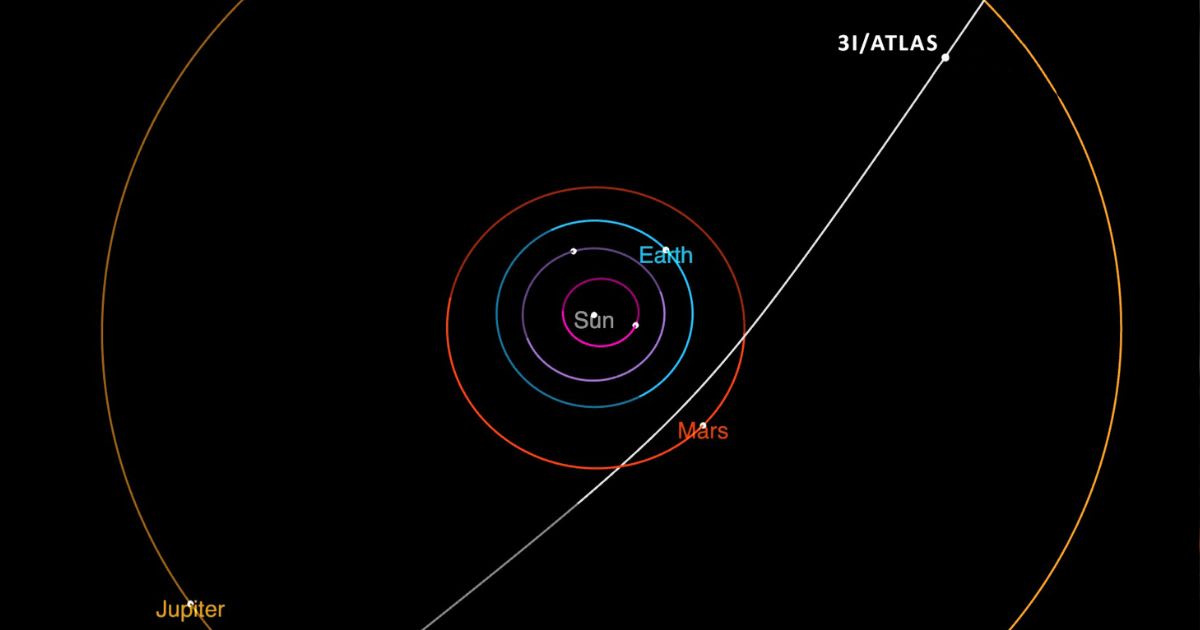
This diagram shows the trajectory of interstellar comet 3I/ATLAS as it passes through the solar system. (Representative Image Source: NASA/JPL-Caltech)

Since its discovery on July 1, 2025, comet 3I/ATLAS has occupied a significant space in the media. From discussions of it being billions of years older than our system, the nature of its contents, and what they might reveal about the world beyond our solar system, scientists are having fun with the visitor. Space agencies across the world, including NASA and the ESA, are dedicated to catching a glimpse of the comet whenever they can. As we approach the year 2026, we will soon bid goodbye to the visitor.

More on Starlust

Europa Clipper predicted to intercept charged material stream from comet 3I/ATLAS

3I/ATLAS: Where is the interstellar comet headed next after skimming past Earth?

MORE STORIES

If you've looked up at the sky this month, there's a chance you might have seen at least one of them. If not, this guide has you covered.
12 hours ago
Northern U.S. states like Washington, Idaho, Montana, North Dakota, Minnesota, Wisconsin, Michigan, and Maine could get to see the aurora tonight.
15 hours ago
The Moon will pass close to Antares, located roughly 550 light-years from Earth, on October 14, 2026, with a lunar occultation visible from select regions.
18 hours ago
Jupiter and Mars are drawing closer to each other as October progresses, with a close meeting scheduled for November 16.
1 day ago
The NOAA has issued a warning for moderate geomagnetic storms on October 11 that could bring auroras to some northern and upper midwest states in the U.S.
2 days ago
This will be the second moderate geomagnetic storm in the past seven days, with only minor auroras seen in the months before.
6 days ago
Mars will cross the Beehive Cluster, creating a striking sight for skywatchers this month.
7 days ago
The Orionids may be tougher to spot than the Draconids, as moonlight may interfere with the visibility of the former.
7 days ago
The Hunter Moon will light up the night sky on October 26, peaking at 12:11 a.m. EDT.
7 days ago
After the stunning Saturn show, a crescent Moon will occult Jupiter in the night sky.
Oct 4, 2026