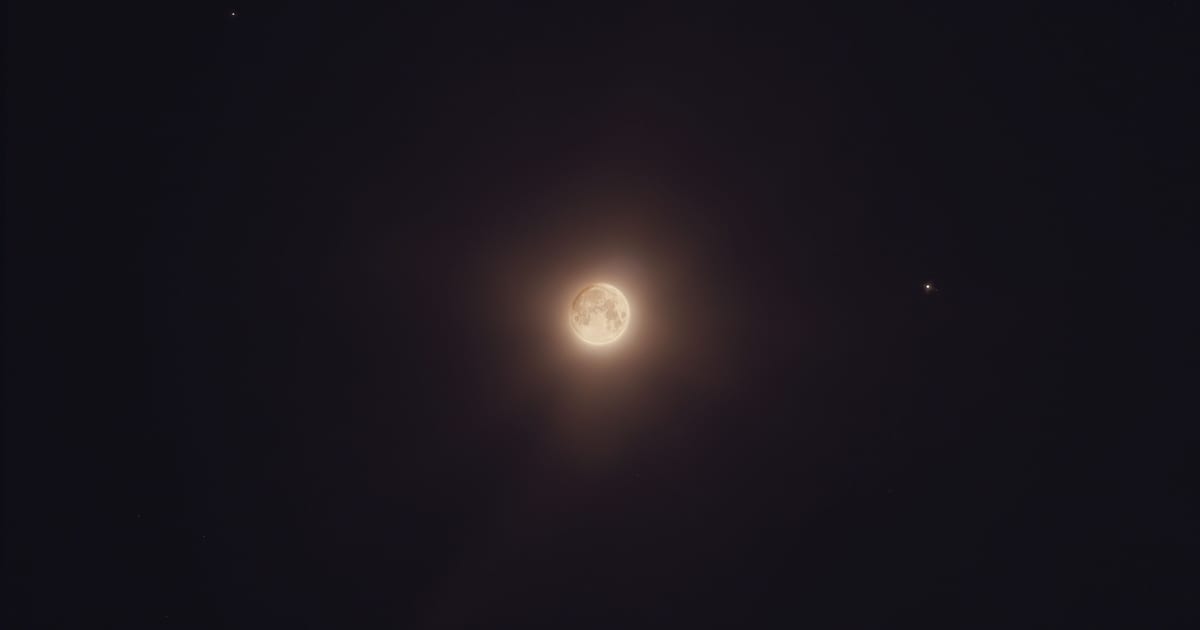
3I/ATLAS: Where is the interstellar comet headed next after skimming past Earth?

Comet 3I/ATLAS, after its closest encounter with Earth on December 19, is now moving towards Jupiter, the largest planet in our solar system, for a dramatic meeting, per NASA. While Friday did, in fact, mark the comet's closest approach to our planet, 3I/ATLAS was still pretty far—about 167 million miles, which is almost twice the distance between Earth and the Sun. The interstellar visitor's closest approach to Jupiter, however, will be a different story.

According to NASA data, 3I/ATLAS is predicted to come so near Jupiter on March 15, 2026, that it will only be 33 million miles (54 million kilometers) away. This kind of proximity implies that spacecraft en route to the gas giant or already stationed there (like Juno) may be able to capture images of the interstellar visitor as it flies by, per Live Science.
The comet continues to be a very difficult observation for anyone wishing to see it from their own backyard. At the moment, 3I/ATLAS has a magnitude of 11.6 (COBS), which indicates that it is too dim to be noticed by the unaided eye or average binoculars. With the comet's distance from our planet increasing with each passing second, light from it is currently taking about 15 minutes to reach us, as mentioned in the data provided on Sky Live.
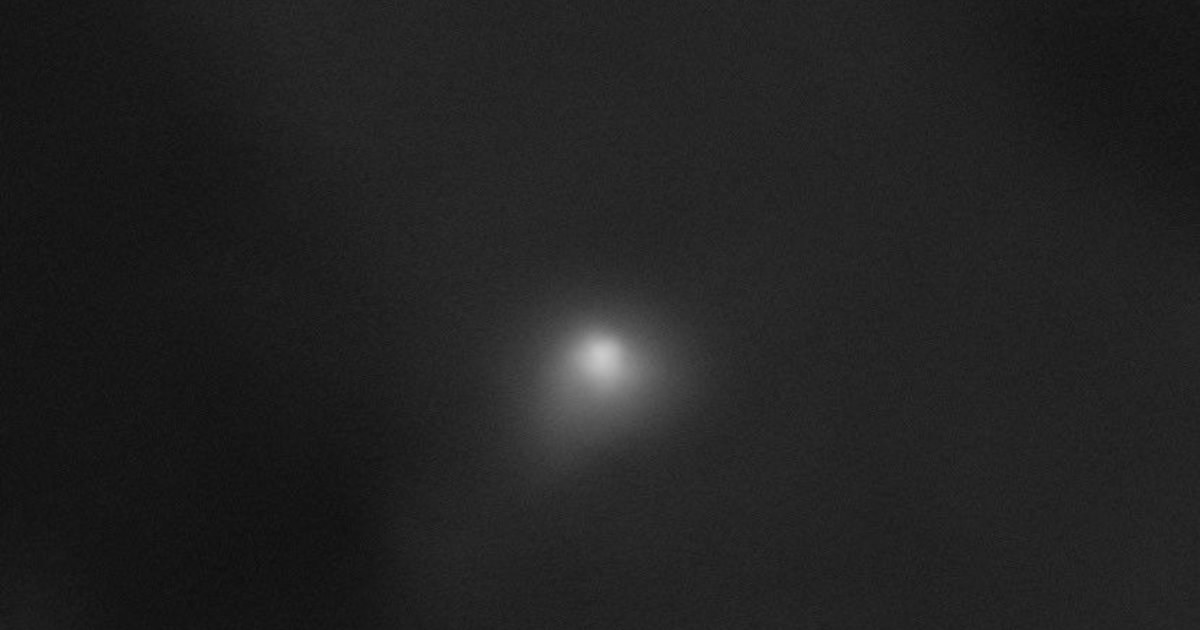
In case you don't have a telescope of professional quality, you can still keep an eye on the comet through digital means. The "Eyes on the Solar System" tool developed by NASA is an interactive app that provides a 3D view of the comet's orbit. It is possible for the users to zoom in on the comet and monitor its position with respect to those of planets and various space missions. All you need to do is click or tap on the magnifying glass icon and type in "3I/ATLAS."
Moreover, the celestial enthusiasts can download and operate the Skyscanner or Sky Guide astronomy apps on their smartphones to find out where the comet is shining in the night sky. The apps utilize augmented reality (AR) to superimpose the star maps on your mobile camera view, thus enabling you to easily point your gadget at the Leo constellation and find out where 3I/ATLAS is currently "hiding" in the stars, as mentioned by Space.com.

The comet has become a subject of fascination for astronomers, who are now letting nothing pass by them during its trip through the inner solar system. On July 1, the NASA-funded ATLAS survey telescope stationed in Chile was the first one to confirm the object's existence. Nevertheless, after the initial observation, specialists rewound through the old records and uncovered proof that the comet had actually been recorded in data already by mid-June. After making its closest approach to Jupiter, 3I/ATLAS will fly by Saturn in July 2026, Uranus in April 2027, and Neptune in March 2028 before leaving the solar system for good.
More on Starlust
3I/ATLAS Live Tracking — Latest Coordinates, Magnitude and More
Astrophotographer livestreaming 3I/ATLAS at closest approach says he doesn't 'believe it is a comet'