Astronomer says 3I/ATLAS 'is a comet for sure' after revealing real-time images of the interstellar object
There has been speculation suggesting that 3I/ATLAS may be alien technology.
Interstellar comet 3I/ATLAS being tracked live by astrophysicist Gianluca Masi during a YouTube broadcast on November 19, 2025. (Image Source: YouTube | Photo by The Virtual Telescope Project)

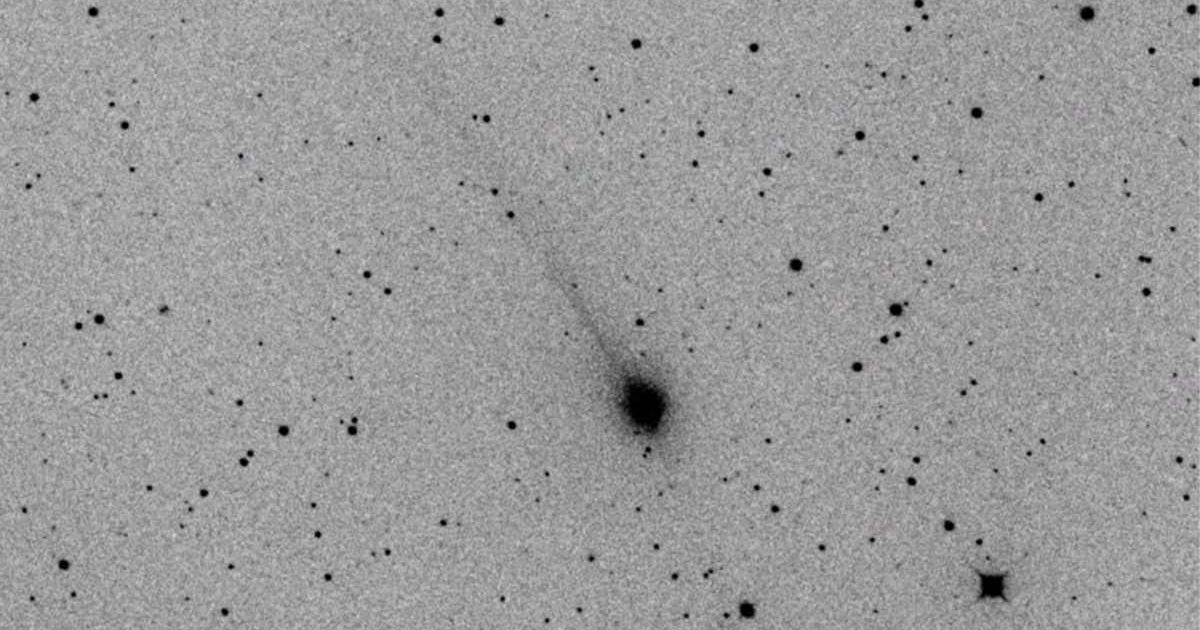
The Virtual Telescope Project held an online observation of the interstellar comet 3I/ATLAS on November 19, 2025. Renowned astrophysicist Gianluca Masi hosted the YouTube broadcast where he shared real-time visuals of the interstellar comet. Talking about the comet, Masi said that despite various speculations, the object was natural and “a comet for sure.” He emphasized the cometary nature of the object and dismissed any baseless theory.


“Maybe you have heard a lot of things about this object, but trust me, this is a natural object,” Masi stated. “This is a comet for sure. A very intriguing one, but still a comet,” he added. As he scrolled through the various images, he exclaimed his surprise at the array of theories on the comet. “I still fail (in) understanding why any other kind of idea has spread so much despite the clear nature, the cometary nature of this object,” the astrophysicist stated. This could be hinting at the speculations about the comet being an alien mothership by Harvard astronomer Avi Loeb.

Loeb compiled a list of anomalies (which he has expanded to twelve) in his blog on Medium that suggested that the comet could be alien technology. However, a big section of the scientific community has dismissed his claims. Among them was Penn State astronomer Jason Wright, who, on his AstroWright blog, claimed that 3I/ATLAS is a comet, albeit an unusual one. And from what he said on a recent episode of the Joe Rogan Experience, SpaceX founder Elon Musk also doesn't seem to be convinced by Loeb's claims. "If there was any evidence of aliens, Joe, you have my word, I will come on your show, and I will reveal it on the show," he told Rogan.

A deep image of interstellar Comet 3I/ATLAS captured by the Gemini Multi-Object Spectrograph (GMOS) (Cover Image Source: International Gemini Observatory/NOIRLab)
A deep image of interstellar Comet 3I/ATLAS captured by the Gemini Multi-Object Spectrograph (GMOS) (Image Source: International Gemini Observatory/NOIRLab)

Masi presented the inverted image of the comet so that the tail was visible to the viewers. He brought attention to the size of the object, and how the best estimates put it around "a few hundred meters to a few kilometers." 

This diagram shows the trajectory of interstellar comet 3I/ATLAS as it passes through the solar system. It will make its closest approach to the Sun in October (Image Source: NASA | JPL-Caltech)
This diagram shows the trajectory of interstellar comet 3I/ATLAS as it passes through the solar system. (Image Source: NASA | JPL-Caltech)

Masi also mentioned how it was moving at an incredible speed despite being far away from the Sun (it got closest to the Sun on October 29), before reiterating that it was pretty clear from the time it was discovered that it is a natural comet.
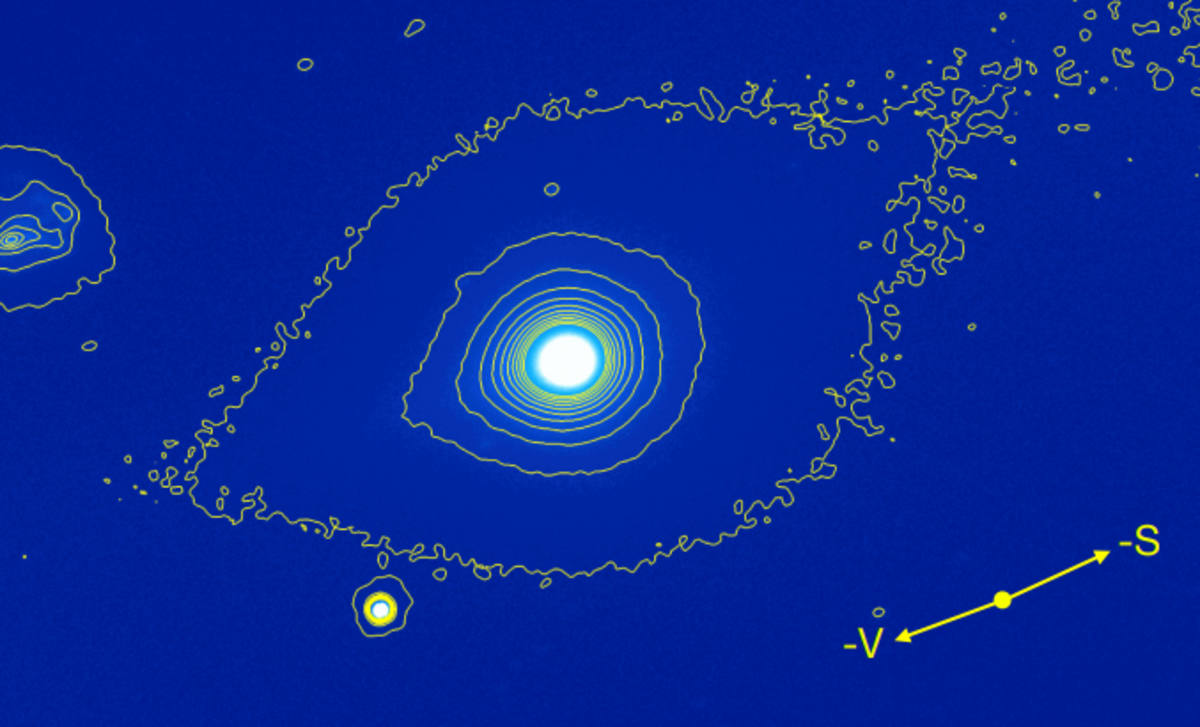
Latest images of 3I/ATLAS captured by Nordic Optical Telescope on November 11, 2025 (Image Source: David Jewitt, Jane luu | The Astronomer's Telegram)

Of course, the interstellar object is on its way to make its closest approach to Earth on December 19, which will see it come within 170 million miles of our planet. While it's still a huge distance, Masi assured that the Virtual Telescope Project will be well prepared for the event. In the other news, only a few hours are left before NASA releases previously unseen images of 3I/ATLAS in a live event scheduled to take place at 3 p.m. EST on November 19 at the agency's Goddard Space Flight Center in Greenbelt, Maryland. Of course, you'll be able to catch the event from the comfort of your home thanks to NASA+, the agency's website, its YouTube channel, and Amazon Prime. 

More on Starlust

NASA report detects first signs of non-gravitational acceleration in interstellar comet 3I/ATLAS near perihelion

Astrophysicist explains how Mars Orbiters captured closest view of interstellar comet 3I/ATLAS

MORE STORIES

This new U.S. air show and exposition is expected to eventually draw more than half a million visitors a year to Kennedy Space Center in Florida.
1 day ago
This past week, several new exoplanets were added to NASA's archives, while in spaceflight, several new builds progressed. Here's a wrap-up of space-related news that flew beneath the radar.
2 days ago
Dimorphos, which orbits Didymos, was struck by NASA's DART spacecraft in 2022, altering its orbit. Now, Hera has given us a close-up view of the binary asteroid system.
2 days ago
The ESA's ExoMars Trace Gas Orbiter (TGO) has found magmatic gas above a volcano on Mars. This could have huge implications for the search of life on the planet.
2 days ago
The study asserts that it is very unlikely that comets brought ingredients of life to Earth because most of them would not have survived impacts with our planet.
4 days ago
37 dwarf galaxies lying within 22 million light-years of Earth have between just 4% and 25% of the oxygen that their stars are known to have produced. Scientists are not sure where the rest went.
4 days ago
A new study claims that the VVV CL001 cluster is around 13.4 billion years old, which could make it the oldest star cluster in the Milky Way.
4 days ago
The Universe didn't see light travel freely until 380,000 years after the Big Bang. Then it was plunged into a long period of darkness again. Oliver Zier from the Center for Astrophysics | Harvard & Smithsonian explains what the cosmic dark ages might have felt like, and more in a conversation with Starlust.
5 days ago
This rose-colored meteorite named Teghaza 001 is said to be more than 4 billion years old and holds invaluable clues about the young red planet.
7 days ago
Get insights into the development of a new space station, rising amounts of space debris, and more in this week's space recap.
Oct 30, 2026