How far away is interstellar comet 3I/ATLAS from Earth on December 17? Latest coordinates

Now passing through the constellation Leo, the interstellar object sits at a distance so immense that the light from it takes about 15 minutes to reach us.
A stock image of a comet passing in front of planet Earth (Representative Cover Image Source: Getty | Johan63)

Interstellar comet 3I/ATLAS is making its last approach toward Earth this week, with experts tracking its position as it passes through the inner solar system. As of December 17, 2025, the comet is at about 1.8 astronomical units (AU), or about 167,286,110 miles, from Earth, with a magnitude of 12.5, according to the data shared on the Solar System Dynamics

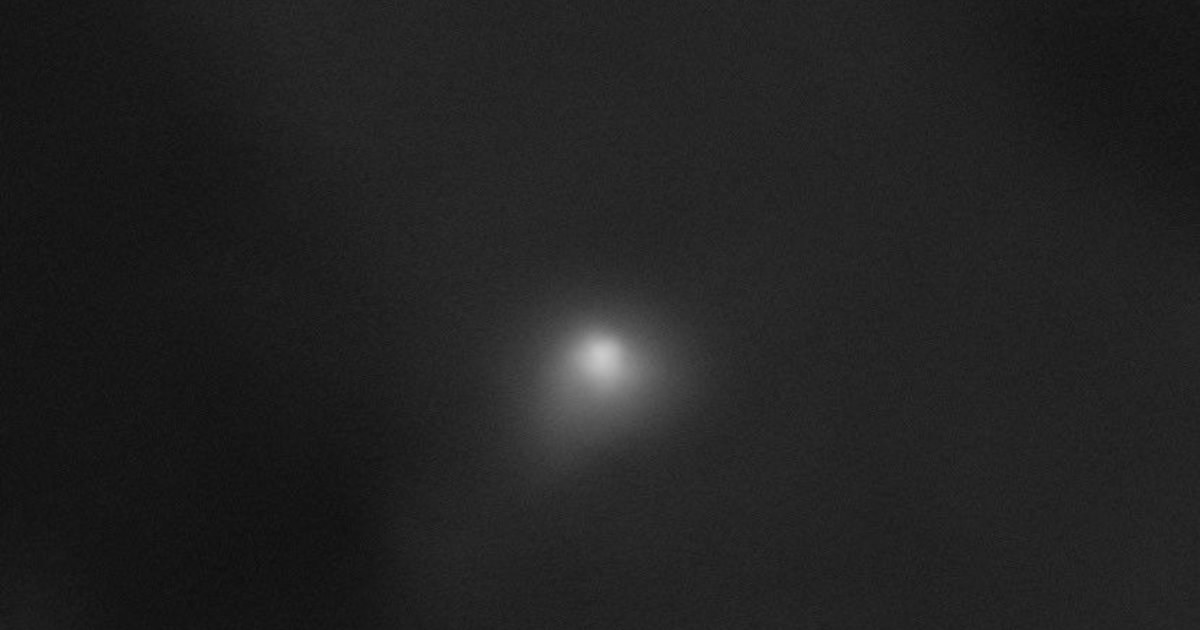
The High Resolution Imaging Science Experiment (HiRISE) camera aboard NASA’s Mars Reconnaissance Orbiter captured this image of interstellar comet 3I/ATLAS on Oct. 2, 2025. At the time it was imaged, the comet was about 0.2 astronomical units (19 million miles, or 30 million kilometers) from the spacecraft. (Image Credit: NASA/JPL-Caltech/University of Arizona)
The High Resolution Imaging Science Experiment (HiRISE) camera aboard NASA’s Mars Reconnaissance Orbiter captured this image of interstellar comet 3I/ATLAS on Oct. 2, 2025. (Image Source: NASA/JPL-Caltech/University of Arizona)

Presently, it is in the constellation Leo at Right Ascension 10h 55m 31s and Declination +06° 16’ 24”. Due to this enormous distance, reflected light from the comet takes almost 15 minutes to reach us. As per Sky Live, this celestial object, scheduled to make its closest approach to Earth on December 19, will grace our sky at a distance of about 167,171,912 miles.
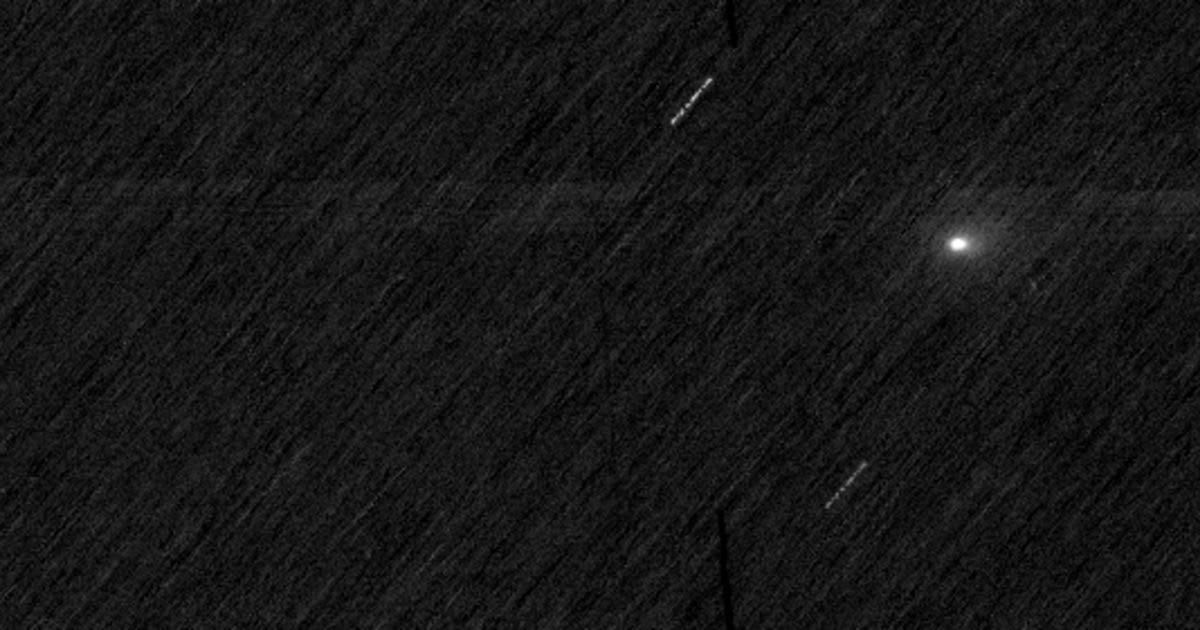
Hubble captured this image of the interstellar comet 3I/ATLAS on July 21, 2025 (Image Source: NASA/ESA | David Jewitt)
image.png
Hubble captured this image of the interstellar comet 3I/ATLAS on July 21, 2025 (Image Source: NASA/ESA | David Jewitt) image.png

For astronomers who follow the object, the comet will be at a Right Ascension of 10h 53m 15s and a Declination of +06° 28’ 00” on Thursday, December 18. At this time, the object will have a magnitude of 15.16 as it journeys through the constellation Leo. By Friday, December 19, 3I/ATLAS will make its closest approach to Earth. Its coordinates at that time will be Right Ascension 10h 48m 38s and Declination +06° 51’ 39”. Although it will be at the closest possible distance to Earth, its brightness is predicted to be 15.19, which means it will be a challenging target for anything but powerful telescopes. 

A man watching a shooting star, the Milky Way, and the moonset (Representative Image Source: Getty | Carlos Fernandez)

Because the comet is so faint, it will only be able to be seen via a telescope with at least 30 centimeters of aperture, NASA said. For the best viewing results, stargazers should focus on the east-to-northeast sky during the pre-dawn hours. The comet can be found positioned just below Regulus, the brightest star in the constellation Leo, which serves as a helpful celestial landmark for those scanning the area. 
A girl observing stars, planets, the Moon, and the night sky with an astronomical telescope (Representative Image Source: Getty | m-gucci)

3I/ATLAS stands out in a year filled with several celestial discoveries. First spotted by the ATLAS team on July 1, it is only the third interstellar object ever confirmed to enter our solar system. Researchers believe this ancient wanderer has been drifting through deep space for billions of years, making it even older than our own solar system. While 3I/ATLAS is a rare guest from beyond, several other comets have made headlines throughout 2025. C/2025 R2 (SWAN) was discovered in early September by observer Vladimir Bezugly in images provided by the SWAN instrument aboard the SOHO spacecraft. It skirted past the Sun on September 12 and made its close approach to Earth on October 20, passing within 24.2 million miles of our planet.
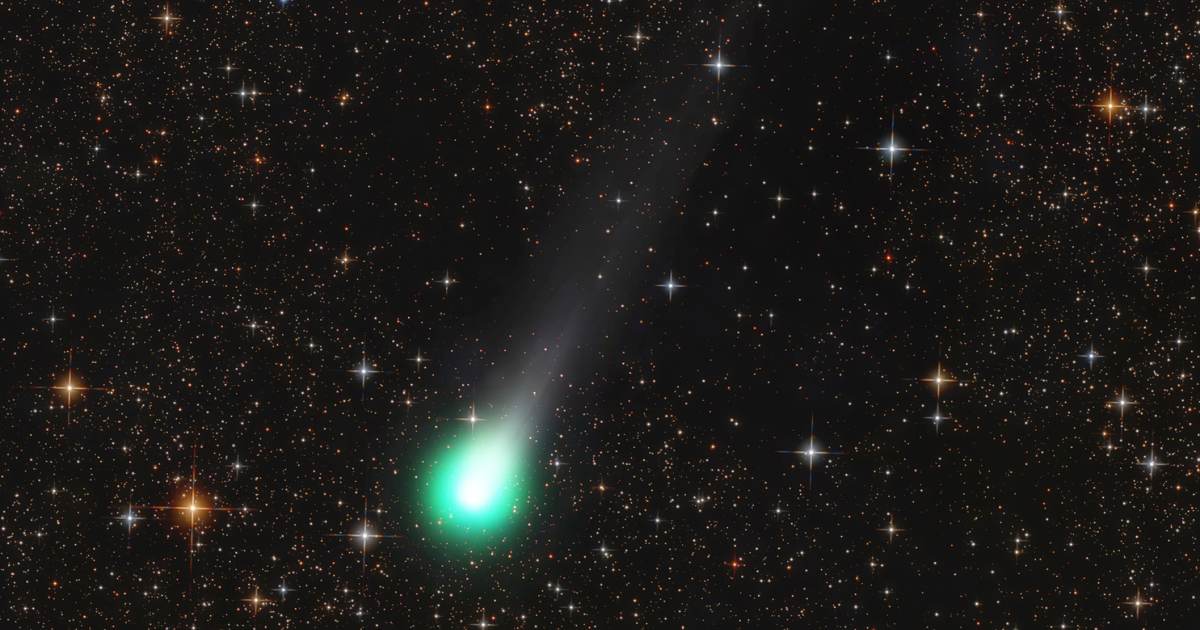
Comet C/2025 A6 (Lemmon) with a glowing green coma and visible tail navigating across millions of stars in the Solar System (Cover Image Source: Getty | 	Javier Zayas Photography)
Comet C/2025 A6 (Lemmon) with a glowing green coma and visible tail navigating across millions of stars in the Solar System (Image Source: Getty | Javier Zayas Photography)

Another object, C/2025 A6, was reportedly discovered by the Mount Lemmon Survey on January 3, 2025. It came closest to Earth on October 21, remaining about 55.4 million miles away. When the comet's orbit was looked into by scientists, it was found that the comet had last visited the inner solar system more than a millennium ago. As for 3I/ATLAS, it will never return. 

More on Starlust

Comet 3I/ATLAS displays greenish hue in new Gemini North images

Amateur astronomer captures Mercury's magnificent and bright comet-like tail. See picture

MORE STORIES

The Perseids will be active until August 24, so you can spot more meteors in the days to come.
7 hours ago
The Aurigids are one of the lesser known and shorter-lived showers that are active from August end.
14 hours ago
Two solar eclipses are coming in 2027—here's when and where you can catch them.
12 hours ago
Meir shared photos captured from the Russian segment of the ISS, which saw a partial solar eclipse.
12 hours ago
A recap of the total solar eclipse that swept the globe on August 12, in images and video.
1 day ago
One must remember to ensure any solar eclipse viewing gear conforms with safety standards.
2 days ago
Residents of the US, Europe, Canada, and northwestern Africa will see a partial eclipse, meaning only a portion of the Sun will be blocked by the Moon.
2 days ago
August brings in many events for skywatchers, and here are a few lesser-known meteor showers worth a look.
2 days ago
This year's peak arrives hours after a rare total solar eclipse. Here's where to catch it.
3 days ago
Afraid of missing the total solar eclipse of August 12? Worry not, there are many livestreams available.
3 days ago