Watch stunning transition video of planetary nebula NGC 6072 between Webb's NIRCam and MIRI images
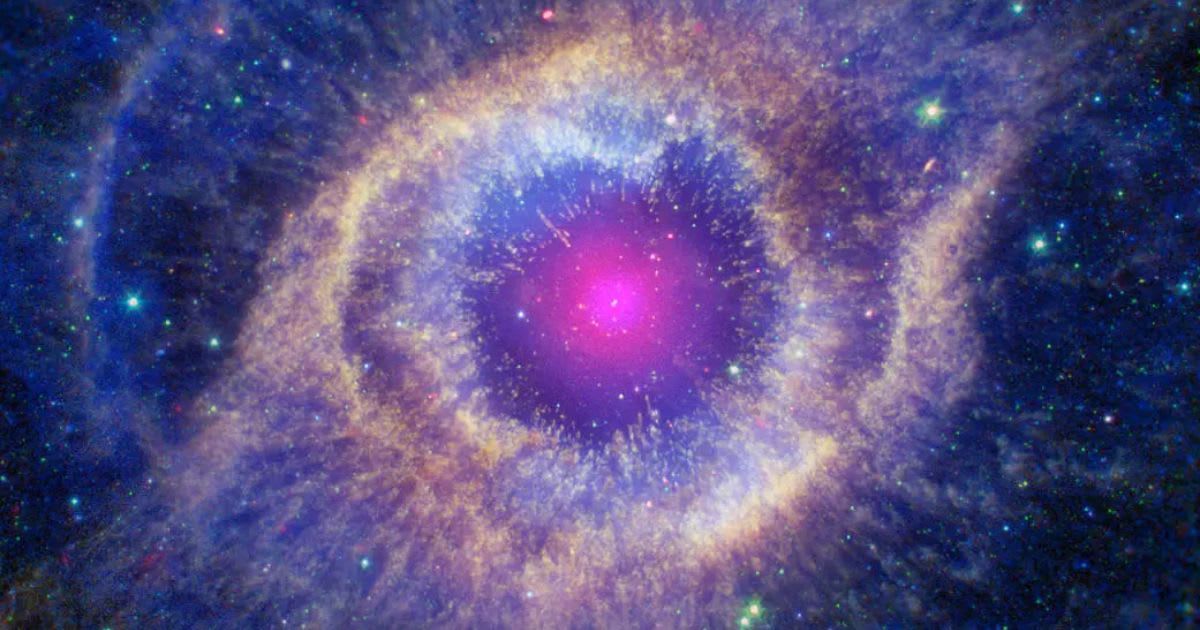
New observations from NASA's James Webb Space Telescope are providing striking insights into the complex evolution of planetary nebula NGC 6072. Far from the typical symmetrical structures previously observed, this nebula presents a strikingly chaotic and multi-polar appearance, hinting at a more intricate stellar drama unfolding at its core, as per NASA.
Dare to be different ⭐ ⭐
— NASA Webb Telescope (@NASAWebb) July 30, 2025
Planetary nebulae are typically symmetrical, but some stray from the norm! Webb’s newest look at NGC 6072 reveals an unusual scene, potentially caused by a binary star system (two stars orbiting one another).https://t.co/Ix82lUf9Cw pic.twitter.com/cjrjd5Qgr7
Since their initial discovery in the late 18th century, planetary nebulae, the expansive shells of gas shed by dying stars, have captivated astronomers with their diverse forms. While most display predictable circular, elliptical, or bipolar shapes, NGC 6072 defies convention, appearing almost like splattered cosmic paint. This unusual asymmetry suggests highly dynamic processes are at play as its central star nears the end of its life, shedding up to 80% of its mass. Astronomers are leveraging Webb's capabilities to deepen their understanding of stellar life cycles and their impact on surrounding environments.
These celestial spectacles are, by nature, fleeting events, typically lasting between 30,000 and 100,000 years from their formation to complete dissipation. In a distant future, our own Sun is expected to undergo this transformation, becoming a planetary nebula approximately five billion years from now as it exhausts its nuclear fuel.
Webb's Near-Infrared Camera (NIRCam) image of NGC 6072 reveals a distinctly multi-polar structure, characterized by several elliptical outflows. These jets, extending in various directions, are believed to compress material, potentially forming a perpendicular disk. This complex morphology strongly suggests the presence of at least two stars within the nebula's heart: a companion star interacting with an aging star already in the process of shedding its outer layers, as mentioned on NASA.
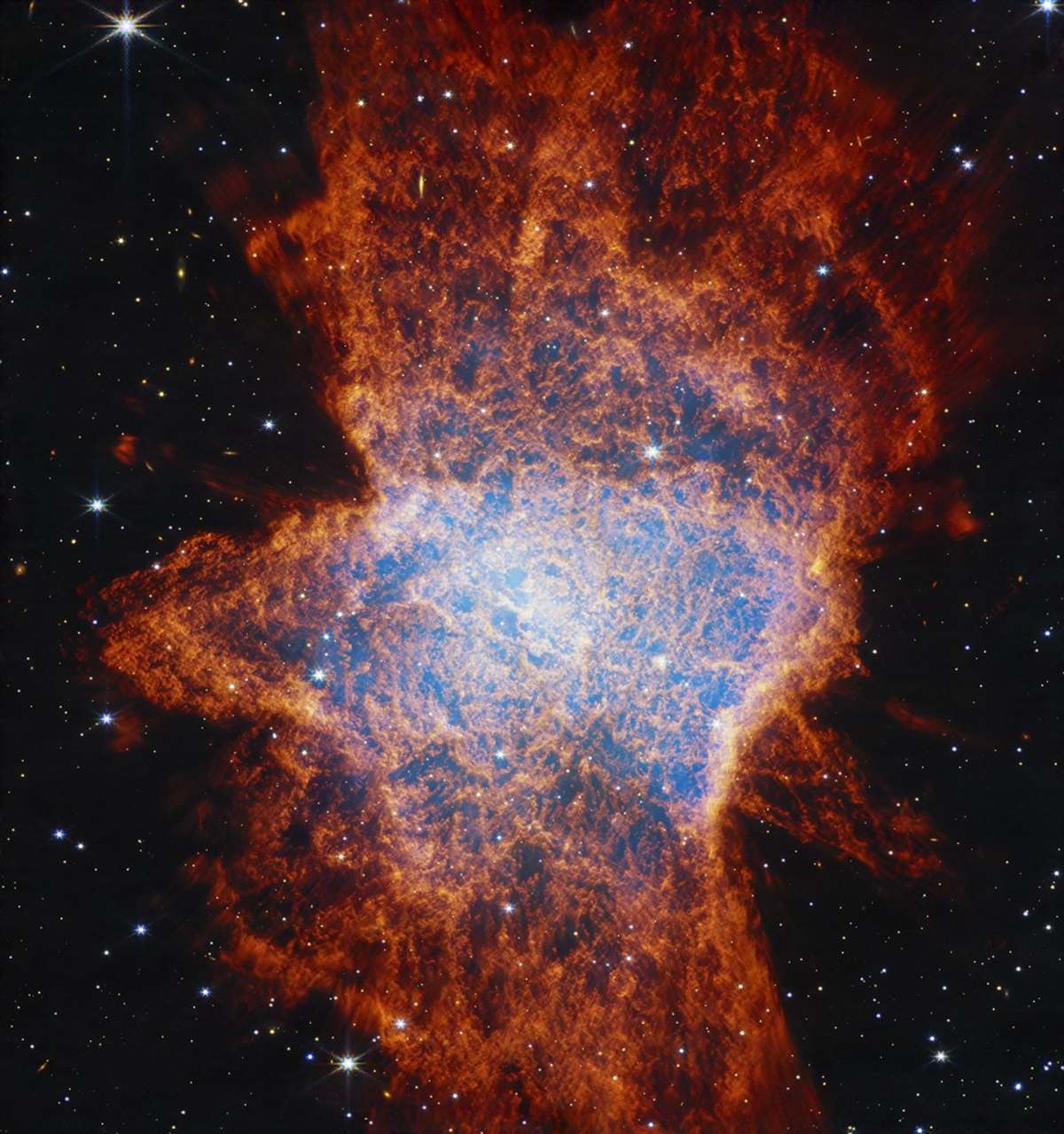
In the near-infrared, the nebula's central region glows with a hot, stellar core, appearing as a light blue hue. Dark orange material, composed of gas and dust, fills "pockets" that appear dark blue. This clumpy distribution may result from dense molecular clouds shielded from the central star's immense radiation, or it could be a temporal effect, with rapid inner winds carving through older, expelled material over millennia.
Conversely, Webb's Mid-Infrared Instrument (MIRI) highlights the nebula's dusty components, pinpointing a small, pinkish-white dot that researchers suspect is the central star. MIRI also unveils concentric rings expanding outward from the core, notably just beyond the edges of the multi-polar lobes. These rings provide further evidence for a hidden companion star, which may have carved out these bullseye patterns as it orbited the primary star during an earlier phase of mass expulsion. Alternatively, the rings could signify pulsations that uniformly expelled gas or dust over thousands of years.
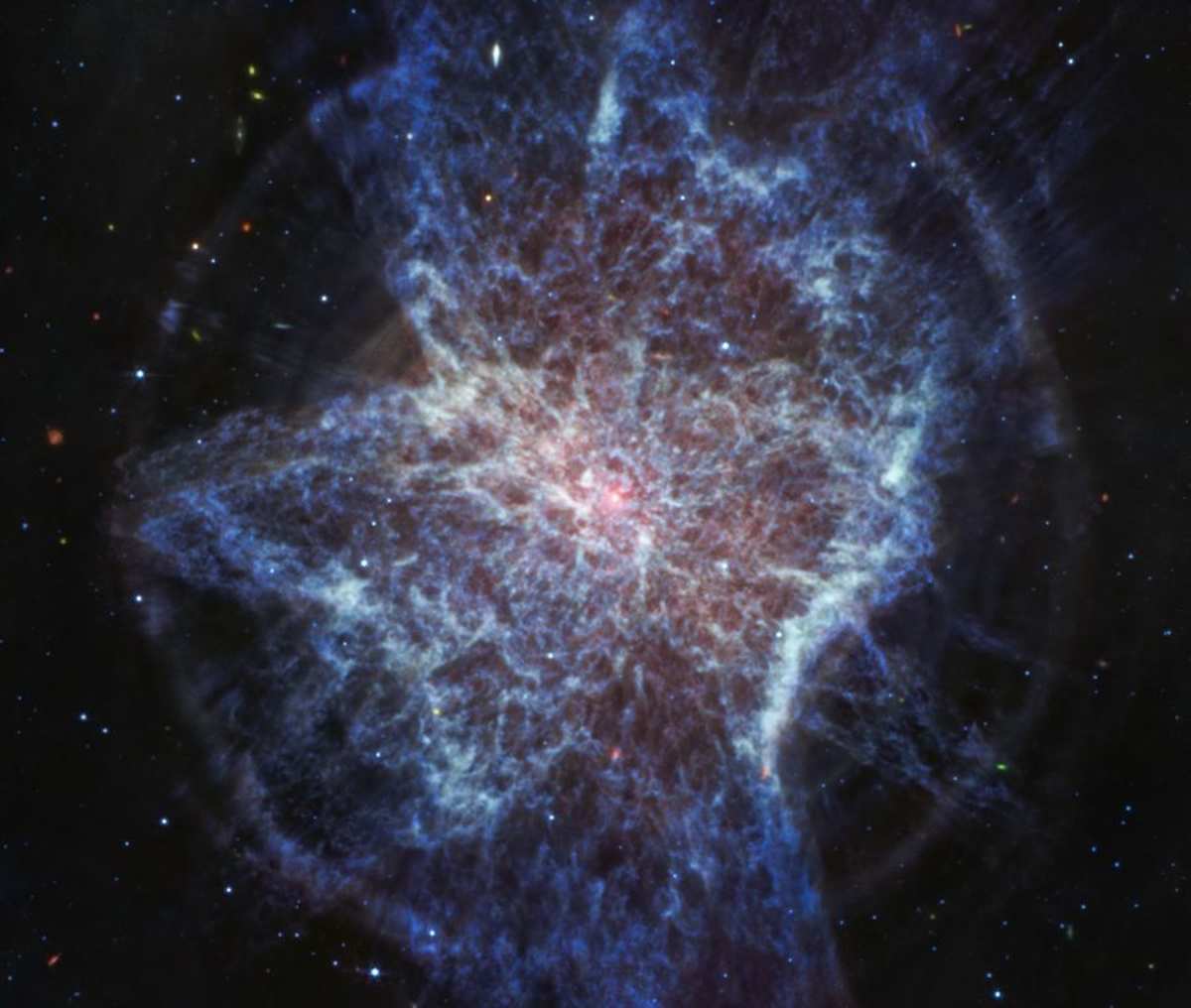
Both NIRCam and MIRI observations indicate the presence of cool molecular gas (likely molecular hydrogen) in the red and blue areas, respectively, while the central regions trace hot ionized gas. As the central star of a planetary nebula cools and fades, the nebula gradually disperses into the interstellar medium, enriching it with heavier elements crucial for the formation of new stars and planetary systems. Webb's detailed imaging of NGC 6072 is paving the way for a deeper understanding of how complex planetary nebulae contribute to this fundamental cosmic process.
For ground-based observers, identifying these faint, often star-like objects can be challenging. A common technique involves using an OIII filter, which enhances the visibility of planetary nebulae by allowing specific wavelengths of light emitted by these objects to pass through. By comparing observations with and without the filter, a planetary nebula will appear to "blink on" when the filter is in place, distinguishing it from ordinary stars.