What creates Venus' mysterious lower haze? Astronomers may finally have the answer
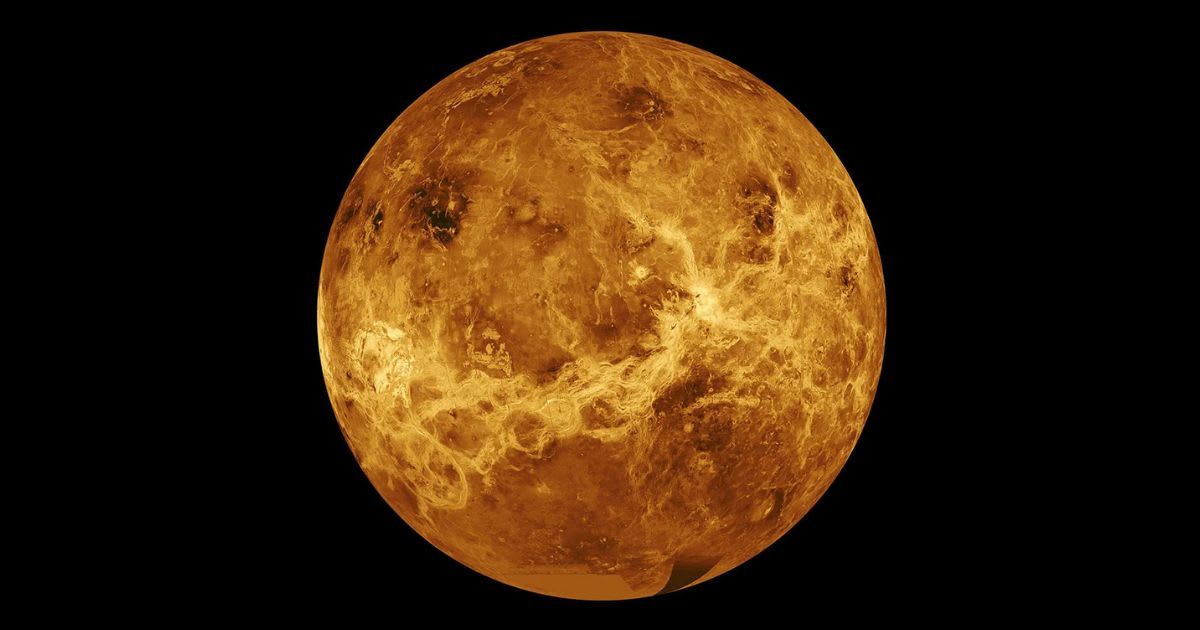
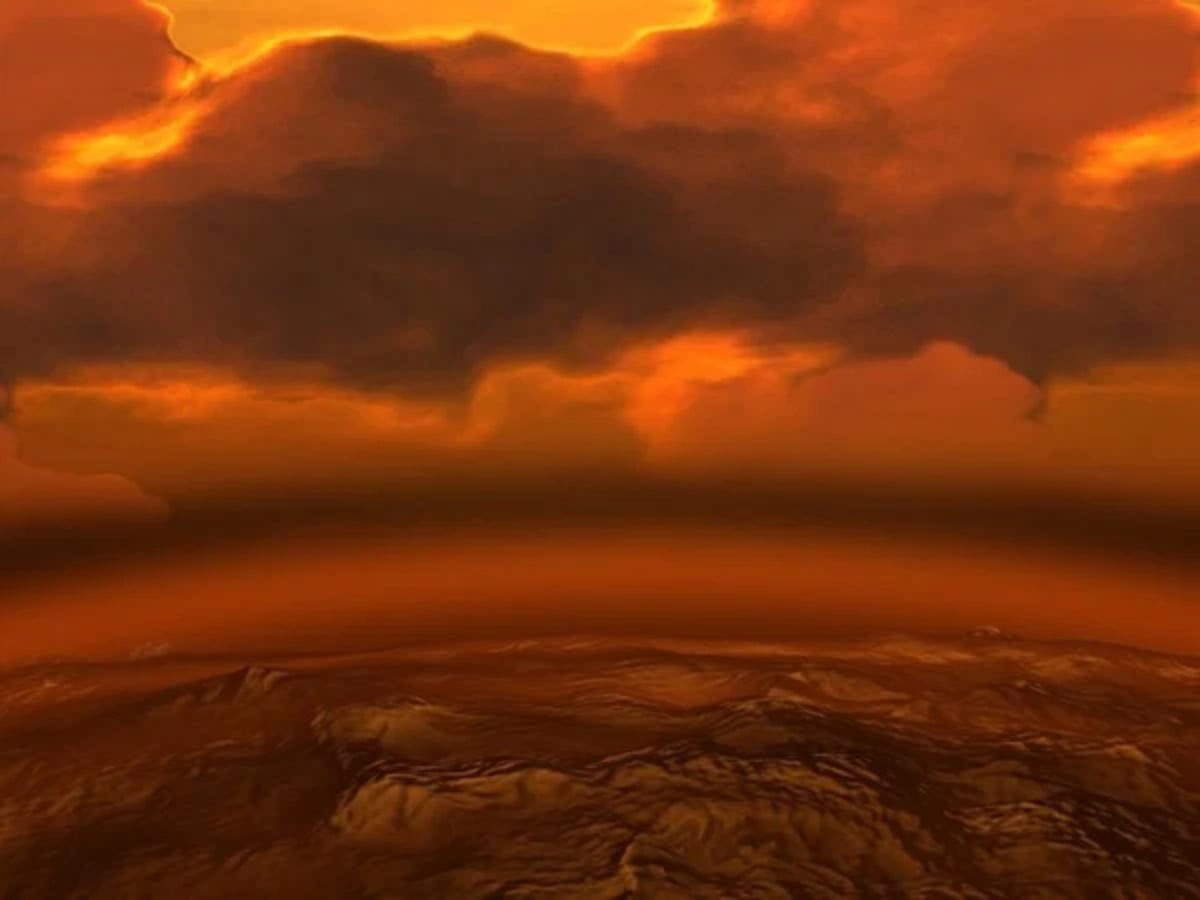
Venus, being the third brightest object after the Sun and the Moon in the sky, easily draws the attention of skywatchers. Although similar in structure and size to Earth, it has a hellish environment where temperatures soar to 467 degrees Celsius and surface atmospheric pressure reaches 93 times that of Earth at sea level. Its hostile atmosphere has long hidden a mysterious lower haze that hangs below 47 kilometers. Now, a research team led by Hiroki Karyu, Takeshi Kuroda, and Naoki Terada of Tohoku University, in collaboration with the Royal Belgian Institute for Space Aeronomy, may have finally uncovered the mystery of the haze. Using a microphysical model, the team showed that cosmic dust forms the lower haze. More specifically, the haze is made of tiny particles left behind by "shooting stars" that constantly rain down on Venus.
The Japanese team has published their findings in Nature Astronomy. "When we traced the life cycle of these particles in our simulations, everything suddenly fit together," said Karyu in a statement. "Cosmic dust, which might seem insignificant, turns out to be the missing ingredient needed to explain Venus's lower haze." In the 1970s, the spacecraft that flew by this planet first detected the haze. Since then, its origin has puzzled astronomers. The haze lies beneath the planet's main cloud layer that sits between 47 and 70 kilometers above the surface.
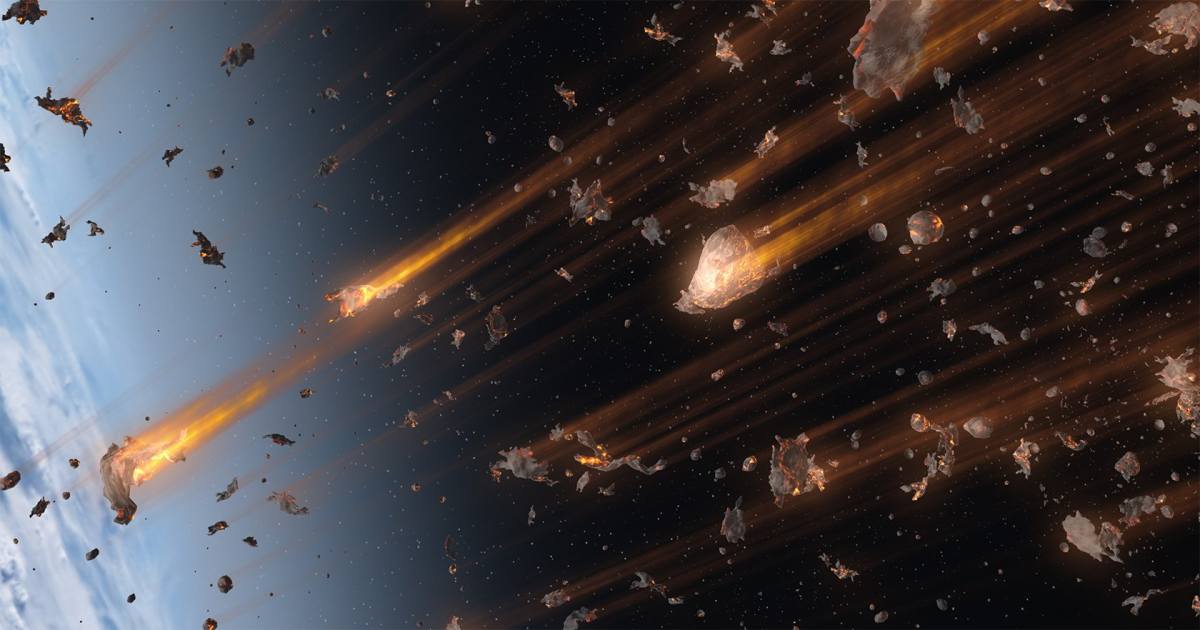
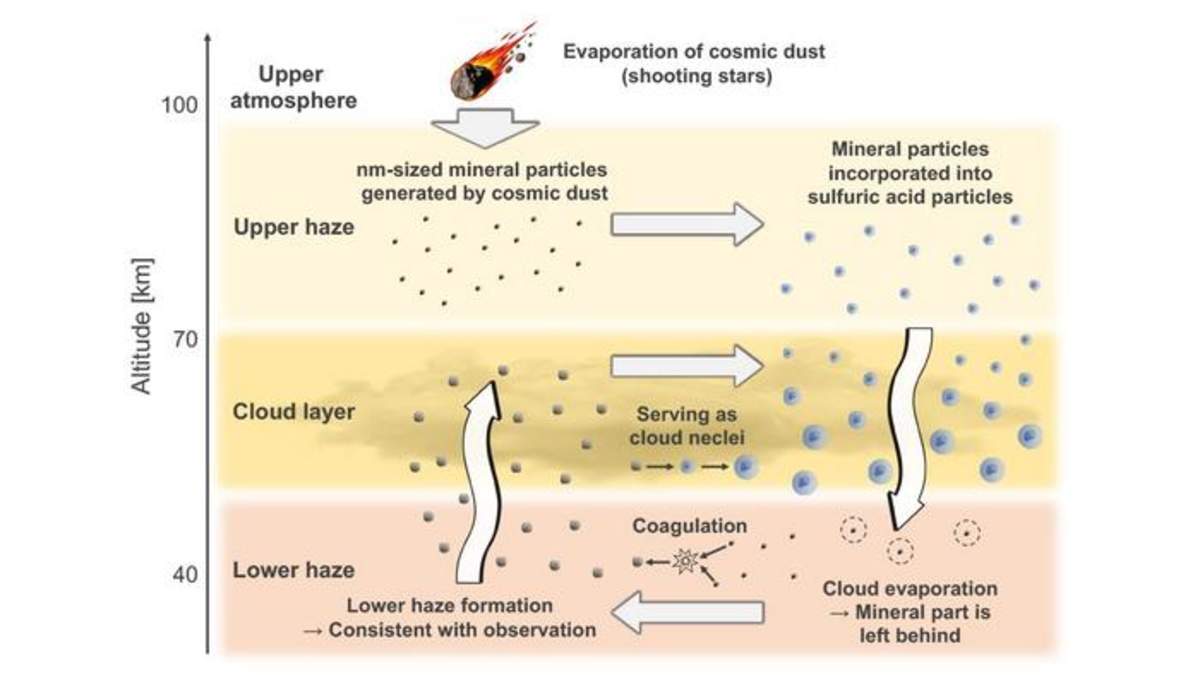
Cosmic dust that invades Venus’ atmosphere burns up high in the atmosphere, generating nanometer-sized particles. These particles accumulate within Venus's sulfuric acid clouds that lie below a thick carbon dioxide atmosphere. But these particles don’t settle down there. As they move into the hotter lower atmosphere, the sulfuric acid evaporates, leaving behind solid mineral cores. The mineral cores then collide with each other and stick together, giving rise to the haze layer observed by previous missions such as Venera and Pioneer Venus. The model's results closely matched measurements collected decades ago, supporting the team's conclusions. The researchers found that the cosmic particles don’t just sit idly, but they play a vital role in Venus’s climate. These particles act as “seeds” for cloud formation, increasing cloud formation by 20-30%. The dust also contains metallic elements such as iron, which absorbs ultraviolet light. This affects the planet’s energy balance.
"These findings show that material from space is not just a passive visitor," said Terada. "It can actively shape a planet's atmosphere and climate." The study will help understand how planetary processes work on gas giants like Jupiter and Saturn. It will also help decode the planetary atmospheres of distant exoplanets. The team believes that their predictions can be tested with future missions, including NASA's DAVINCI mission to Venus, which is likely to lift off in the late 2020s.
More on Starlust
A giant volcanic tunnel on Venus has been confirmed. It dwarfs Earth’s caves.