UAE reveals lander for its bold mission to seven asteroids; Launch expected in March 2028
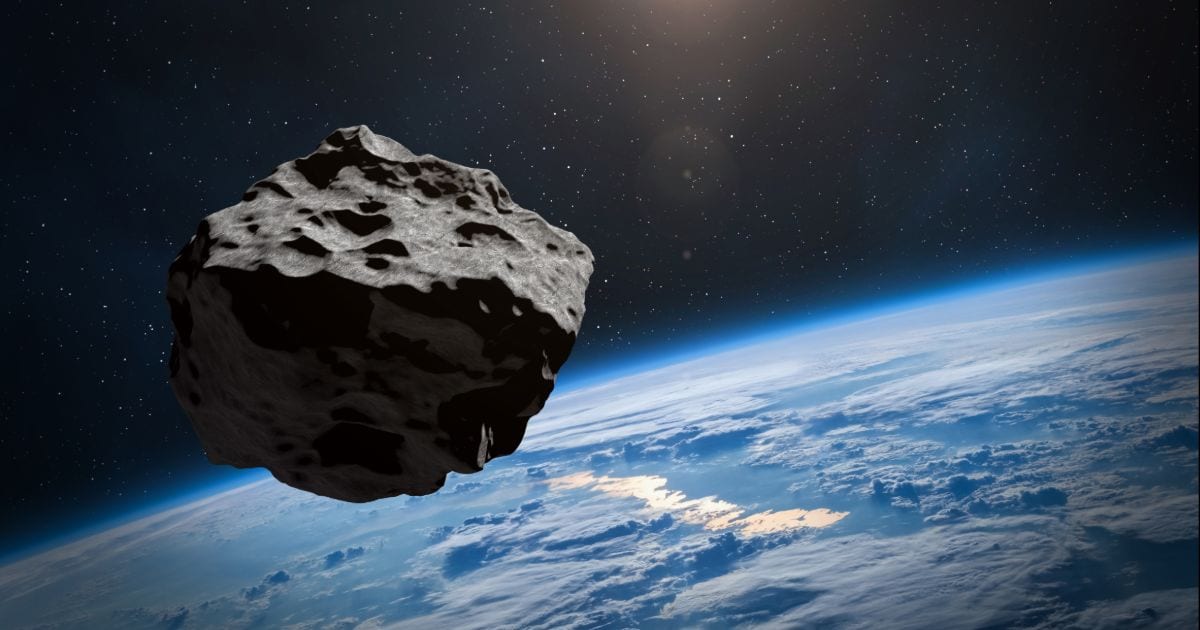
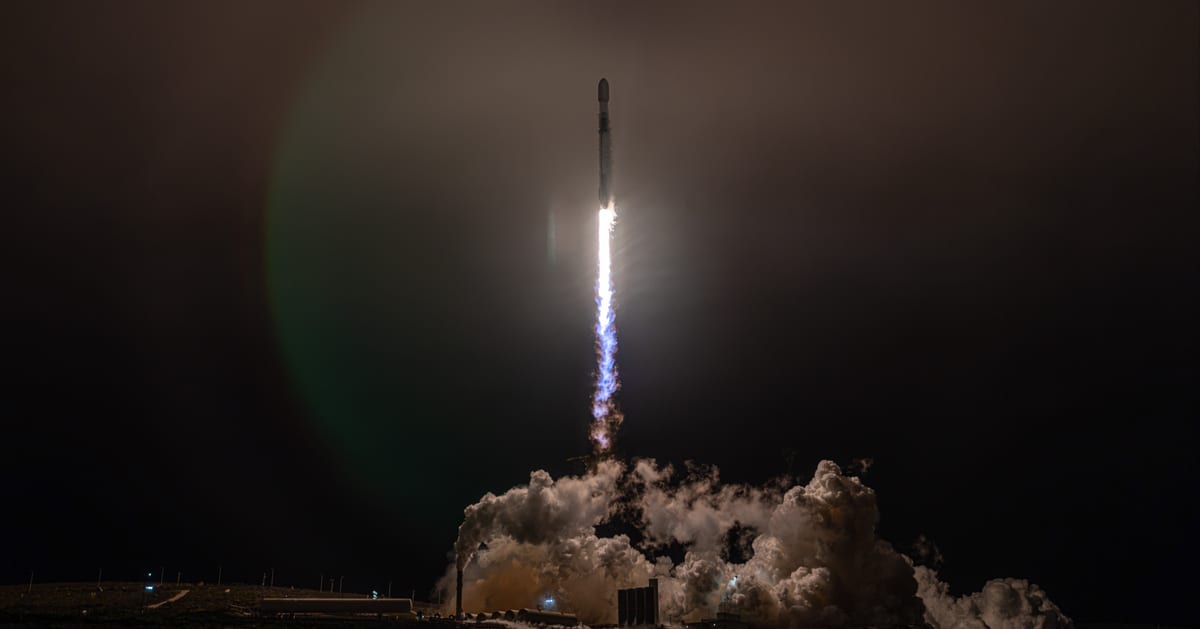
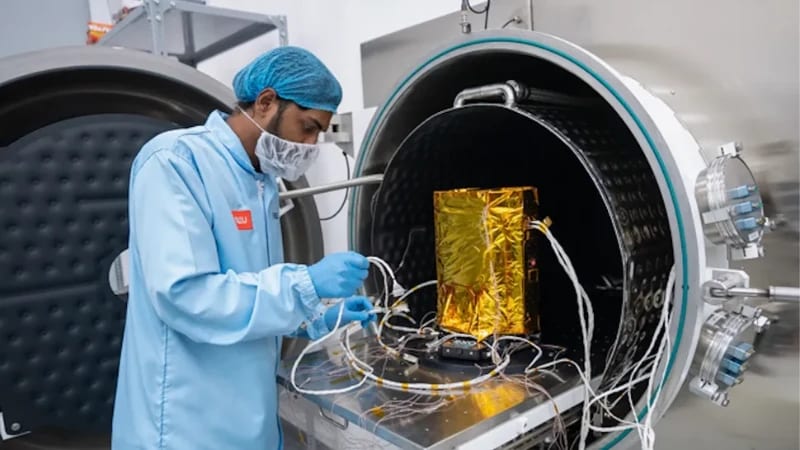
The United Arab Emirates (UAE) has recently shared updates on its lander for its ambitious 2028 asteroid mission called the Emirates Mission to the Asteroid Belt (EMA). As part of the mission, the probe is expected to hit the mysterious asteroid 269 Justitia at high speed and is not expected to survive the touchdown. At a press conference in Abu Dhabi, the officials showed a half-scale model of the craft, which will ride attached to the main spacecraft, MBR Explorer. As of now, the liftoff is scheduled from Japan in March 2028.
The UAE and US are building the future of space exploration together. From the Hope Mars Mission to the Emirates Mission to the Asteroid Belt, each chapter of the UAE's space journey has been shaped by a partnership that keeps reaching further🚀. #UAEUSA https://t.co/61GFWuh3uo
— UAE Embassy US (@UAEEmbassyUS) October 7, 2026
The trip is expected to take eight years and pass six asteroids between Mars and Jupiter before deploying its lander to touch down on a seventh asteroid, 269 Justitia. For this mission, the ship is named after Sheikh Mohammed bin Rashid al-Maktoum, who is the ruler of Dubai and the UAE’s prime minister. Faisal al-Bannai, secretary general of the Advanced Technology Research Council in Abu Dhabi, told the reporters, “It’s a proud moment for us here at the UAE.”

How will the lander reach the asteroid?
The spacecraft MBR Explorer will use gravity assists from Venus and then Earth to swing deeper into space. A later assist from Mars will send it even farther out. That will carry it past six asteroids before it reaches 269 Justitia by 2036, after about 3 billion miles. It will then orbit for roughly seven months, starting 155 miles (250 km) up. According to al-Bannai, the technology matured on this trip will guide the next generation of Emirati spacecraft.
I attended the unveiling of the probe for the Emirates Mission to the Asteroid Belt. Developed, assembled and tested in the UAE, the probe has achieved flight readiness in less than two years. Guided by our visionary leadership, the UAE continues to build its capabilities in one of the world’s most advanced sectors. Today, more than 150 engineers and scientists are working as one national team on a mission that will travel around 5 billion kilometres to explore 7 asteroids. The UAE’s space sector is now valued at more than AED 44 billion. By 2031, we aim to double the returns of the space economy and establish the UAE among the world’s top 10 space economies. We are proud of Emirati minds turning ambitious aspirations into achievements, and we continue to invest in people, knowledge and technology to shape a new future for the UAE in space.
— Hamdan bin Mohammed (@HamdanMohammed) October 4, 2026
While the probe is on its way towards the asteroid surface, it will take two to three hours to descend at 15 to 27 meters per second (34 to 60 mph). There will be no brakes attached. Two cameras will be attached to it so that they can record the descent. Officials said the flight-ready version of the lander is currently being kept clean in a vacuum chamber, and Etihad Airways will fly it to Colorado to join MBR Explorer.
Why is 269 Justitia worth the trip?
The target for this mission is asteroid 269 Justitia, which is roughly 30 miles (50 km) wide and sits in the middle of the asteroid belt. It has a deep red color, and due to this, it looks similar to other icy objects in the Kuiper Belt. According to scientists, it may have formed in the outer solar system and could still hold water-related minerals and organic compounds.
“We don’t know what we’re going to find — that’s exploration,” said Elias Tsoutsanis, a chief researcher at TII’s propulsion and space research center. “We’re really excited.” The impact of the landing is also expected to dig a small crater and possibly expose untouched material below the surface.
What could go wrong with the mission?
To make these flybys possible, the spacecraft would need to launch during a three-week window that opens in early March 2028. “God forbid we miss that — we basically don’t have a mission,” noted Mohsen al-Awadhi, the mission director at the UAE Space Agency. Al-Awadhi added that there's little point in working on a backup plan, as another similar opportunity won't come along for at least 100 years.
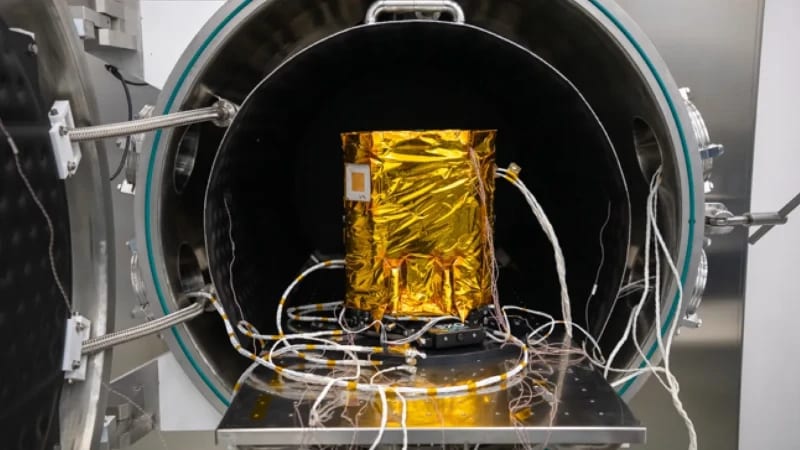
Once it's in deep space, the lander cannot take commands from Earth or from MBR Explorer. “In these eight years, I have no control to call it back — so nothing can go wrong,” said Najwa Aaraj, the CEO of TII. The probe will use AI to decide when to take pictures and which to rank highest, and it will then send the best ones home about every six months, according to the official statement.