The Sun’s death could throw the outer solar system into chaos sooner than expected
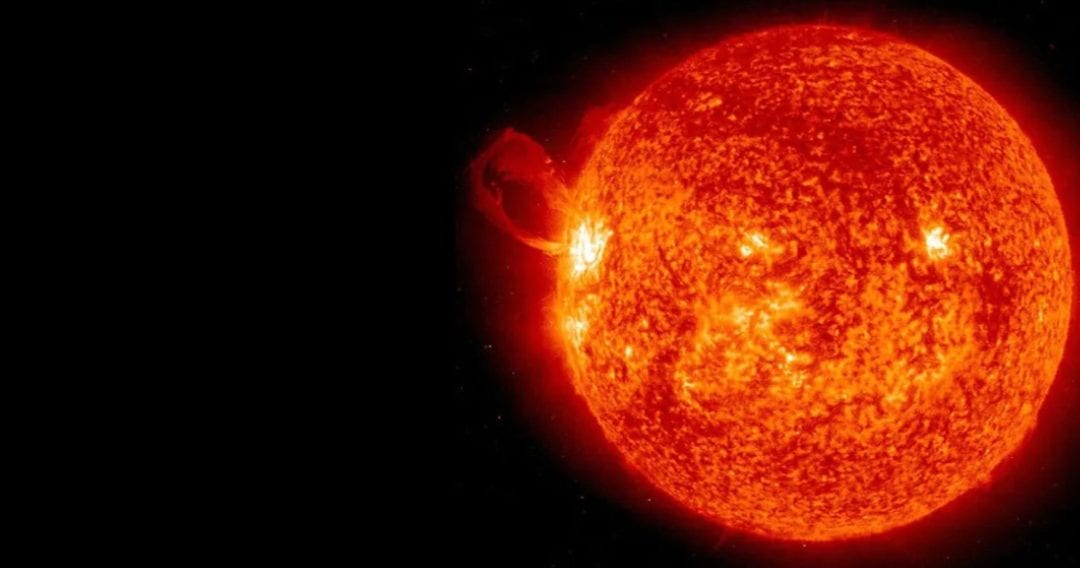
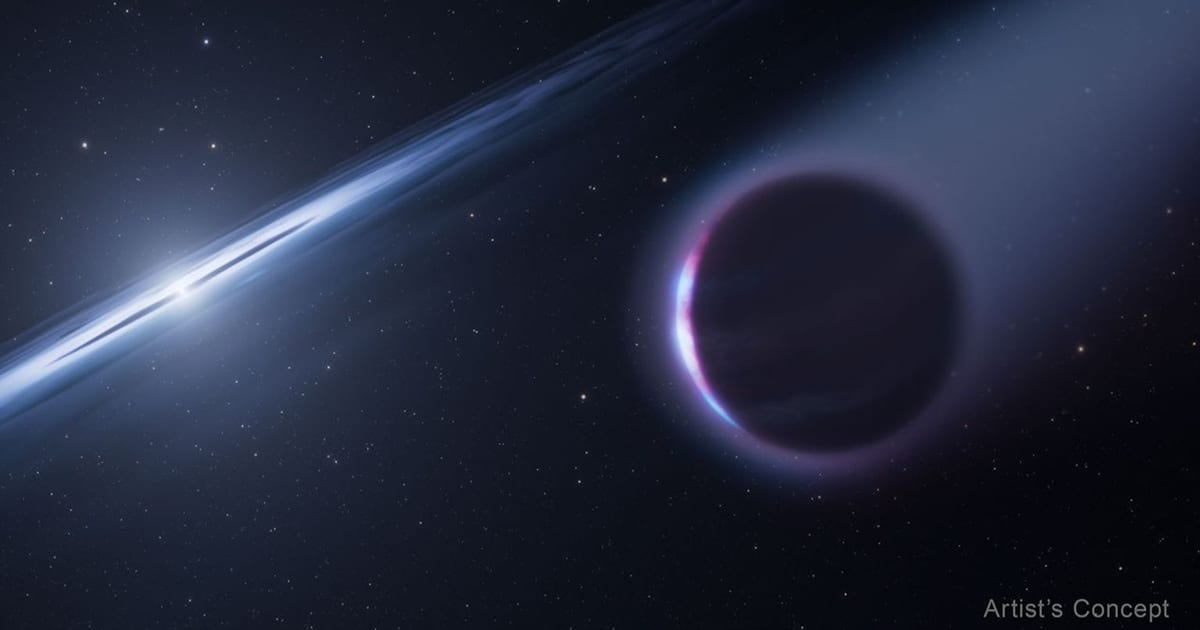
That the Sun will eventually die out in a few billion years is well established. Now, a paper published recently in The Astrophysical Journal Letters suggests that the Sun's demise could trigger a dramatic upheaval across the outer Solar System, potentially destabilizing the orbits of Jupiter, Saturn, Uranus, and Neptune on much shorter timescales than scientists previously expected. Instead of surviving a quintillion (10¹⁸) years after the fact, they could be gone within roughly a billion years. The researchers say that these outer planets could begin scattering, swapping orbits or even escaping the Solar System as the Sun sheds its outer layers and transforms into a white dwarf. Of course, Earth, which is much closer to the star, will, in all probability, be long swallowed up by then.
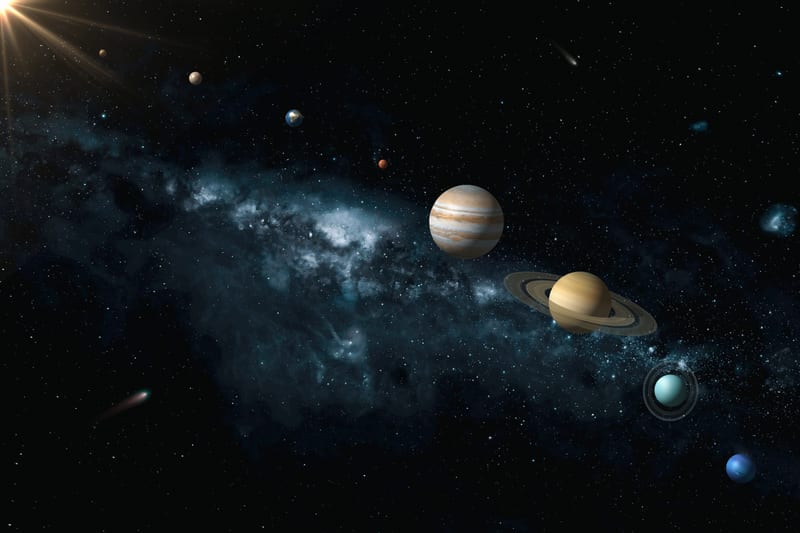
Earlier calculations indicated that the outer planets would remain stable for a staggering quintillion years, far more than the current age of the universe, until they are disturbed by a random passing star. The recent research work, carried out by astrophysicists Konstantin Batygin and Jim Fuller at the California Institute of Technology and Fred Adams of the University of Michigan, challenges this long-standing assumption.
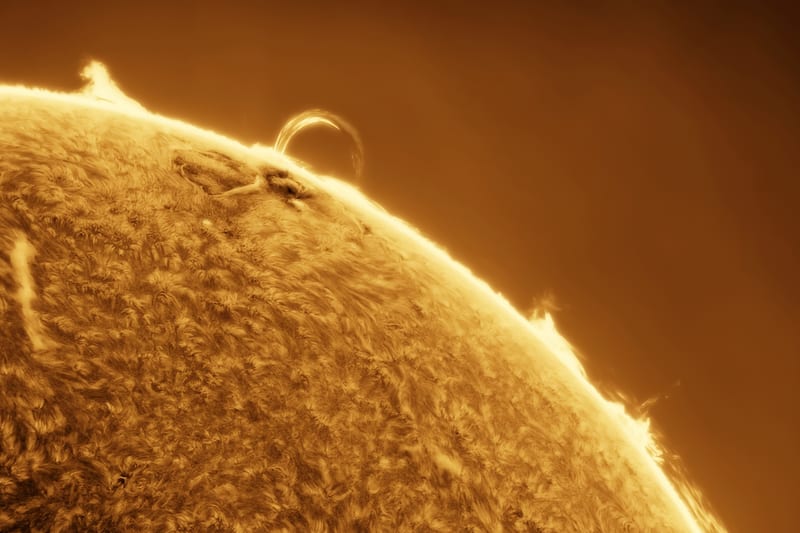
The earlier estimates were based on the assumption that the Sun would slowly devolve into a white dwarf in a smooth, gradual manner. However, the new study indicates that this scenario may not be true—the team implies that the Sun's transformation into a white dwarf would be in the form of "stochastic kicks," where mass would be violently and abruptly ejected. "The surprise is what happens when smoothness gives way to granularity: break the mass loss into discrete ejection events and the picture changes wholesale," Batygin told ScienceAlert. Every ejection will propel the dying Sun into a somewhat different position, thereby modifying its gravitational impact on planets, which may be far more disruptive than models have suggested so far.
Simulating the Sun's death: A potentially chaotic future
The researchers paired a solar evolution model with simulations that detect alterations in the orbits of the outer planets as the Sun ejects material in discrete, uneven bursts. They tested 672 scenarios involving varying amounts of material ejected during individual bursts and compared these results with those of the classic models in which the Sun undergoes smooth mass loss. The team then monitored the planetary systems for 3 billion years to check their stability.
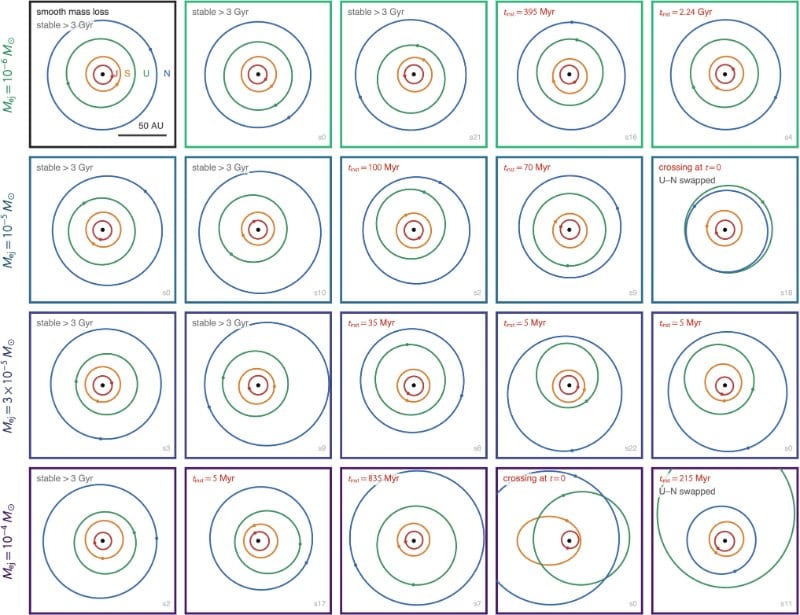
"Everything changes when the envelope departs in pieces," the authors stated in the study. The results revealed that the outer planets' behavior depended on the ejection mass of each stochastic kick, presenting a grim scenario for the simulations focused on larger bursts. They revealed that in cases of huge bursts, about 90% of the simulated planetary systems became unstable within three billion years after white dwarf formation. Surprisingly, around 40% of the simulated planetary systems experienced disruption or violent scattering even before the Sun devolves into a white dwarf. In certain simulations, some planets were ejected completely, while some others showed that Uranus and Neptune may exchange orbits.
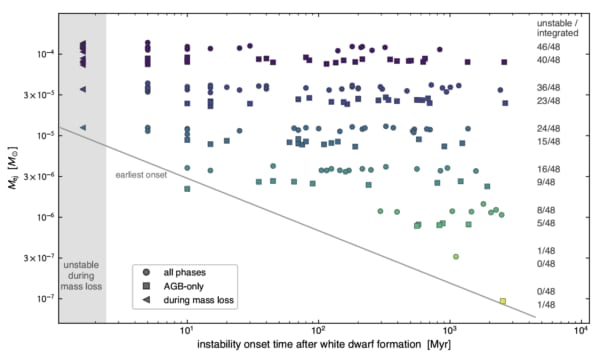
The scenario was somewhat varied when the Sun's death was pictured as being less turbulent. In the case of gentler bursts of mass loss, some planets were propelled into synchronized orbits in pairs, some of which showed stability for 3 billion years. An important question: which of these ejection masses are likely to occur? Unfortunately, ejection simulations and the analyzed kick amplitudes indicate that future ejections will probably occur in large bursts, implying a greater chance of destabilization of orbits.
More on Starlust
The Sun was about to unleash a coronal mass ejection—but it didn't. Scientists now know why
Scientists find a new way to predict space weather based on how the Sun goes to 'sleep'