Scientists just found a bizarre new form of ice that could explain what’s inside Uranus and Neptune
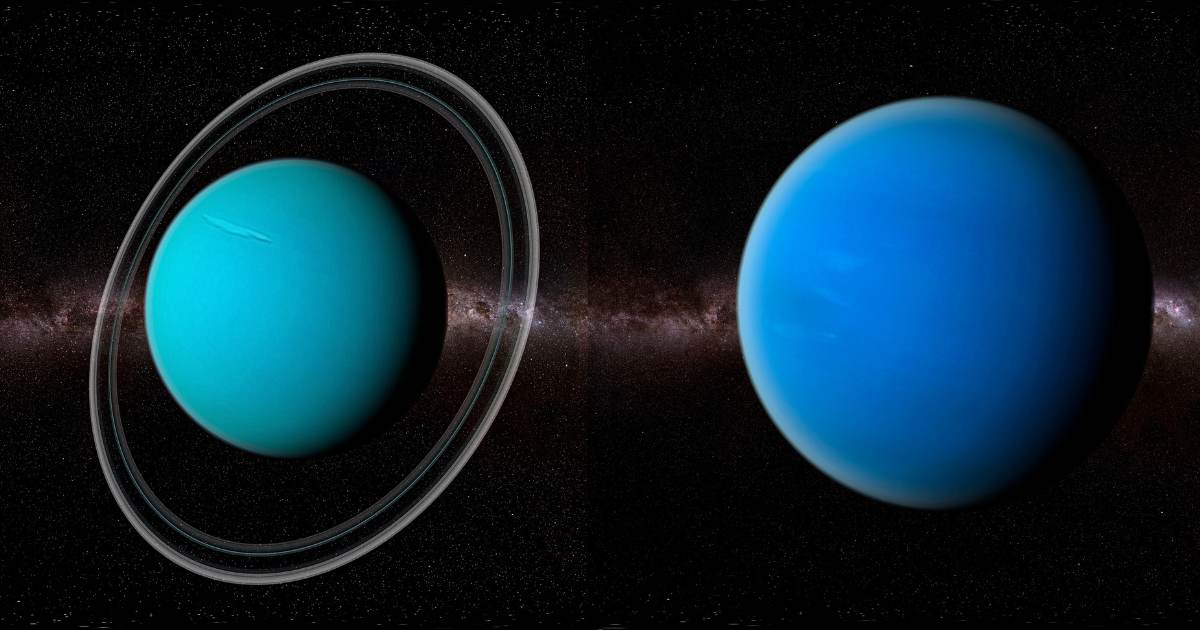
In new research, scientists have discovered a very strange new form of ice. This only forms under extreme heat and pressure, which is similar to the conditions that are found deep inside planets like Neptune and Uranus. These findings can help scientists explain one of the most puzzling phenomena, which is why these planets have magnetic fields that behave so strangely. These fields tilt off at odd angles instead of lining up neatly with the planet’s spin, just like the way Earth’s magnetic field does.
Scientists just squeezed water so hard it became a new kind of hot ice — and it may be hiding inside Uranus and Neptune.
— Black Hole (@konstructivizm) September 13, 2026
At more than 2 million atmospheres and about 1,500 °C, water stops behaving like anything familiar. Oxygen atoms lock into a rigid crystal lattice while… pic.twitter.com/kbH3bRkfOo
Scientists have long suspected that there are odd things going on inside these planets due to the behaviour of their magnetic fields. This was first seen by Voyager 2 when it flew by the two planets in the late 1980s. And now, this study can help explain why that happens. Explaining the findings, the team noted in their paper, "The presence of an fcc-hcp martensitic transition in the superionic regime of warm dense ice may have implications for planetary models of Uranus and Neptune.” This study was done by a team of scientists led by Alexis Forestier at the CEA, France's Alternative Energies and Atomic Energy Commission.

How did they recreate this new form of ice here on Earth?
Since we can’t really dig thousands of miles into Neptune or Uranus, the research team came up with a new approach. The team decided to build similar conditions here on Earth. For this, they used a device called a diamond anvil cell. With the help of this, they squeezed a sample of water between two ultra-hard diamond tips until the pressure reached 230 gigapascals. After this, the research team fired lasers at the trapped sample until the temperature got past 1,800 Kelvin.
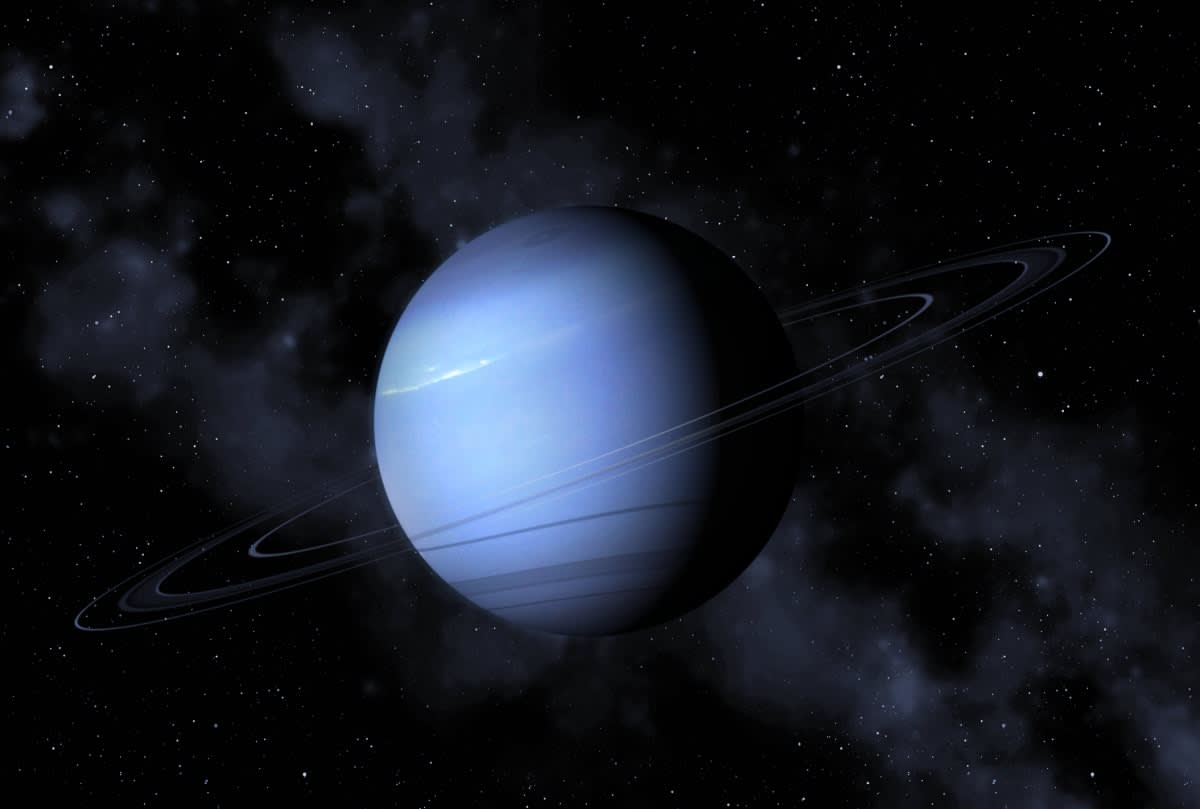
But the sample behaved differently. Instead of boiling away, it then turned into a solid crystal structure. The structure resembled a hexagonal pattern, which is called hexagonal close-packed, or hcp. This was different from the previously assumed cube-shaped structure that was expected to take place under these conditions.
What could this tell us about Neptune and Uranus?
The shape of that atomic structure may affect how electricity and heat move through the ice. This, in turn, shapes how a planet generates its magnetic field. Because this hexagonal form of ice likely behaves differently (both electrically and mechanically), it could help researchers explain why Uranus and Neptune have such oddly shaped magnetic fields in the first place.

For now, this study remains a laboratory discovery as no spacecraft has ever traveled deep enough into either planet to check. But it gives planetary scientists a concrete new data point. It also offers one of the clearest clues yet about what might be swirling deep inside two of the least understood planets in our solar system.
More on Starlust:
What if dark energy is evolving? Comprehensive new dataset questions a core assumption
Mercury has been shrinking faster than we realized. Here’s what that means