In a rare feat, scientists captured the Sun just hours before a massive solar flare—and were stunned
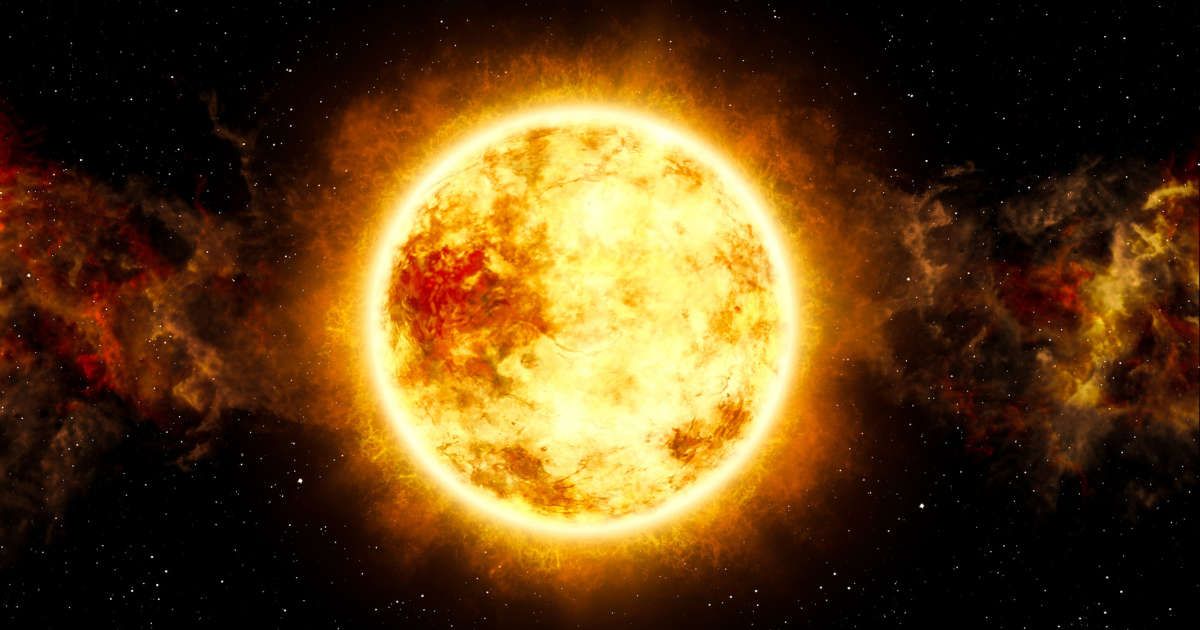
Every so often, the Sun produces an eruption powerful enough to affect systems here on Earth. These outbursts are called solar flares. Scientists have been observing solar flares for decades. Still, we don't fully understand what causes these eruptions to begin in the first place. Now, a new study offers real clues. Louis Seyfritz, a graduate researcher at the New Jersey Institute of Technology, and his team analyzed a dataset that caught the Sun building up to the massive X9-class solar flare that erupted on October 3, 2024.
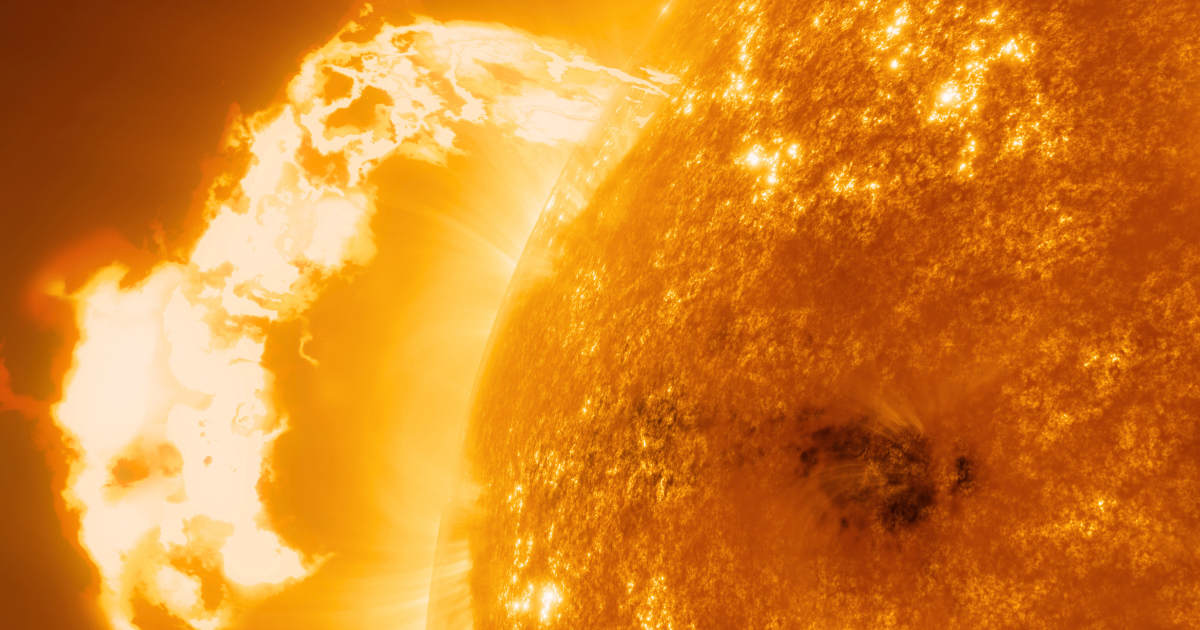
This isn't the first time scientists have made progress on solar storm forecasting. A separate study that analyzed 50 years of data from the Geostationary Operational Environmental Satellite (GOES) recently found that solar storms could be predicted up to two years in advance. However, this new study spotted physical warning signs in the Sun's atmosphere in the hours immediately before a flare erupted. "I was not expecting what I found," Seyfritz told Space.com.
What made this solar flare worth studying?
The active region that was studied had already been producing strong flares for several days beforehand, so multiple solar observatories already had their eyes on it. Among them was NASA's Interface Region Imaging Spectrograph (IRIS), a spacecraft designed to study a narrow slice of the Sun's atmosphere in extraordinary detail. Because IRIS was already observing the region, the team ended up with nearly five continuous hours of data captured before the explosion. "I chose that event because I was expecting the flare to be big enough to see those signs," said Seyfritz. "There's very few that reach that amount of power." That kind of pre-flare record is rare, and it formed the basis of everything the researchers found.
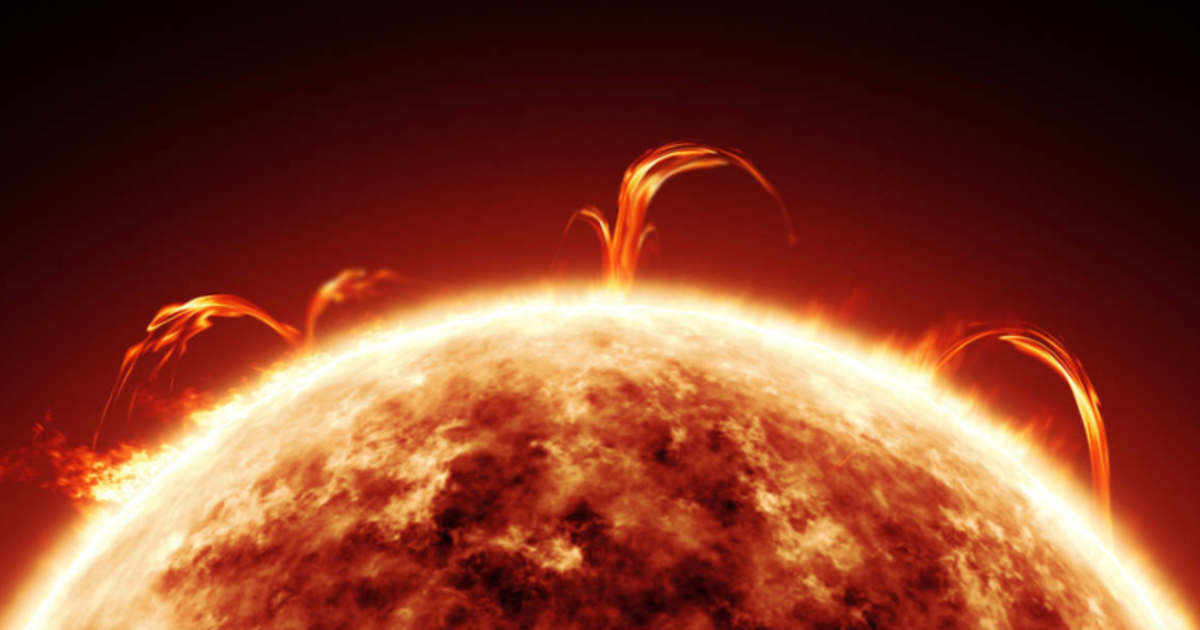
Using the IRIS data, the team tracked three properties of plasma in the Sun's atmosphere. Those properties were the plasma's brightness, its motion toward or away from the observing spacecraft, and non-thermal velocity, which captures turbulence and small-scale motion within the plasma. All three started increasing roughly three hours before the flare erupted, which suggests the Sun's magnetic field had been growing increasingly unstable well before the event itself. The team also found that the brightness, motion, and turbulence of the plasma rose and fell in regular cycles. "Such a long buildup of preflaring signatures is rarely observed," Seyfritz noted. Around 15 to 20 minutes before the flare erupted, the atmosphere shifted into a more volatile state. Turbulence spiked, and plasma began streaming outward, which may reflect the onset of the magnetic energy release that drives these events. Even so, no single measurement on its own pointed to an obvious warning.
"If we see those oscillations happening before the flare, it can be a strong indicator that a flare is going to happen," Seyfritz explained. But it was the combination of rising brightness, increasing turbulence, and the coordinated oscillations together that stood out as a potential signal. The findings, published in the journal Solar Physics, are based on one flare only. Researchers don't yet know if the same pattern holds across other eruptions, and testing that will entail finding many more pre-flare datasets of similar quality, which is difficult to come by. If the signatures do hold up, the goal is to eventually feed them into real space weather forecasting systems.
More on Starlust
A fleet of six spacecraft could be Earth's first active defense against solar storms
Scientists create 3D map of the sun's magnetic interior to help improve predictions of solar flares