Scientists identify a 'bathtub ring' on Mars, hinting at a long-lost ocean on the Red Planet
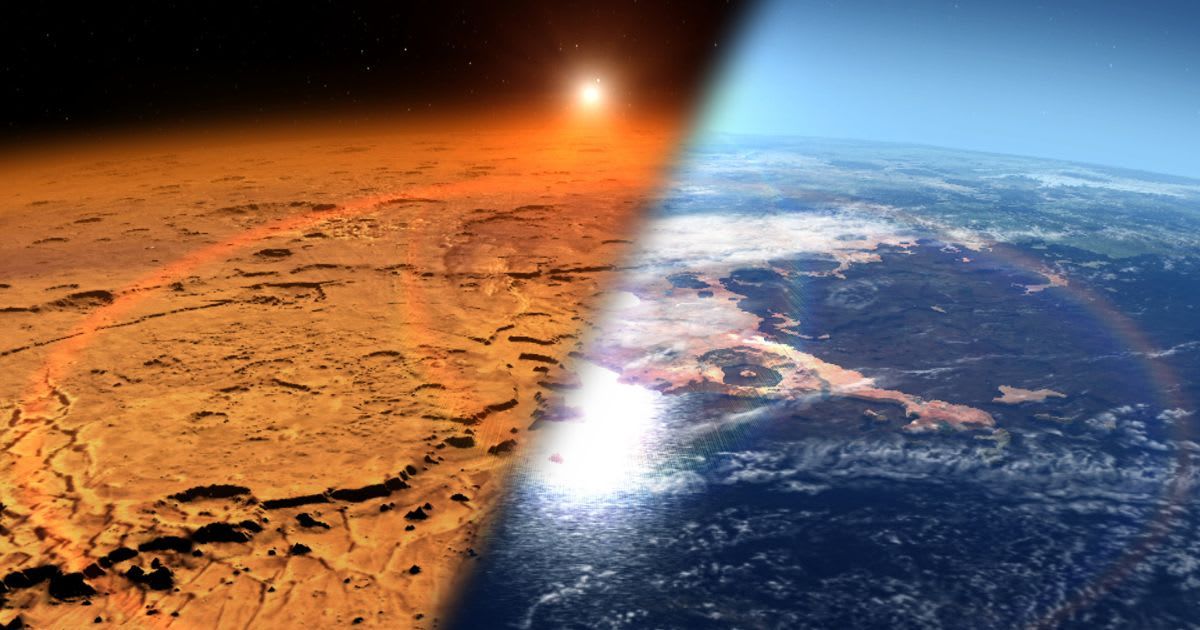
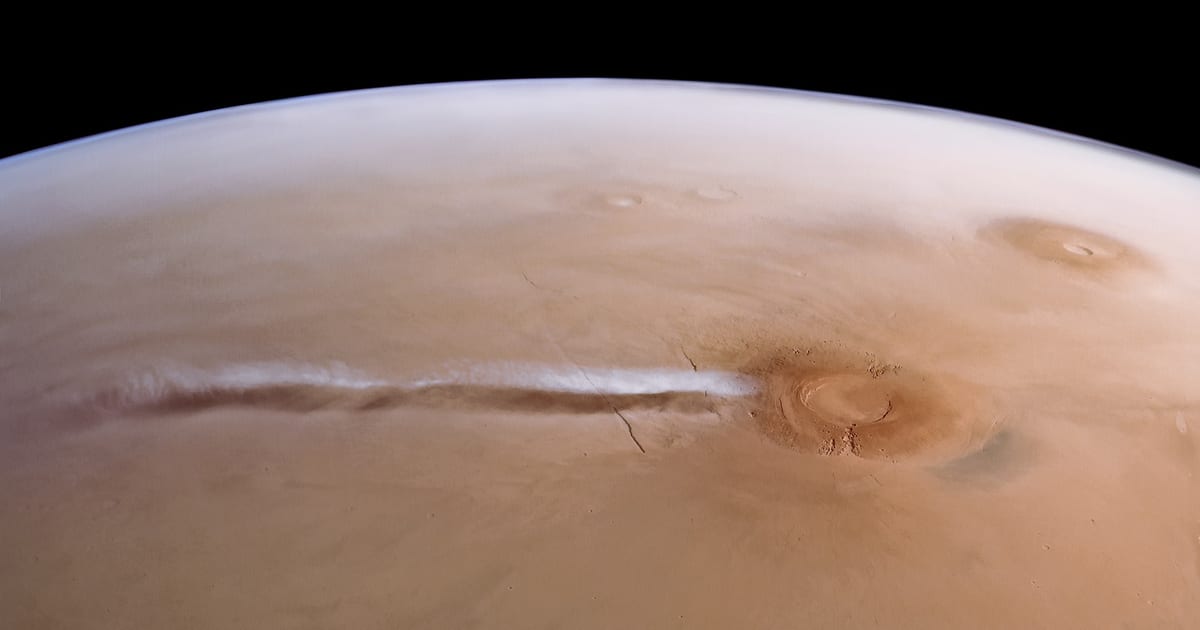
About a billion years ago, Mars was warmer and wetter. At that time, an ocean might have covered a third of the Red Planet's surface, according to new research by former Caltech postdoctoral scholar Abdallah Zaki and Caltech professor of geology Michael Lamb. They describe their findings in a paper published in the journal Nature. Be it a planet or a natural satellite, water is thought to be a key ingredient of life. Astronomers are unanimous that Mars once had some liquid water. But it is still not clear whether that water flowed only through streams or was stored in a lake, or whether it was enough to form a long-lasting ocean. Previous Mars missions found geological features that resemble shorelines. True signatures of a stable ocean mean shorelines should be at the same elevation, as the sea levels are consistent on Earth.
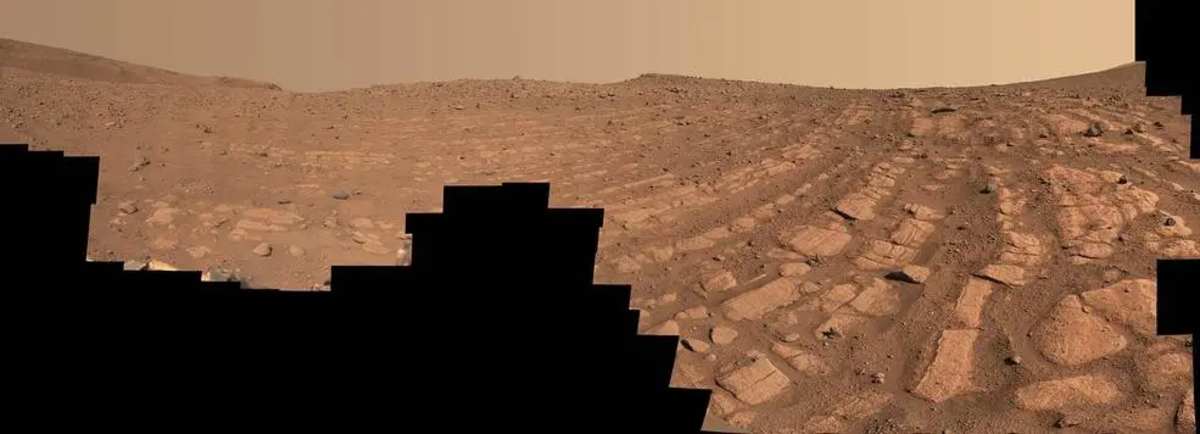
It is a daunting task to find a long-gone shoreline on Mars. "If Mars did have an ocean, it dried up a long time ago—possibly several billion years ago, more than half of the age of the planet itself," says Lamb as per a report by Phys.org. "There is hardly anything on Earth that is that old; anything on Mars from that time has been eroded by billions of years of wind blowing, volcanoes erupting, and other disturbances removing subtle features.” So, what is the way out? “We wanted to find a better topographic feature than shorelines that could be evidence for an ocean," Lamb adds. Zaki and Lamb turned to Earth to find what geological features indicate the presence of an ocean. They simulated Earth's oceans and then made them dry out to see what geological features surfaced.
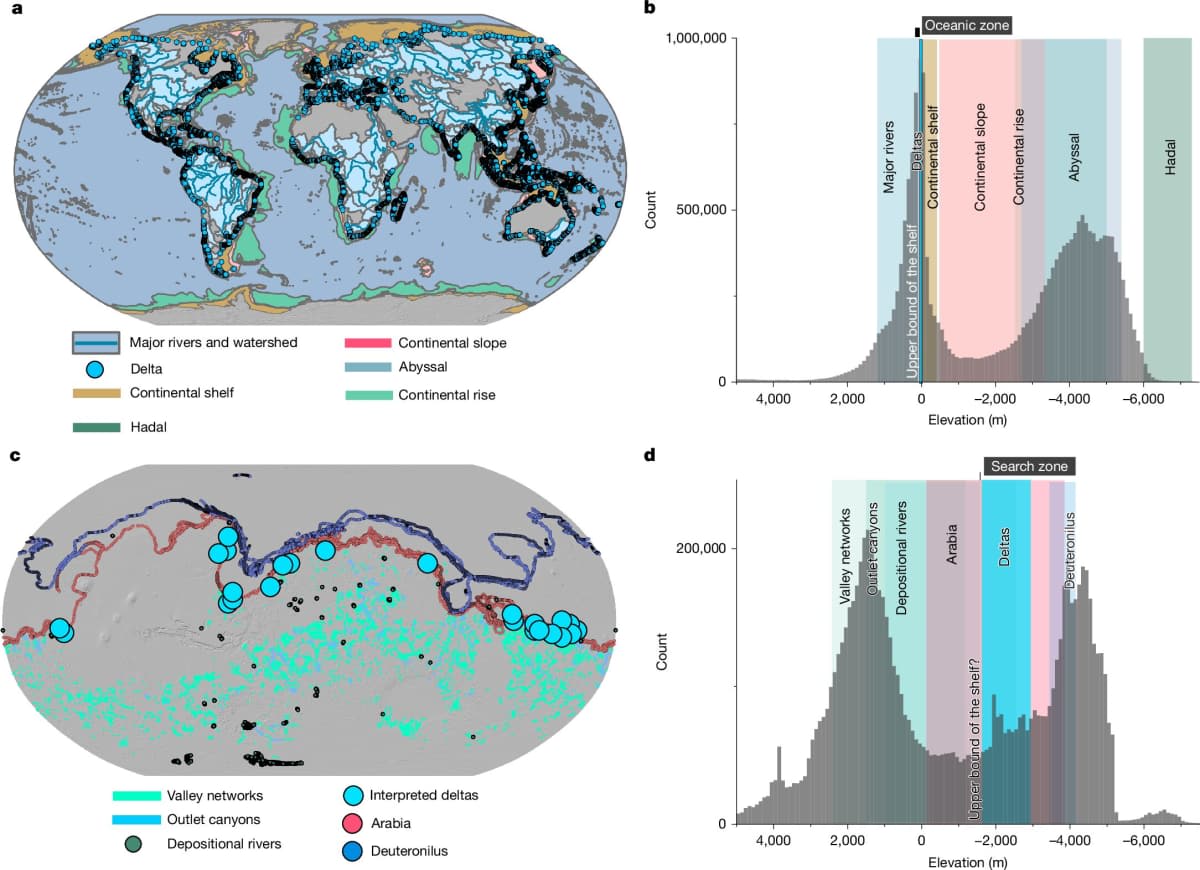
The models revealed that the most distinct feature of the oceans is a flat band of land, up to several hundred kilometers wide. This land, known as the continental shelf, meets the ocean like a ring that remains around a drained bathtub. Sea levels on Earth are not static. It fluctuated over millions of years. But the continental shelf is relatively stable and doesn’t change like sea levels. Next, the team probed the topographic data of Mars taken by past orbiters. They found an Earth-like band that indicates a large ocean in the Martian northern hemisphere covering a third of the planet's surface. This is a massive landform and probably took time to form. Such a landform is not found around lakes. The findings suggest that the ocean was possibly stable for millions of years. Then they detected signs of river deltas, the triangular plains of sediment formed where rivers empty into the ocean, lining up with the ‘bathtub ring’ shelf.
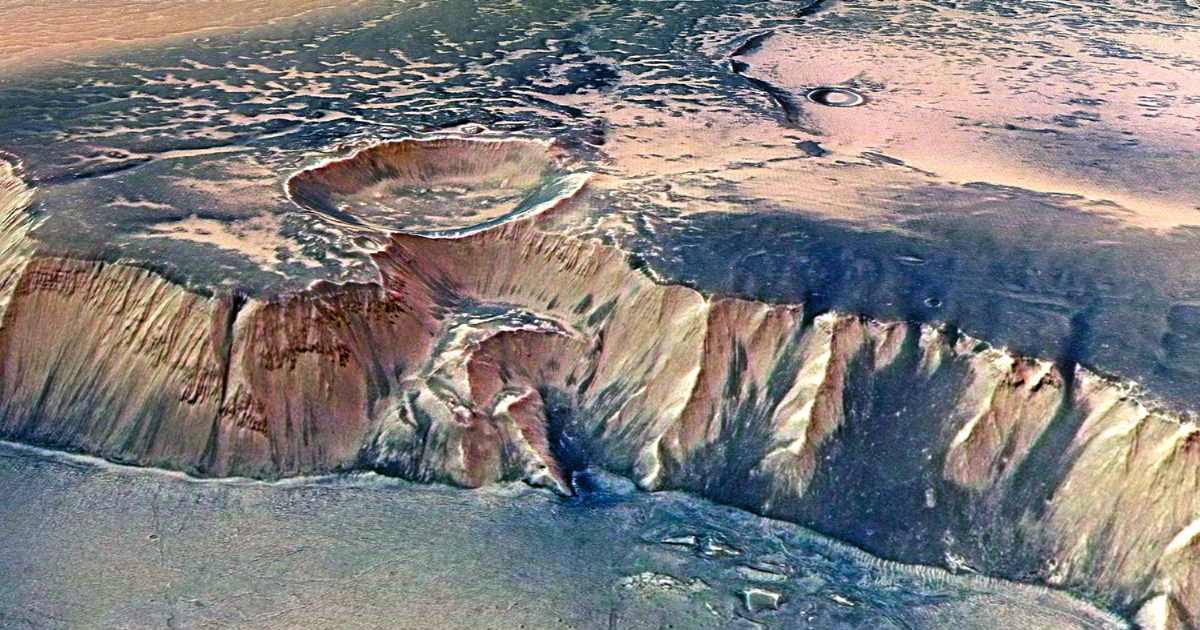
"The shelf is a new observation that ties together evidence of what the coastal zone would have looked like," Zaki says. "Nobody had really looked for it before. It's a strong additional piece of evidence supporting a northern ocean on Mars, but there's plenty of follow-up work to be done for rovers to examine deposits and for further analysis of satellite data." The new findings suggest that future missions to Mars have new targets to probe. They can take a fresh look at the dried-up shorelines for probable signs of ancient life, as we have stumbled upon relics of life from coastal sediments on Earth.
More on Starlust
Did life come to Venus from Earth or Mars? New study offers clues
Hidden waves in Mars' ionosphere reveal secrets of the planet’s magnetic field