Scientists uncover one of the most metal-poor stars ever seen, a rare find in Milky Way's halo

Scientists have identified an incredibly rare, ancient star, designated GDR3_526285, nestled within the halo of the Milky Way galaxy. The discovery, announced in a new study published in The Astrophysical Journal Letters, represents a significant find for astronomers, as the star is one of the most metal-poor stars ever detected, as mentioned on Phys.org. This star offers a unique window into the early universe. Stars with extremely low metallic content, known as ultra-metal-poor (UMP) stars, are believed to be direct descendants of the very first stars that formed. Only a few dozen such stars have been found, making each discovery a vital piece of the cosmic puzzle.
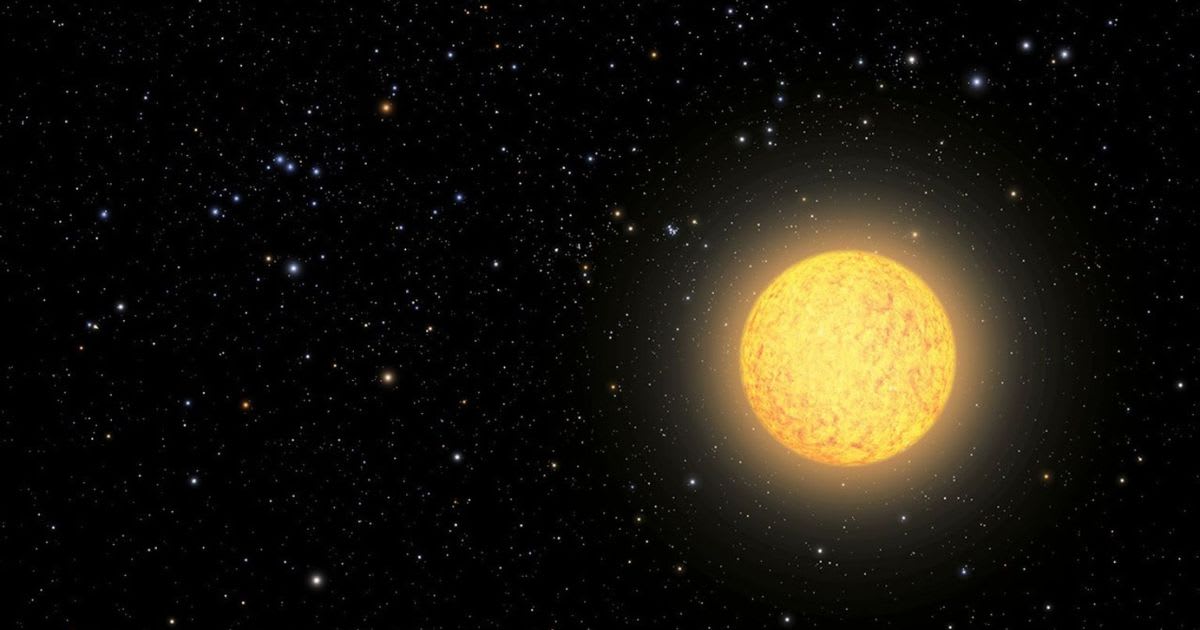
A team of astronomers, led by Guilherme Limberg of the University of Chicago, uncovered GDR3_526285 by sifting through data from the European Space Agency's (ESA) Gaia satellite. Its unique properties were then confirmed with additional observations using the Magellan Clay 6.5-meter telescope in Chile. Located approximately 78,600 light-years from Earth, the star's metallicity is a stunning -4.82 dex, placing it among the lowest ever measured. Its mass is estimated to be around 0.78 times that of our Sun, with a surface temperature of roughly 4,600 Kelvin.
One of the star's most intriguing features is its surprisingly low carbon-to-iron ratio. This suggests that GDR3_526285 may have formed through a different process than other UMP stars. Researchers speculate it was created from gas cooled by dust, rather than by carbon or oxygen, which are typically thought to facilitate the birth of these ancient stars.
The star's movement through space has also led to another fascinating theory. Its trajectory suggests a possible connection to the Magellanic Clouds, two dwarf galaxies that orbit the Milky Way. This raises the possibility that the star was either influenced by the galaxies' gravitational pull or was once a part of one of them before being stripped away by the Milky Way's immense tidal forces. This discovery promises to provide fresh insights into the formation of the universe's first stars and the dynamics of our galaxy.

Adding another layer to our understanding of the Milky Way, a separate study has challenged a long-held belief about the shape of our galaxy's stellar halo, according to The Center for Astrophysics | Harvard & Smithsonian. For decades, astronomers assumed this vast, diffuse cloud of stars enveloping the galactic disk was spherical. However, new research published in The Astrophysical Journal reveals it's an oblong, tilted shape, more like a cosmic football than a beach ball.
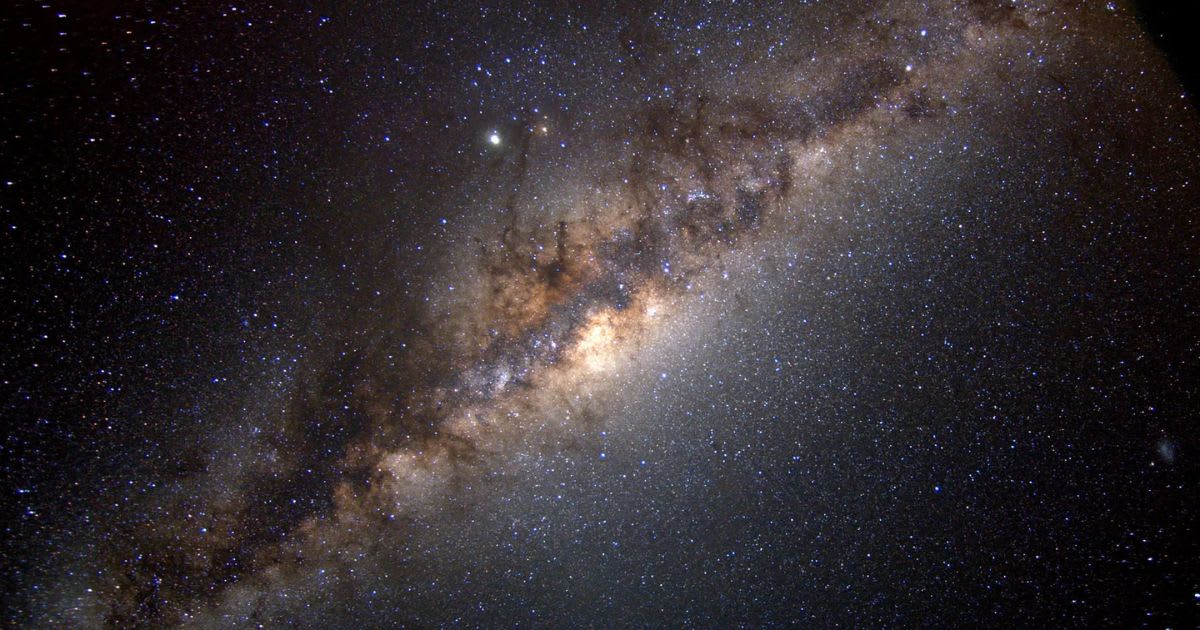
"The shape of the stellar halo is a very fundamental parameter that we've just measured to greater accuracy than was possible before," says Jiwon "Jesse" Han, the lead author and a PhD student at the Center for Astrophysics at the Harvard and Smithsonian. This discovery has significant implications for our understanding of the Milky Way's history and evolution. It also offers new avenues for the search for dark matter, the mysterious substance thought to make up most of the universe's mass.
"We now know that the textbook picture of our galaxy embedded within a spherical volume of stars has to be thrown out," adds Charlie Conroy, Han's advisor and a professor of astronomy at Harvard University. This finding necessitates a significant reassessment of our galactic model, offering a fresh perspective on the structure and dynamics of our home galaxy.