Scientists finally track a hard-to-see companion orbiting aging red giant 400 times the size of our Sun
Spotting celestial objects around asymptotic giant branch (AGB) stars has not been an easy task. These huge, luminous stars often hide things that get too close to them. But for the first time, experts have got some clues through ALMA (Atacama Large Millimeter/submillimeter Array). The discovery throws light on how giant or dying stars behave with their surroundings and other objects around them.
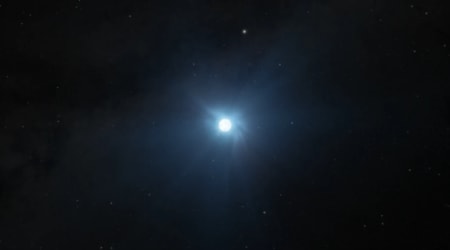
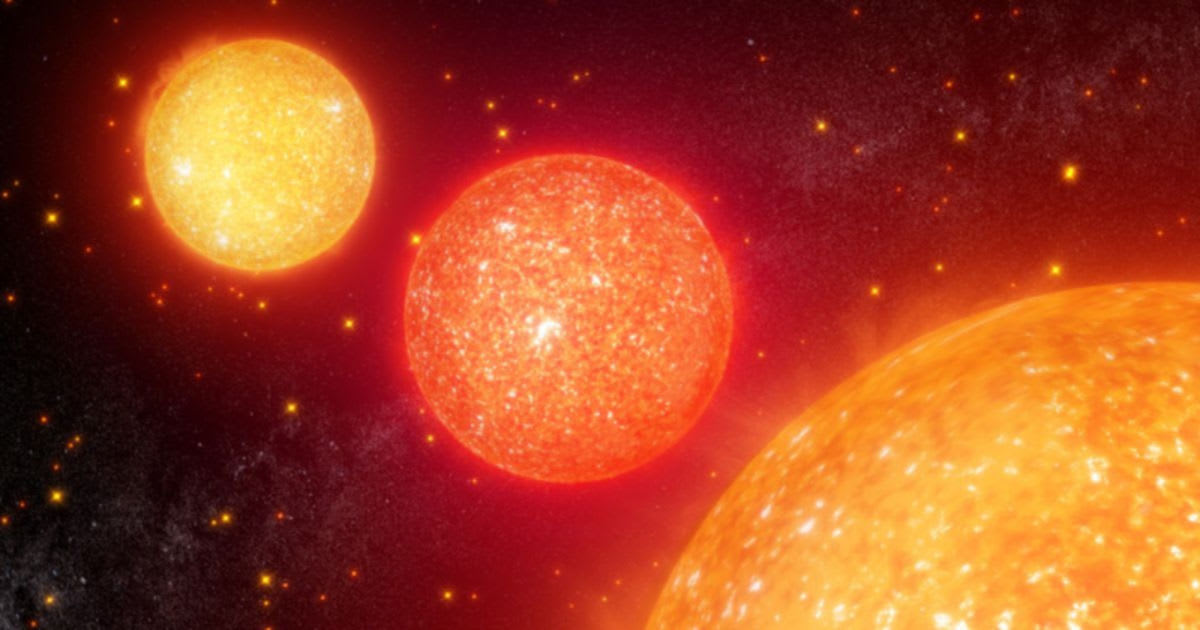
Roughly 530 light-years from Earth, aging red giant π¹ Gruis, also known as “pi-one-Gru,” has been a mystery for years. Like typical AGB stars, π¹ Gruis has swelled up to more than 400 times the Sun's size and has cooled down. As per research published in Nature Astronomy, the first direct view of a companion orbiting around π¹ Gruis has finally been captured using ALMA, an astronomical interferometer in the Atacama Desert of northern Chile. It is a long-sought feat that has now surprised the scientists.
According to phys.org, this research was done by researchers at Monash University. Yoshiya Mori, a Ph.D. candidate in astrophysics at the University, worked on matching the observed luminosity and pulsation behavior of π¹ Gruis with high-precision stellar evolution models. He shared, “A key part of understanding the orbit of the companion is knowing the mass of the AGB star. Our team helped better constrain this mass by using its observed luminosity and pulsation characteristics to find the best-suited stellar model." He added, "This research is especially interesting, as throwing a close companion into the mix could possibly wreak further havoc on the already complicated processes surrounding these stars."
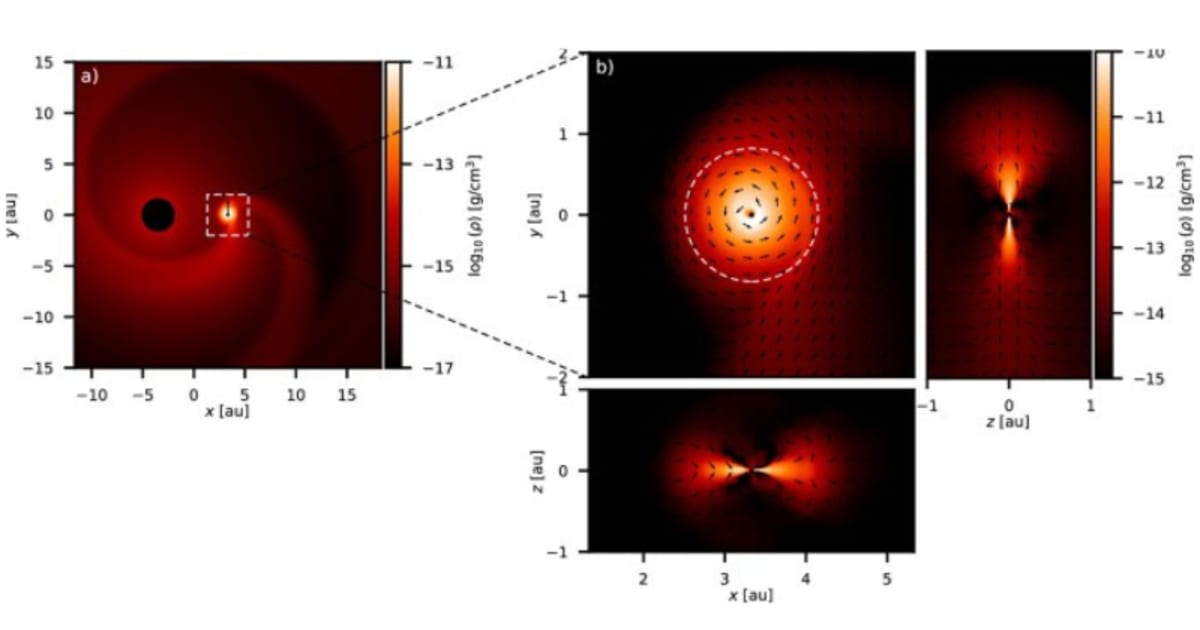
These giant and massive stars are known for some tricky and dramatic behaviour. They forge fresh elements, pulse rhythmically over days or years, and lose a huge amount of material—sometimes, losing mass equivalent to that of the Earth in just four years. Eventually, they end their lives as planetary nebulae. Even at this distance, π¹ Gruis is thousands of times brighter than the Sun, and that’s a problem too. Any smaller celestial object orbiting nearby gets overshadowed by the star’s glow. But this new finding changes the whole scenario. Previously, there were assumptions that the companion moves on an elliptical orbit. ALMA’s measurements have brought a surprise: the orbit is almost circular. That finding hints that orbital evolution may happen much faster in these systems than models currently assume.
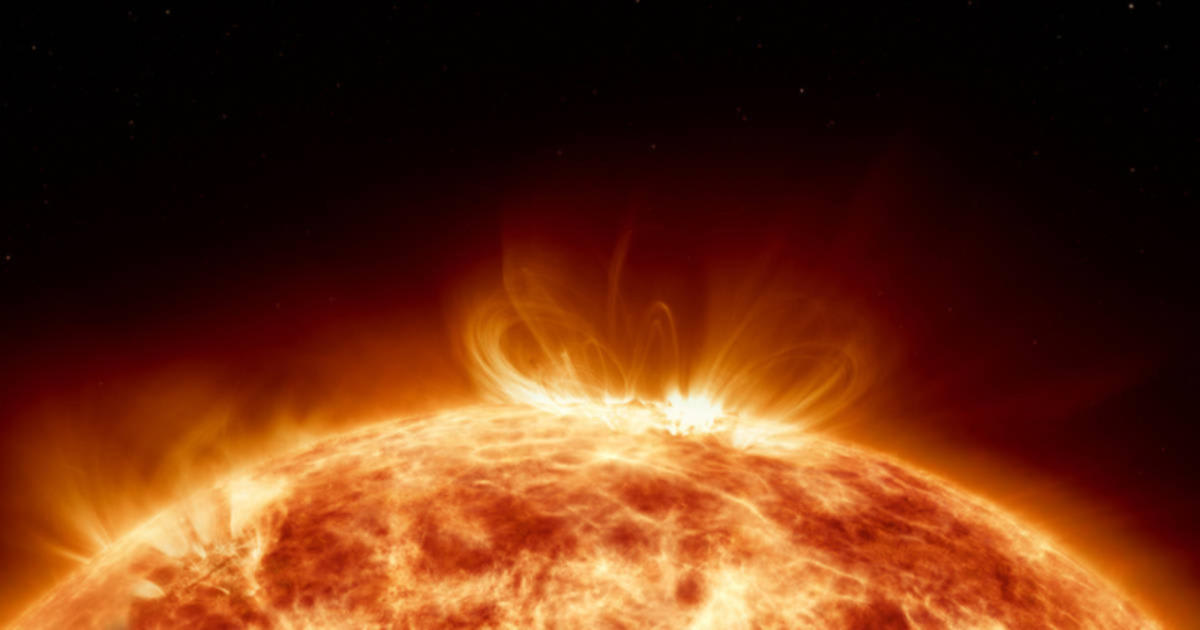
Project lead Mats Esseldeurs of KU Leuven notes that these insights also point ahead to the Sun’s far future. “Understanding how close companions behave under these conditions helps us better predict what will happen to the planets around the sun and how the companion influences the evolution of the giant star itself”. The team’s results suggest that existing circularization rates in stellar evolution models are likely underestimated, opening a window into refining the physics of tidal interactions and binary evolution.
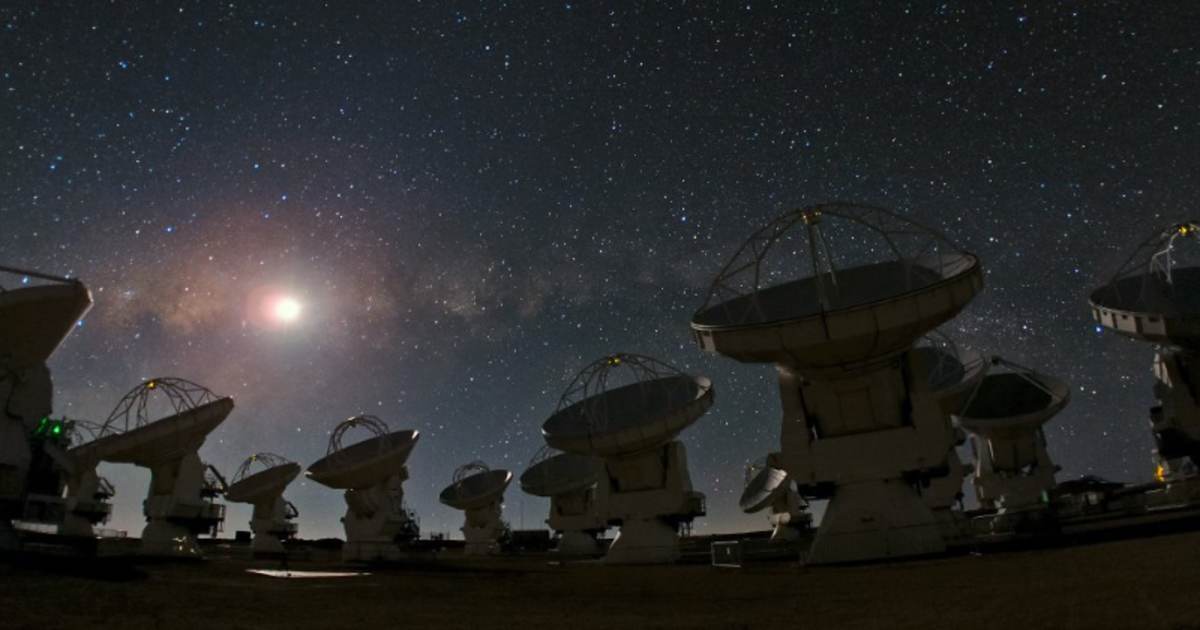
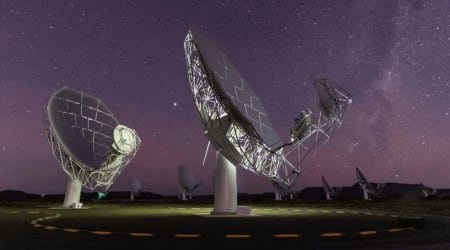
About ALMA, it is the most powerful radio telescope on Earth right now. Europe (ESO), North America (NRAO), and East Asia (NAOJ) came together for this, along with the Republic of Chile. It is made of 66 high-precision antennas, which operate on wavelengths of 0.32 to 3.6 mm. ALMA’s array can be rearranged into many configurations, spreading them from about 150 meters to nearly 16 kilometers apart. That becomes a plus point and gives the observatory an exceptional range of “zoom”. That’s how it produces images better than those captured by the Hubble Space Telescope.
More on Starlust
ALMA captures first-ever video of spiraling dust around a young star
'Stripped-to-the-bone' supernova offers first direct look inside a dying star's core