Astronomers baffled by mysterious 'super-puff' world that's challenging evolution models
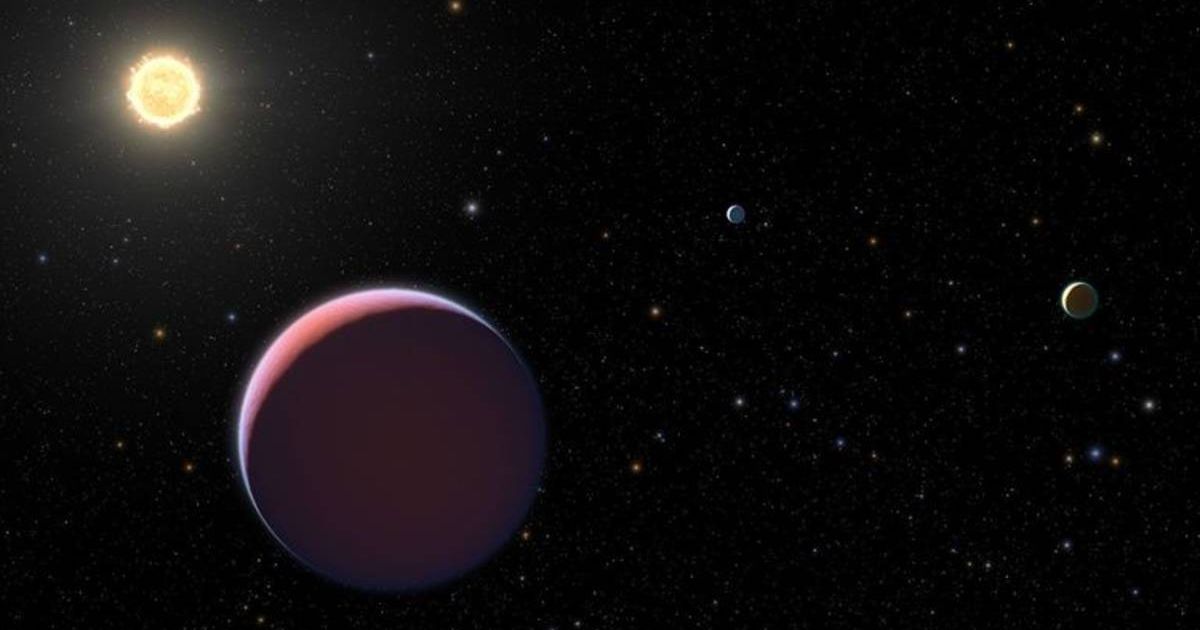
A newly identified exoplanet, TOI-4507 b, is challenging fundamental theories of how celestial bodies evolve, according to a preliminary analysis. The findings, which have yet to undergo peer review and were submitted to the arXiv pre-print server, describe an extraordinarily light and large world orbiting a surprisingly youthful star.
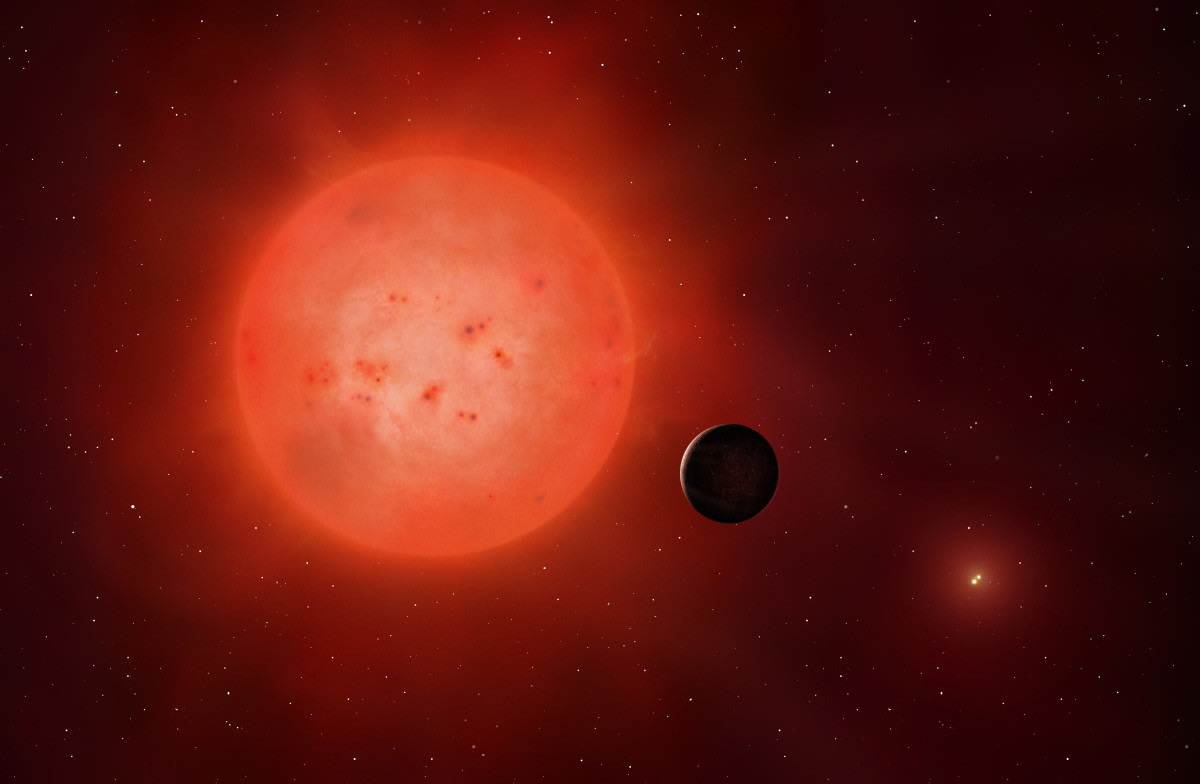
Located approximately 578 light-years from Earth, TOI-4507 b presents a cascade of peculiar characteristics. According to Space.com, it is one of the youngest planetary systems ever discovered, orbiting a star estimated to be only 700 million years old. The planet itself has earned the classification of a "super-puff," a term for exoplanets with drastically low density. While its diameter rivals that of Jupiter (about nine times Earth's width), its mass is less than a tenth of Jupiter's, putting its total mass at only about 30 times that of Earth. This bizarre combination of vast size and negligible mass implies a large, extremely distended atmosphere.
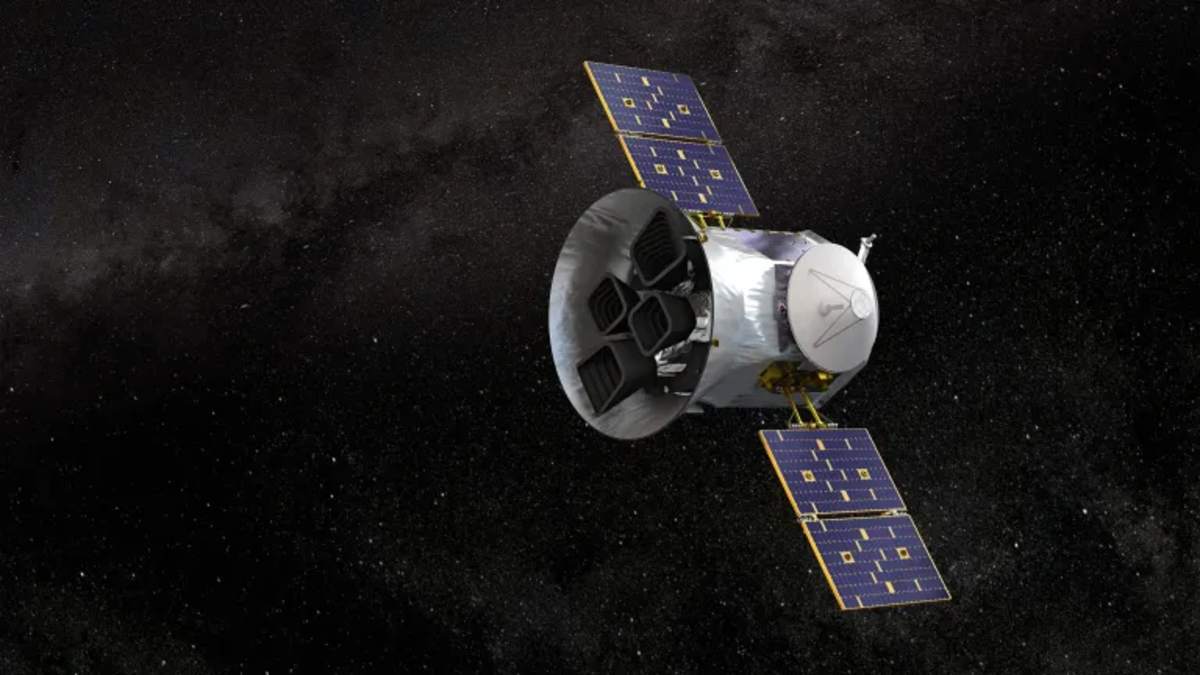
Adding to the mystery, the planet's trajectory is highly unusual. It maintains a relatively close orbit, completing a revolution every 105 days, making it the longest-period super-puff known to date. More significantly, its path is nearly polar, meaning it circles its host star on an axis almost perpendicular to the star's rotation. This rare alignment presents a major problem for researchers. Data from NASA's Transiting Exoplanet Survey Satellite (TESS) and the ASTEP telescope in Antarctica helped rule out common explanations for a planet's inflated atmosphere.
Typically, the expansive atmospheres of super-puffs are attributed to tidal heating, where the gravitational tug of a star on a close, elliptical-orbit planet causes internal friction and heat. However, TOI-4507 b's orbit is too distant for this mechanism to be a primary factor. Researchers also dismissed the possibility that the planet is smaller than it appears, masked by an enormous ring system. While the planet is relatively cool, it is reportedly not cold enough to sustain a durable ring structure.

The consensus among the discoverers is that a significant, possibly catastrophic, event must have occurred early in the system's history, perhaps a swift misalignment of the original protoplanetary disk, or a protracted gravitational influence from a more distant, as-yet-undiscovered celestial body. Because of its brightness and low atmospheric density, TOI-4507 b is now a high-priority target for the James Webb Space Telescope (JWST). Future observations aim to analyze the super-puff's atmospheric composition, providing crucial clues on the forces responsible for shaping this remarkable, rule-breaking world.
The discovery of TOI-4507 b occurs within a burgeoning census of worlds, though one still limited to a relatively small cosmic neighborhood. According to NASA, most exoplanets detected thus far reside within a few thousand light-years of our solar system, a tiny fraction of the Milky Way galaxy. Even the nearest known exoplanet, Proxima Centauri b, is roughly four light-years away. It's now understood that the galaxy contains more planets than stars, meaning the current pool of confirmed exoplanets represents just the tip of a cosmic iceberg.
More on Starlust
NASA’s TESS captures two Earth-like exoplanets orbiting an orange dwarf
Astronomers in search of habitable worlds rule out atmospheric scenarios on exoplanet TRAPPIST-1e