Satellite launched in 1981 breaks up in low Earth orbit; debris may put other spacecraft at risk
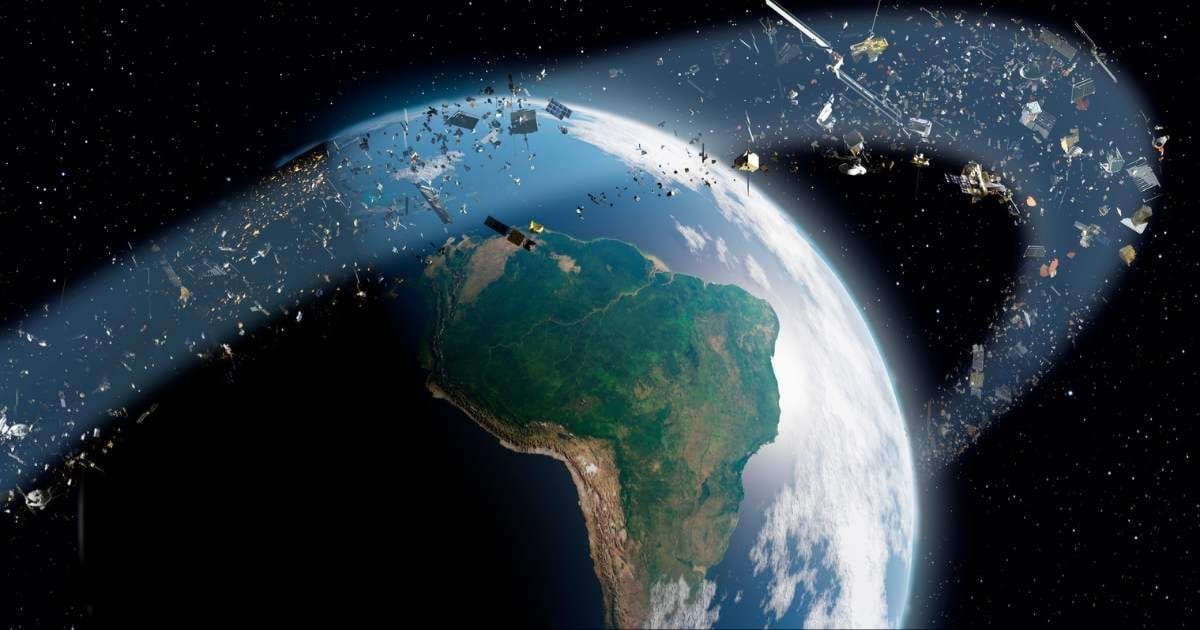
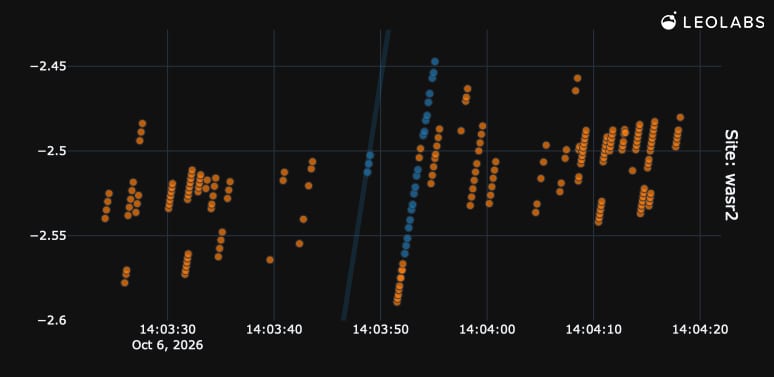
A space domain awareness company has flagged the breakup of a decades-old dead satellite in low-Earth orbit, which has created dangerous new space debris pieces. This weather satellite, named Meteor 2-7, was launched in 1981 by the erstwhile Soviet Union, and its fragmentation has now generated ‘tens of fragments’ in its vicinity, which pose a serious threat to spacecraft near it. The threat was flagged by LeoLabs, which noticed the debris when the satellite flew over its radar site in Western Australia.
LeoLabs has detected another debris-generating event in orbit. This is the latest in a series of events we've seen over the last 6 months. Together, they point to a worrying trend for space safety and security, and underscore the critical need for persistent sensing.
— LeoLabs (@LeoLabs_Space) October 7, 2026
“On 5 October, LeoLabs Delta alerted our team to multiple objects near the Soviet-era Meteor 2-7 satellite (NORAD ID 12456) following a pass over our radar site in Western Australia,” LeoLabs posted on X Wednesday. “Additional observations across our network confirmed that a debris-generating event occurred and resulted in an estimated tens of fragments that may pose a threat to surrounding spacecraft.” The company also shared a data graphic showing a significant increase in debris pieces near the dead satellite.
While many debris pieces are just a few centimeters (cm) in size, they whip around Earth at very high speeds and can cause serious damage to functional satellites and even the International Space Station (ISS). There have been many instances when NASA and its partners had to raise the station’s orbit in order to dodge a debris cloud. Astronauts also have had to take shelter in their spacecraft docked at the ISS during times of space debris emergency. According to data by the European Space Agency (ESA), there are an estimated 1.5 million space debris objects between 1 and 10 cm and about 230 million objects between 1 mm and 1 cm. About the recent disintegration event, LeoLabs said that it is the latest addition to a series of events seen over the last six months and that “they point to a worrying trend for space safety and security.”
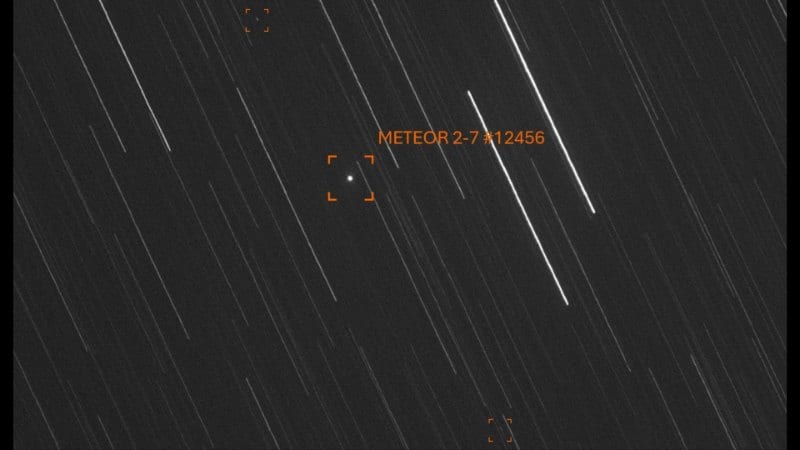
Interestingly, this is the second time the Meteor 2-7 has generated debris in space. According to orbital debris expert Jim Shell, the first disintegration event occurred in March 2004, and the latest one happened at an altitude of around 530 miles “in a dense region for orbital debris.” Space situational awareness company s2a Systems also shared a picture of the Meteor 2-7 satellite confirming some debris around it. “Optical observation conditions for this object are currently poor at our sites due to orbit/Earth's shadow. Nevertheless, a pass over Australia, recorded on 2026-10-08, still showed some debris around METEOR 2-7,” s2a Systems posted on X. This comes on the heels of the disintegration of a Cold-War-era spy satellite named USA 32 that was confirmed by the U.S. Space Force in September. It was reportedly launched by the National Reconnaissance Office (NRO) in 1988 with the objective of intercepting Soviet radar and radio signals from space.
Some recordings of USA 32 (#19460), whose fragmentation in LEO on 13 Sep 2026 at approximately 2113 UTC was confirmed by U.S. Space Forces–Space (S4S). By the time of the recordings, a large number of fragments had already dispersed over a wide section of the track. https://t.co/gjRxCTPz2o
— s2a systems (@s2a_systems) September 16, 2026
The Space Force’s satellite-observation arm, Space Track, said per Live Science that the satellite suffered a sudden fragmentation on September 13. The agency did not specify the amount of debris created in the event or the reason for what may have been an explosion. s2a Systems had posted a time-lapse video of the satellite (shared above) stating that a large number of fragments had dispersed into space by the time it was recorded.
More on Starlust
Earth orbit headed towards overcrowding? Latest ESA report raises alarm amid uptick in launches