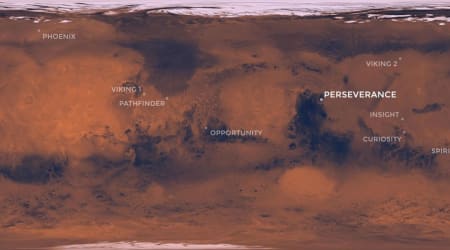
Perseverance rover detects electric discharge in Martian dust storms for the first time
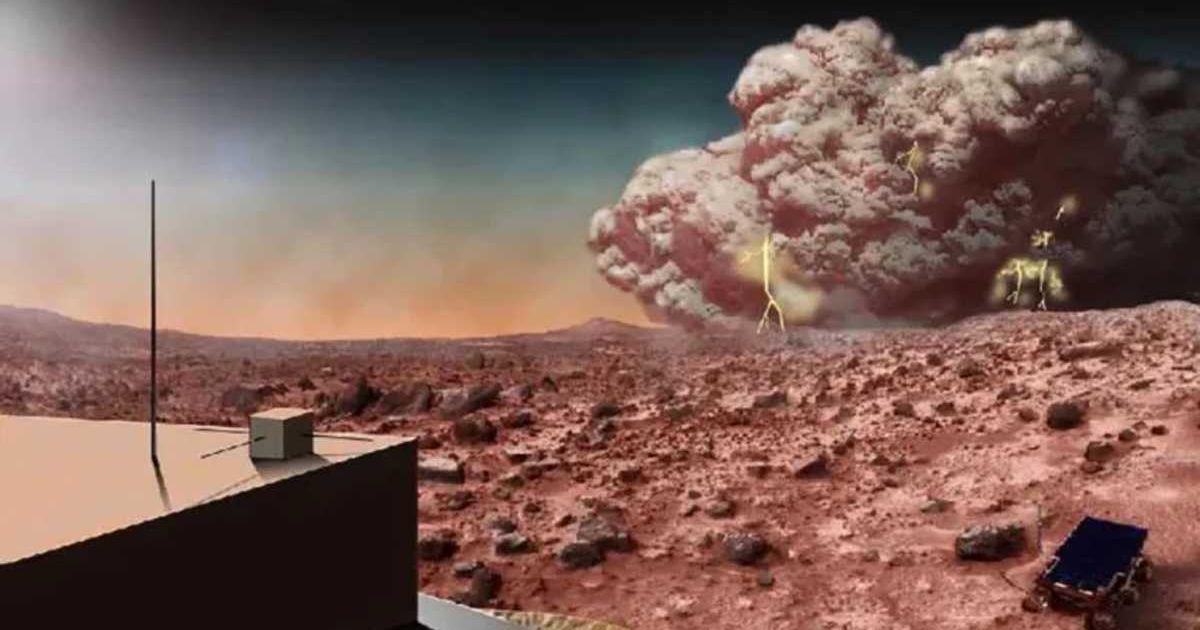
The SuperCam's microphone unexpectedly picked up the signals from two dust devils.
PUBLISHED NOV 27, 2025
This artist's concept illustrates a Martian dust storm, which might also crackle with electricity (Representative Cover Image Source: NASA)

For the first time, scientists have confirmed that electric discharges, in the form of tiny lightning bolts, are indeed occurring within the storms or "dust devils" that swirl across the Martian surface, according to the Centre national de la recherche scientifique (French National Centre for Scientific Research).
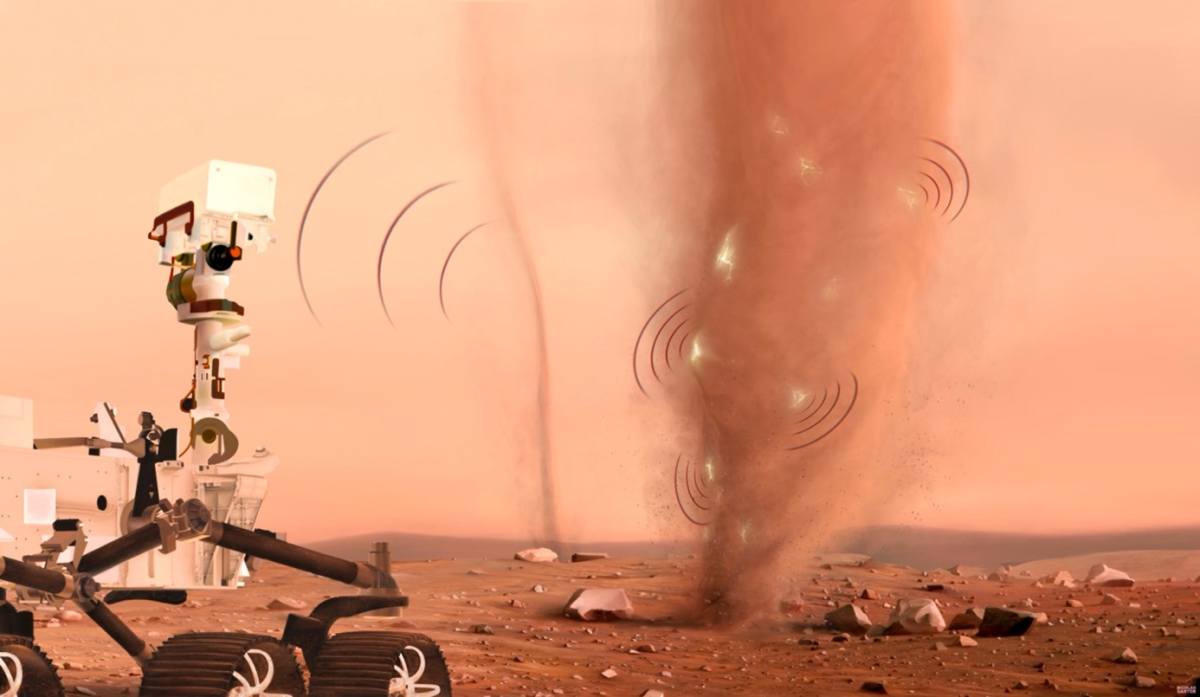
Detection of electric discharges in dust devils by the SuperCam instrument, on board the Perseverance rover on Mars (Image Source: CNRS | Nicolas Sarter)

The striking observation was made using a microphone on NASA's Perseverance rover. The audio sensor, part of the SuperCam instrument, unexpectedly captured powerful signals as the rover passed near two dust devils. Analysis carried out by an international team, including researchers from the CNRS, Université de Toulouse, Observatoire de Paris – PSL, showed that these signals were the electromagnetic and acoustic signatures of electrical sparks. Scientists liken them to the small static electricity jolts people feel on Earth when they touch a door handle in dry conditions. 

NASA's Perseverance (Mars 2020) rover will store rock and soil samples in sealed tubes on the planet's surface for future missions to retrieve in the area known as Jezero crater on the planet Mars. (Representative Photo illustration by NASA via Getty Images)

This happens because friction among wind-carried fine dust particles causes them to acquire an electrical charge. These charged particles then release their energy in short, audible electric arcs. Static electricity is a common occurrence on Earth, but it rarely results in visible sparks in dust. On Mars, however, the thin carbon dioxide atmosphere makes these discharges far more likely, since less charge is needed to produce a spark than in Earth's thicker air. 
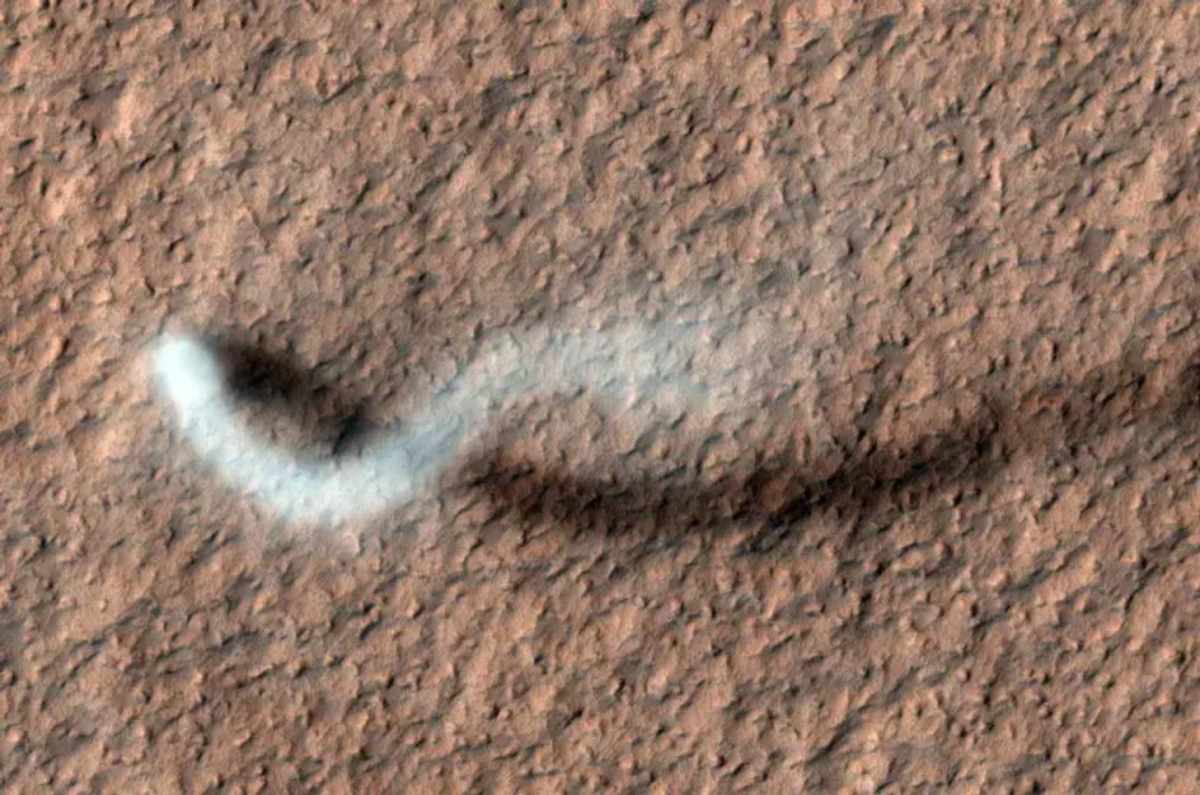
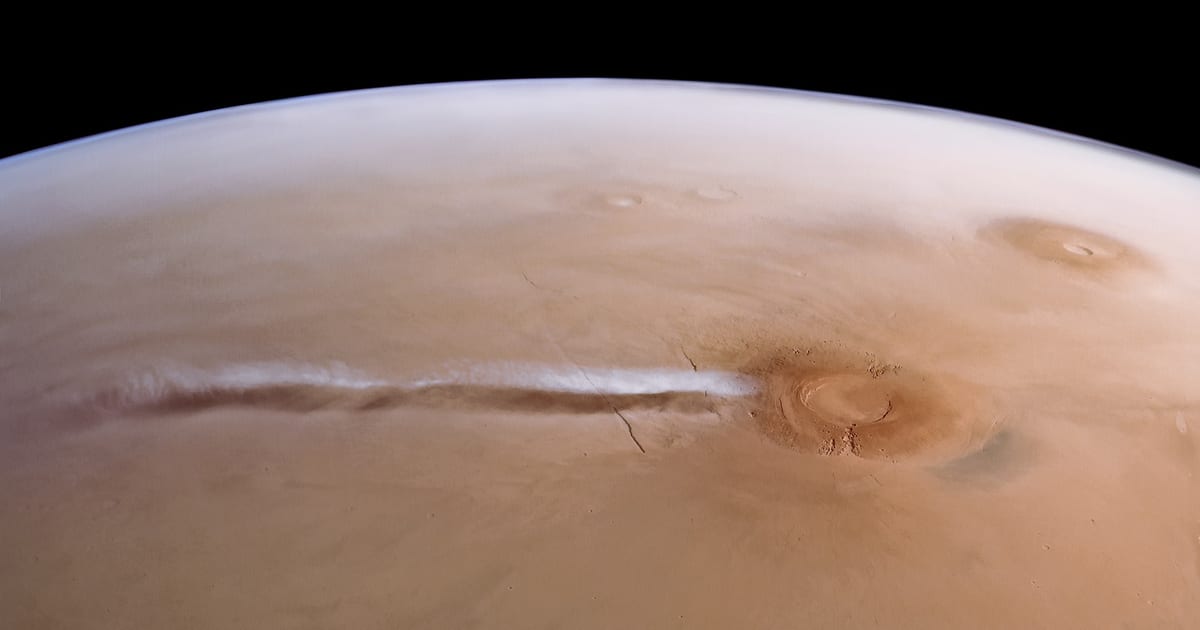
A towering dust devil casts a serpentine shadow over the Martian surface in this image acquired by the High Resolution Imaging Science Experiment (HiRISE) camera on NASA’s Mars Reconnaissance Orbiter (Image Source: NASA)

This finding, published in the journal Nature on November 26, 2025, will have an immediate and crucial impact on our understanding of the Red Planet. The study showed that the Martian atmosphere can reach levels of charge high enough to quicken the formation of oxidizing compounds. These can then rapidly destroy organic molecules on the surface, as well as compounds in the atmosphere, thereby disrupting its photochemical balance. This newly discovered process may also help explain the long-standing mystery of why Mars' gases, such as methane, disappeared so rapidly. 
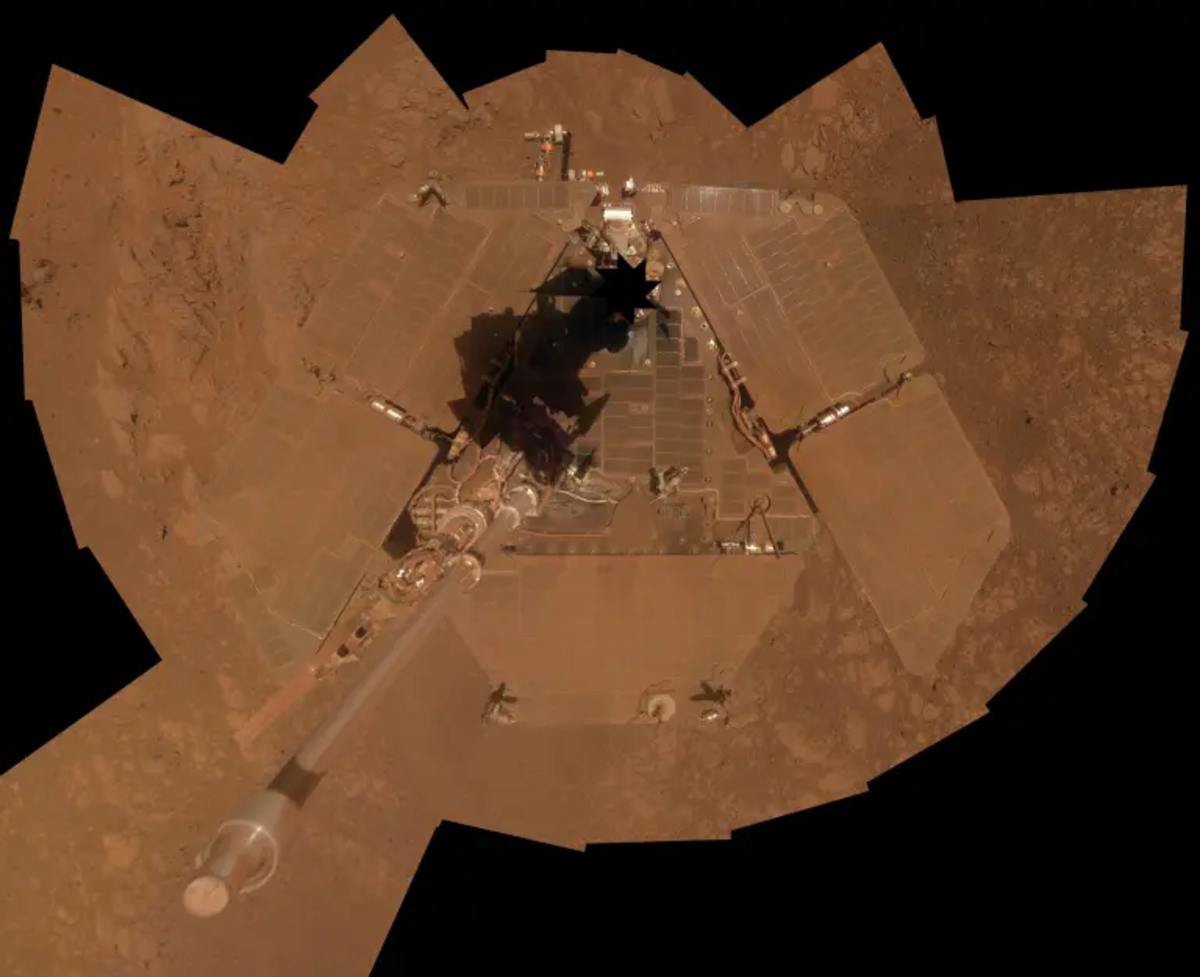
A dust storm on Mars in 2008 temporarily cuts the amount of sunlight reaching the solar array on NASA’s Mars Exploration Rover Spirit, leaving the rover in a vulnerable state (Image Source: NASA/JPL-Caltech/Cornell)

Those electric charges most likely affect the way that dust moves around the planet and play an important, previously unknown role in Mars's climate system. The sparks also pose a risk to the electronics aboard current robotic missions and could be a safety hazard for astronauts on future crewed missions. The SuperCam microphone that made the discovery possible is the very same tool that first captured the sounds on Mars in 2021.

Recently, in a separate but equally fascinating find, NASA's Perseverance rover found an unusual rock in Jezero Crater that may be what is left of a visitor from the wider Solar System. The rock, which measures about 31 inches across and is named "Phippsaksla," immediately caught the rover's attention because its sculpted, high-standing shape was highly unusual compared to the low-lying surrounding Martian rock in the Vernodden area. 
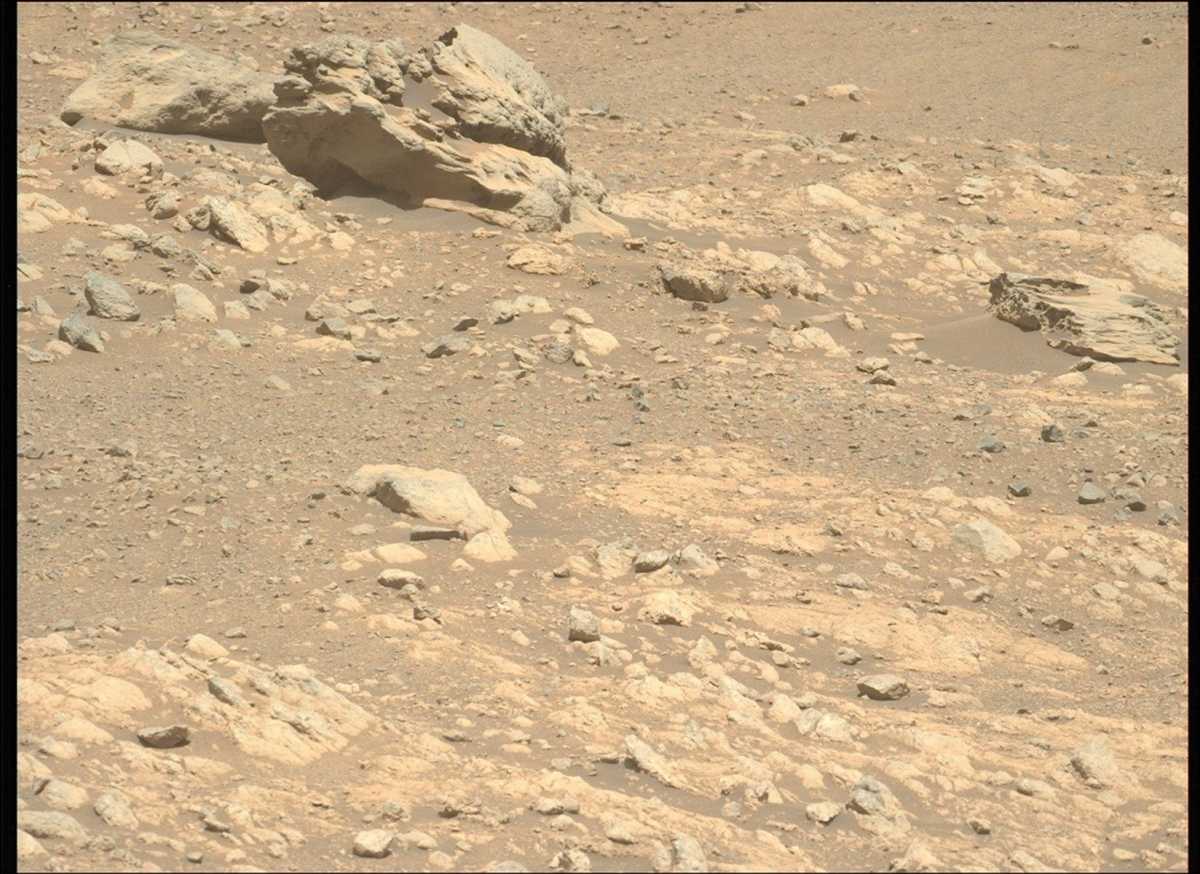
An image of the unusually-shaped rock
An image of the unusually-shaped rock "Phippsaksla" (upper-left in the distance) captured by NASA's Mars Perseverance rover. (Image Source: NASA/JPL-Caltech/ASU)

The SuperCam instrument on the rover fired its laser at the rock and analysed its chemistry with a spectrometer. Its findings confirmed that it was rich in iron and nickel, a metallic signature similar to that of meteorites originating in the core of large asteroids. Thus, this rock suggests Phippsaksla initially formed far beyond Mars before crashing into the planet. For comparison, a nickel-iron alloy is also a key constituent of Earth's own core. 

More in Starlust

Stunning new study claims Mars may have supported life longer than initially suspected

ESA’s ExoMars captures massive dust avalanches on Mars triggered by a meteoroid impact
MORE STORIES

The discovery is based on observations made during the probe's record-setting dive in December 2024, when it came within a mere 3.8 million miles of the Sun.
21 hours ago
University of Rochester researchers have evidence that Earth's magnetic field may have funnelled key elements from our atmosphere to the Moon.
1 day ago
The spider-like feature may offer clues about subsurface liquid water on Europa.
1 day ago
The 17-hour X-ray study, performed in late November 2025, captured a subtle X-ray glow emanating from 3I/ATLAS's core.
2 days ago
The degree of space weather impact determines how bright soils appear.
2 days ago
Astronomer Dr. Christopher Manser has stated that the Sun will run out of hydrogen in its core as it dies, becoming a red giant in about 5 billion years.
3 days ago
The enormous burst of energy, which peaked at 12:01 a.m. on December 8, was imaged by NASA's Solar Dynamics Observatory.
3 days ago
The findings represent the first major results from OASIS, a program that uses advanced telescope instruments to seek out large planets and brown dwarfs.
4 days ago
The space weather alert was triggered by an M8-class solar flare from sunspot 4299 on December 6, which immediately preceded the incoming CME.
5 days ago
Physicists found that clocks on Mars will tick 477 microseconds (millionths of a second) faster than on Earth per day, on average.
5 days ago