NASA's Artemis II Orion spacecraft advances in launch preparations at Kennedy Space Center
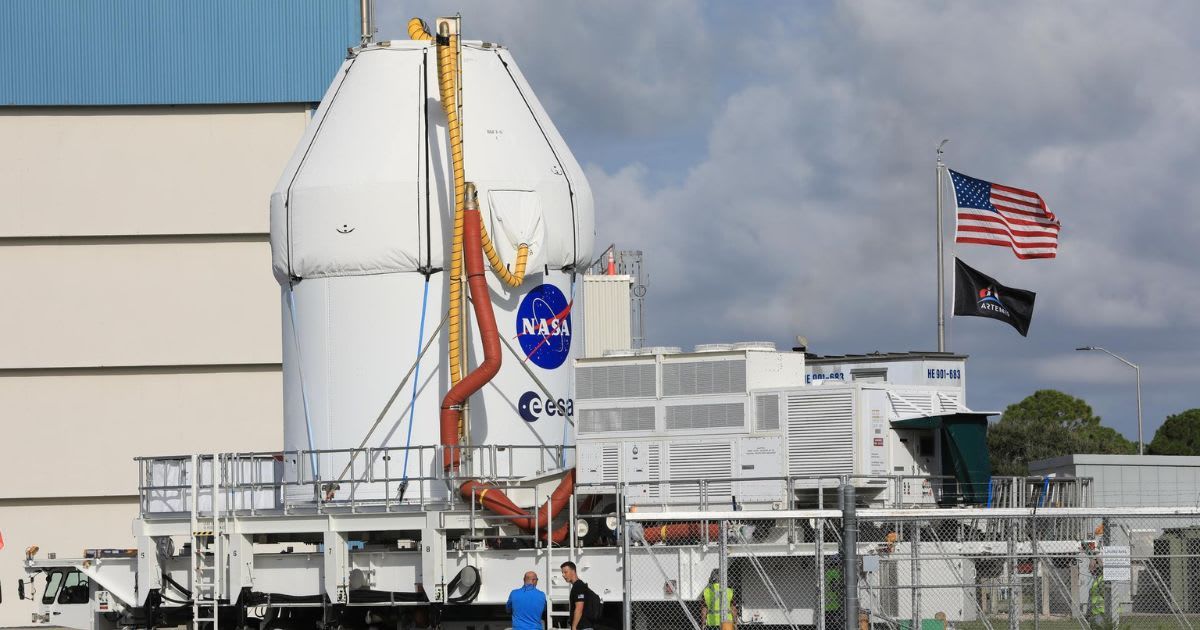
NASA's Artemis II Orion spacecraft is one step closer to launch after a significant move at the agency's Kennedy Space Center. Following the completion of fueling, the spacecraft was transported to its next processing facility on August 10, according to NASA.
On the move 🚚
— NASA's Kennedy Space Center (@NASAKennedy) August 11, 2025
With fueling complete, NASA’s Orion spacecraft departed the Multi-Payload Processing Facility for the Launch Abort System Facility. Next, Exploration Ground Systems teams will begin integrating Orion with the 44-foot-tall abort tower. https://t.co/Uk3qn30o30 pic.twitter.com/UGqn3WpfQU
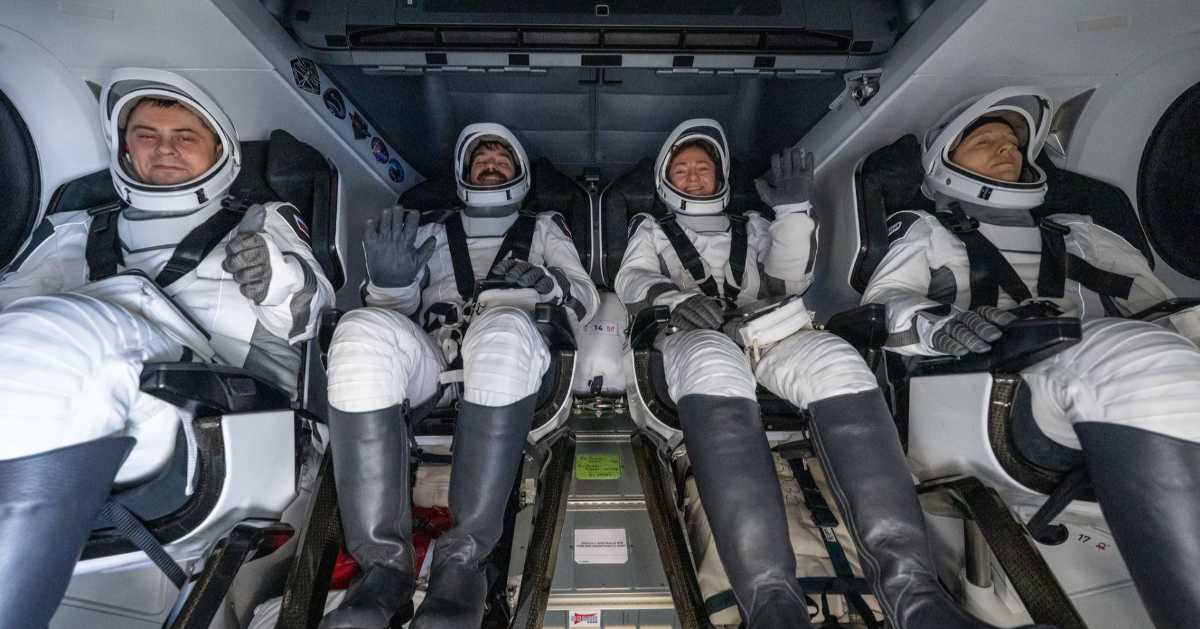
The Orion capsule, which will carry a crew of four on a ten-day journey around the Moon, has been loaded with all necessary propellants, gases, and coolants. The Artemis II crew, consisting of NASA astronauts Reid Wiseman, Victor Glover, and Christina Koch, and CSA astronaut Jeremy Hansen, recently conducted a series of tests inside the spacecraft, practicing procedures in their Orion Crew Survival System suits.
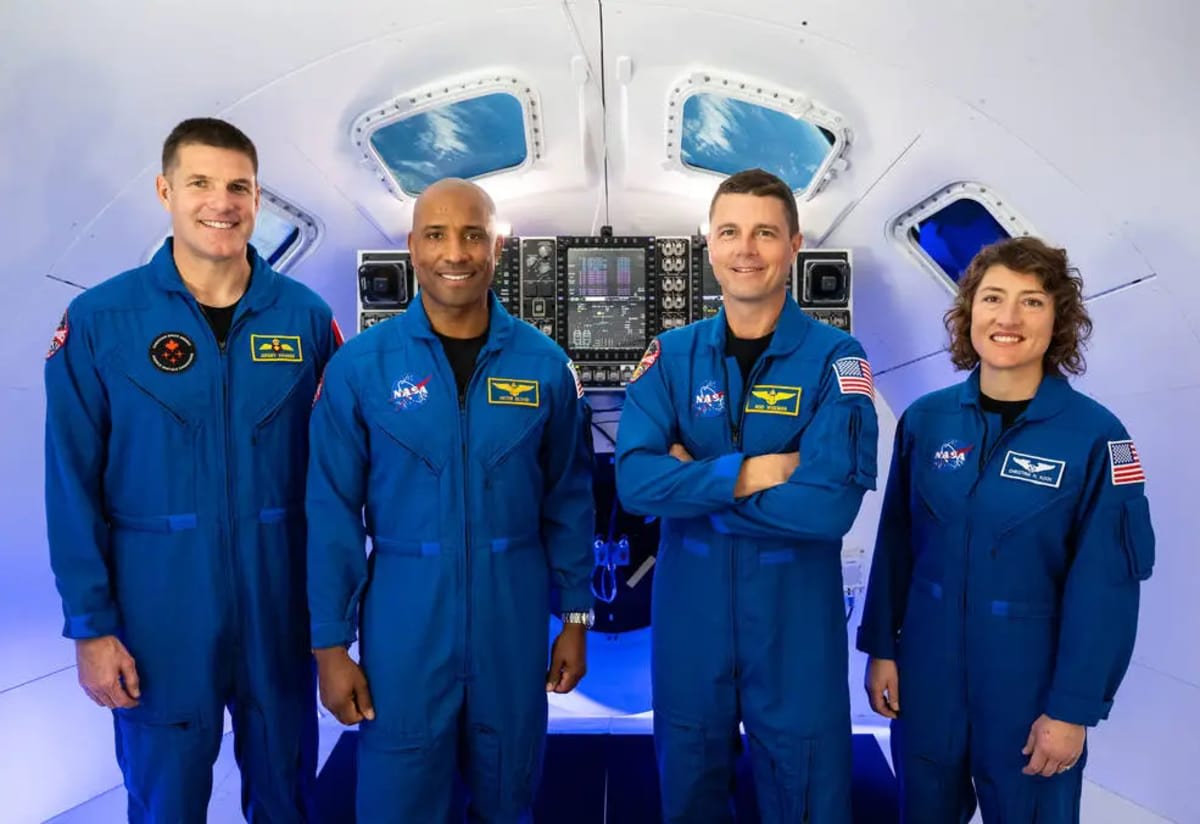
The vehicle is now at the Launch Abort System Facility, where a crucial 44-foot-tall escape system will be attached. This system, which includes the "launch abort" tower and a fairing assembly to protect the crew module, is designed to safely separate the crew from the SLS (Space Launch System) rocket in the event of a launch emergency. Once this integration is complete, the entire Orion stack will be moved to the Vehicle Assembly Building to be connected to the "Moon rocket." This test flight marks the first crewed mission of the Artemis campaign, which aims to return humans to the lunar surface and establish a foundation for future missions to Mars.
Just weeks before its transfer, the Artemis II crew completed a multi-day training session inside the Orion spacecraft. The astronauts, wearing their Orion Crew Survival System spacesuits, boarded the capsule on July 31 to simulate launch day and orbital activities, as per NASA. This hands-on training allowed astronauts Reid Wiseman, Victor Glover, Christina Koch, and Jeremy Hansen to experience flight conditions and test their ability to respond to potential emergencies. Connected to the spacecraft's communication and life support systems, they practiced key launch-day activities, including suit leak checks and communication checkouts. Teams also ran simulated scenarios to challenge the crew, such as the failure of a fan in the air revitalization system.
The Artemis II crew recently completed three days of testing and training inside the Orion spacecraft at @NASAKennedy. They performed suit fit and leak checks, communication checks, interfaced with equipment, and simulated launch and flight scenarios. https://t.co/xILo2Abgea pic.twitter.com/K3WWElibZB
— NASA Artemis (@NASAArtemis) August 4, 2025
“In about six months, Artemis II astronauts will journey around the Moon for the first time in 53 years,” stated acting NASA Administrator Duffy. “America rallied behind Apollo because it represented the best of us — now it’s Artemis’ turn. They’re not just carrying a flag — they’re carrying the pride, power, and promise of the United States of America.” This crucial test enabled both the crew and ground teams to verify the compatibility of all equipment and systems, ensuring they were prepared for any scenario that might arise during the mission.
Built in partnership with prime contractor Lockheed Martin, the Orion spacecraft is NASA's only vehicle currently designed for crewed deep space missions, per the space agency. It provides astronauts with a safe environment for journeys far beyond Earth, offering protection from solar radiation and the extreme speeds required for re-entry into the atmosphere. The Orion's advanced systems for communications and life support are essential for its role in the Artemis program, which is designed to be a flexible, multi-decade effort. The spacecraft is a key part of NASA's long-term strategy to build the infrastructure needed for increasingly complex missions, including the future human exploration of Mars.