Partial Lunar Eclipse August 2026: Best pictures of the 'almost blood Moon' from around the world
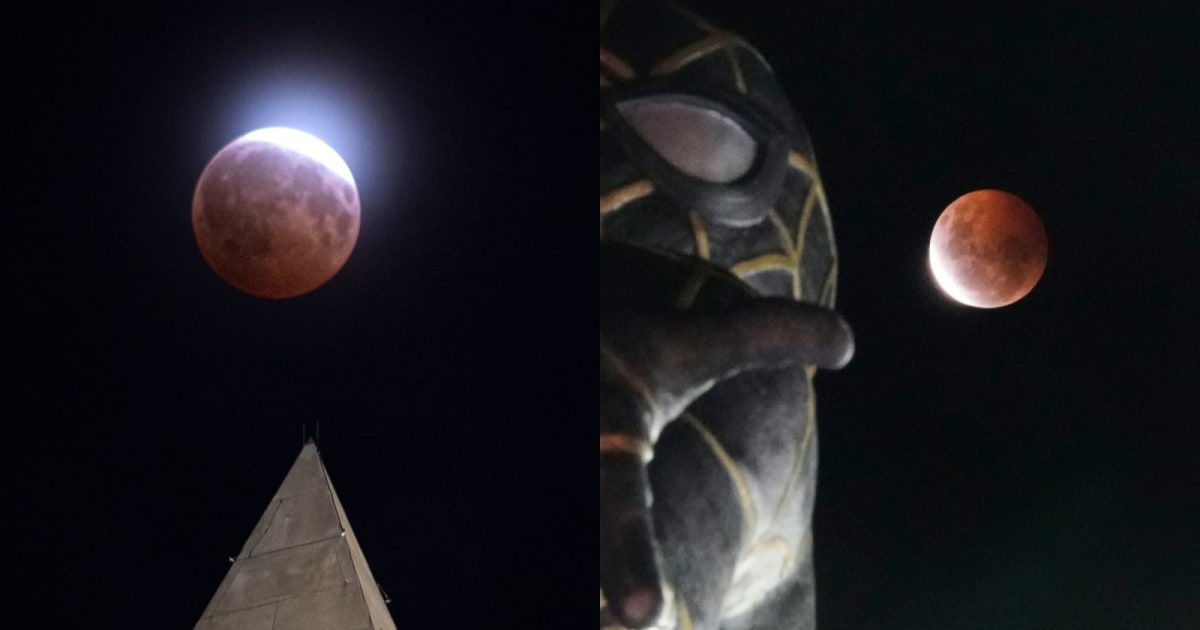
The eclipse crossed many major cities in the Americas, Europe, Africa, and West Asia and lasted more than five hours from start to finish.
A lunar eclipse is seen through clouds behind the Washington Monument in Washington (L); The Moon rises behind a Spider-Man statue during a partial lunar eclipse in El Alto, Bolivia (R). (Cover Image Source: AP Photo/Juan Karita/Cliff Owen)

On the night of August 27-28, more than a billion skygazers had the chance to witness a stunning lunar eclipse that turned Earth's closest celestial neighbor almost entirely red over multiple continents. The eclipse was a partial one, meaning the entire lunar disk was not in Earth’s shadow, but it was still the best one that will be visible until December 31, 2028. The eclipse crossed a number of major cities in the Americas, Europe, Africa, and western Asia and lasted more than five hours from start to finish.
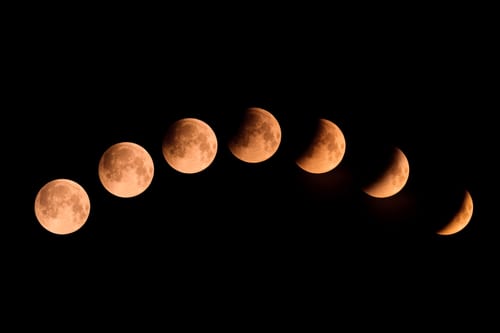
A composite image of the phases of a lunar eclipse over Corsica on 16th May 2022
A composite image of the phases of a lunar eclipse over Corsica on 16th May, 2022. —(Image Source: joningall/Getty Images)

The eclipse began when the Moon started sliding into Earth’s outer shadow (penumbra) at 9:23 pm EDT on August 27. It eventually entered the inner shadow (umbra) at 10:33 pm, reaching its peak at 12:12 am on August 28. The partial eclipse ended at 1:51 am, while the penumbral phase ended at 3:01 am. If you missed the event due to weather or other reasons, check out these pictures from across the world.

Top pictures of the partial lunar eclipse

In the image below, a partial lunar eclipse is seen in Los Angeles, California, on August 27. California was part of the region where only the peak and final phase of the eclipse was visible, but it also had great sky conditions at night. 
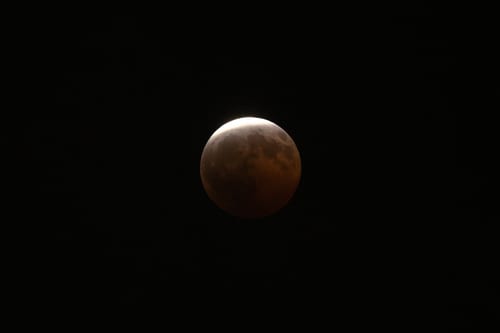
A partial lunar eclipse is seen in Los Angeles, Thursday, Aug. 27, 2026. (AP Photo/Jae C. Hong)
The lunar eclipse was visible to millions across multiple continents on the night of August 27-28. (AP Photo/Jae C. Hong)

In the picture below, the Moon can be seen rising behind a Spider-Man statue during a partial lunar eclipse in El Alto, Bolivia, on August 27. 
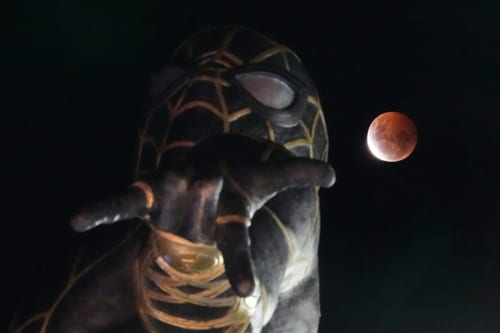
The moon rises behind a Spider-Man statue during a partial lunar eclipse in El Alto, Bolivia, Friday, Aug. 28, 2026. (AP Photo/Juan Karita)
This partial lunar eclipse is said to be the best eclipse until December 31, 2028. (AP Photo/Juan Karita)

A partial lunar eclipse is seen on August 28, in Cairo, Egypt, in the image below. Several nations in Africa and West Asia were well placed to see the eclipse. 
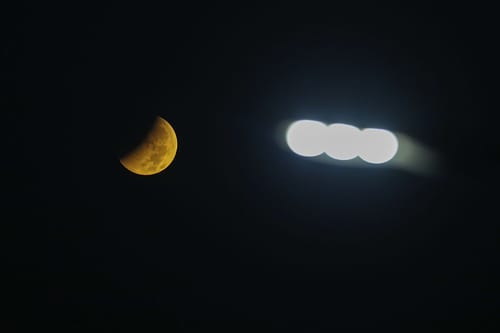
A partial lunar eclipse is seen on August 28, 2026 in Cairo, Egypt. (Photo by Sayed Hassan/Getty Images)
The partial phase of the eclipse started at 10:33 pm EDT on August 27. (Photo by Sayed Hassan/Getty Images)

The following image shows the Moon above the stadium lights during the second half of a preseason NFL football game between the New England Patriots and Cleveland Browns on August 27 in Cleveland.
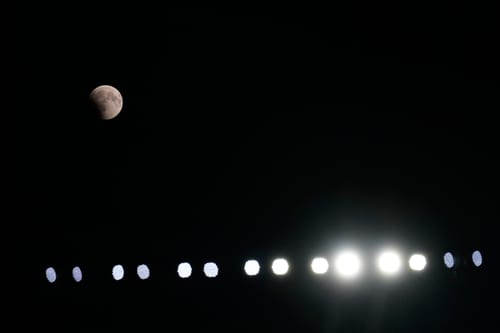
A partial lunar eclipse is seen above the stadium lights during the second half of a preseason NFL football game between the New England Patriots and Cleveland Browns Thursday, Aug. 27, 2026, in Cleveland. (AP Photo/Carolyn Kaster)
The Moon was far into Earth's umbra, which is why it was a deep lunar eclipse. (AP Photo/Carolyn Kaster)

Several European cities were treated with clear skies that ensured a pleasant viewing experience. This image below shows the Moon setting behind the Colosseum in Rome, Italy, in the early hours of August 28. 
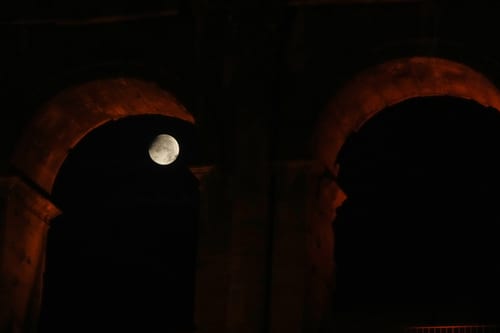
The moon sets behind the Colosseum during a partial lunar eclipse in Rome, Friday, Aug. 28, 2026. (AP Photo/Gregorio Borgia)
Europe and Africa didn't witness the peak of the eclipse so the residents there missed out on seeing a blood Moon. (AP Photo/Gregorio Borgia)

The picture below features the Moon during the beginning of a partial lunar eclipse in Munich, Germany.
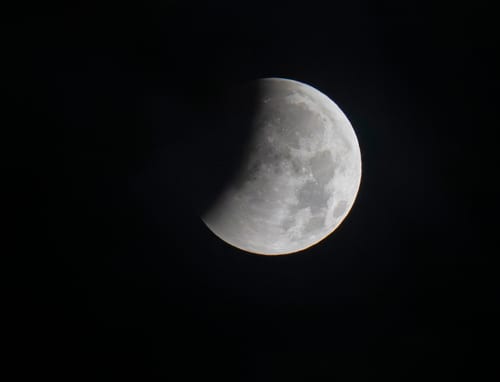
The beginning of a partial lunar eclipse is seen from Munich, Germany, Friday, Aug. 28, 2026. (Peter Kneffel/dpa via AP)
Over a billion people were in the path of the eclipse that crossed dozens of countries. (Peter Kneffel/DPA via AP)

The image below captures a person watching the Full Moon as it rises above the Tagus River hours before the lunar eclipse began in Lisbon.
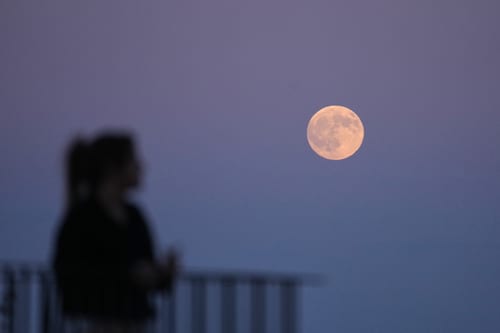
A person watches as the full moon rises above the Tagus river hours before a lunar eclipse in Lisbon, Thursday, Aug. 27, 2026. (AP Photo/Armando Franca)
The eclipse lasted five-and-a-half hours from start to finish. (AP Photo/Armando Franca)

The picture below shows a lunar eclipse of the Moon through light clouds above the Washington Monument in Washington.
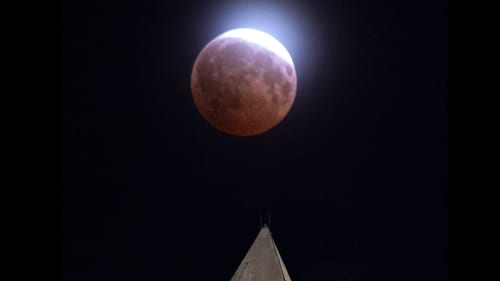
A lunar eclipse of the moon is seen through light clouds above the Washington Monument in Washington, Thursday, Aug. 27, 2026. (AP Photo/Cliff Owen)
NASA says this lunar eclipse was of the Saros 138 series, and the next one in this series will occur in 2044. (AP Photo/Cliff Owen)

Missouri also had clear night skies, which allowed for pleasant viewing in major areas like Kansas City. The image below features the Full Moon rising beyond the city hall in downtown Kansas City before the lunar eclipse.
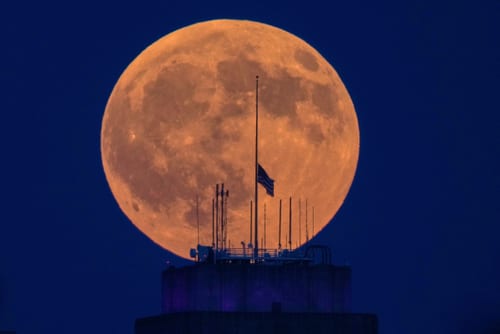
The full moon rises beyond the city hall in downtown Kansas City, Mo. before a lunar eclipse Thursday, Aug. 27, 2026. (AP Photo/Charlie Riedel)
During the eclipse, more than 96 per cent of the Moon's disk was within Earth's umbra. (AP Photo/Charlie Riedel)

In Africa and Europe, the eclipse was best seen in the wee hours before sunrise. The next image captures the partial lunar eclipse as seen across Pegwell Bay on August 28 in Ramsgate, England.
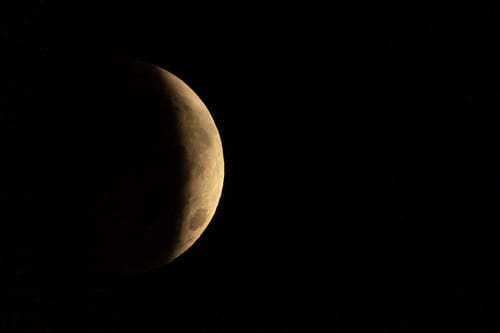
A partial lunar eclipse is seen across Pegwell Bay on August 28, 2026 in Ramsgate, England. The event saw the Moon obscured by Earth’s shadow, with around 93% of its visible diameter covered at the eclipse’s peak. (Photo by Brook Mitchell/Getty Images)
At the eclipse's peak, only a thin sliver of the Moon's surface was outside Earth's umbra. (Photo by Brook Mitchell/Getty Images)

According to NASA, the next lunar eclipse will occur on February 20, 2027. It will be a penumbral eclipse, meaning the Moon will cross the Earth’s outer shadow (the penumbra) and won’t get as dark as a partial or total lunar eclipse. This one will be seen across the Americas, Europe, Africa, Asia, and western Australia. The next total lunar eclipse will occur on December 31, 2028, and it will be visible across Europe, Africa, Asia, Australia, and the Pacific.

More on Starlust

2028 could be the best year yet for the Perseid meteor shower, expert says; here’s how
After the 2026 total solar eclipse, get ready for a 'ring of fire' and 'Eclipse of the Century' in 2027

MORE STORIES

During the eclipse, more than 96 percent of the Moon's disk will be within Earth's umbra.
1 day ago
The NOAA says that auroras may be visible over some northern and upper Midwestern states in the U.S.
1 day ago
Cloud cover and storms can play spoilsport. Here's what conditions to expect across the U.S.
3 days ago
"If rates during 2027 are enhanced to at least 100 per hour, then we can expect 200-300 per hour for 2028."
3 days ago
Earth's shadow will swallow 96% of the Moon this week and turn it a deep red. Here's what to expect.
3 days ago
A partial lunar eclipse this deep will not be seen in another two years.
3 days ago
The eclipse will begin when the Moon enters Earth’s outer shadow at 8:23 pm CDT and last for hours.
4 days ago
During the eclipse, the Moon will turn almost into a ‘blood Moon’ turning coppery red as it moves through Earth’s shadow. 
5 days ago
As much as 96 per cent of the Moon’s surface will be covered in Earth’s shadow and its rarity makes this event a must watch. 
5 days ago
The partial lunar eclipse this week will turn the moon nearly blood red. Here's when to look up.
5 days ago