Partial lunar eclipse 2026: Why you won’t want to miss this event on August 27-28
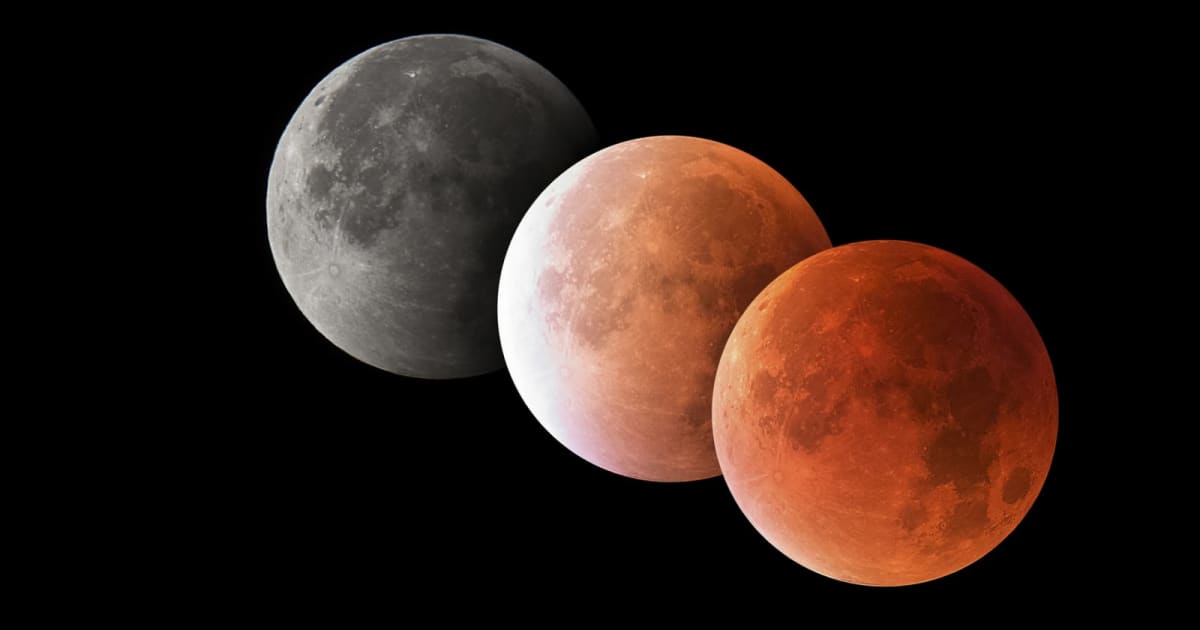
It’s almost time to look up again as there’s a deep partial lunar eclipse heading towards us. On August 27-28, the Moon will fall into Earth’s shadow and take on a rusty, reddish hue and become an ‘almost blood Moon’—a phenomenon that won’t be seen for the next couple of years. As much as 96 per cent of the Moon’s surface will reportedly be covered in Earth’s shadow and its rarity makes this event a must watch.
Why you should not miss the event
This lunar eclipse is happening two weeks after the August 12 total solar eclipse, which was witnessed by millions around the world.
While a lunar eclipse is not considered as eventful as a solar eclipse, the one next week is something you would not want to miss. Such a deep partial eclipse with nearly 96 per cent coverage will not be seen until December 31, 2028—that too will be visible majorly in the eastern hemisphere.
How does a lunar eclipse occur?
A lunar eclipse occurs when the Earth is positioned between the Moon and the Sun. When our planet moves between the two bodies, its shadow falls on the Moon as it moves in its orbit.
What is a total and partial lunar eclipse?
During a total lunar eclipse, the entire Moon passes through Earth’s shadow whereas only a portion of it is covered during a partial lunar eclipse.
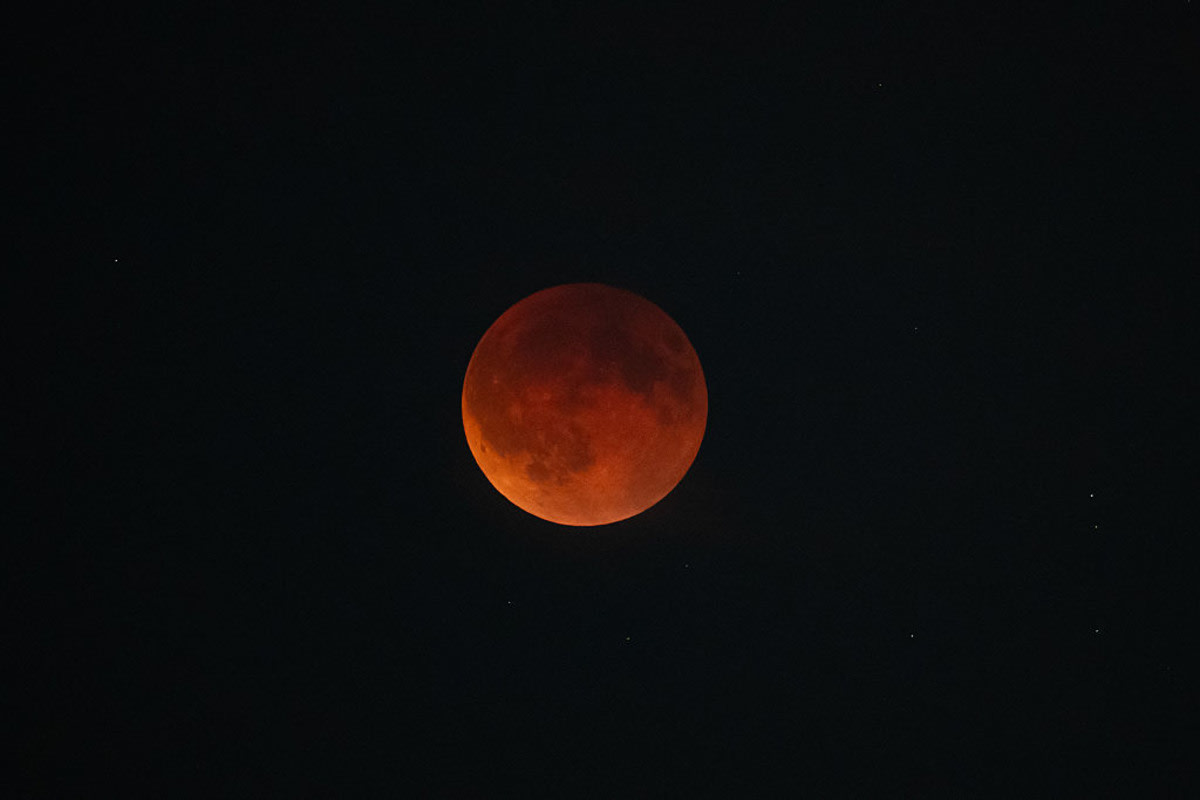
On the night of August 27, a large portion of the Moon will move through Earth’s shadow and only a tiny sliver of it will be brightly illuminated.
What are the different phases of a lunar eclipse?
You will see the Moon pass through different stages of the eclipse when the event starts.
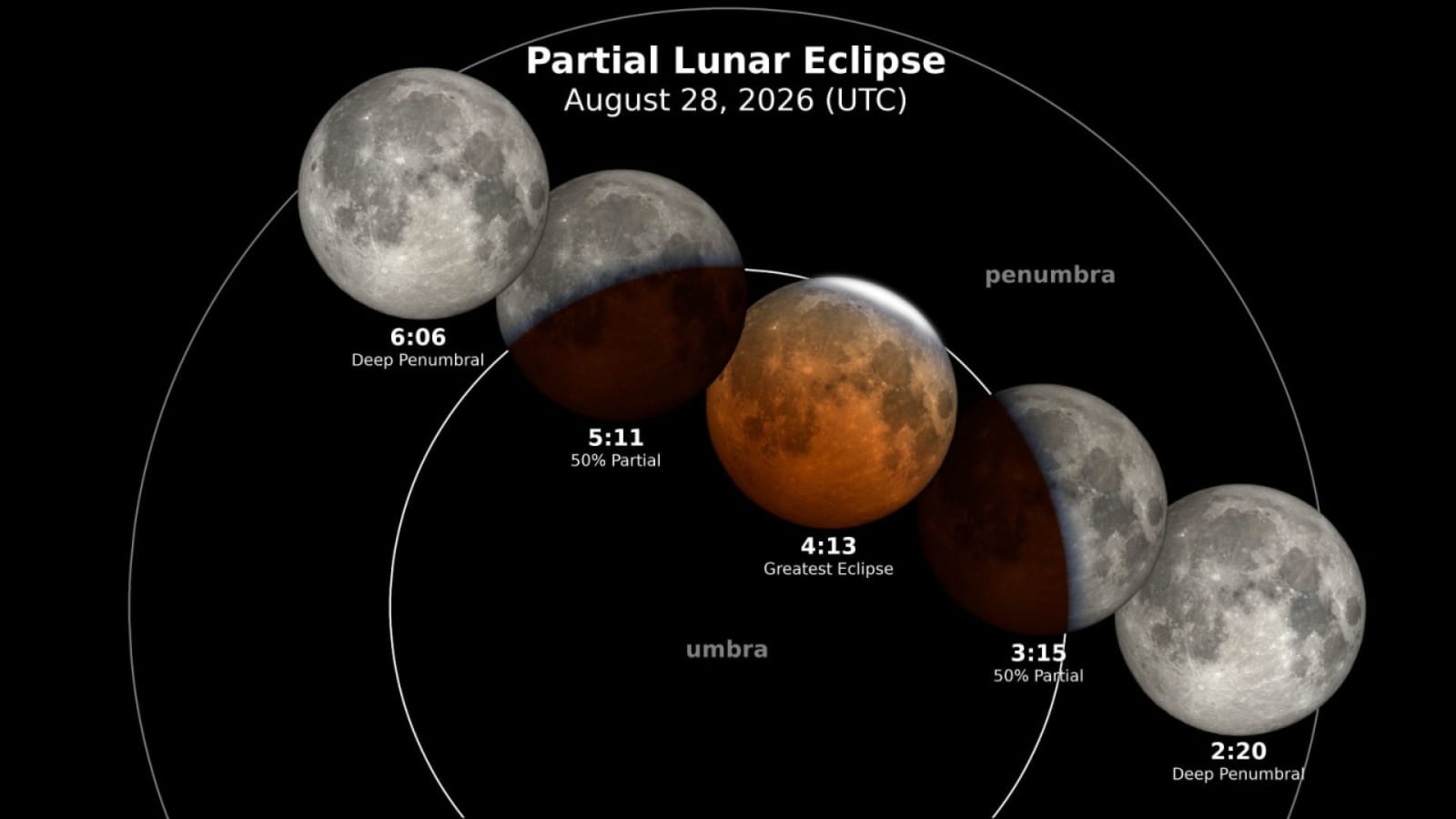
First the Moon will enter penumbra (Earth’s outer shadow) before entering the umbra (the dark central shadow)—that’s when the Moon's surface becomes noticeably darker and it can last between 30 minutes to more than an hour.
How does the Moon become a 'blood Moon'?
It is during the umbral phase when the Moon will take on a reddish hue because despite being mostly blocked by Earth, some sunlight passes through our planet’s atmosphere.
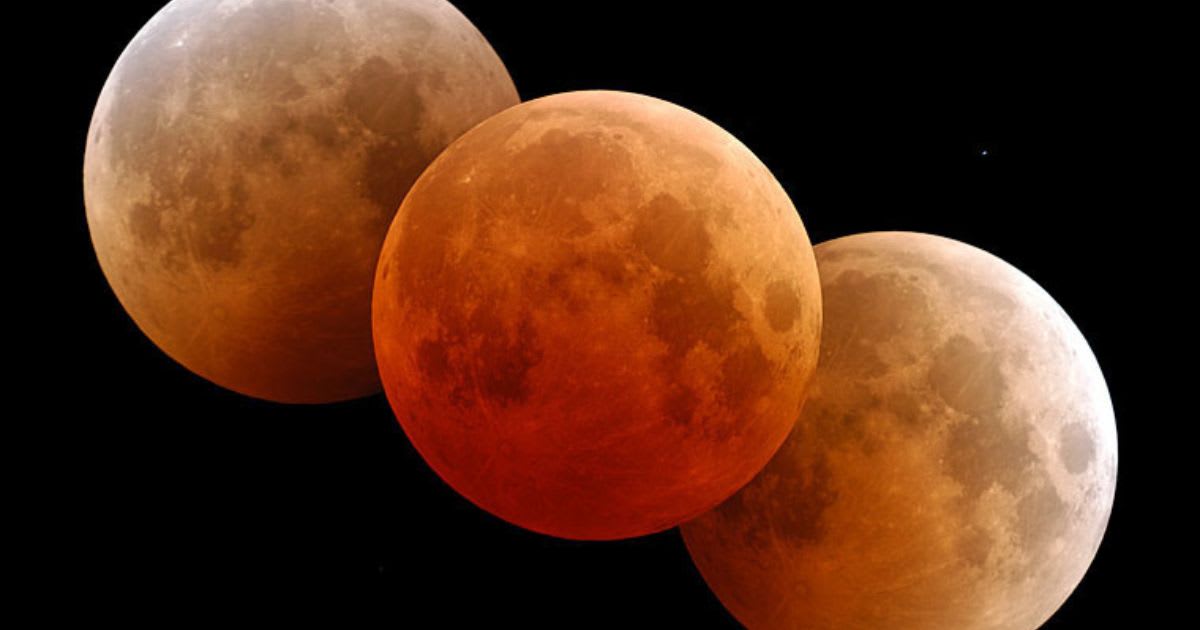
Light with shorter wavelength such as blue gets scattered away as sunlight filters through the atmosphere and those will longer wavelengths like red and orange fall onto the Moon, giving it a distinct coppery look. As the eclipse progresses, the shadow phases reverse, meaning the Moon exits the umbra and enters the preumbral stage.
Where will the eclipse be visible?
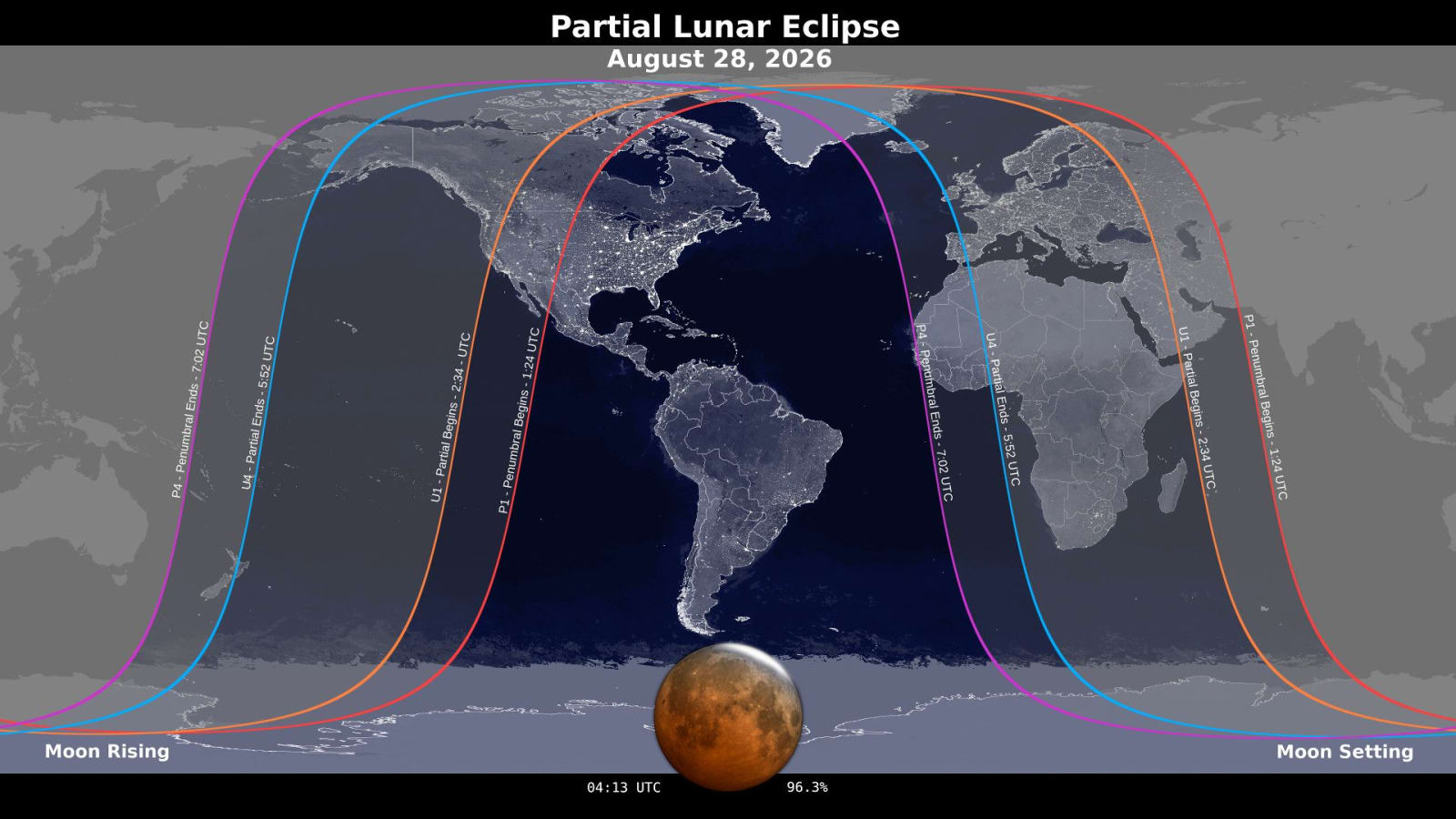
The upcoming lunar eclipse will be a lot easier to spot as you just need the Moon to be above the horizon, and residents across North and South Americas as well as Europe and Africa will be able to experience it.
When does the eclipse start and end?
According to Earthsky, the penumbral eclipse will begin at 8:23 pm CDT and the Moon will start entering the umbra at 9:33 pm. The eclipse will reach its peak at 11:12 pm CDT—that’s when the Moon will become coppery red and it will start exiting the umbra at 12:52 am CDT on August 28. The eclipse will finally be over when the penumbral phase ends at 2:02 am CDT. All phases of the eclipse will be visible to everyone on the night side of the Earth but timings may differ according on your location.