One of the biggest and brightest SAR arcs in years lights up skies from the U.S. to Europe
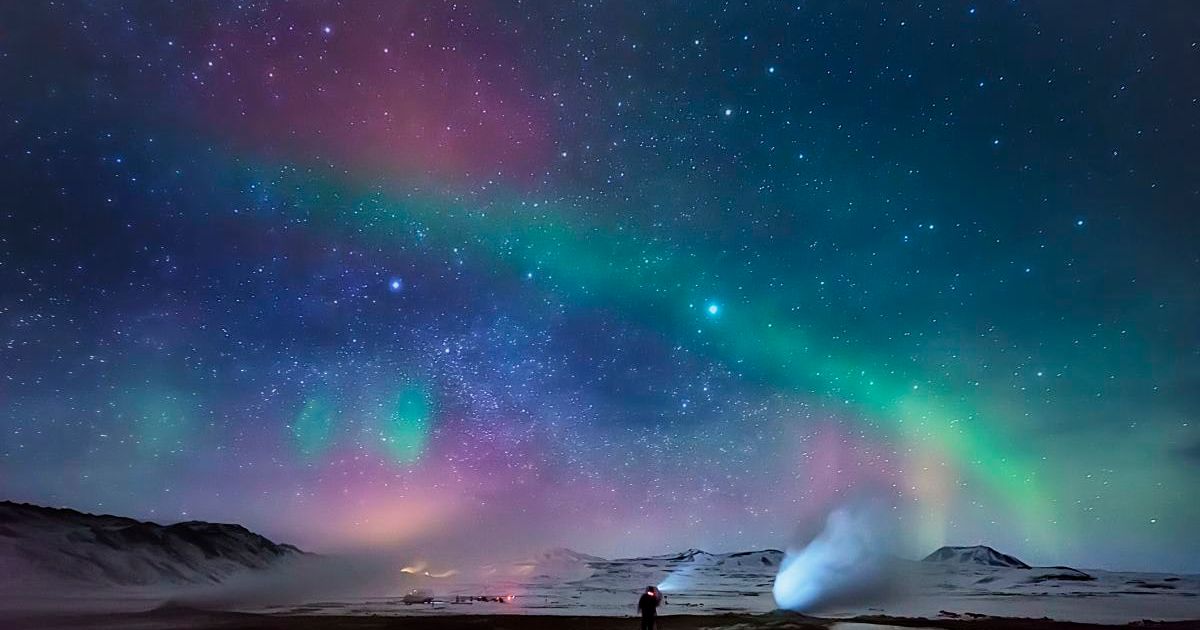
A rare and brilliant atmospheric phenomenon, a Stable Auroral Red (SAR) arc, unexpectedly illuminated the night sky from the United States to Europe on October 18th, defying predictions based on the relatively minor geomagnetic storm that caused it, as per Space Weather.
The celestial display, described as one of the most intense in years, appeared during a routine G2-class geomagnetic storm triggered by a passing Coronal Mass Ejection (CME). Despite the storm's moderate strength, the resulting SAR arc was so vibrant that it was captured reflecting in a pond by photographer P-M Hedén in Norrtälje, Sweden.
Researchers are now scrambling to understand why this particular event exhibited such extreme luminosity. Jeff Baumgardner, who studies the arcs at Boston University's Center for Space Physics, noted the phenomenon was potent enough to "nearly saturate" his detectors, stating it was an astounding 10 to 30 times brighter than typically expected from a G2 storm. "Only a few times in a solar cycle do we get an SAR arc this bright," Baumgardner said, acknowledging that current scientific models failed to predict the exceptional intensity. "We need to gather more information."
A time-lapse captured the event's stunning progression. Earth to Sky Calculus on Vimeo featured a movie of the arc compiled from images taken by a filtered all-sky camera near Presque Isle, ME. The footage, covering four hours (8:00 p.m. - 12:00 a.m. ET) with 120-second exposures, showed the arc's near-saturation of the detector at its peak brightness (around 10:00 p.m. ET), a point where Baumgardner suggests it "may have been visible to the unaided eye."
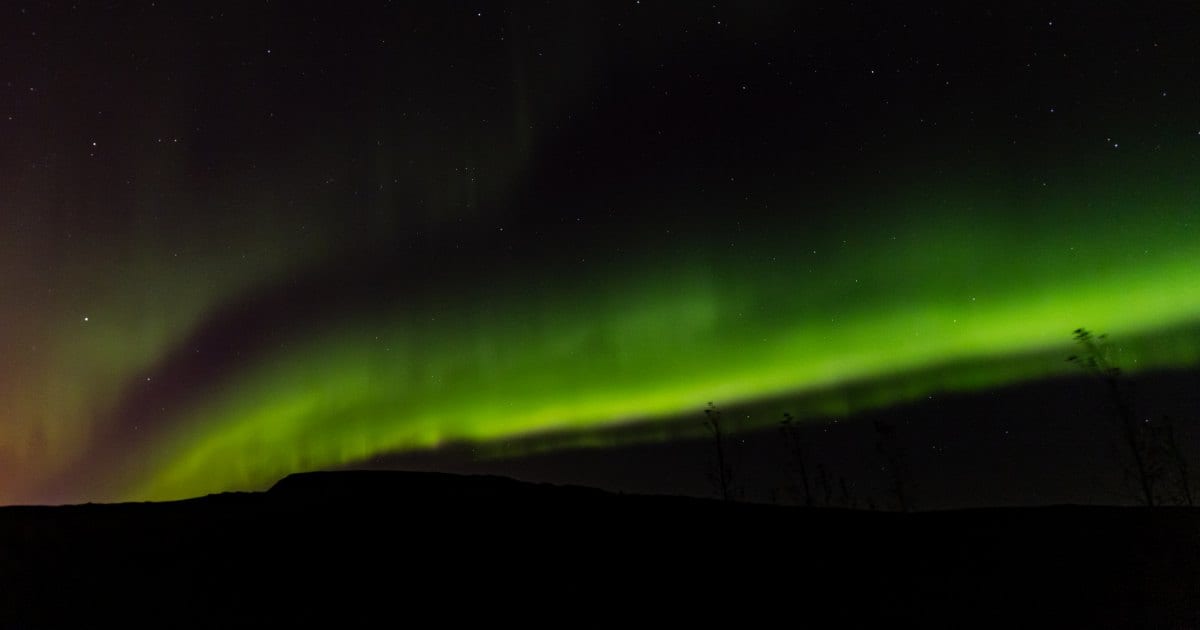
This latest event adds to the complexity of SAR arcs, which are a relatively modern discovery, only widely acknowledged and studied since the mid-1950s. They appear as an unusual red halo, distinct from the more common green and red auroras they sometimes encompass, as seen in a wide-angle photograph from Poolburn, New Zealand, during an energetic geomagnetic storm on January 3, 2024, according to APOD NASA.
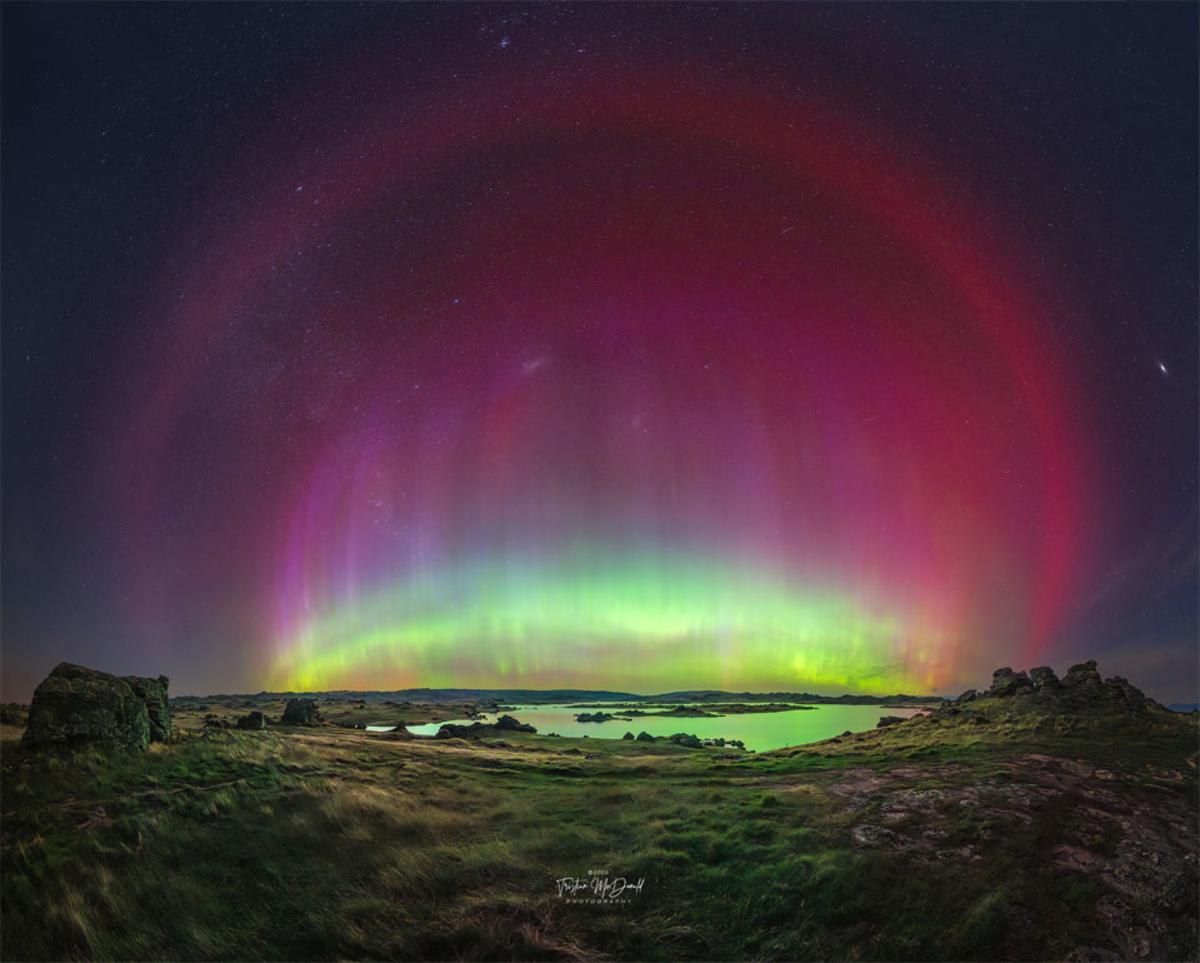
SAR arcs are distinct from true auroras. They manifest when a "leak" occurs in Earth's ring current system, an immense, donut-shaped electrical circuit carrying millions of amps around the planet. During geomagnetic activity, thermal energy from this powerful ring current can precipitate into the upper atmosphere, generating the characteristic, deep red glow. Though first documented in 1956, their original name, "Stable Auroral Red arcs," is misleading; they are purely a thermal energy transfer. Their primary color is a pure red at 630.0 nm, a wavelength the human eye is notoriously insensitive to, making the brightness of the October 18th event even more remarkable, as some observers were able to spot it without aid.
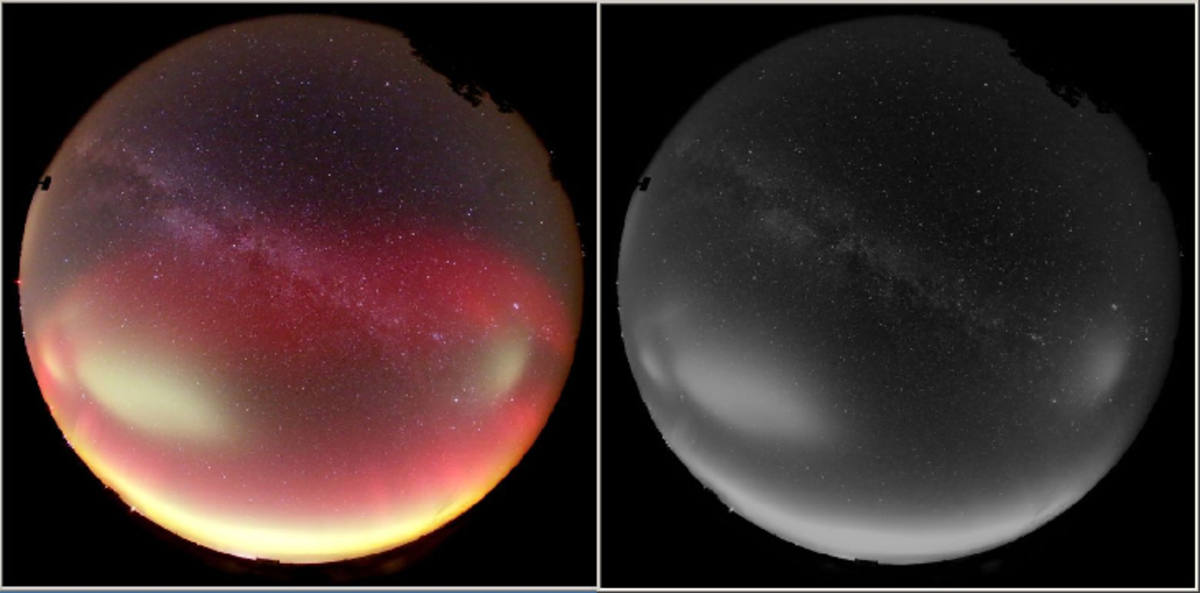
As space weather events continue to challenge our understanding, scientists are pressing for more data to unravel the unpredictable nature of these stunning atmospheric events. The unexpected brilliance of this SAR arc serves as a powerful reminder of the dynamic forces at play high above our planet.
More on Starlust
Triple coronal mass ejections are headed to Earth and could trigger auroras in northern skies
Dual solar wind streams from two giant coronal holes could reach Earth on October 3