Mars is set to cross a spectacular swarm of stars soon—when and how to watch it
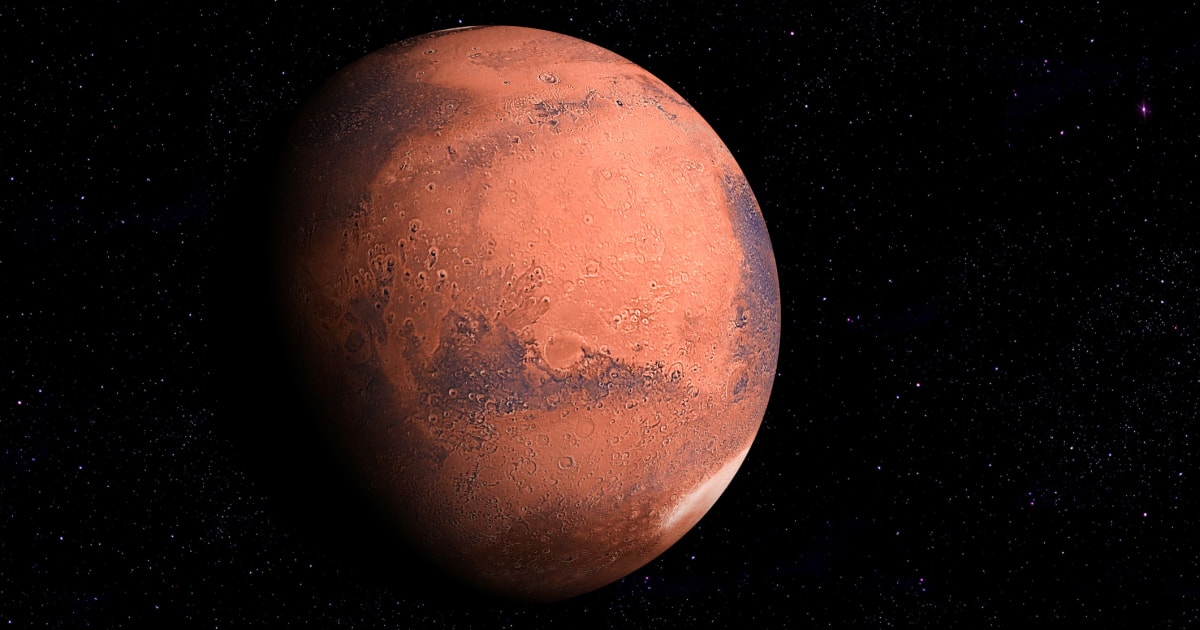
If you look up at the night sky on October 11, Mars may appear like a small red dot sitting inside a huge swarm of stars. The Red Planet will appear almost in the middle of the distant Beehive Cluster, creating a striking sight for skywatchers, with reddish Mars standing out clearly against hundreds of stars. Here's what to know about this event.

Mars is about to cross the Beehive Cluster
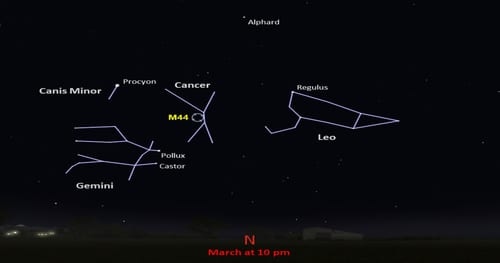
Mars will appear to move across the heart of the Beehive Cluster, or M44, starting October 10. On that morning, the Red Planet will appear near the western edge of the cluster before continuing its apparent journey across the swarm of stars. By October 11, Mars will appear almost in the middle of the cluster, which creates the closest and most striking view of this three-day encounter. Skywatchers can then follow the Red Planet as it continues moving towards the eastern side of the cluster on October 12.
Mars, however, is not actually traveling between these stars. The Beehive Cluster is around 600 light-years away from Earth, while Mars is a mere 148 million miles (238 million km) away from our planet. However, from our vantage point on Earth, the two objects will appear nearly in the same line of sight, so Mars looks like it is sitting among the distant stars of the cluster.
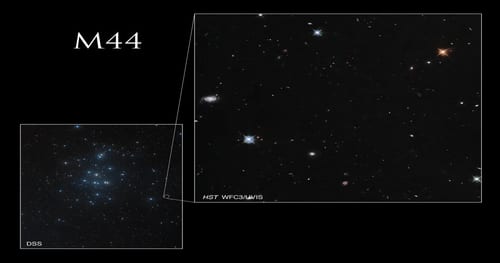
On October 11, this alignment will be even more striking, when Mars will appear to be very close to the center of M44. Mars will shine at around magnitude 1.1, which means it will look brighter and more noticeable than the comparatively faint cluster.
The Beehive Cluster was first observed by Galileo
The Beehive Cluster, which is also called Praesepe or M44, is an open cluster located in the Cancer constellation. This means its stars formed from the same cloud of gas and dust and are loosely connected by gravity. According to NASA, there are around 1,000 stars in this cluster, which is approximately 600-700 million years old. It is also one of the closest open star clusters to Earth.
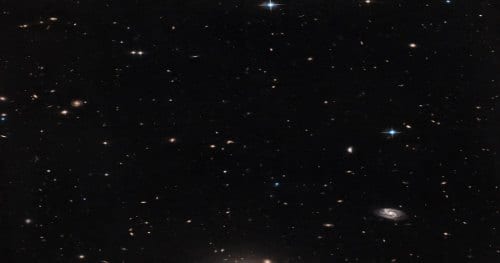
The most interesting thing about this cluster is that its apparent size is around three times wider than the Moon in the sky. On a dark night, it can look like a faint, cloudy patch to the naked eye. But when Galileo Galilei observed it with his telescope in 1610, he was able to resolve the cloudy-looking object into around 40 individual stars.
How to watch Mars pass through the Beehive Cluster
The best time to catch a glimpse of Mars on October 11 will be in the early morning, before sunrise. The exact time will vary according to your location. For instance, in Los Angeles, Mars and the Beehive Cluster will be visible around 2:11 a.m., with the best view around 5:06 a.m. local time. In London, they will be visible around 1:48 a.m., with the best view around 6:03 a.m.
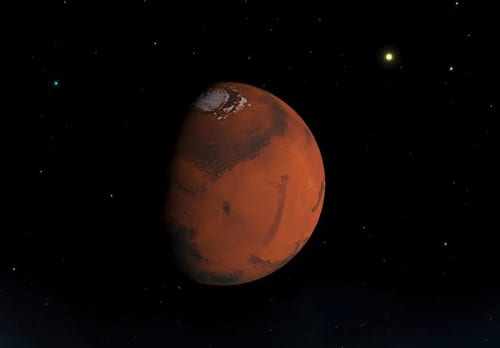
Under a dark sky, the Beehive Cluster will be visible as a faint, cloudy patch to the naked eye, while Mars will look brighter. Binoculars can give a better view because M44's individual stars can be resolved, with Mars clearly visible among them. A small telescope can also be used, especially with low magnification or a wide-field view, so that Mars and the surrounding stars of the Beehive Cluster can be seen in the same field of view.