Have we been wrong about Uranus and Neptune being 'ice giants'? New study certainly suggests so
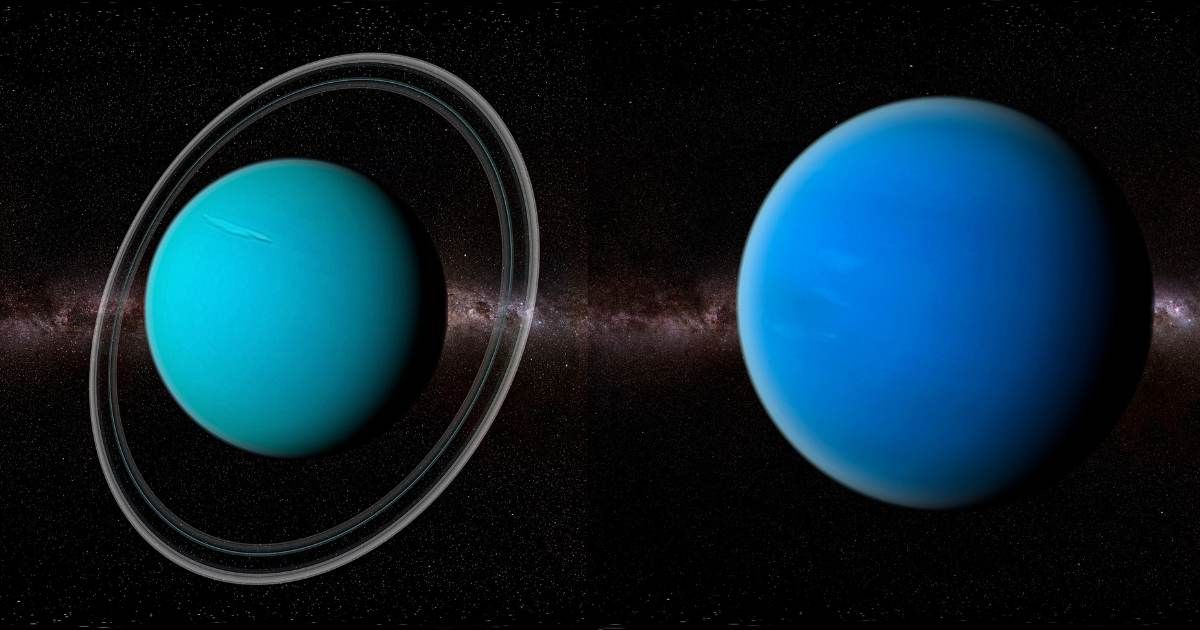
Both Uranus and Neptune have been historically classified as ‘ice-giants.’ However, in a recent study published in the Astronomy & Astrophysics journal, scientists have stated that the atmospheric makeup of both planets could consist of rocks.
![An annotated collage of JWST's observations of Uranus between 19 and 20 January, 2025. [Image Source: ESA/Webb, NASA, CSA, STScI, P. Tiranti, H. Melin, M. Zamani (ESA/Webb)]](https://de40cj7fpezr7.cloudfront.net/de7b47ef-876f-4259-8141-bd2c10c583fc.jpg)
Both Uranus and Neptune have an almost identical rocky core with icy mantles. Scientists had thought that the thick atmospheres around them contained hydrogen, helium, and methane gases along with silicate clouds. However, this new study claims that the planets’ atmospheres might have a lot of rocks too. The research team decided to look closely at Uranus and Neptune due to a separate study that stated that the trans-Neptunian region might be more rocky than icy. In fact, Kuiper Belt objects like Pluto have also been found to have rocky atmospheres.

Trying to figure out the truth, the researchers modeled the composition of both planets. To do this, the team simulated their combined inner and outer atmospheres, mantles, and cores. Next up, they studied Uranus's and Neptune’s temperatures throughout their atmospheric envelopes and found that the silicate clouds have the possibility of condensing into solid, rocky materials. Study author Yamila Miguel of the Netherlands Institute for Space Research told Space.com that while the planets’ interiors might still have some significant amounts of ice, they are surely not entirely made up of it, as the earlier assumptions had suggested.
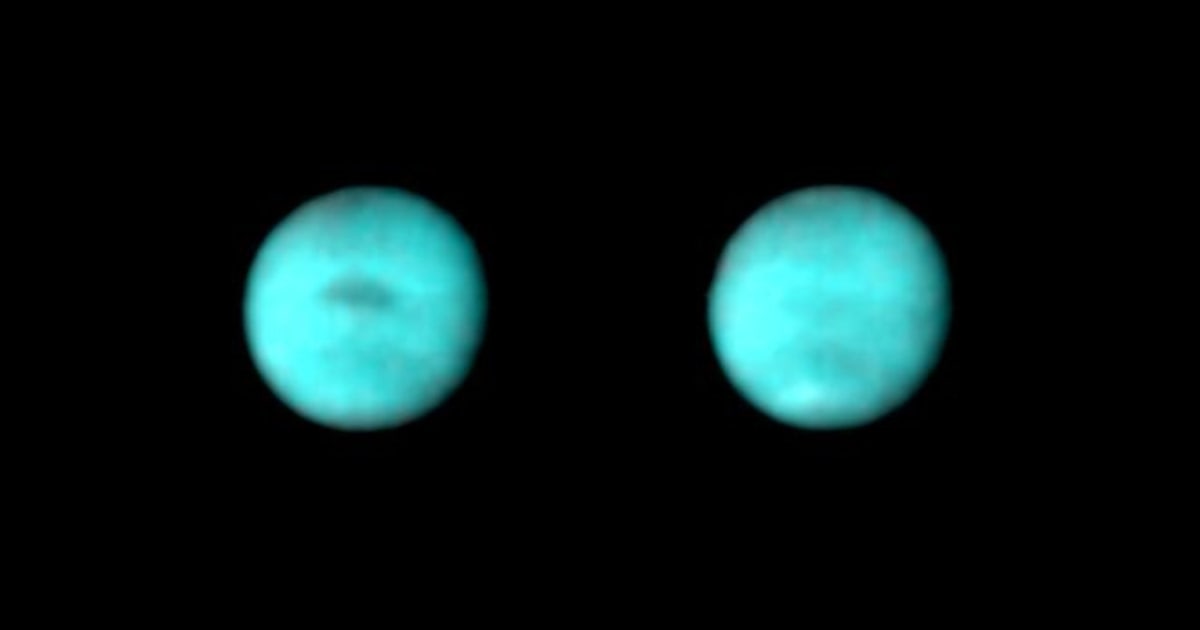
“We found out that both Uranus and Neptune have their outer shells made mostly of rocks (and hydrogen and helium gas)," Miguel said. This "goes against the common belief that they are ice-giant planets.” And that’s not all. Miguel also believes that his team’s findings might lead to a debate about whether the planets should be reclassified at some point. Now, this has been done before. Pluto, too, lost its classification as a planet and was demoted to being a 'dwarf.' According to Miguel, there is a need to reclassify these planets so that their present definition does not mislead people. They also pointed out that Uranus and Neptune can be simply called ‘minor giants.’ “We should indeed change their classification so as not to be misleading. Rather than 'icy' or 'rocky,' we should simply call them minor giants or something like that.”

That being said, the study will almost definitely not lead to an immediate reclassification of Uranus and Neptune. However, it certainly poses a lot of questions about whether both planets indeed have a rocky atmosphere or not. In fact, queries can also be raised about whether there are other major aspects of the two planets that our scientists have not fully unearthed yet. Any future developments in this regard will definitely be worth keeping an eye on.
More on Starlust:
39-year-old mystery about Uranus may have been solved by revisiting Voyager 2 data
NASA’s James Webb captures Neptune’s extraordinary auroras for the first time