NASA’s Curiosity rover captures clearest images of mysterious Martian cliffs: See pictures
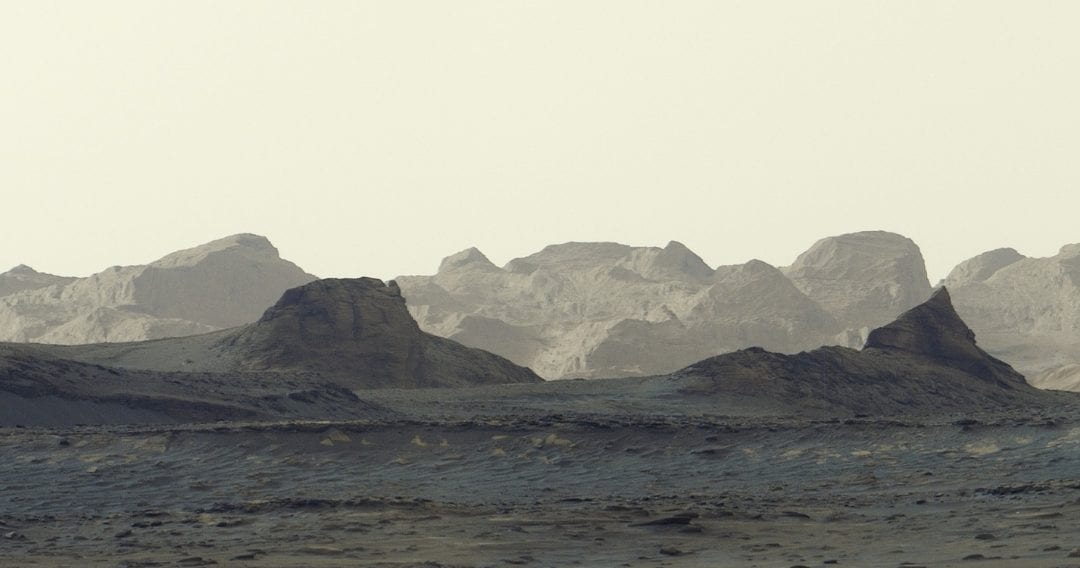
NASA's Curiosity rover continues to take stunning pictures of the Martian landscape. Its recent image of a Martian dawn, in particular, reveals features of Mars that astronomers have been waiting a long time to see up close. This striking view of the Red Planet, captured on August 11, 2026, at about 8:30 a.m. local Mars time, highlights distant cliffs known as yardangs—sharp, streamlined ridges of cohesive sediment carved by wind. NASA’s Jet Propulsion Laboratory shared the newly obtained panorama in an update yesterday, with the image providing the clearest view yet of this unusual geological formation.
📍Gale Crater, Aug. 11, 2026, 8:30 a.m. local Mars time. The Curiosity rover captures the Sun rising on crags known as yardangs, a scene that scientists have long been waiting to see up close. 1/2 https://t.co/NJQH9yNEYR
— NASA Mars (@NASAMars) October 6, 2026
The panorama is a combination of six images snapped by Curiosity's Mastcam and depicts distinct blue hues in the foreground with the yardangs glowing in the early morning light. Astronomers processed this image without white balancing, in contrast to most Curiosity images, so that the image retains the distinctive appearance of the Martian morning.
The Sun is always rising somewhere. 🌄 On the 4,982nd Martian day of its mission, our Curiosity rover captured this photo of dawn breaking over distant yardangs, jagged land formations carved by wind. https://t.co/OnNbMY921o https://t.co/toVcCJruDl
— NASA (@NASA) October 6, 2026
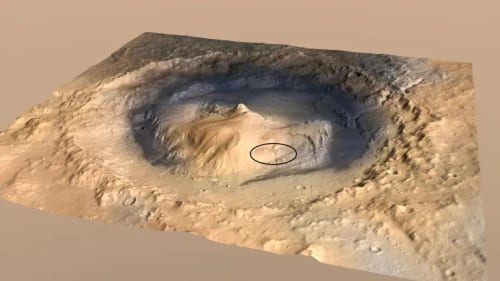
The yardang layer stretches about 10 miles (16 kilometers) along the northwestern areas of Mount Sharp—a mountain that stands 3 miles (5 kilometers) tall—which Curiosity has been climbing since 2014. The mountain comprises different layers, each one associated with a different era of Mars. Astronomers, by exploring these layers, have been able to gain knowledge of the lakes and streams that existed in the region billions of years ago. The water in these locations, with the passage of time, dried up and deposited salts in these areas. Once the mountain stopped building up new layers, wind may have worn some of it away, shaping the yardangs. But no one can say for sure.
The yardang layer extends roughly 10 miles (16 km) across the northwestern reaches of Mount Sharp, a mountain that Curiosity has been ascending since 2014. Scientists hope to get even more amazing imagery — and answers to how these cliffs were created. https://t.co/ovG6N2mDro
— NASA Mars (@NASAMars) October 6, 2026
“The yardang layer looks out of place. It’s the wrong color, the layers tilt at an odd angle, and it almost appears plastered on. But that’s what makes it exciting to reach. No one is sure exactly what created this layer, but one idea is it may be ash deposited by ancient volcanic eruptions,” said Ashwin Vasavada, Curiosity project scientist of NASA’s Jet Propulsion Laboratory in Southern California.
Curiosity mission scientists are expecting the rover to reach the base of the yardangs in 2027 and study these mysterious formations directly with the rover's instruments and robotic arm. In the meantime, as it draws closer, it will get opportunities to capture even more stunning images of the features.
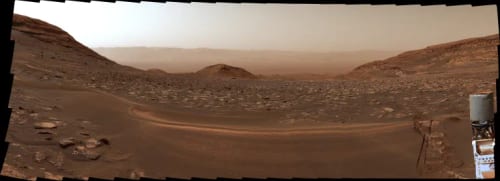
Curiosity captured the recently released panorama during its 4,982nd Martian day, or sol, of the mission. Following its launch on November 26, 2011, Curiosity arrived at Mars in August 2012, and it has exceeded expectations by surviving beyond its estimated lifespan. The rover, in fact, achieved a new milestone last month by surviving more than 5,000 days on the Red Planet. In another milestone during its ascent in August, it climbed 0.6 miles (1 kilometer) in elevation above the Gale Crater floor, the most any rover has gained on Mars. Currently serving the second year of its fifth extended mission, which it began by surveying spider-like boxwork ridges on Mars, Curiosity aims to spend next year exploring sulfate- and carbonate-rich layers, which are both representations of ancient drying on the Martian surface.
More on Starlust
Mars is set to cross a spectacular swarm of stars soon—when and how to watch it
Could Mars be our next home? Five strange facts about the Red Planet that will make you rethink