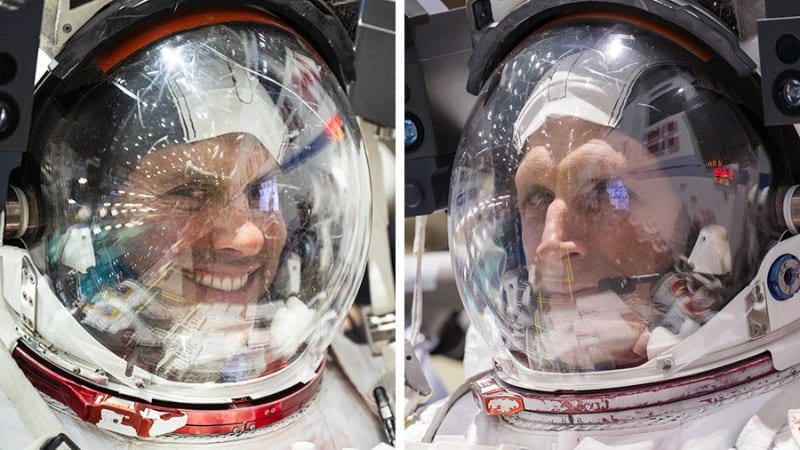
NASA's Anil Menon, CSA's Joshua Kutryk complete 100th U.S. spacewalk outside ISS, install seventh roll-out solar array
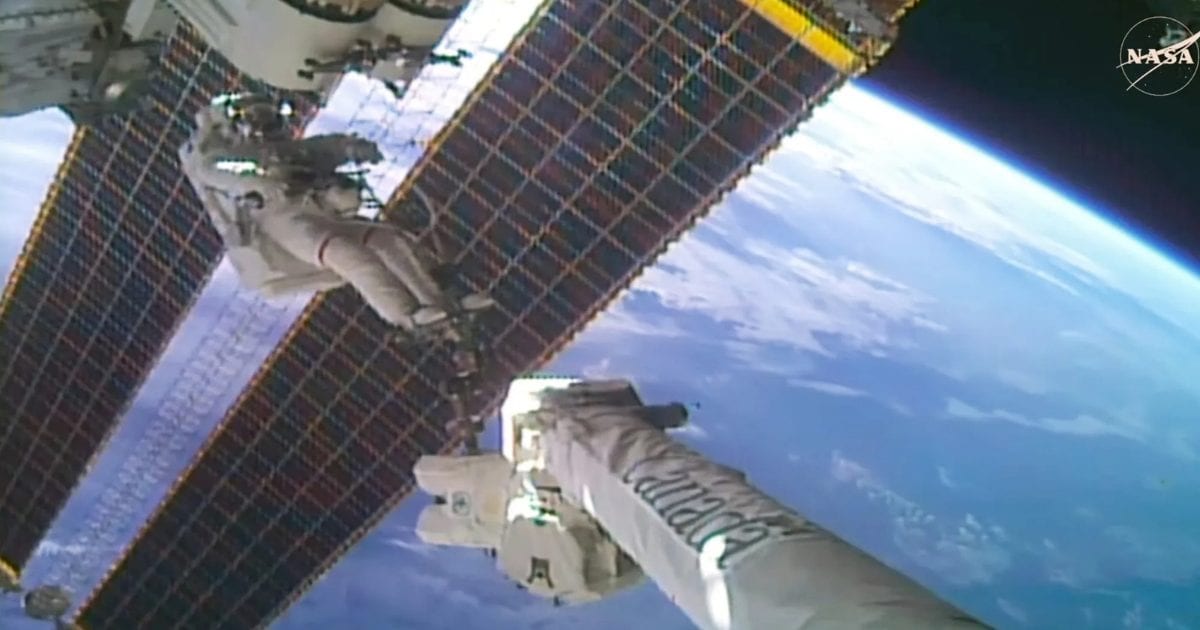
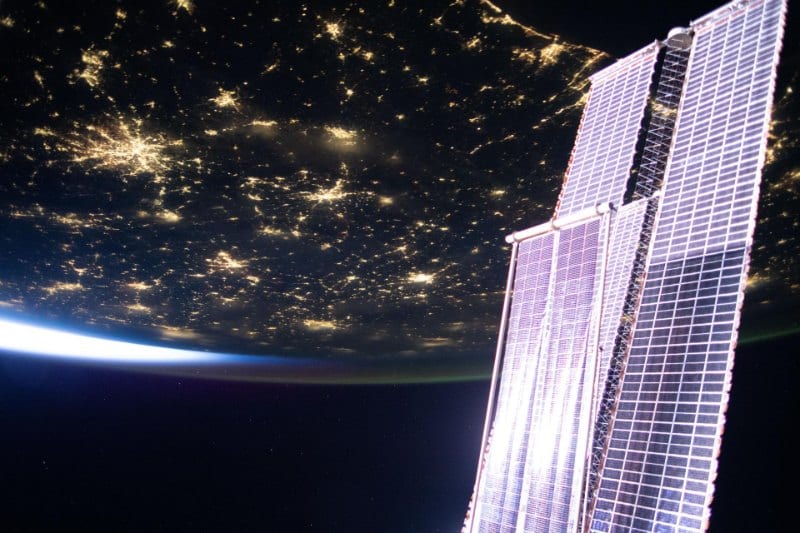
Members of Expedition 75 have installed the seventh of eight planned roll-out solar arrays on the International Space Station (ISS), marking another milestone in the orbiting laboratory's power system upgrade. The installation, completed during a spacewalk on Thursday, October 29, was done by NASA astronaut Anil Menon and Canadian Space Agency (CSA) astronaut Joshua Kutryk. The additional electricity provided by the installed solar arrays will help sustain the station's critical operations during its remaining service life, including preparations for its eventual deorbit, which is planned for 2030 as of now.
.@Astro_Anil and @Astro_Kutryk completed a spacewalk at 3:08 p.m. EDT today after installing a roll-out solar array for power generation. They will conduct a final power upgrade spacewalk on Thursday, Nov. 5. More... https://t.co/zbPdOW1wks https://t.co/KTKf0E9Amr
— International Space Station (@Space_Station) October 29, 2026
The astronauts, donning NASA's extravehicular mobility unit (EMU) spacesuits, started the spacewalk at 7:57 a.m. EDT on Thursday as they ventured out of the ISS' Quest airlock. The spacewalk, lasting 7 hours and 11 minutes, concluded at 3:08 p.m. EDT and deployed the International Space Station Roll-Out Solar Array (IROSA), weighing 750 pounds (340 kilograms), on the ISS' port-side truss structure.
As I embark on my first spacewalk tomorrow, my colleague Anil and I will be able to count on the support of a Canadian legend: Canadarm2. À la veille de ma première sortie dans l’espace, mon collègue Anil et moi pourrons compter sur l’appui d’une légende canadienne : Canadarm2. https://t.co/bZu6gd3gr1
— Joshua Kutryk (@Astro_Kutryk) October 28, 2026
Besides successfully completing the installation of the seventh solar array, Menon and Kutryk completed several tasks in preparation for the installation of the last solar array on the 3B power channel, which is targeted for the next spacewalk on Thursday, November 5. Once all eight arrays are deployed, they will raise ISS' power-generation capacity by up to 30%, from 160 kilowatts to about 215 kilowatts. NASA will host live coverage of the November 5 spacewalk starting at 6.45 a.m. on various channels like X, Discovery+, Amazon Prime, YouTube, and NASA+.
During the Thursday spacewalk, the two astronauts first unfastened the solar array from the temporary platform where it had been stowed. The solar array had arrived at the ISS earlier this month, rolled up tightly, inside SpaceX’s Dragon cargo. Menon then attached himself to the station’s robotic arm, Canadarm2, and transported the array to the port side of the station. The two astronauts then bolted the array into place on the 2A power channel and plugged in its power cables, doing the plugging while on a night pass for safety. Because the array’s rolled-up carbon composite booms store energy like a coiled spring, it opened to its full 63-foot (19-meter) length by itself, with no motor.
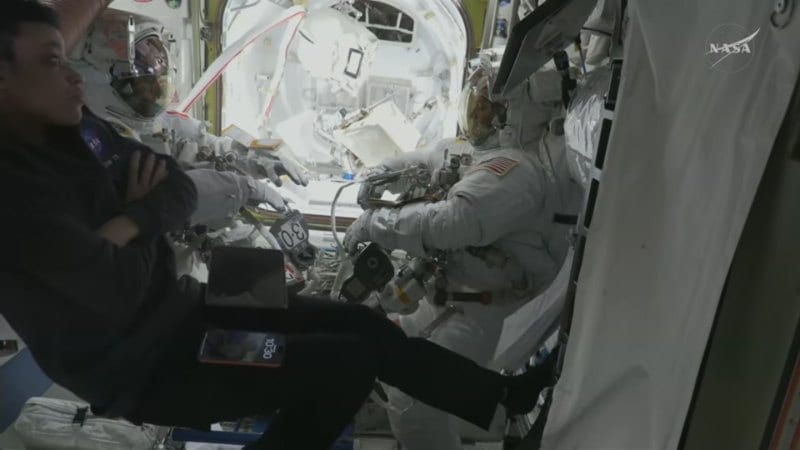
Prior to Thursday's spacewalk, Menon and Kutryk spent Wednesday reviewing their spacewalk procedures and checked their suits’ life support, communications, and other systems. They then teamed up with NASA flight engineers Jessica Watkins and Luke Delaney for a final briefing with ground specialists. Watkins and Delaney, who had the responsibility of monitoring the spacewalkers and operating Canadarm2, also studied the lighting environment and camera positions outside the ISS. The day ended with all four astronauts conferring with robotics engineers to go over the planned Canadarm2 operations.
Meanwhile, Roscosmos’ three cosmonauts had a light workday Wednesday, continuing their science tasks and getting up to speed on Thursday’s power upgrade spacewalk. Commander Pyotr Dubrov removed multi-wavelength camera equipment that had automatically photographed Pacific and Atlantic landmarks while the crew slept. Flight engineer Sergey Teteryatnikov set up another imaging system to shoot Pacific islands and South American glaciers overnight.
Spacewalk preps, a pair of robotics jobs, and scientific duties kept the Expedition 75 crew busy on Tuesday. More... https://t.co/plMyrQQAjj https://t.co/eVhARQjdyp
— International Space Station (@Space_Station) October 27, 2026
The October 29 operation was particularly significant because it marked the 100th U.S. spacewalk conducted from the ISS' Quest airlock without a space shuttle docked to the station. Also, while the U.S. spacewalk 100 happened to be Menon’s fourth spacewalk, it was the first for Kutryk, marking a major milestone in his career. Kutryk’s outing was, in fact, the first by a Canadian astronaut since April 2019, when David Saint-Jacques stepped outside the space station with NASA’s Anne McClain. It was also the 285th spacewalk conducted for station assembly, maintenance, and upgrades.
More on Starlust
Artemis III astronauts meet Trump, present Moon rock: ‘A little reminder of where we’re going’