NASA scientist says terraforming Mars, at least in the near future, is a pipe dream
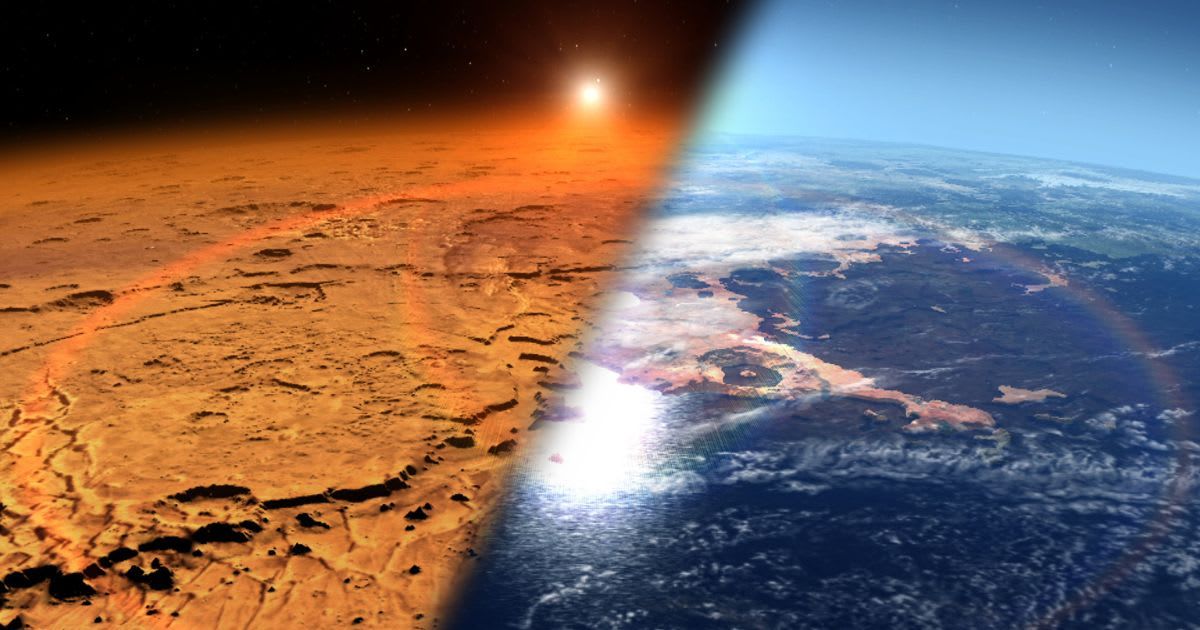
The idea of terraforming Mars sounds like the stuff of science fiction. Yet, the neighboring Red Planet is also the most Earth-like. So, the idea of making it suitable for human life has always intrigued researchers and general space enthusiasts alike, even with the enormous challenges it poses. Despite some exponential growth in our planet’s technology, terraforming Mars still remains far beyond our reach, and a new study by Dr. Slava G. Turyshev of NASA’s Jet Propulsion Laboratory breaks down the near-impossible industrial scale required for it.
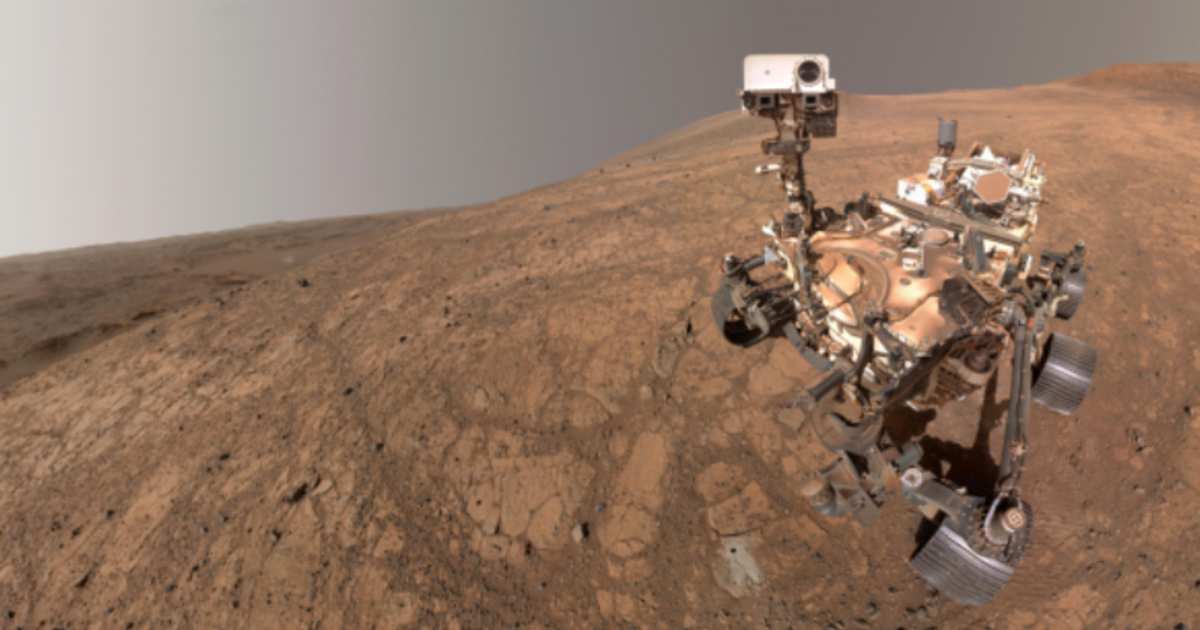
The paper, titled Terraforming Mars: Mass, Forcing, and Industrial Throughput Constraints, is available as a preprint on arXiv. Essentially, it explores the numbers driving the obstacles humanity would need to overcome if it aims to entirely change the environment of Mars into that of a fully habitable world. In an exclusive interview with Starlust, Dr. Turyshev explained that the paper is “an engineering-level feasibility study based on transparent order-of-magnitude constraints.” He added that the results should be treated as lower-bound feasibility estimates rather than detailed climate predictions.
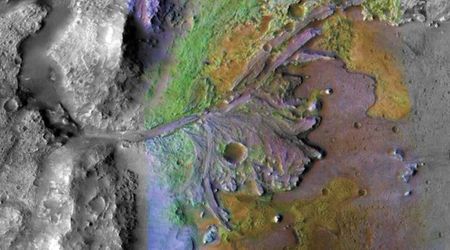
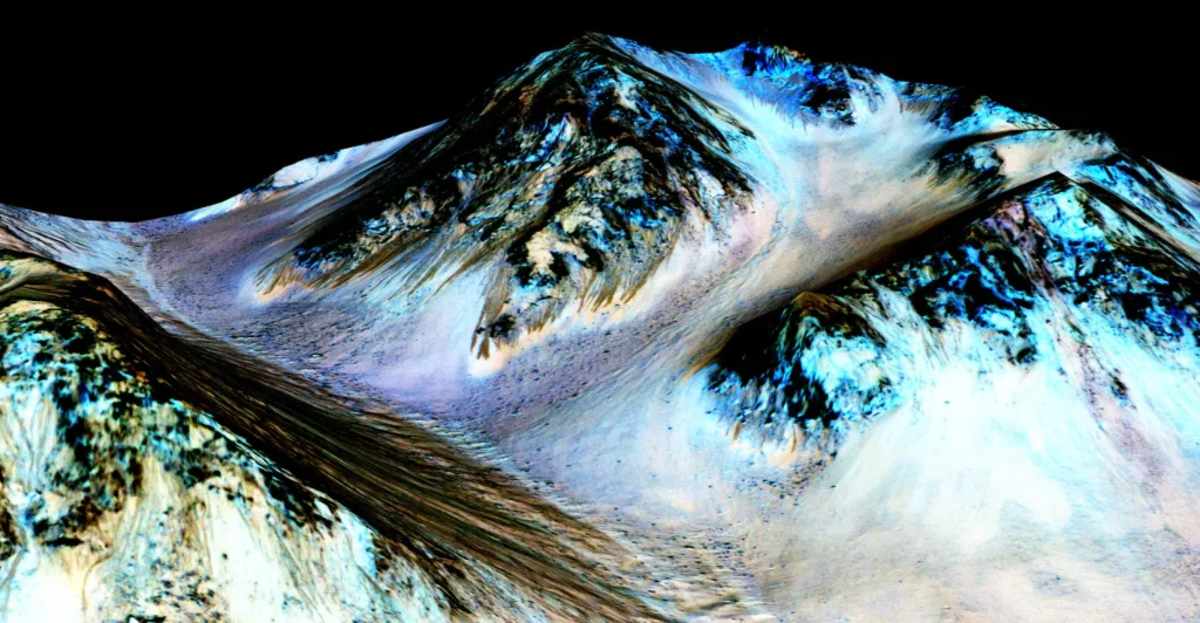
For 20 years, our Mars Reconnaissance Orbiter has searched the planet for signs of long-ago water. It has sent back photos that are not only stunning, but useful – they'll help us when future astronauts land on Mars to explore it. Which is your favorite? pic.twitter.com/mc4wHYjqm5
— NASA (@NASA) March 10, 2026
While Mars may be Earth-like, its current conditions of extremely low temperatures and atmospheric pressure are anything but. Terraforming it could even be compared to setting up a planet-sized life support system. While Dr. Turyshev doesn’t call the idea irrational in the sense of violating physics, he believes it is unrealistic if discussed as a near-term settlement strategy. “Once one writes down the atmospheric mass, radiative forcing, energy, and industrial-throughput requirements, full planetary terraforming becomes a multi-century planetary-industry project,” he explains. “By contrast, regional habitability gains look much more plausible on nearer timescales.”
Atmospheric pressure: the bare minimum
To make Mars habitable, the first constraint is raising the atmospheric pressure above 6.1 millibars at 0°C. This level of pressure is the triple point of water, where ice, water, and vapor can coexist. However, Mars is already near that pressure threshold, and simply exceeding it is not enough to make surface water stable. The larger difficulty is temperature and persistence, as Dr. Turyshev’ paper argues that even mobilizing accessible CO₂ still leaves a big deficit in temperature needed to keep liquid water stable globally.
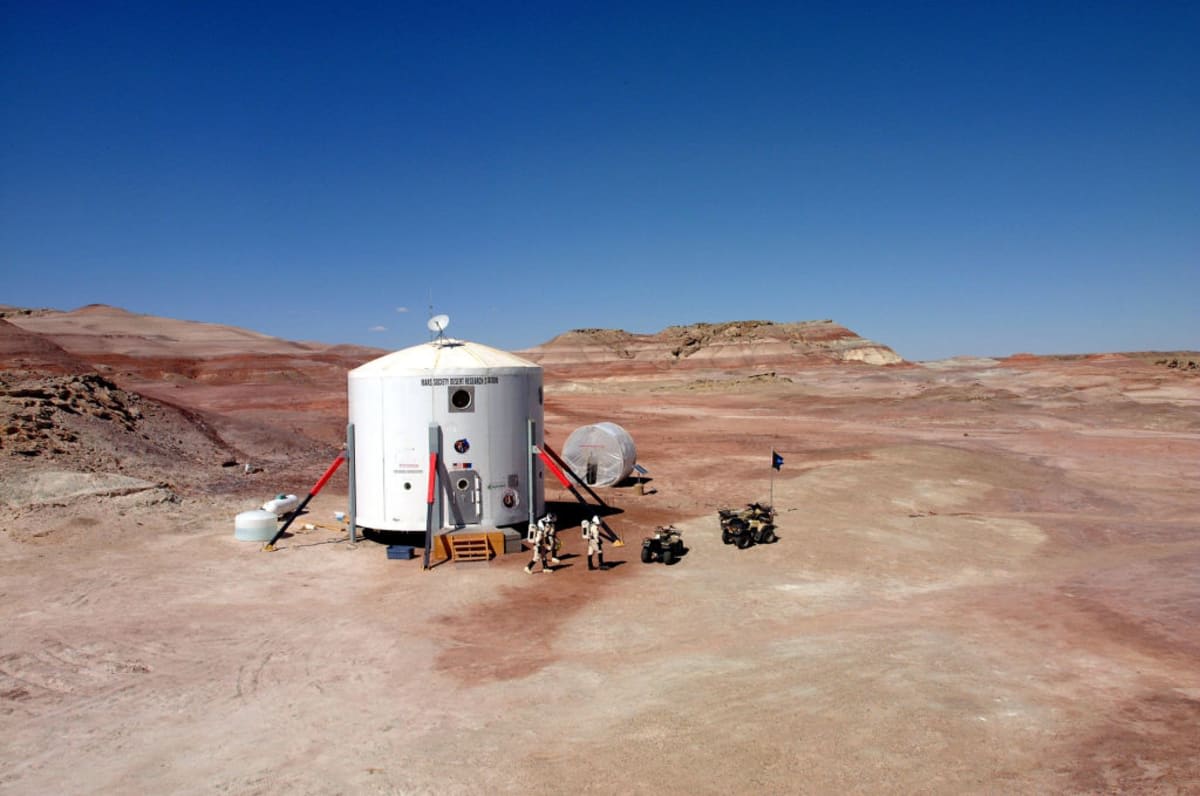
There are more atmospheric and temperature levels to consider beyond the bare minimum of the triple point. Creating large-scale farming environments on Mars with pressurized greenhouses is a more feasible solution than terraforming. The pressure inside these domes could reach around 100 mbar, which would allow crops to grow. Next, to prevent human blood from boiling at 37°C, Mars would need 62.7 mbar of atmospheric pressure. But this is just for surviving without pressurized suits. A fully breathable Martian atmosphere with a thick nitrogen buffer would demand around 210 mbar of oxygen with 500 mbar total pressure.
Volatile supply and raising temperature
About 3.89 × 10¹⁵ kilograms of gas are required to increase Mars’ atmospheric pressure by even 1 millibar. That’s roughly the same mass as Deimos, the Red Planet’s smaller moon. So, terraforming would demand about 10¹⁸ kilograms of gas, and Mars would need a major exogenous volatile supply, especially for buffer gas. Sources like asteroids, comets or icy moons are viable here, but they must be nitrogen/ammonia-bearing and water-rich. “The deeper challenge is not merely identifying a source class,” shares Dr. Turyshev. “It is capturing, transporting, processing, and distributing roughly 10¹⁸ kg-scale volatile inventories in a controlled way.”
Apart from just having the right pressure, terraforming Mars would mean making it much warmer too—by about 60°C to retain liquid water. This is another massive hurdle that demands solutions like releasing large amounts of CO₂ into the planet, injecting nanoparticles into its atmosphere, or even adding large-scale mirrors to reflect sunlight toward the planet. Dr. Turyshev’s calculations suggest a rough-but-extreme estimate of 70 million km² of mirrors required for solar forcing. “I would not picture a single monolithic mirror or a surface installation,” he explains about realizing the idea. “If such a system were ever attempted, it would more likely be a distributed orbital reflector swarm built from ultra-light materials and enabled by very large-scale space manufacturing.”
Energy demands for oxygenation
A breathable Martian atmosphere would need around 8.2 × 10¹⁷ kilograms of oxygen. The planet holds enough ice to supply water molecules that can be split into oxygen and hydrogen. Even though it would mean using up nearly 20% of the known accessible surface ice, the bigger concern here is the energy needed to generate the oxygen that’s needed — a minimum of 1.2 × 10²⁵ joules—that’s roughly 380 terawatts of power per year for over a thousand years. Considering Earth’s current energy output and consumption being exponentially lower, such numbers are beyond the capabilities of modern civilization.
So, what kind of energy infrastructure could realistically supply this? “At Mars sunlight levels, even 1 TW of average power would require on the order of 45,000 km² of photovoltaics at 20% efficiency, so a purely surface-solar approach becomes enormous very quickly,” explains Dr. Turyshev. “A credible architecture is therefore more likely hybrid: large nuclear baseload, solar where practical, major storage and transmission, and for aggressive timelines possibly space-based collection and beaming as part of a broader cis-Mars industrial power system.”
Is paraterraforming more realistic?
These staggering industrial numbers don’t paint a flattering, optimistic picture for terraforming Mars anytime in the near future. A more realistic approach would be to focus on compact environments like pressurized greenhouses that can accommodate both human life and vegetation. The concept of paraterraforming builds on this and could even be scaled up to cover the entire planet, eventually supporting city-scale populations and larger settlements. Dr. Turyshev shares, “Local domes, worldhouses, aerogel-covered regions, and pressurized controlled environments scale with covered area and local power, not with the mass of an entire planetary atmosphere.”
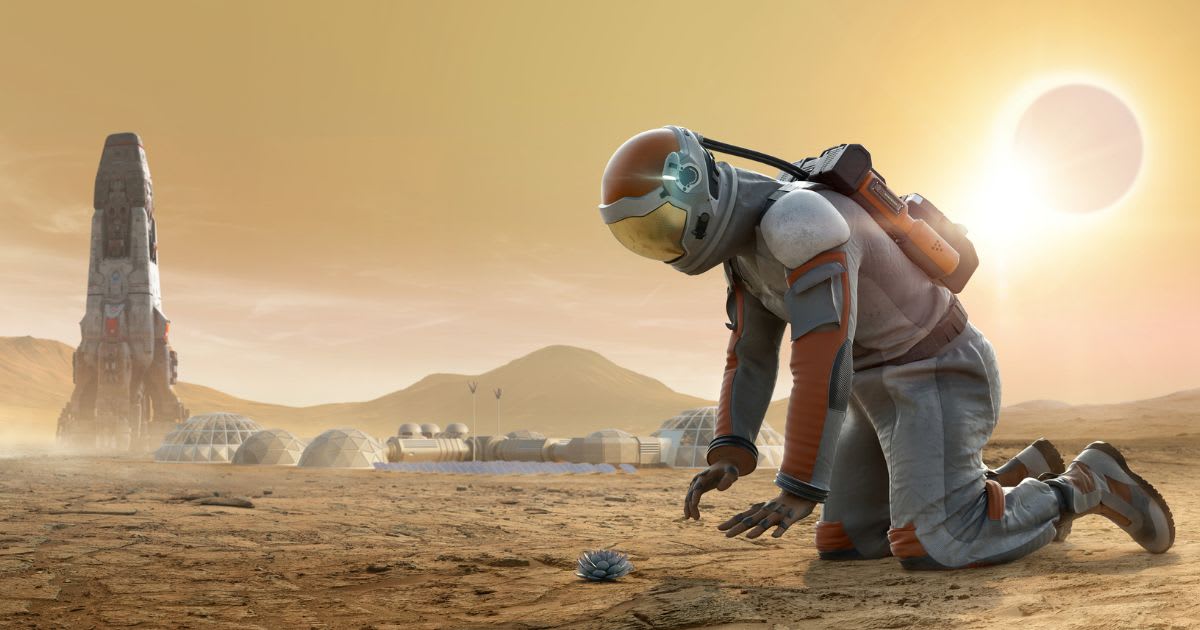
The question remains whether humanity will ever reach this level of industrial production in the foreseeable future. Dr. Turyshev outlines a staged roadmap as follows: “Decades for regional paraterraforming, about a century for climate nudging and resource mobilization, and multi-century for sustained atmospheric engineering.” He emphasizes that regional habitability on Mars appears far more plausible on near- to mid-term industrial scales than full open-air planetary habitability.