NASA planning to build a 100 kilowatt nuclear reactor on the moon by 2030
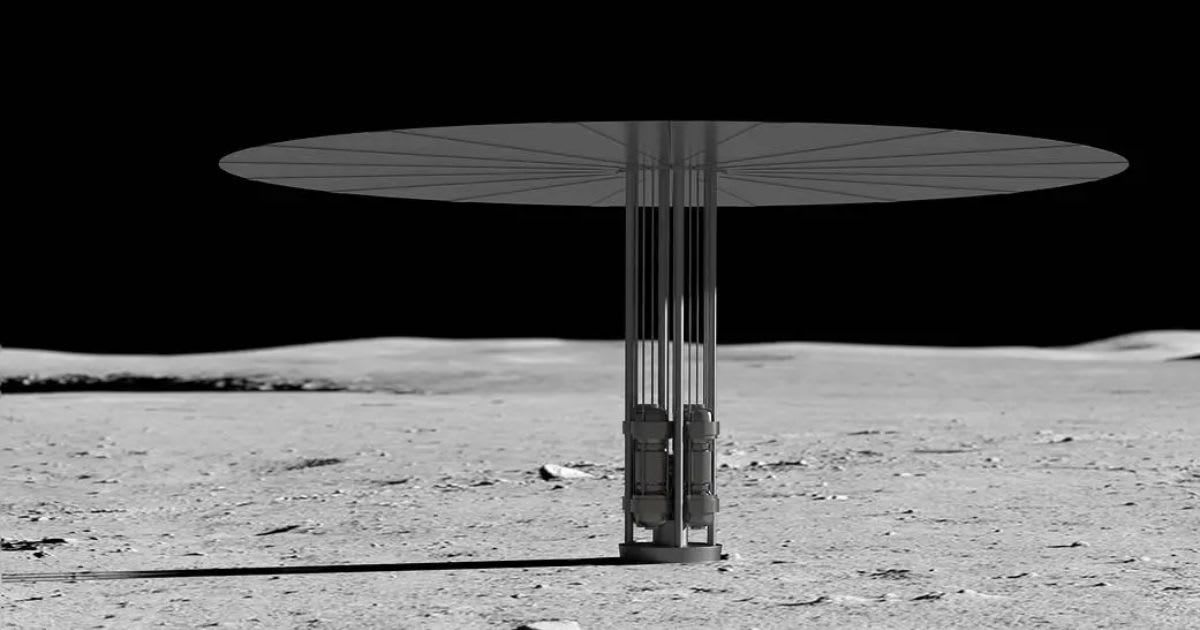
The directive establishes an aggressive new timeline, aiming to launch a lunar reactor by 2030 despite NASA's significant budget cuts.
A concept image NASA's Fission Surface Power project (Representative Cover Image Source: NASA)

NASA's new interim administrator, former Fox News host and current Transportation Secretary Sean Duffy, is making his first major move by accelerating the agency's plan to build a 100-kilowatt nuclear reactor on the moon. The directive sets a definitive target of launching the reactor by 2030. This new, more aggressive timeline comes as NASA grapples with a significant budget reduction, as reported on POLITICO. 
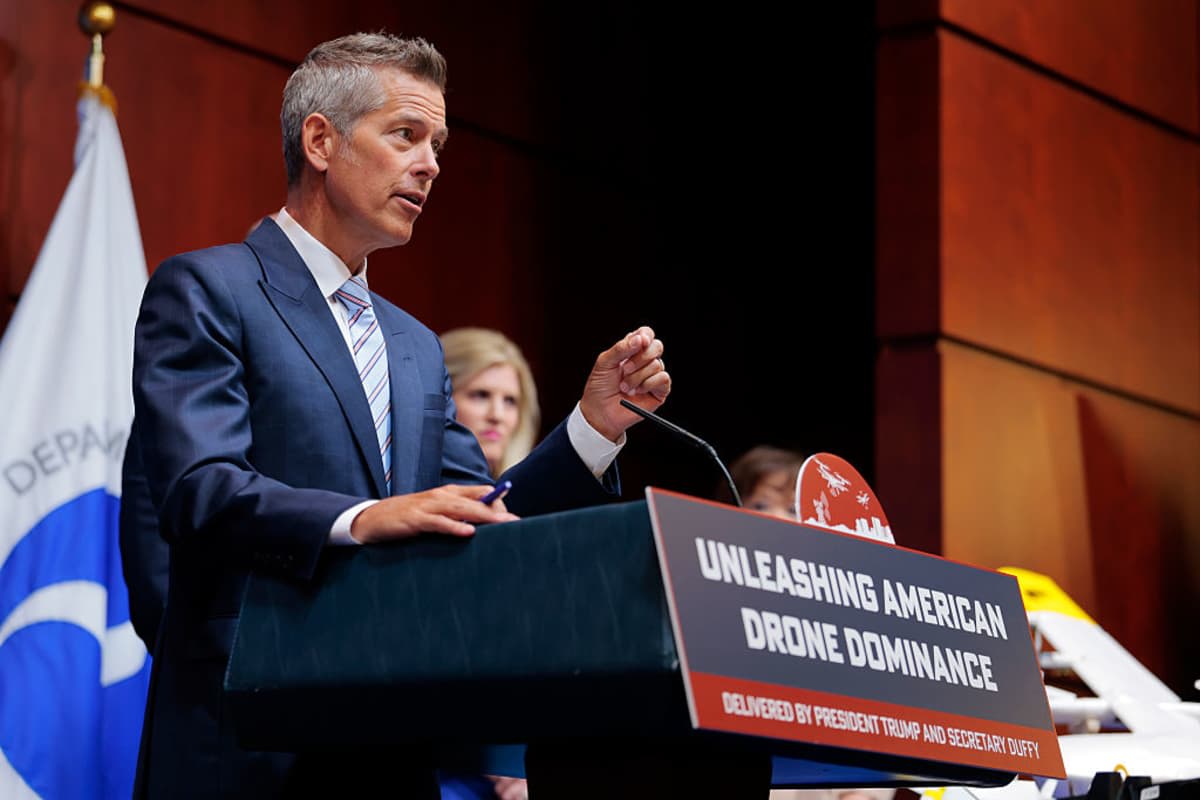
U.S. Transportation Secretary Sean Duffy speaks at a news conference on drone safety at the Department of Transportation Headquarters on August 05 (Image Source: Getty | Anna Moneymaker)

The push is seen as a strategic step to position the United States in a new space race, particularly against a joint project between China and Russia. An anonymous senior NASA official stated, “It is about winning the second space race.” The documents warn that the first country to establish a reactor could “declare a keep-out zone," potentially hampering US lunar activities. 
Image of an astronaut gardening on the moon (Representative Image Source: Getty | Caspar Benson)

Duffy was appointed interim administrator by President Donald Trump in July, following the withdrawal of Jared Isaacman's nomination. The move has drawn scrutiny from some lawmakers who questioned Duffy's ability to manage both the Transportation Department and NASA. In addition to the lunar reactor, Duffy has also issued a directive to expedite the replacement of the International Space Station. The plan aims to replace the aging ISS with commercially operated stations by 2030, a year after the ISS is slated to be deorbited. This initiative is designed to prevent a scenario where China would be the only country with a permanently crewed space station. 

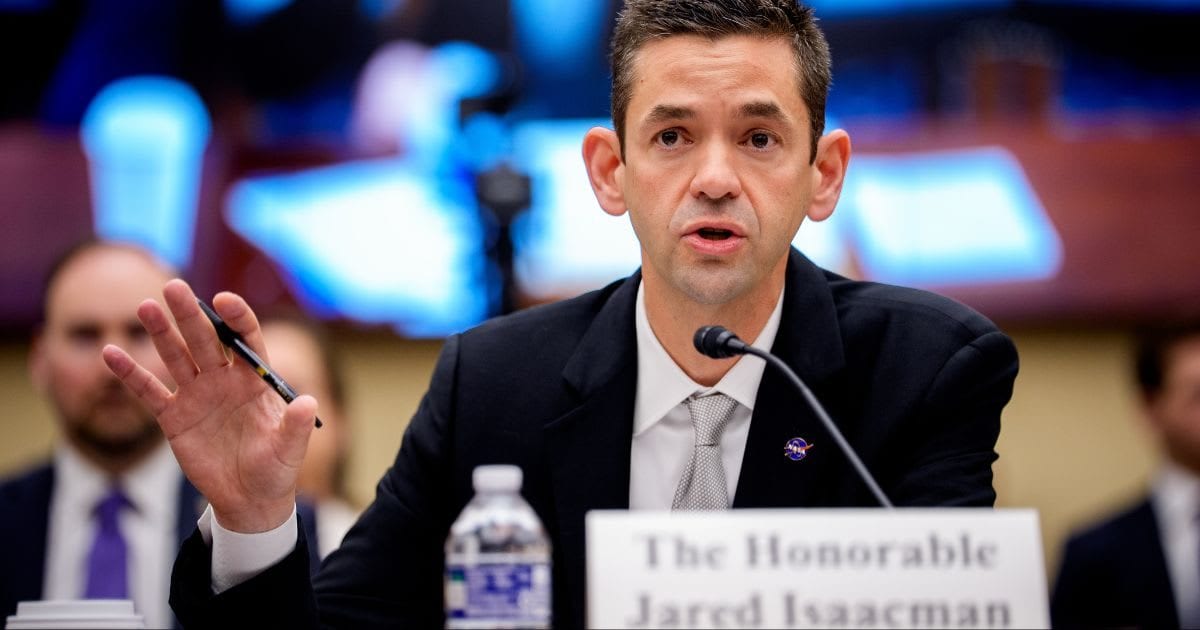
Jared Isaacman, U.S. President Donald Trump's nominee to be NASA Administrator, testifies during a confirmation hearing in the Russell Senate Office Building on Capitol Hill on April 09, 2025, in Washington, DC. (Photo by Kevin Dietsch/Getty Images)
Jared Isaacman, U.S. President Donald Trump's nominee to be NASA Administrator, testifies during a confirmation hearing in the Russell Senate Office Building on Capitol Hill on April 09, 2025, in Washington, DC. (Image Source: Getty | Kevin Dietsch)

The administration's focus on crewed spaceflight is clear. While the White House has proposed a budget that would slash funding for science missions by nearly 50 percent, it advocates for an increase in human spaceflight funds for 2026. The new directive for a lunar reactor marks a departure from a recent joint program on nuclear-powered rocket engines that was canceled by the Pentagon. However, a NASA official emphasized that the cancellation did not reflect a lack of belief in the technology itself. 

NASA's new timeline for the reactor is more ambitious than its previous plan, which aimed to have a 40-kilowatt reactor ready for launch in the early 2030s. The 2030 deadline for the 100-kilowatt reactor is set to coincide with China's goal of landing its first astronaut on the moon. This directive also mandated the designation of a project leader and a 60-day window for gathering industry proposals. 
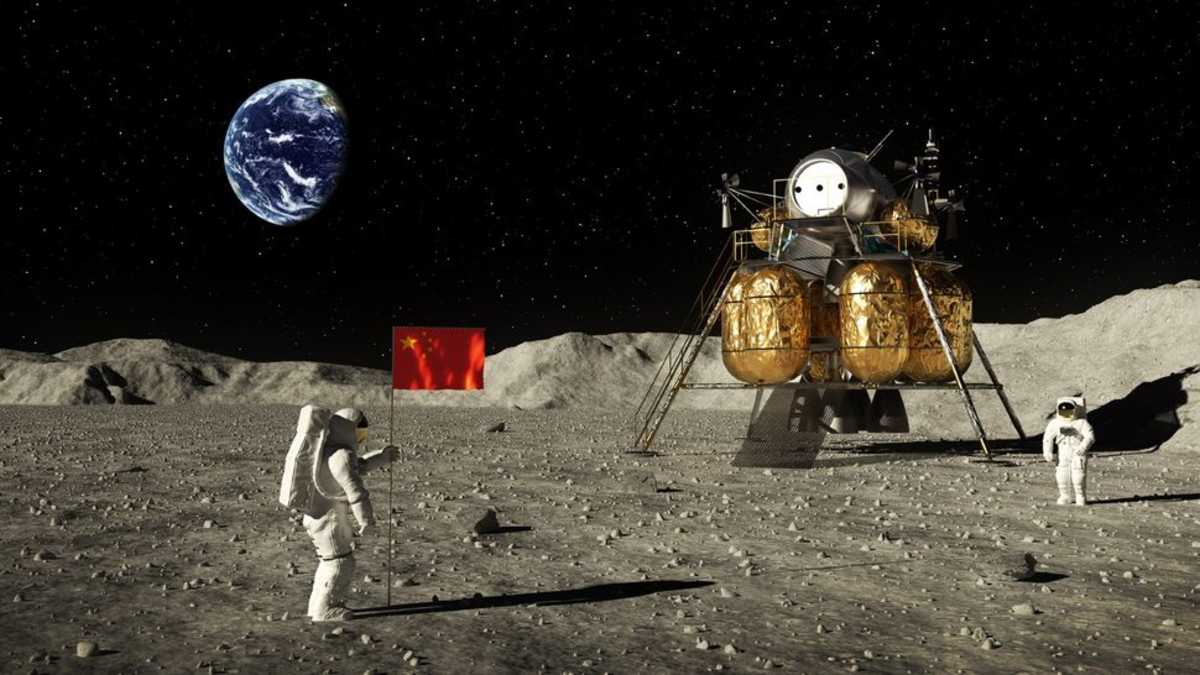
Artist's illustration of astronauts on the moon planting a Chinese flag. (Representative Image Source: Getty | 3DSculptori)

The push for a lunar reactor follows the recent and unexpected withdrawal of billionaire Jared Isaacman's nomination to lead NASA. Isaacman, who founded a private air force and is a close ally of Elon Musk, was poised for Senate confirmation when President Trump abruptly pulled his name on May 31, according to the New York Post. Trump announced the decision in a social post, citing a "thorough review of prior associations" and vowing to nominate a new candidate who is "Mission aligned" and will "put America First in Space.” This sudden reversal, which caught many off guard, has led to speculation about the true motives. While some suggest Isaacman's liberal record was the cause, many prominent conservatives, including Musk, have publicly supported him.  

Elon Musk speaks alongside U.S. President Donald Trump to reporters in the Oval Office of the White House (Image Source: Getty | Kevin Dietsch)

The withdrawal is particularly notable given the administration's continued partnership with SpaceX, one of NASA's largest contractors. Although Isaacman's close ties to the company were a recurring topic during his confirmation hearings, the reason for his sudden removal remains unclear. 
MORE STORIES

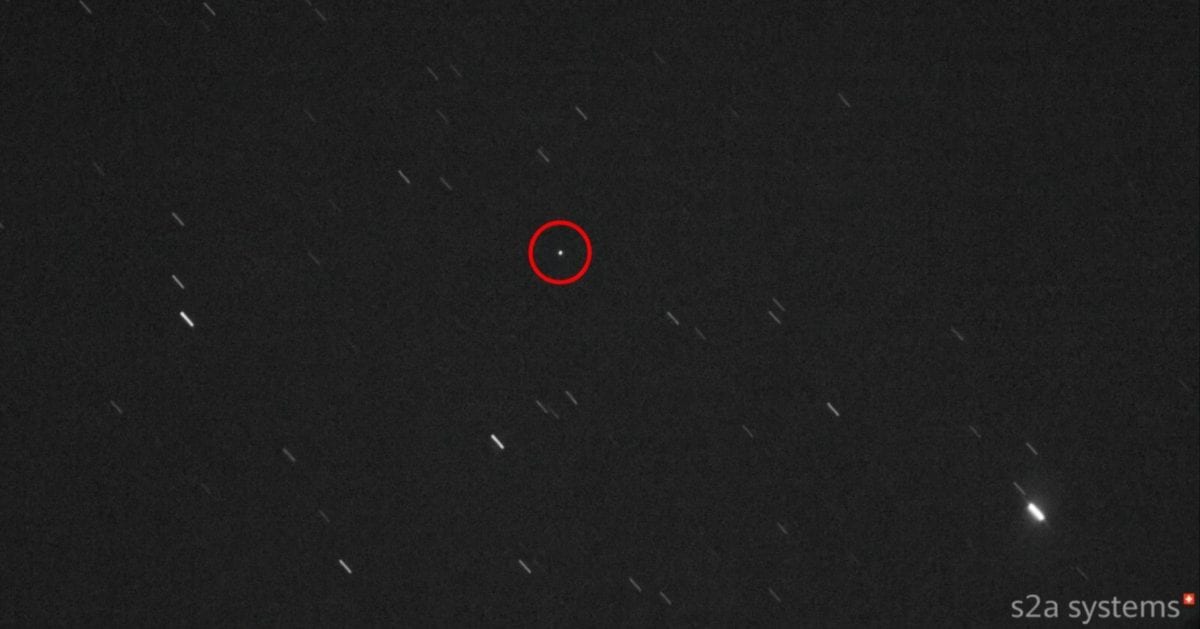
The probe whipped past our planet on September 28 from a distance of around 5,370 miles and was captured by a ground-based optical telescope.
6 hours ago
The rocket’s first stage landed back at Vandenberg a little over seven minutes after liftoff. Watch the livestream here.
15 hours ago
Maye's comments about being 'skeptical' of the Moon landings prompted NASA chief Isaacman to offer 'receipts' as proof. Read the exchange here.
2 days ago
A weather satellite launched by the Soviet Union has fragmented for the second time, raising concerns about the safety of other spacecraft near it.
2 days ago
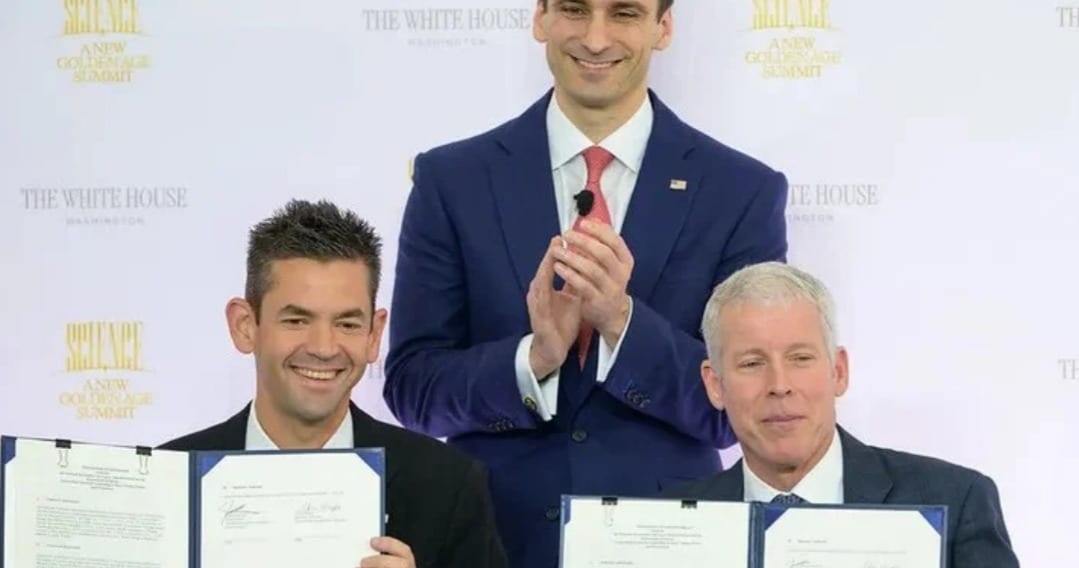
The new MoU between NASA and DOE establishes a framework for comprehensive collaboration, covering everything from research to launch integration and operations.
2 days ago
While Flight 12 and 14's upper stages exploded, the recovery of Ship 40 gives SpaceX an opportunity to inspect a returning second stage.
2 days ago
During their long-duration stay aboard the International Space Station, Crew-12 traveled more than 100 million miles and completed more than 3,792 orbits of Earth. Watch them discuss their experience during a live presser on October 15.
2 days ago
After 237 days in orbit, the four astronauts safely splashed down in the Pacific Ocean on October 8, 2026.
2 days ago
NASA's SunRISE mission will hitch a ride aboard a SpaceX Falcon Heavy rocket, which will launch from the agency's Kennedy Space Center in Florida.
2 days ago
Isaacman's comments come amid President Trump and the U.S. government's renewed attention to unidentified anomalous phenomena.
3 days ago