NASA-funded "Slingshot" concept aims to map minerals on the Moon and beyond

Here's how NASA's 'Slingshot' concept hopes to spot valuable minerals from orbit.
Digital illustration of the Solar System. (Representative Cover Image Source: rbkomar/Getty Images)

NASA has recently funded an early-stage spacecraft concept informally called "Slingshot" and officially named Interworld Slingshot Resource Surveys. This project aims to scan the Moon, asteroids, and other bodies for valuable minerals. With this, the spacecraft will fly from one world to another to read the mineral makeup from orbit. This will be done long before astronauts arrive at the planet, so that they can confirm that a site is actually worth the cost and risk of a mission.
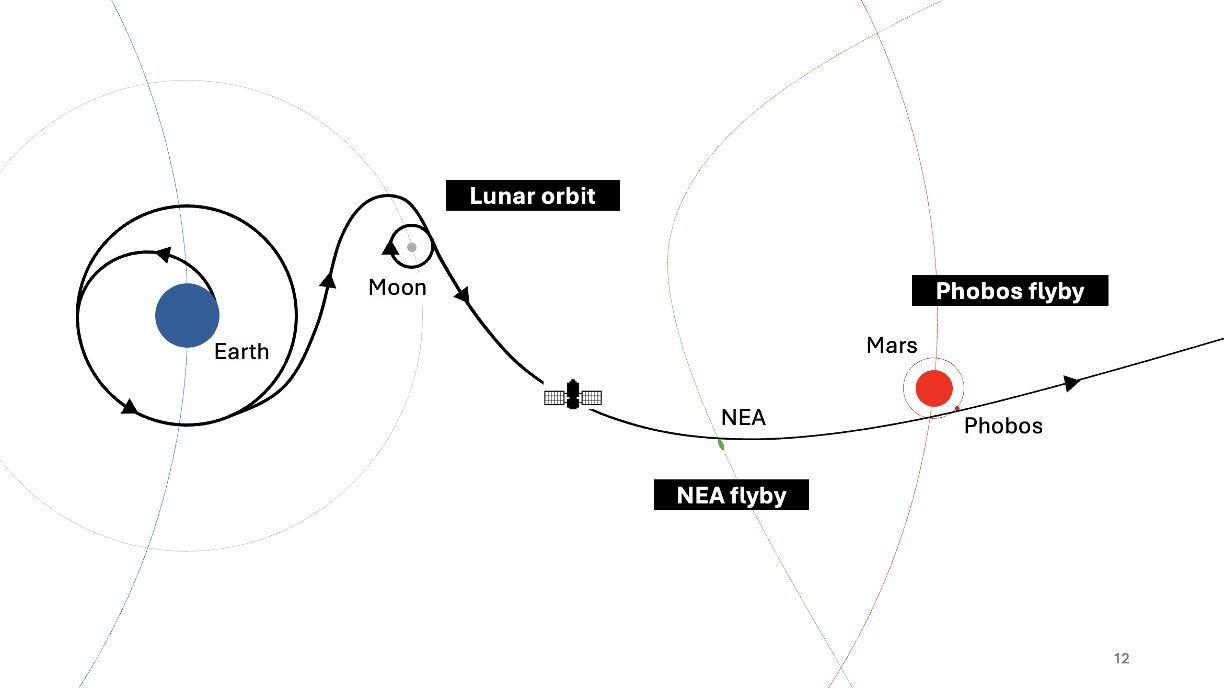
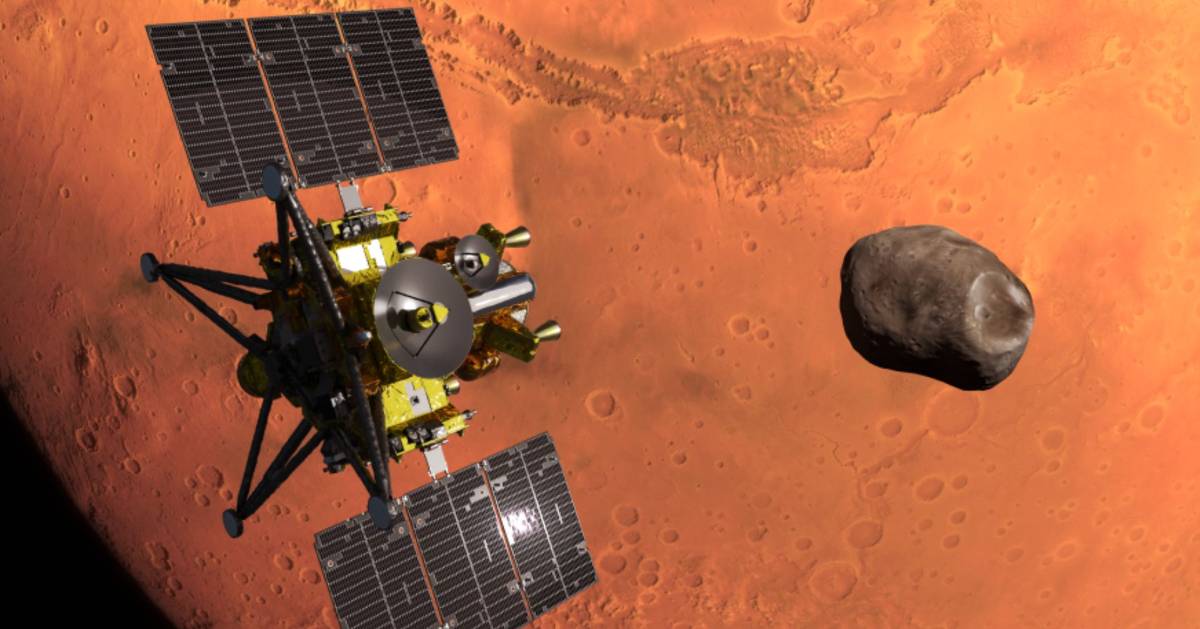
The NASA-funded Interworld Slingshot Resource Surveys study is exploring whether a small spacecraft could survey the moon, a near-Earth asteroid and Phobos during a single mission using a single remote-sensing instrument. (Image credit: Pablo Sobron)
Image of the NASA-funded Interworld Slingshot Resource Surveys as it explores whether a small spacecraft could survey the moon, a near-Earth asteroid, and Phobos. (Image Source: Pablo Sobron/SETI)

This mission will help NASA in its moon base plan, which it aims to achieve in the 2030s. The U.S. is looking to get access to helium-3 and other minerals on the moon ahead of China. If the space agency is able to scout the landing site’s resources well ahead, then it would become a major advantage for its lunar base. 
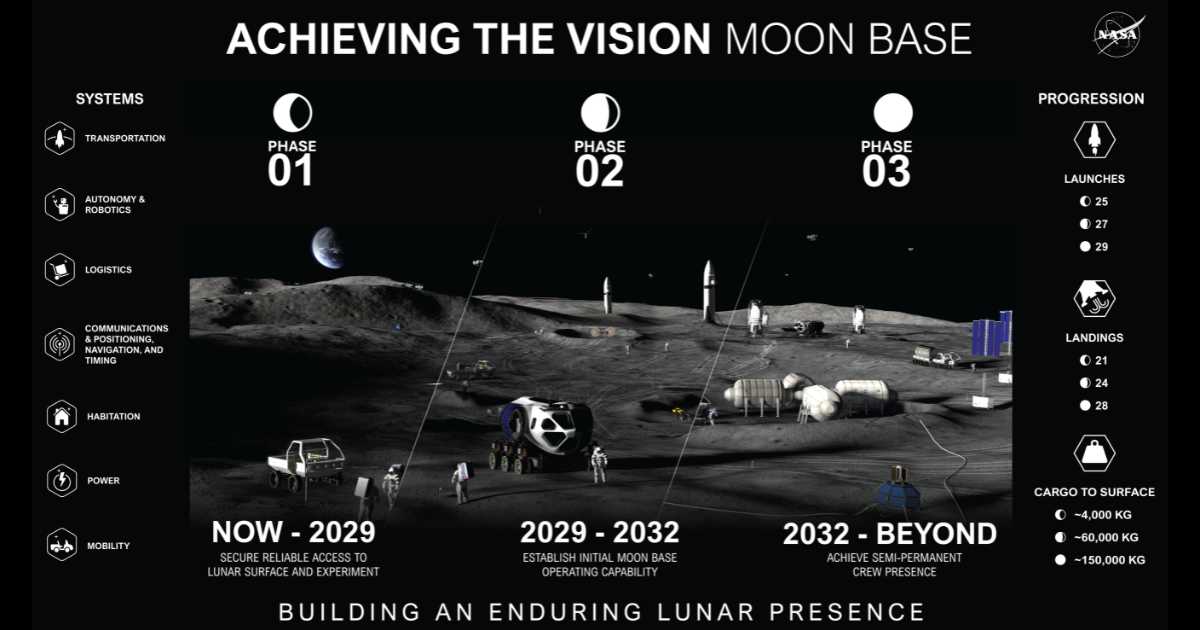
The image shows an illustration of the proposed Moon Base at the lunar South Pole.  (Image Source: NASA/Edmy S. Cruz Reyes)
The image shows an illustration of the proposed Moon Base at the lunar South Pole. (Image Source: NASA/Edmy S. Cruz Reyes)

Commenting on this, Pablo Sobron, the project's principal investigator and a research scientist at the SETI Institute, said, "The thing most likely to stop space mining may be that we cannot afford to prove there is anything worth mining.” He added, "Land in the wrong place and you can lose an entire exploration program or a company, and nobody has enough money to keep sending spacecraft and hoping for the best." Slingshot will work to solve this problem.

How would the technology actually work?

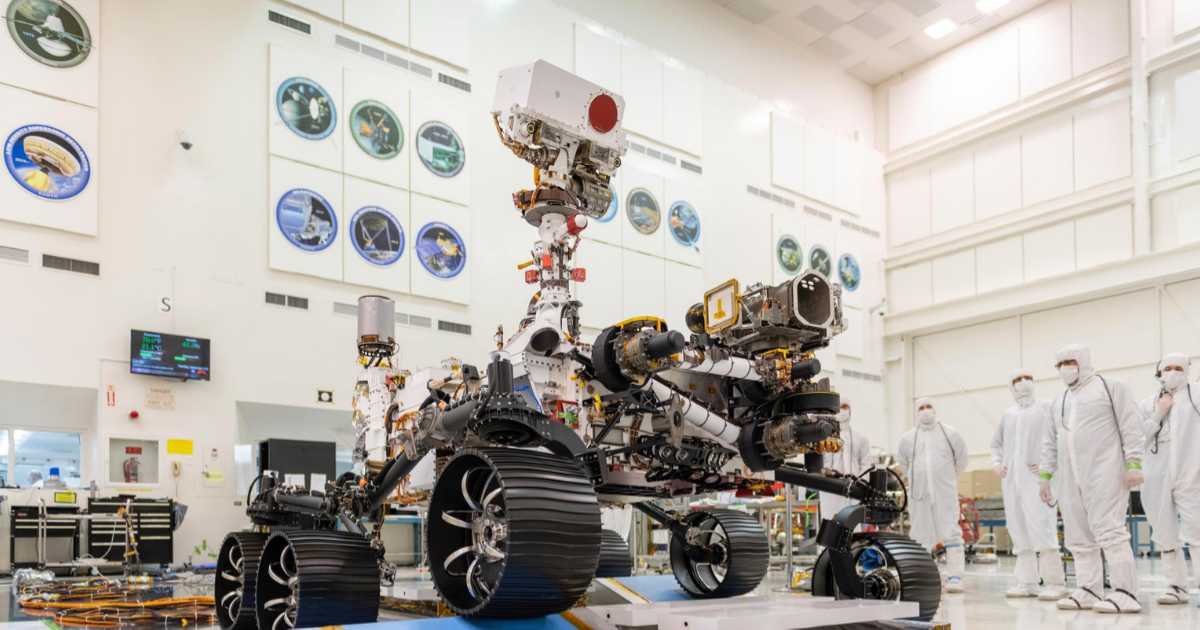
The concept of Interworld Slingshot Resource Surveys will rely on a method that has already been used on Mars. Currently, NASA’s Perseverance rover uses Raman spectroscopy. It fires a laser at a rock or surface and then studies the reflected light to figure out what minerals are present. A similar approach will be used by Slingshot but from much farther out (somewhere between 19 and 31 miles). With this, it will study targets like the Moon, a near-Earth asteroid, or Mars's moon Phobos

Earth and Mars planets. Middle East at night viewed from space. Colonization of Mars. Mars mission concept. Planets of the Solar system. Night Earth planet. This image elements furnished by NASA. ______ Url(s):
https://science.nasa.gov/resource/viking-1-orbiter-partial-image-of-mars/
https://svs.gsfc.nasa.gov/30028#media_group_346239
https://neo.gsfc.nasa.gov/archive/blackmarble/media/
https://neo.gsfc.nasa.gov/archive/bluemarble/
https://neo.gsfc.nasa.gov/archive/bluemarble/cloud.E.2001210.21600x21600.png
Adobe Photoshop CC 2023. Optical Flare. Adobe After Effects CC 2021. 3ds Max 2016
Image of Earth and Mars. (Image Source: buradaki/Getty Images)

As per SETI, "The main challenge for Interworld Slingshot Resource Surveys is the distance involved. Raman scattering is very faint and hard to detect. The project team says that only about one photon in 10 trillion is Raman-scattered”. Earlier long-range tests by Pablo Sobron have reached just 393 feet. With this study, the team is now focused on testing if the technique can work across tens of miles.
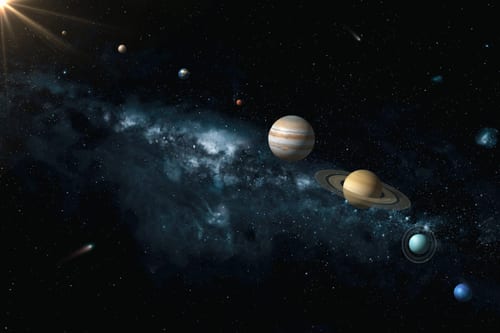
Complete solar system visualization showing all planets arranged in order from the sun across deep space. Mercury, Venus, Earth, Mars, Jupiter, Saturn, Uranus, and Neptune occupy their respective positions in the composition. Saturn displays its characteristic ring system prominently in the scene. Uranus appears as an ice giant with visible ring structure. Comets travel through the cosmic environment, adding dynamic elements to the scene. The Milky Way galaxy stretches across the background, creating a vast stellar backdrop with its cloudy structure and numerous stars. Distant galaxies dot the deep space environment. The sun's bright rays emanate from the composition's edge, casting light across all planetary bodies. The arrangement demonstrates the relative positions and scale relationships between all eight planets within our solar system, set against the expansive cosmic perspective of interstellar space. Textures of objects are taken from https://images.nasa.gov.
Complete solar system visualization showing all planets arranged in order from the sun across deep space. (Image Source: rbkomar/Getty Images)

What comes next for Slingshot?

Right now, Slingshot is only a Phase 1 study. It has received NASA's funding through the NASA Innovative Advanced Concepts program, known as NIAC. If the results hold up, the next step would be applying for a larger, two-year Phase 2 grant. This project includes specialists from SETI Institute, NASA’s Goddard Space Flight Center, NASA’s Ames Research Center, as well as the company OffWorld. As per SETI, “This study is an early step in solving a problem that could become more important as governments and private companies plan long-term work beyond Earth. It is not just about how to extract resources in space, but also about how to gather enough information to decide where it makes sense to try.”

More on Starlust

Progress 96 mission to bring supplies to the ISS on September 9: How to watch the resupply live

NASA’s Curiosity rover crosses more than 5,000 days on Mars, defying its odds of survival
MORE STORIES

This was Spectrum’s second launch ever and it broke several records in European commercial spaceflight on its way to space.
2 hours ago
The mission will bring three tons of supplies for the Expedition 75 crew living in space.
1 day ago
Curiosity had a mission of just one Martian year, or roughly 669 Mars days.
1 day ago
With this success, ISRO redeemed itself after the back-to-back failures it suffered in 2025 and 2026.
2 days ago
Eight years after launch, BepiColombo has entered its final approach to the planet. Here’s what happens next.
2 days ago
The name, Ahmakiq Undae, comes from an IAU convention of naming dune fields in Latin after gods of wind.
2 days ago
The mission marks ISRO's return to the launch pad following the failure of its PSLV rocket earlier this year.
2 days ago
The fourth and final satellite's controlled reentry occurred at 23:30 CEST (5:30 pm EDT) over the South Pacific Ocean on September 1.
2 days ago
Similar to SpaceX's Falcon 9, the Chinese rocket has a reusable first stage and is designed for at least 25 flights.
2 days ago
BepiColombo's ‘Mercury Arrival Phase’ is set to begin at 8 am EDT on September 3, the European Space Agency announced.
3 days ago