These 5 asteroids are passing closer to Earth than you might expect
Near-Earth asteroids are keeping scientists on alert
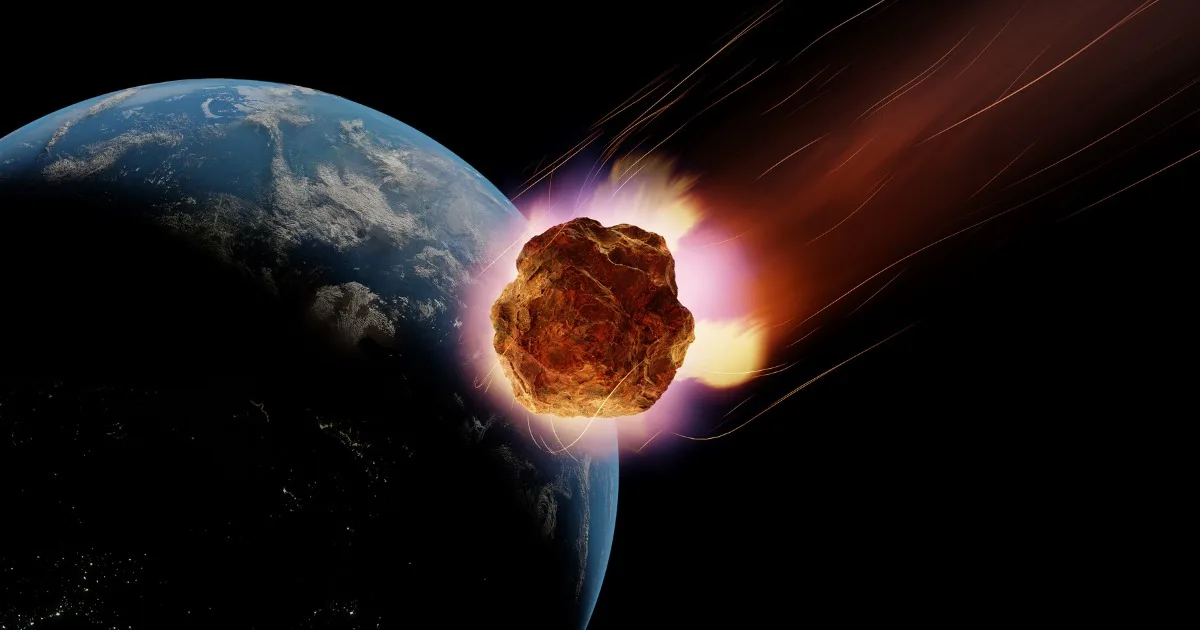
Asteroids have previously caused the mass extinction of the dinosaurs. Although most asteroids pass Earth harmlessly, a small number have the potential to pose a threat. Thus, scientists are keeping a close eye on asteroids in our solar system.
Here’s a look at some asteroids that are predicted to approach Earth closely in the future.
Bennu
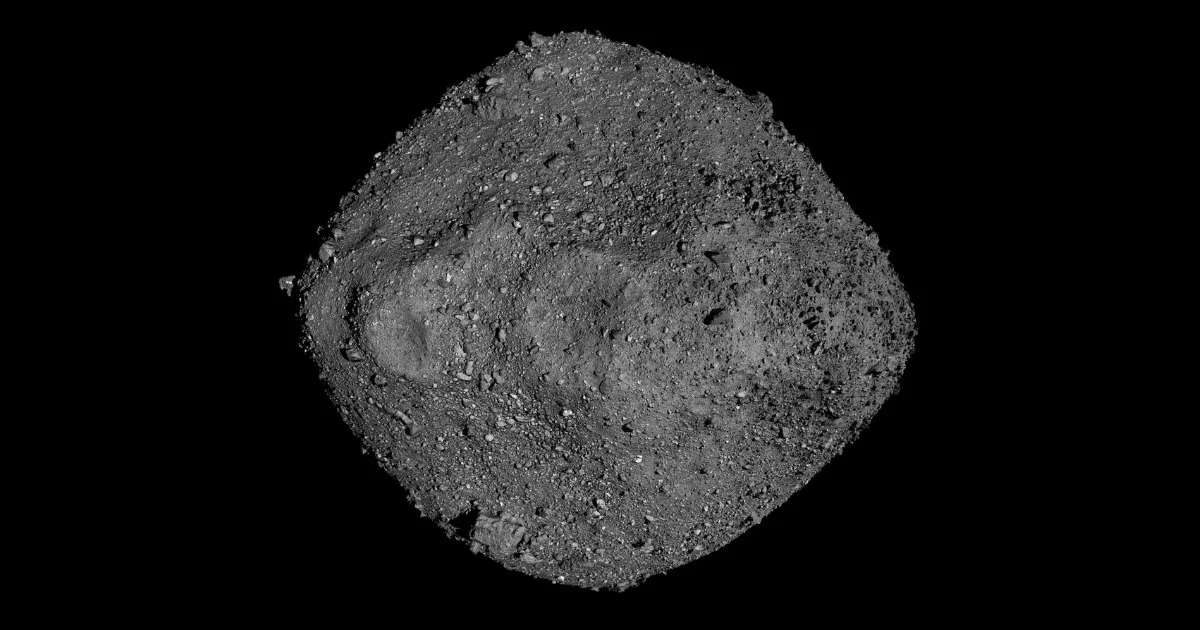
Bennu’s width is estimated at approximately half a kilometer or one-third of a mile. Such a width makes the asteroid capable of making it through the Earth’s atmosphere. According to a study by the OSIRIS-REx science team, Bennu is expected to impact Earth on September 24, 2182.
The study estimates that Bennu has a 1:2700 (0.037%) chance of impacting Earth. As per NASA, “During the flyby, there is an extremely small chance that Bennu will pass through a “gravitational keyhole '–a region of space that would set it on just the right path to impact Earth, late in the 22nd century.”
Asteroid Apophis
The asteroid Apophis (99942) was discovered back in 2004. Initially, scientists feared that the asteroid might make an impact with our Blue Planet in 2029, 2036, or 2068. Thankfully, further studies made the scientists change their opinion. They dismissed the chances of any impact for at least 100 years to come.
On April 13, 2029, Apophis will pass close to the Earth. The asteroid is estimated to pass less than 32,000 kilometers, or 20,000 miles, from the Earth’s surface. Apophis will momentarily come closer to our planet than the satellites in geostationary orbit. The asteroid has a width of roughly 375m, and it will be bright enough to spot with the naked eye from parts of Europe, Africa, and Asia.
2023 DW
2023 DW is a small Aten-class near-Earth asteroid. Its size can be compared to that of a school bus. Previously, in 2020, the asteroid passed within 9,539,882 miles of Earth. On February 18, 2023, 2023 DW was approximately 5,422,533 miles away from Earth. It's expected to make a close approach on April 15, 2029.
The asteroid was observed and studied by scientists back on February 26, 2023 and it was last officially observed on March 19, 2023. Despite 2023 DW’s orbit standing in close proximity to Earth, computer simulations have not indicated any chances of collision in the near future. Thus, although NASA JPL has noted it as a near-Earth asteroid, it is not considered potentially hazardous.
2005 ED224
This one is a very small near-Earth asteroid of the Apollo class. 2005 ED224 orbits the Sun every 965 days and is expected to be about 0.023 to 0.052 miles (0.037 to 0.083 kilometers) in diameter. It was last officially observed on March 16, 2005, and is classified as a "Near Earth Asteroid" by NASA JPL.
Going by the indications of the computer simulations, it is not marked as potentially hazardous. But NASA Sentry has evaluated two possible scenarios where the 2005 ED224 might impact Earth. On March 11, 2030, the probability of impact is stated as 0.00002%, and for March 10, 2064, it stands at 0.00004%.
1950 DA
The asteroid 1950 DA is also known as 29075. Since it has a moderate size, it is classified as a near-Earth object by NASA's JPL. This asteroid has a diameter of about 2 kilometers (1.2 miles), and this makes 1950 DA significantly larger than almost 99% of the asteroids known to humans. In fact, its sheer size can be compared to the highest peak on Earth, Mount Everest.
Furthermore, it's classified as a "Potentially Hazardous Object" by NASA's Jet Propulsion Laboratory. Asteroid 1950 DA's next significant approach is expected on March 2, 2032, followed by close approaches in 2074, 2105, 2136, and 2187. NASA's Sentry impact monitoring system estimates a 0.00286% chance of the asteroid impacting Earth on March 16, 2880.