NASA's twin ESCAPADE mission snaps first 'selfies' just days after leaving Earth
The twin ESCAPADE spacecraft utilized their Visible and Infrared Observation System (VISIONS) cameras to take photographs on November 21.
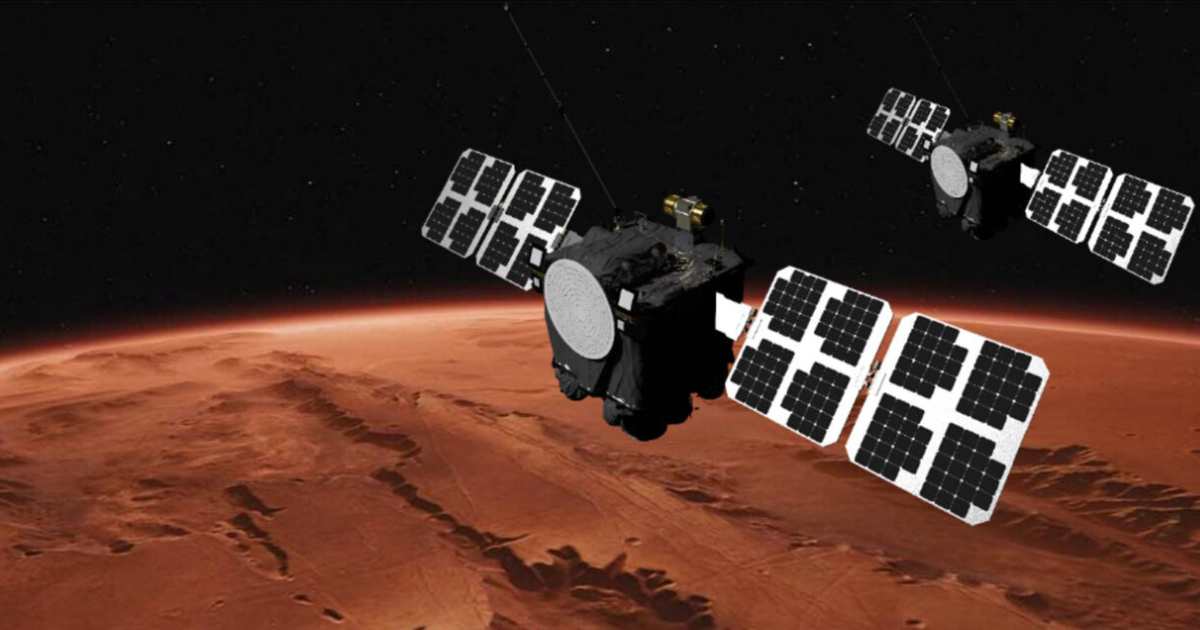
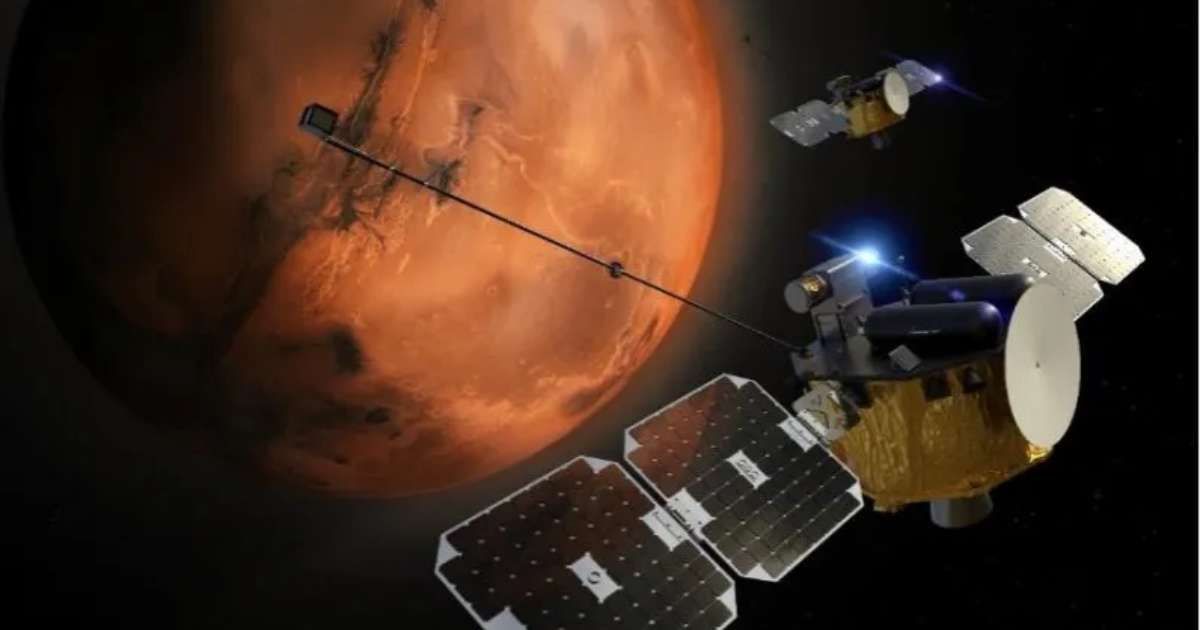
Illustration of the ESCAPADE spacecraft in orbit around Mars (Representative Cover Image Source: Rocket Lab USA/UC Berkeley)

NASA's ESCAPADE spacecraft, headed to Mars, has tested and confirmed its onboard cameras are operational in space by capturing and sending back its first images, a successful technical milestone in just a little over a week after launch, an update by the agency said

An artist's rendition of the two ESCAPADE satellites in orbit around Mars (Cover Image Source: NASA)

One of the two spacecraft snapped pictures with its special Visible and Infrared Observation System (VISIONS) cameras, designed and built at Northern Arizona University, on November 21. Part of its solar panel was also visible in the images.
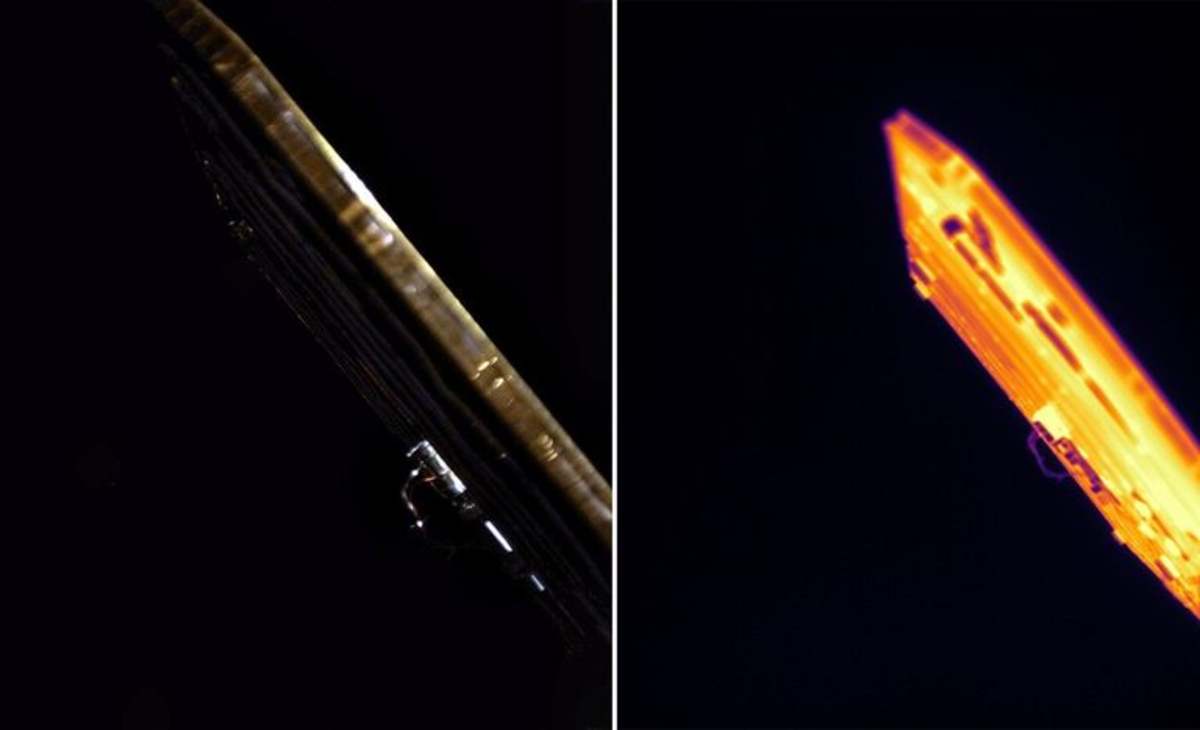
These images show the side of a solar panel on one of NASA’s two ESCAPADE spacecraft. The image on the left is from the spacecraft’s visible-light camera. The image on the right was taken with its infrared camera, showing which parts of the array are warmer (yellow and orange) and cooler (purple and black) (Image Source: NASA/UCB-SSL/RL/NAU-Radiant/Lucint)

Successful visible-light images indicate it will be sensitive enough to photograph Mars' aurora when it arrives at the red planet. The infrared camera will help track how the surface warms up and cools down during its daily and seasonal cycles. The second spacecraft also powered up its camera, but since it was pointed away from the craft and toward open space, that image came back completely dark. 

This frame from an animation shows the sudden appearance of a bright aurora on Mars during a solar storm (Image Source: NASA Image and Video Library | NASA)

The two ESCAPADE spacecraft were launched on November 13 from Florida aboard a Blue Origin New Glenn rocket. Built by Rocket Lab, the probes are now in a temporary "loiter" orbit near a stable point in space about a million miles from Earth called Lagrange point 2. In November 2026, using Earth's gravity, they will make a gravity assist maneuver, better known as a slingshot, to send themselves toward the Red Planet, where they are expected to arrive in September 2027. 
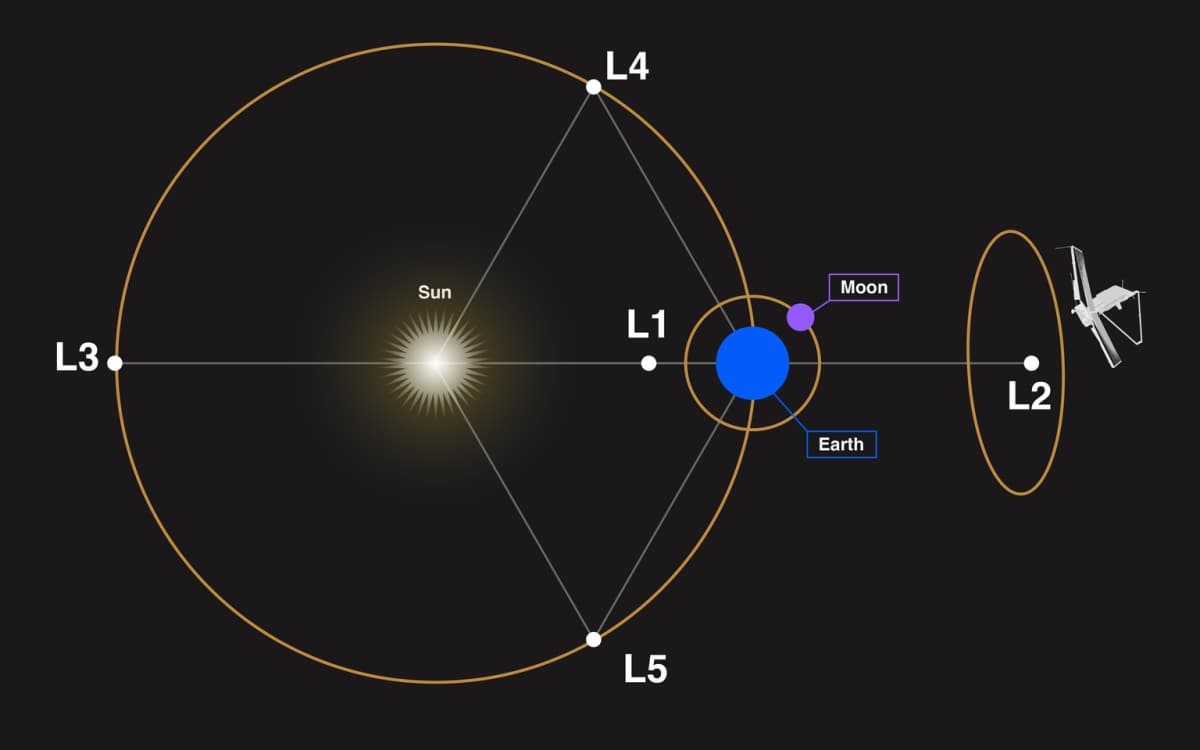
The James Webb Space Telescope orbits the Sun near Sun-Earth Lagrange point 2 (L2), approximately 1.5 million kilometers (1 million miles) from Earth (Representative Image Source: NASA, STScI, CSA)

This is a radical new path that experts say could revolutionize future logistics to Mars. If colonization efforts require hundreds of vessels launched at every planetary alignment, for instance, this flexible trajectory would permit spacecraft to launch over several months and queue up before executing the final maneuver. This would greatly reduce the extreme risks currently associated with very tight launch windows. "Can we launch to Mars when the planets are not aligned? ESCAPADE is paving the way for that," said Jeffrey Parker of Advanced Space LLC, about the broader implications of the route. Once at Mars, according to NASA, the main objective of the mission will be the investigation of how solar wind, high-speed material flowing from the Sun, interacts with the Martian atmosphere, contributing to its erosion. 
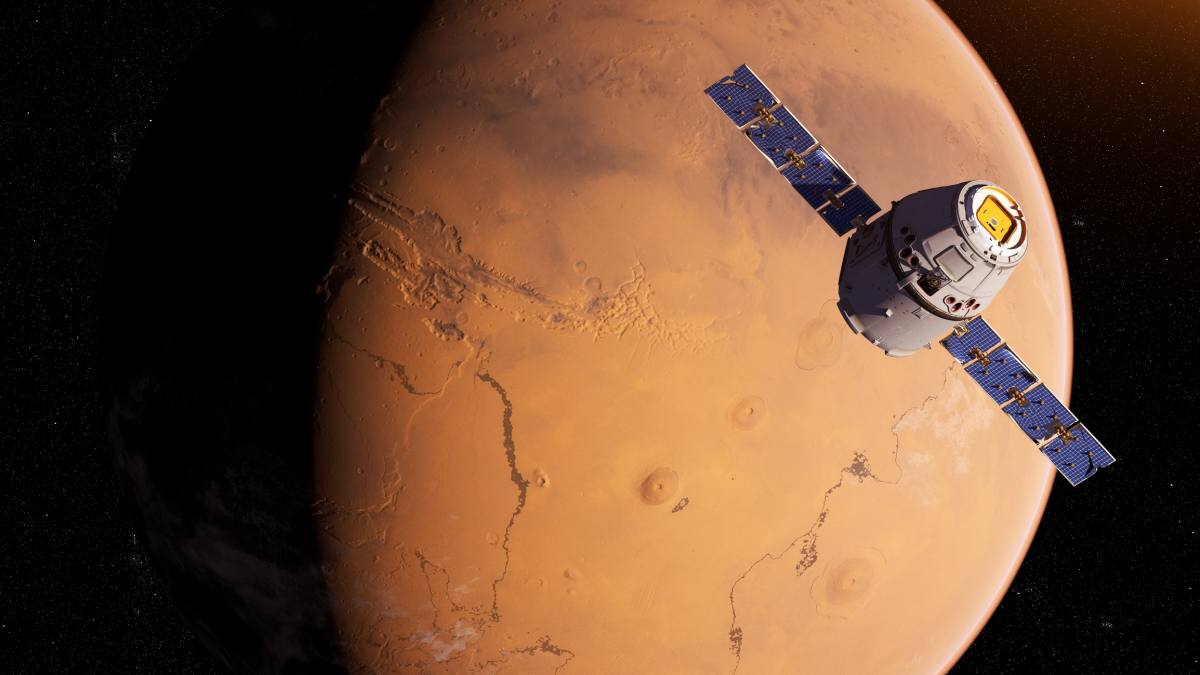
Illustration of a satellite in front of Mars (Representative Image Source: Getty | 	SCIEPRO/SCIENCE PHOTO LIBRARY)
Illustration of a satellite in front of Mars (Representative Image Source: Getty | SCIEPRO/SCIENCE PHOTO LIBRARY)

"Every launch of New Glenn provides data that will be essential when we launch MK-1 through Artemis," said acting NASA Administrator, Secretary Sean Duffy, upon the successful launch of the mission. "All of this information will be critical to protect future NASA explorers and invaluable as we evaluate how to deliver on President Trump’s vision of planting the Stars and Stripes on Mars." In addition to deploying the NASA payload, the New Glenn rocket also facilitated a successful demonstration for Viasat's HaloNet launch telemetry data relay solution in support of NASA's Communication Services Project. This mission was also New Glenn's second National Security Space Launch (NSSL) certification mission as Blue Origin works with the U.S. Space Force to fulfill key national security needs. 

More on Starlust

Severe solar storm forces Blue Origin to postpone NG-2 launch of NASA’s twin ESCAPADE spacecraft

Blue Origin's New Glenn successfully launches NASA’s twin ESCAPADE spacecraft
MORE STORIES

The cargo vehicle carrying essential supplies for the Expedition 74 crew docked with the Zvezda module.
3 hours ago
SUPARCO's Earth observation satellite reaches space as Pakistan President Asif Ali Zardari praises China's cooperation.
21 hours ago
Launch timing, live stream, and more—here's all you need to know about the return of SpaceX's Falcon Heavy rocket.
1 day ago
Mission to study Earth’s response to solar wind enters final prep at Europe’s Spaceport.
2 days ago
Expedition 74 crew finishes key science work and maintenance as Russian cargo craft's arrival looms.
2 days ago
Once Crew-13 arrives at the station, the group will form part of Expedition 75 on board the ISS.
3 days ago
Isaacman defends Trump over NASA cuts, opens up on Gateway cancellation, and talks post-ISS plans.
4 days ago
Orion heat shield showed reduced damage and improved performance thanks to trajectory tweaks.
5 days ago
Besides delivering food, supplies, and equipment, SpaceX's Dragon will also carry a number of important science experiments.
6 days ago
The Jeff Bezos-owned company will be able to launch the New Glenn rocket again only after getting its final report and potential corrective measures approved by the FAA.
6 days ago