NASA's PUNCH captures stunning footage of 'time-traveling' Comet Lemmon (C/2025 A6)
From late October through mid-November 2025, the PUNCH satellite captured a dramatic sequence of the comet's tail twisting and reacting to powerful solar activity.
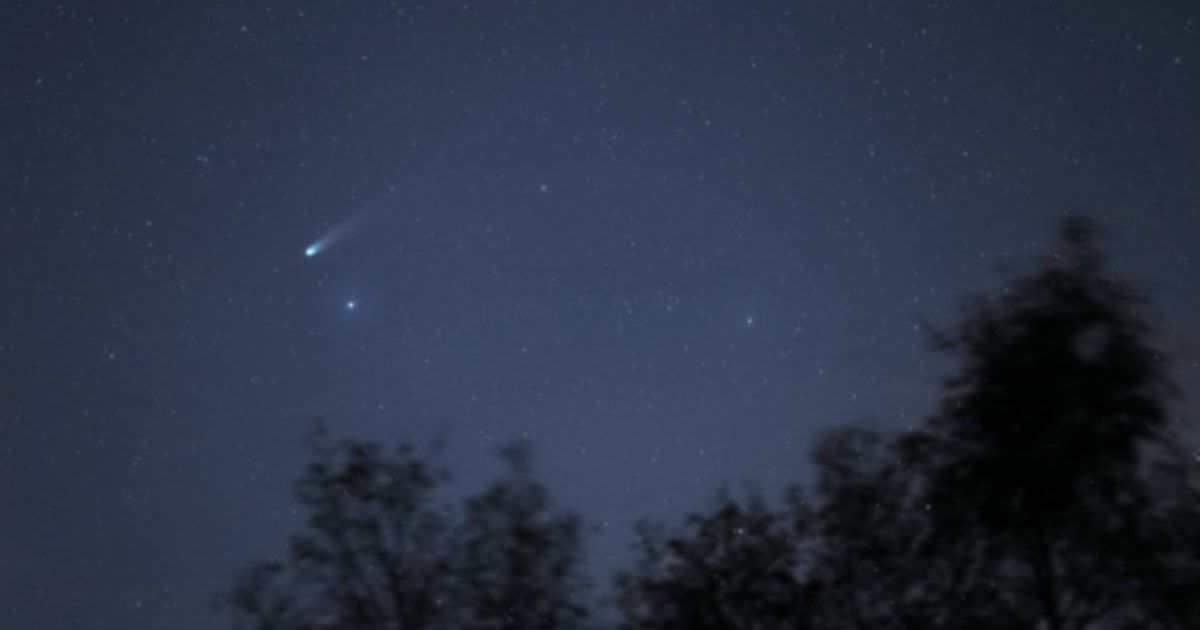
Comet C/2025 A6 (Lemmon) in the sky over Dartmoor National Park, UK (Image Source: UK Space Agency | Will Gater)

A NASA mission has produced incredible images of a comet that looks like it is "time-traveling" and is going through a turbulent life past the sun. The comet C/2025 A6 (Lemmon), which has not visited our solar system for more than 1,300 years, has recently come into view of NASA’s PUNCH mission, the space agency announced

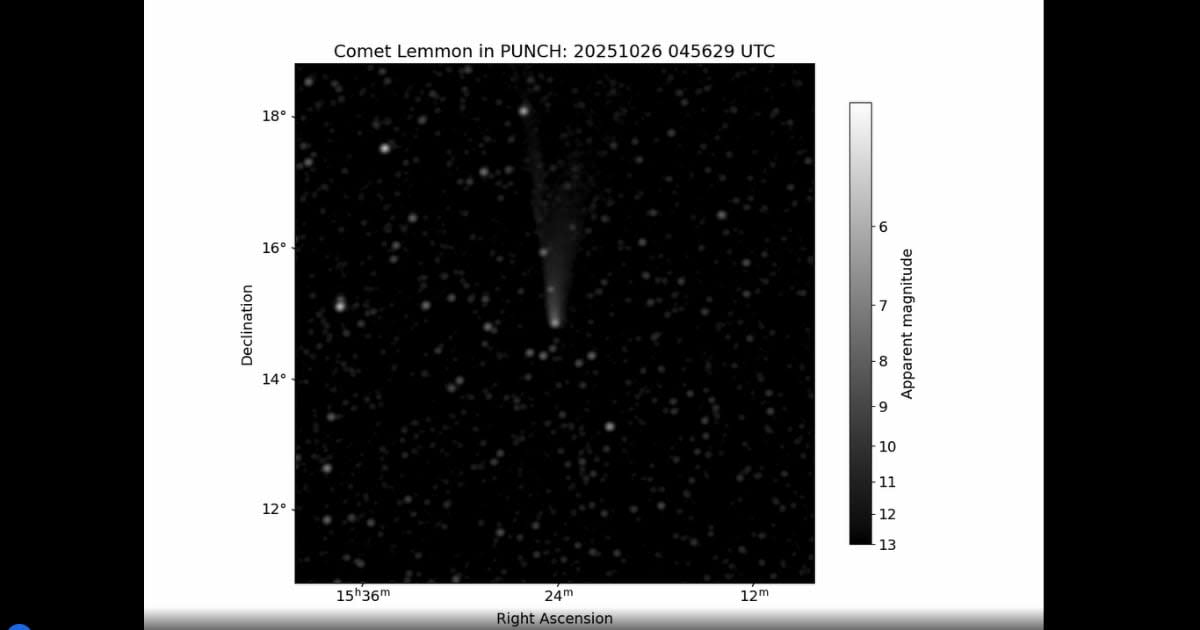
This movie, made from images taken by NASA’s PUNCH mission, shows comet Lemmon from Oct. 22 to Nov. 12, 2025 (Cover Image Source: NASA/Southwest Research Institute)
A screenshot from the movie made with images taken by NASA’s PUNCH mission, shows comet Lemmon from Oct. 22 to Nov. 12, 2025 (Cover Image Source: NASA/Southwest Research Institute)

The satellite, whose mission is to observe the Sun’s heliosphere in 3D, took the comet as a natural reference to monitor the movement of solar winds through the cosmos. During the period from October 22 to November 12, the PUNCH satellite captured dramatic footage of the comet’s tail responding to the solar activity. Scientists observed that on November 1 and November 4, the tail of the comet appeared to "waver and break in response to solar activity." However, even though the comet’s tail was subjected to such strong solar winds, it still grew back within a few days as the comet proceeded on its journey.
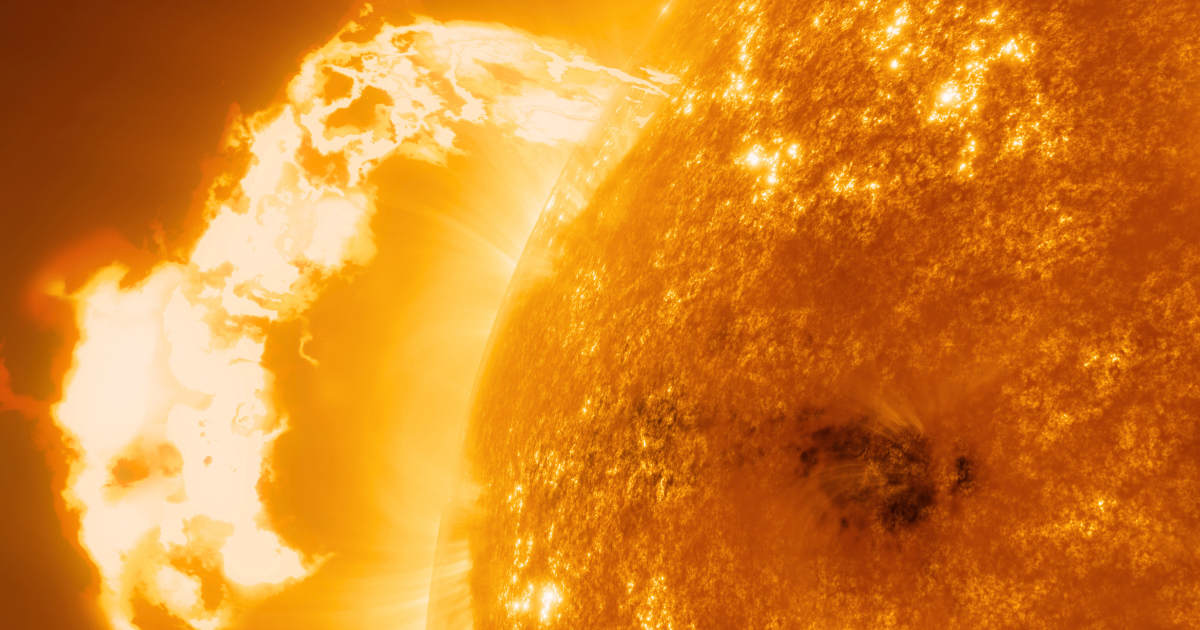
Illustration of a coronal mass ejection emanating from the Sun. These events are powerful releases of solar charged particles and magnetic field, travelling on solar wind. (Representative Cover Image Source: Getty| MARK GARLICK/SCIENCE PHOTO LIBRARY)
Illustration of a coronal mass ejection emanating from the Sun (Representative Image Source: Getty| MARK GARLICK/SCIENCE PHOTO LIBRARY)

This isn't just any other space rock. Astronomers describe comet Lemmon as a "time traveler" because of its massive, 1,350-year orbit. Its journey began roughly 240 astronomical units away, a distance that puts its origin far beyond the orbit of Pluto. The comet was originally imaged as an apparent asteroidal object on January 3, 2025, by astronomer David Fuls, who was using the 1.5-m reflector of the Mt. Lemmon Survey. Initially placed on The Possible Comet (and A/ objects) Confirmation Page (PCCP) as CCNG6P2, it was later renamed to C/2025 A6 (Lemmon) after follow-up images showed cometary properties. This long-distance visitor made its closest approach to Earth on October 21, 2025, at a distance of about 55 million miles (89 million kilometers) before making its perihelion (closest approach to the Sun) on November 8.
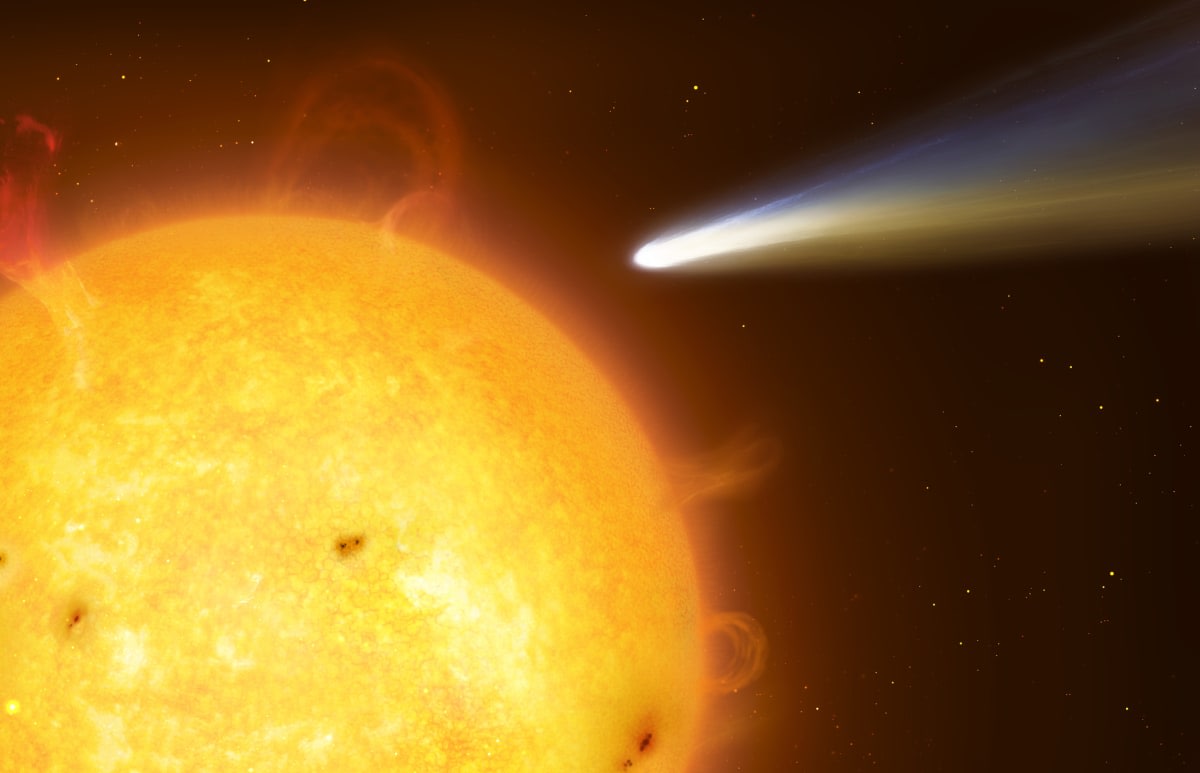
Illustration of a sungrazing comet. These are comets that pass very close to the Sun at perihelion (Representative Image Source: Getty | MARK GARLICK/SCIENCE PHOTO LIBRARY)

The PUNCH (Polarimeter to Unify the Corona and Heliosphere) mission is a fleet of four suitcase-sized satellites that are spread across roughly 8,000 miles of space, working as a single system. While Comet Lemmon still continues to be visible in PUNCH images, it is getting dimmer and dimmer with time. In fact, its scientists expect the comet to disappear from the mission's view by mid-January 2026 as it heads farther away from Earth and the Sun into the darkness of space for another millennium. Its brief appearance serves as a spectacular reminder of the vast, ever-changing universe beyond our world. 
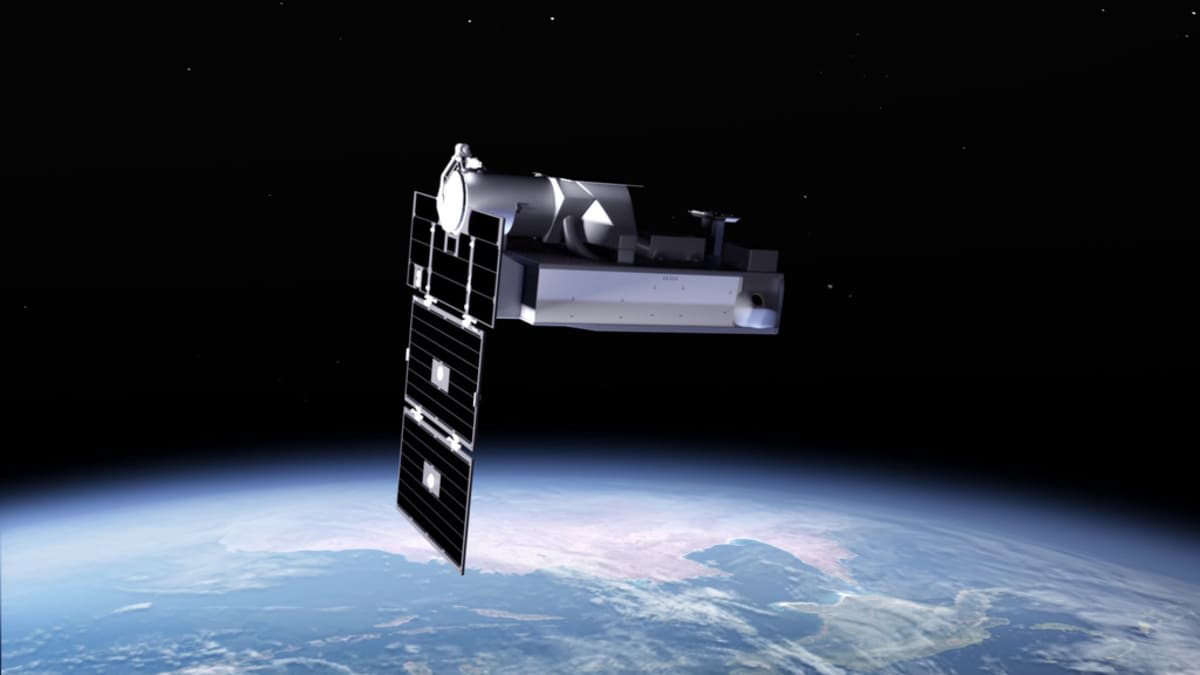
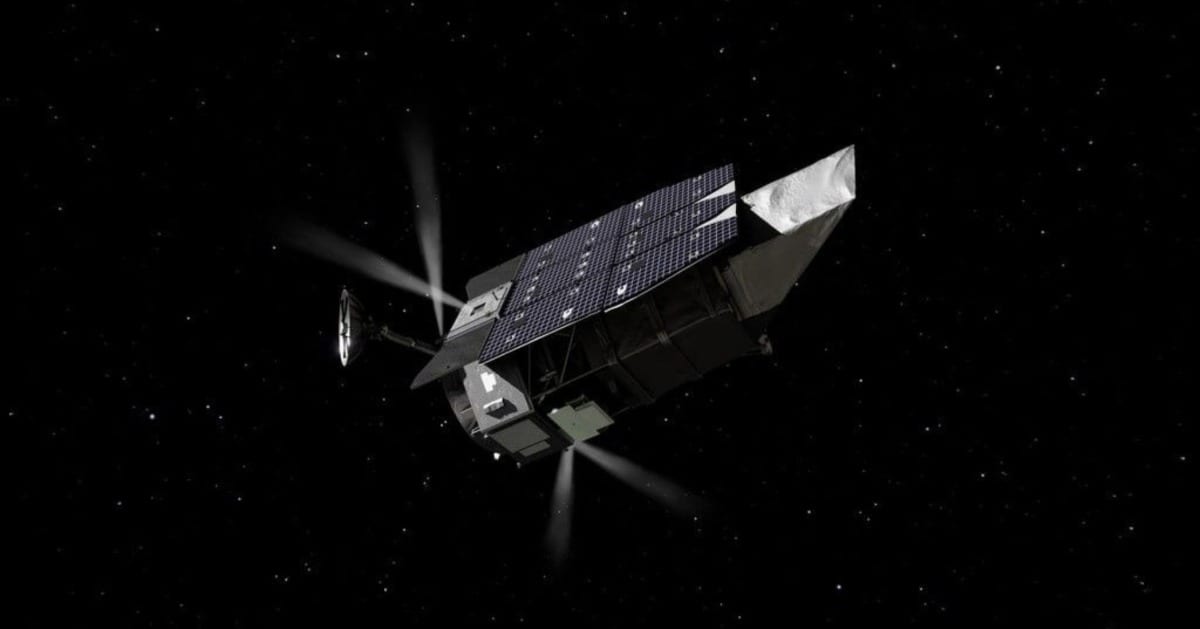
An image depicting the PUNCH Narrow Field Imager, or NFI instrument, from low Earth orbit. (Representative Image Credit: NASA’s Conceptual Image Lab/Kim Dongjae, Walt Feimer)

As of today, the comet is passing through the constellation Scorpius, per Sky Live. It has moved nearly 185 million miles (297 million kilometers) away from Earth, with its expected magnitude (brightness) being 12.49. Because of its current distance, light from it takes about 16 minutes to reach us. For astronomers trying to locate the comet's position, it is currently at a Right Ascension of 17h 14m 01s and a Declination of -36° 05’ 33”.

More on Starlust

Solar storm temporarily rips apart comet Lemmon's tail in rare celestial spectacle

Where is comet C/2025 A6 (Lemmon) now: Current location and coordinates
MORE STORIES

A new study led by a recent graduate of the University of Arkansas suggests that 3D printing tools might be possible on the Red Planet.
3 days ago
The technological payloads represent some of the latest advancements in the fields of space technology and biotechnology.
4 days ago
“The wheels mimic the animal’s characteristic interaction with the ground, generating both longitudinal and lateral forces."
4 days ago
The imaging was done using an instrument that also found changing composition of the comet.
7 days ago
The rover ventured farther west than it had ever been since landing at the Jezero Crater in 2021.
May 15, 2026
When used in future space missions, it could process huge amounts of data directly in space instead of taking most of the help from Earth.
May 13, 2026
Called Solar Neutrino Astro-Particle PhYsics CubeSat (SNAPPY), the project launched on May 3, 2026, atop a SpaceX Falcon 9 rocket.
May 8, 2026
The STORIE instrument will be installed on the exterior of the International Space Station, from where it will measure the speed and direction of energetic neutral atoms in the ring current.
May 8, 2026
The new technology, called LESTR, mimics cold temperatures without the use of cryogenic liquids.
May 7, 2026
Part of ESA’s Copernicus program, the constellation allows all-weather, day-night monitoring.
May 5, 2026