Solar storm temporarily rips apart comet Lemmon's tail in rare celestial spectacle
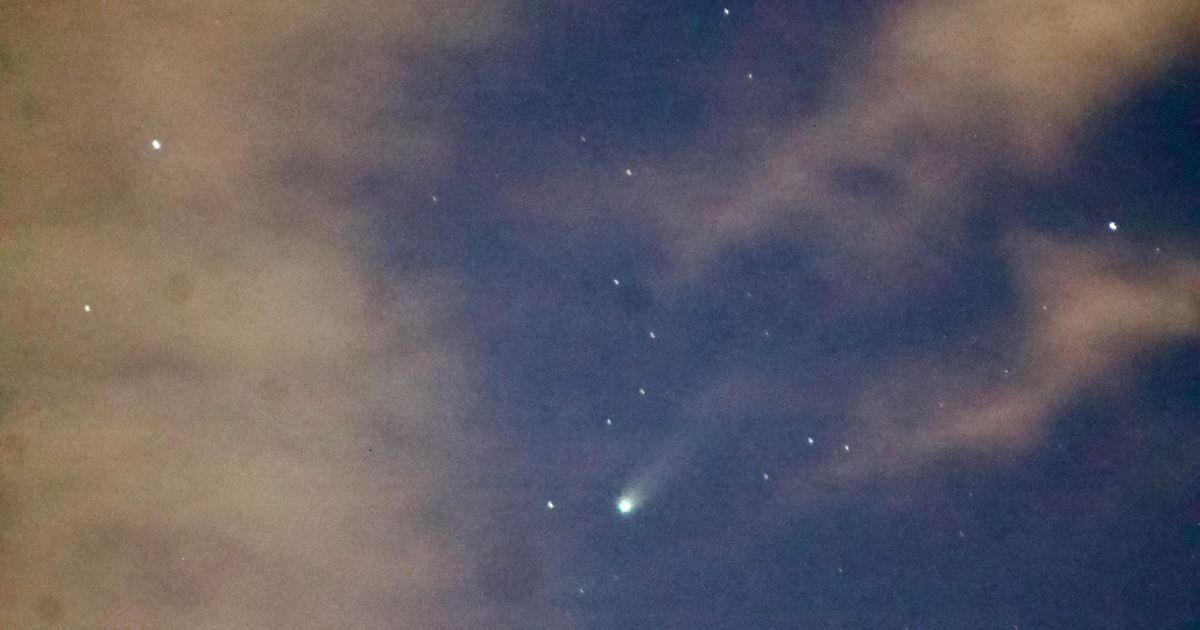
A highly anticipated, though significantly delayed, coronal mass ejection (CME) from the sun delivered a powerful punch to both Earth and the recently discovered Comet Lemmon (C/2025 A6), resulting in a dramatic, albeit temporary, disruption of the comet’s tail, according to Space Weather.
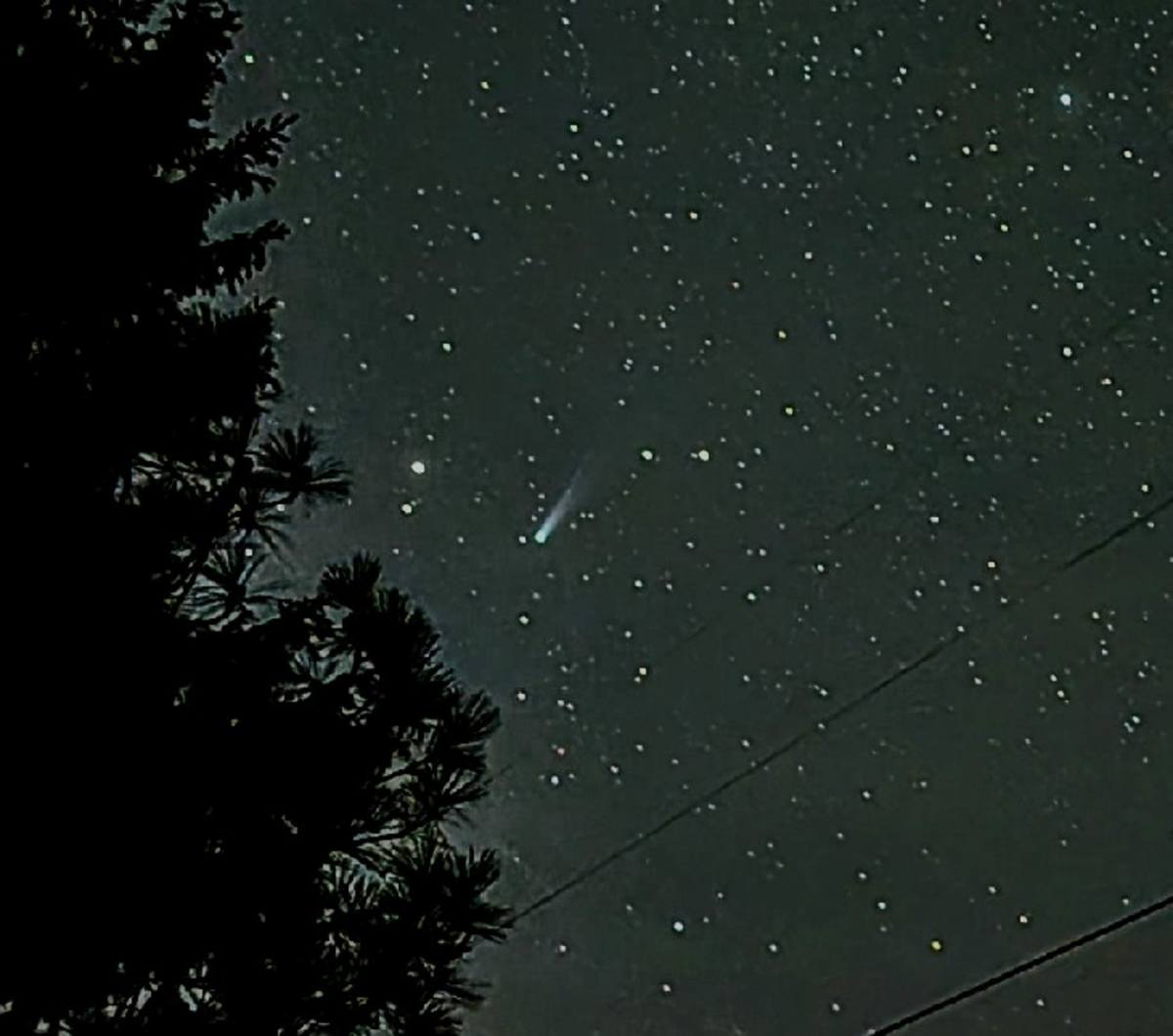
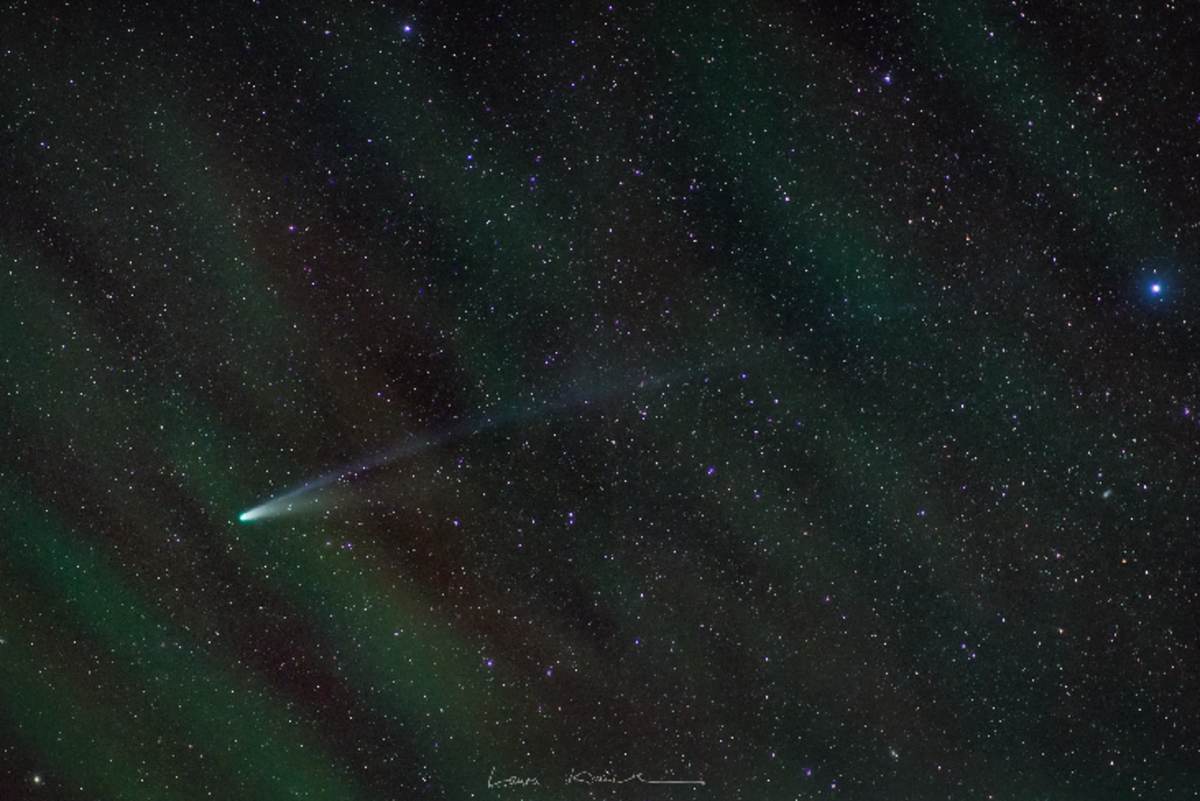
The solar blast, which arrived roughly two days behind schedule late on October 17, triggered a surprise G1/G2-class geomagnetic storm. This event generated vivid aurora borealis displays, the Northern Lights, that were unexpectedly visible far south, reaching US states including New York and Utah. In Scotland, amateur astronomer Alan C. Tough captured the comet completely enveloped by the vibrant light show. "I set up a star tracker with a DSLR and 150mm lens in my back garden to photograph Comet Lemmon when the auroras erupted." Tough recounted from his location in Elgin, Moray.
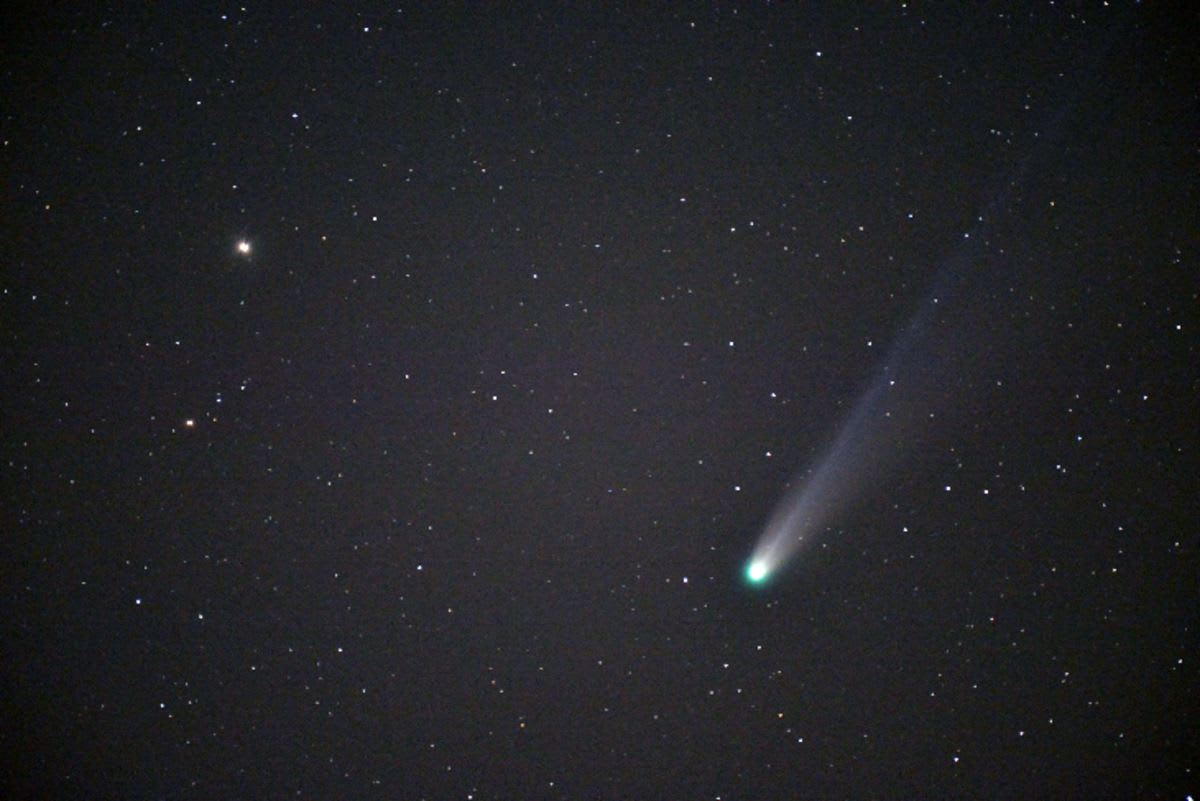
However, the solar event’s most striking effect was observed hundreds of miles away. In the Czech Republic, astronomer Petr Horálek documented the direct impact of the solar wind on the comet itself. "This was a truly unusual view," Horálek stated, noting the comet was surrounded by red auroras over Seč Lake. He confirmed that upon closer inspection, the comet’s ion tail appeared twisted and highly stressed by the atmospheric buffeting.
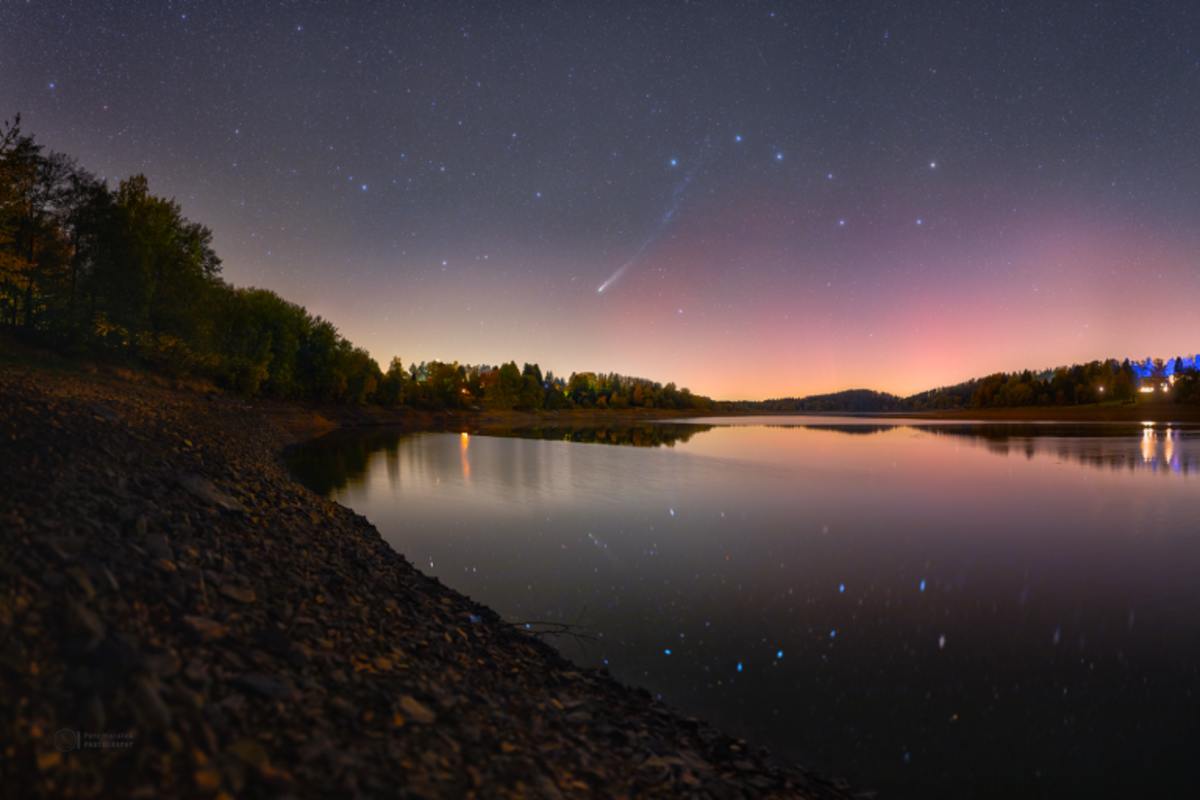
While the spectacle was arresting, astronomers confirm that the intense solar event did not ultimately "shred" the comet, as per Live Science. The observed disfigurement was caused by a powerful surge of solar wind, the continuous stream of charged particles flowing from the sun, rather than the main bulk of the CME. This strong gust twisted the comet's tail and resulted in the visible, temporary severance of its gas and dust trail at several points. This type of rippling along a comet's tail is a relatively common occurrence, especially as these icy bodies near the sun. However, the complete separation of a section of the tail, known as a disconnection event, is considered much rarer.
The unique celestial convergence was further highlighted by the firsthand account of Petr Horálek. Horálek, observing from Seč Lake in the Czech Republic, noted the extraordinary timing of the event on the evening of October 17. "It doesn’t happen every day to capture the invisible solar wind in two sky phenomena at the same moment," he reflected.
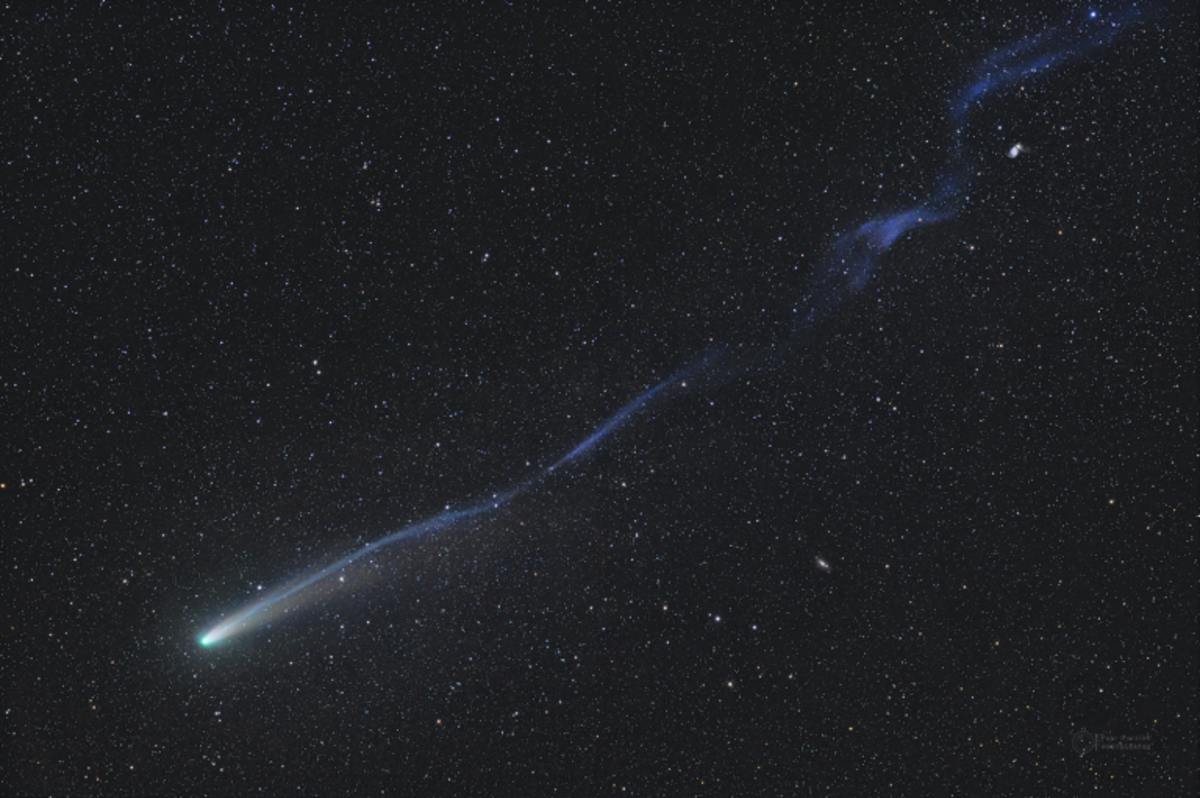
The panoramic image was captured using a Canon Ra camera and a Sigma Art 50mm lens (f/1.4) at ISO 4000, comprising a total of 43 eight-second exposures taken from a tripod. For the detailed shot of the comet’s damaged tail, Horálek used a Nikon Z6III with a Nikkor 135mm lens f/1.8 at ISO 1000, stacking 40 twenty-second exposures while tracking the comet with a Vixen Polarie U.

On October 21st, the icy body was approximately 89.2 million kilometers from our planet. As of today, October 22nd, the magnitude 3.9 comet is already on its outbound trajectory and is currently constellation of Bootes.
More on Starlust
Solar wind is causing 'major disturbance' to comet SWAN (C/2025 R2) gliding through space