Ancient metal-rich Martian lake could power future human industries on Mars
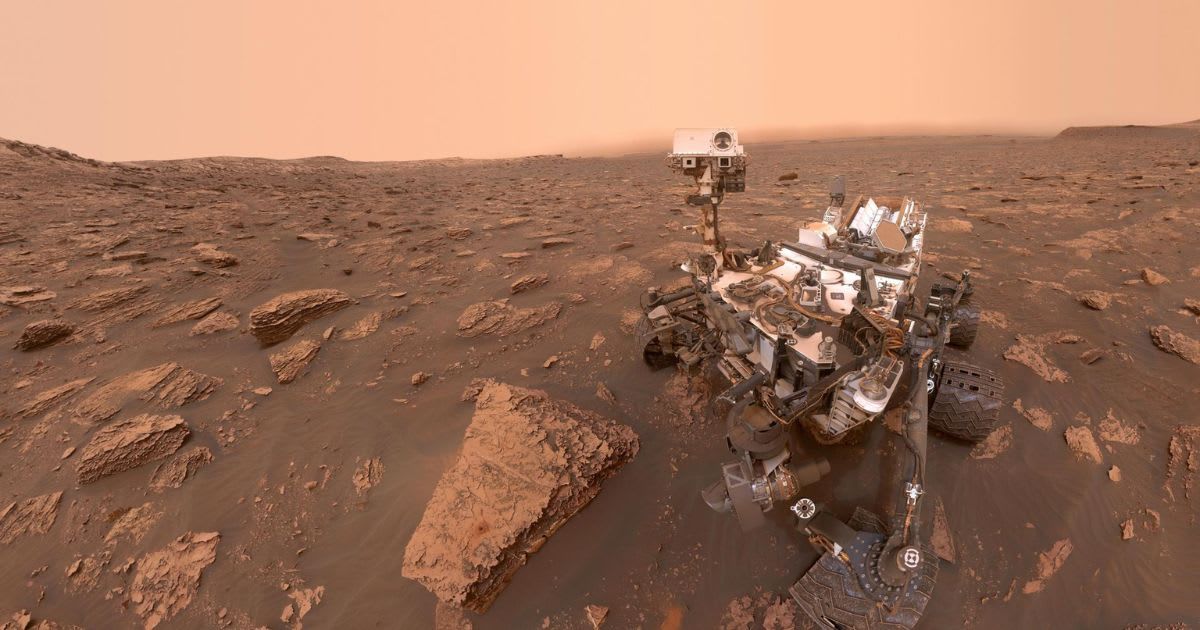
While roaming around on Mars, NASA’s Curiosity Rover stopped in front of a tall rock mound in late 2022. It turned on its ChemCam instrument and scanned nearby rocks in Gale Crater, a crater known for bearing signs of a time when Mars’ climate was changing from wet to dry. Images captured by the Rover reveal well-preserved ripples in mineral-rich rocks, indicating that a shallow lake existed at this location. An analysis by a research team, including researchers at the Los Alamos National Laboratory, indicates that the rocks contain high levels of iron, manganese, and zinc.
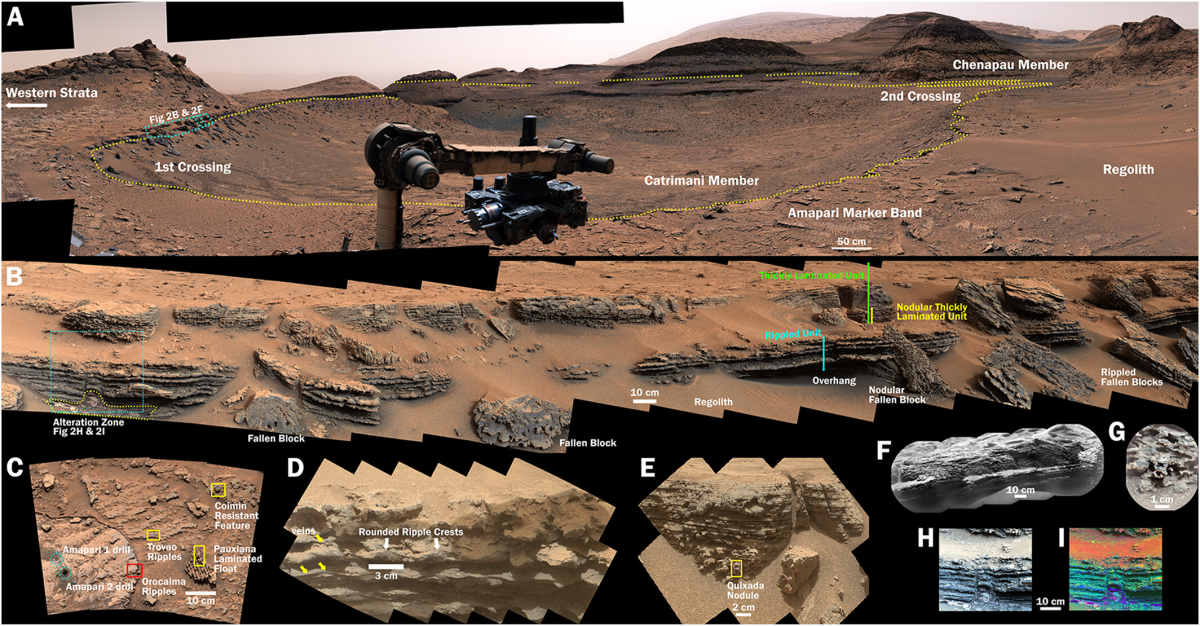
On Earth, metal-rich deposits form in lakes via chemical reactions. Such lakes are also home to microbial life, suggesting that the lake on Mars once harbored life. The lake and its vicinity could also be a spot to mine those minerals and extract metals that could be used by future human colonizers to build their necessary devices. The researchers have reported their findings in a paper published in the Journal of Geophysical Research: Planets. “The metals were found in preserved ripples, which is the clearest evidence we have that a lake was present in Gale Crater,” said Patrick Gasda, ChemCam Instrument science team member and research scientist at the Los Alamos National Laboratory, in a statement. “But what’s more surprising is that this lake existed high up on Mount Sharp, where the rover explored rocks that were deposited during an era on Mars when the climate was drying out.”
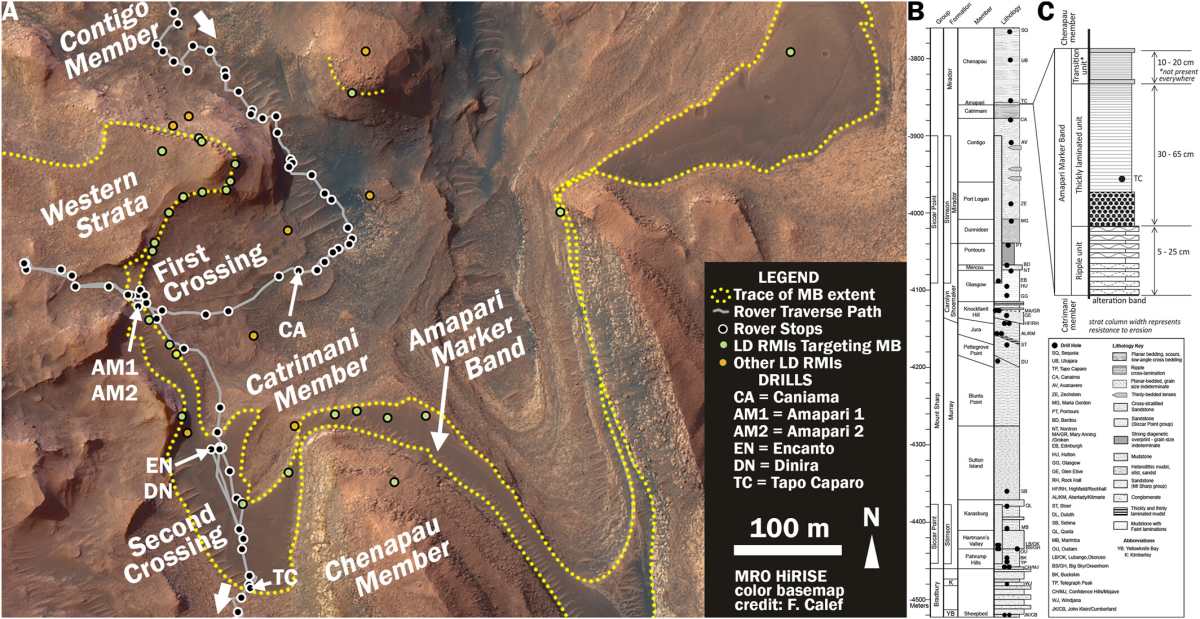
“Ancient Mars was much wetter, and lakes in craters were common then. It seems that as Mars became drier and colder, lakes that formed less frequently were very short-lived,” Gasda added. ChemCam is a powerful device that can vaporize rocks and analyze the light emitted from the elements in them. This reveals the composition of elements and even past signs of life, indicating whether Mars was suitable for life. Los Alamos and the Institut de Recherche en Astrophysique et Planétologie (IRAP) jointly built and operated the instrument, whereas the rover was made and operated by NASA’s Jet Propulsion Laboratory. The discovery of metals such as iron and manganese hints that life could have thrived in this lake. Some microbes on Earth are capable of using metals as energy sources.

The metal deposits point to a past when Mars started to dry up. But in isolated pockets of water, microbial life hung on. Finding such deposits can pave the way for future research on the red planet, helping researchers to determine the next locations for the Curiosity to explore. A recent study also shows that iron-rich minerals are extremely abundant at other locations on the Martian surface. This raises the prospect of in-situ resource utilization, the process of harnessing materials found on the Moon or Mars to create water, fuel and building materials.
More on Starlust
Scientists identify a 'bathtub ring' on Mars, hinting at a long-lost ocean on the Red Planet
Perseverance had found nickel in Martian bedrock—now, study claims it could be sign of ancient life