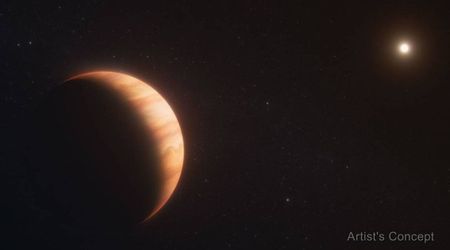
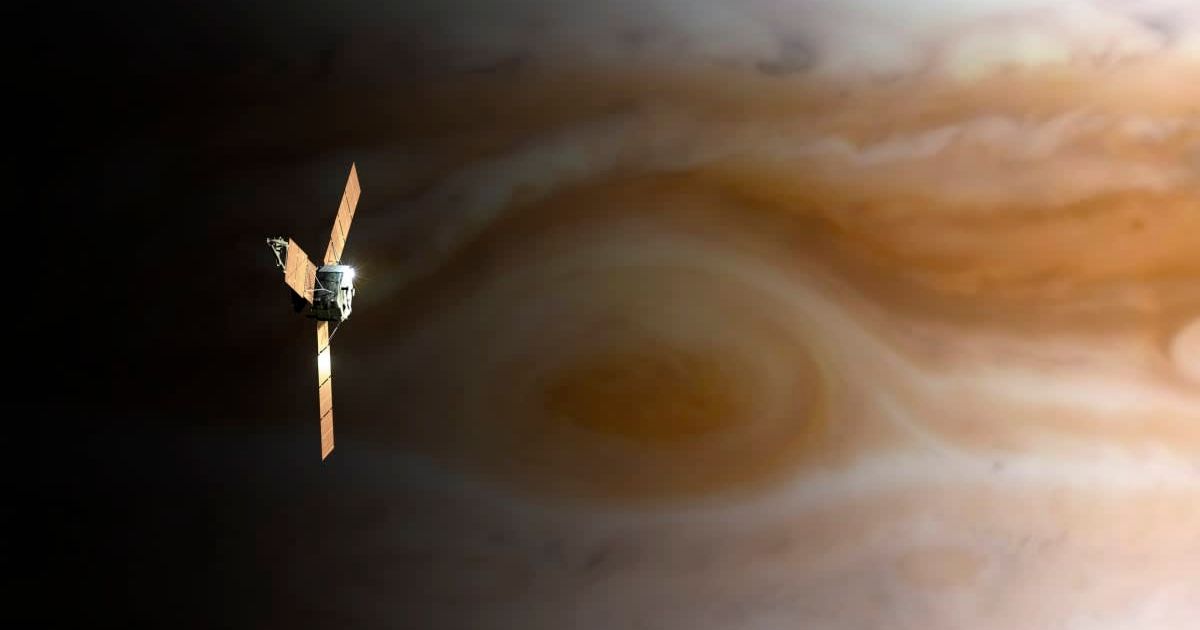
NASA's Juno mission finds particles traveling at near-light speeds at Jupiter
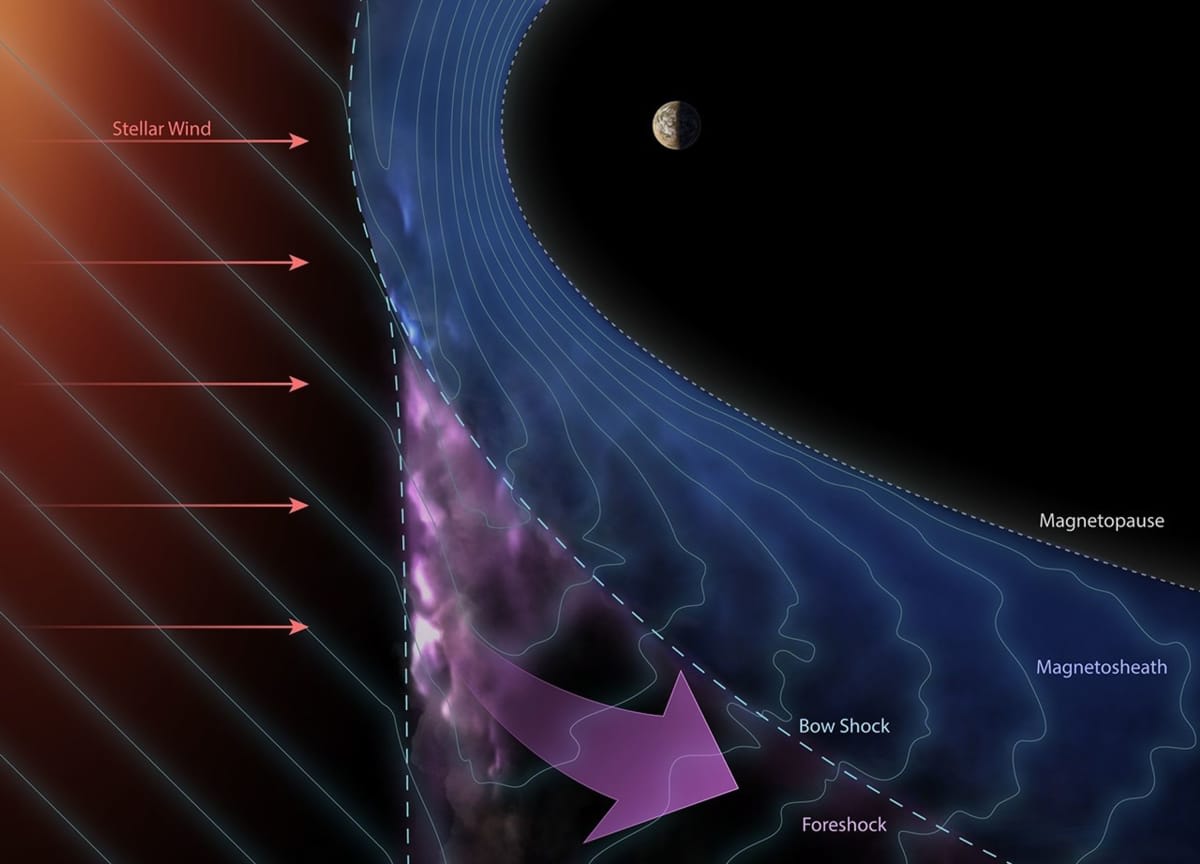
When streams of charged particles, including cosmic rays, collide with the magnetic fields of planets and stars, they get deflected and slowed down, creating shock waves, known as bow shocks. This phenomenon gets its name from bow waves—those that form in the water in the front of a fast-moving boat as it pushes forward. Upstream of this lies the foreshock, which is a variable region around celestial bodies that can accelerate charged particles to near-light speeds.
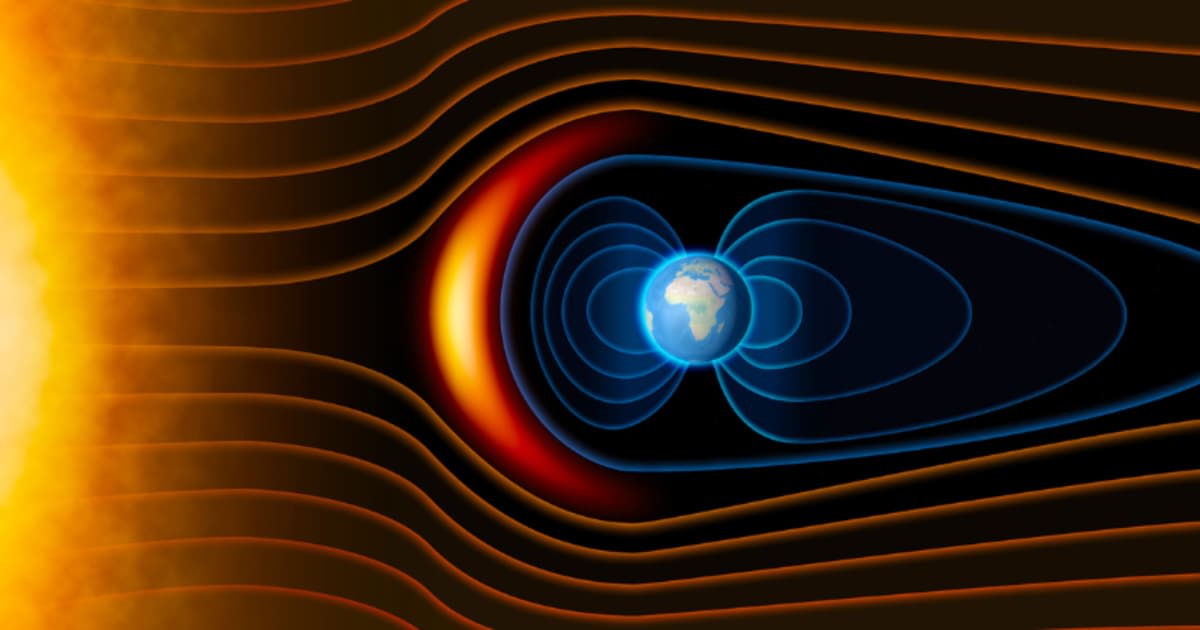
Our Earth is no exception to this. When cosmic rays from the Sun reach the planet's magnetic field, the interaction disrupts satellites, communication, and power systems. NASA missions like MMS (Magnetospheric Multiscale) and THEMIS (Time History of Events and Macroscale Interactions during Substorms), in fact, have shown that some electrons get accelerated in the foreshock region around Earth. The suspicion so far had been that the same process was responsible for accelerating high-energy particles in foreshocks around other celestial bodies as well, but there was no proof. NASA's Juno mission has, however, changed that by capturing particles traveling close to the speed of light near Jupiter.
Since the discovery of cosmic rays 100 years ago, astronomers have been trying to track down their origins. Juno's findings, published in the journal Nature, provide fresh evidence for how and where they form. While orbiting Jupiter, the spacecraft not only detected high-speed electrons in the gas giant's foreshock region but also found that their speeds are much higher than those found in Earth's. Considering that Jupiter's bow shock is much larger, this suggests a rather simple mathematical relationship—the larger the bow shock region, the larger the foreshock region, and the higher the acceleration of particles.
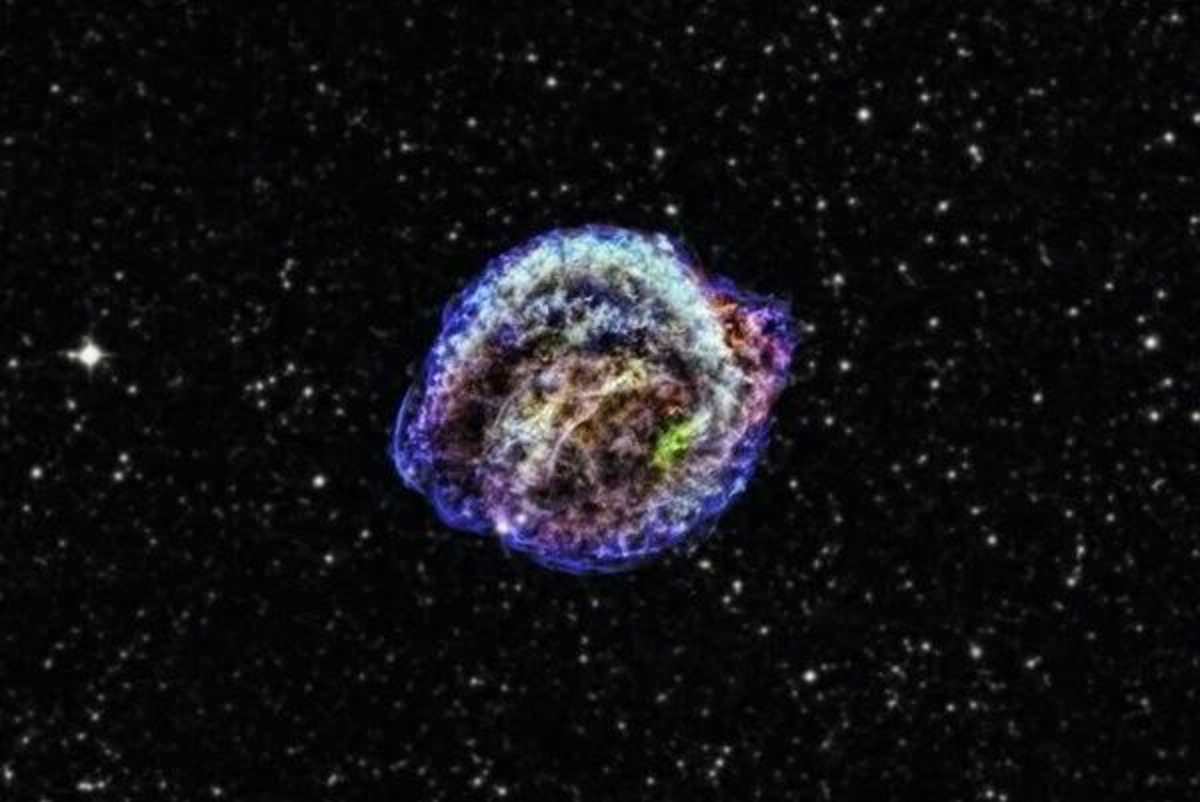
"The universality of these transient processes is confirmed by observations throughout our Solar System, with foreshock transients identified at Mercury, Venus, Mars, Earth, Jupiter and Saturn," the researchers wrote in their paper. "Studies have shown that the physical scale of these transients correlates directly with the size of the primary planetary bow shock." The researchers also found that the relationship applies to cosmic rays coming from supernovae across the galaxy as well, which have larger magnetic fields than Earth and Jupiter and thus accelerate particles to even higher speeds. This indicates that what happens in our Solar System is also likely to happen outside it.
More on Starlust
What are some of the highest-energy particles in the universe made of? Scientists have an answer
What are relativistic particles and why are astronomers so obsessed with them?