NASA's James Webb Space Telescope finds a lemon-shaped exoplanet with a never-before-seen atmosphere
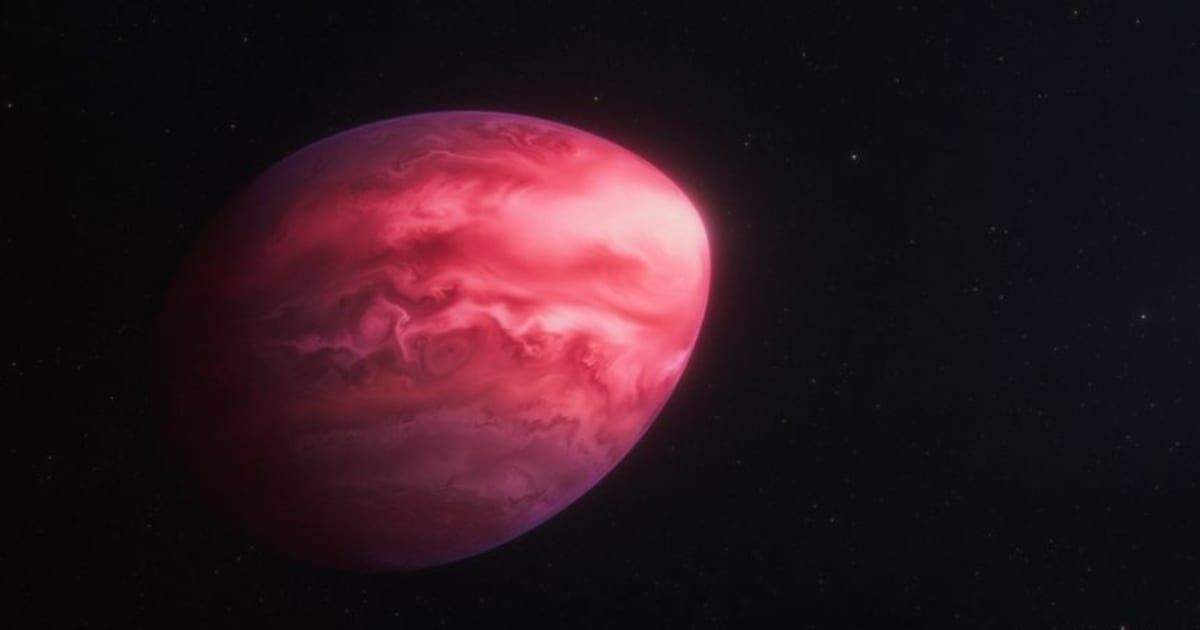
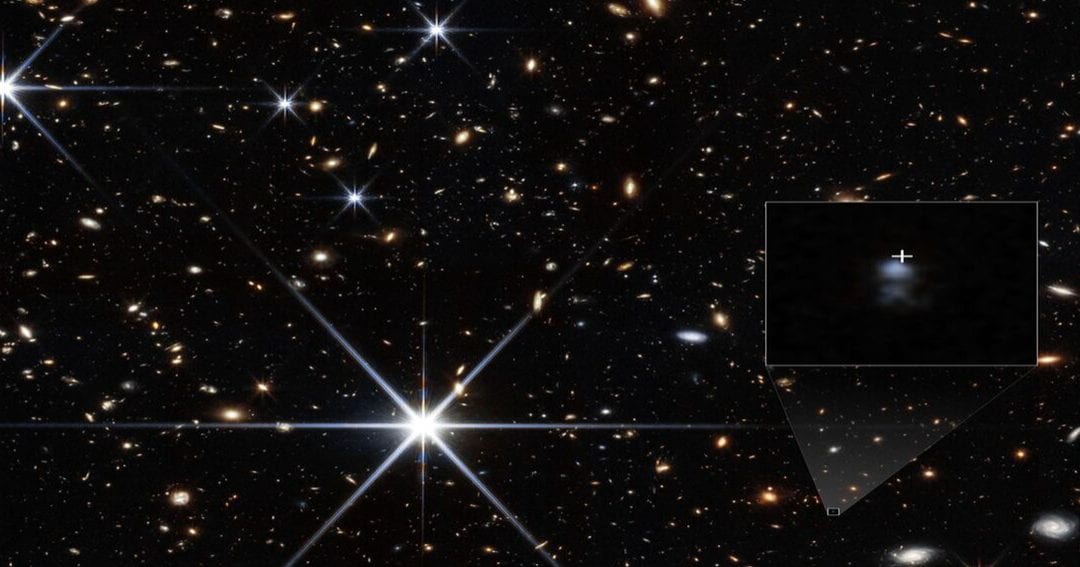
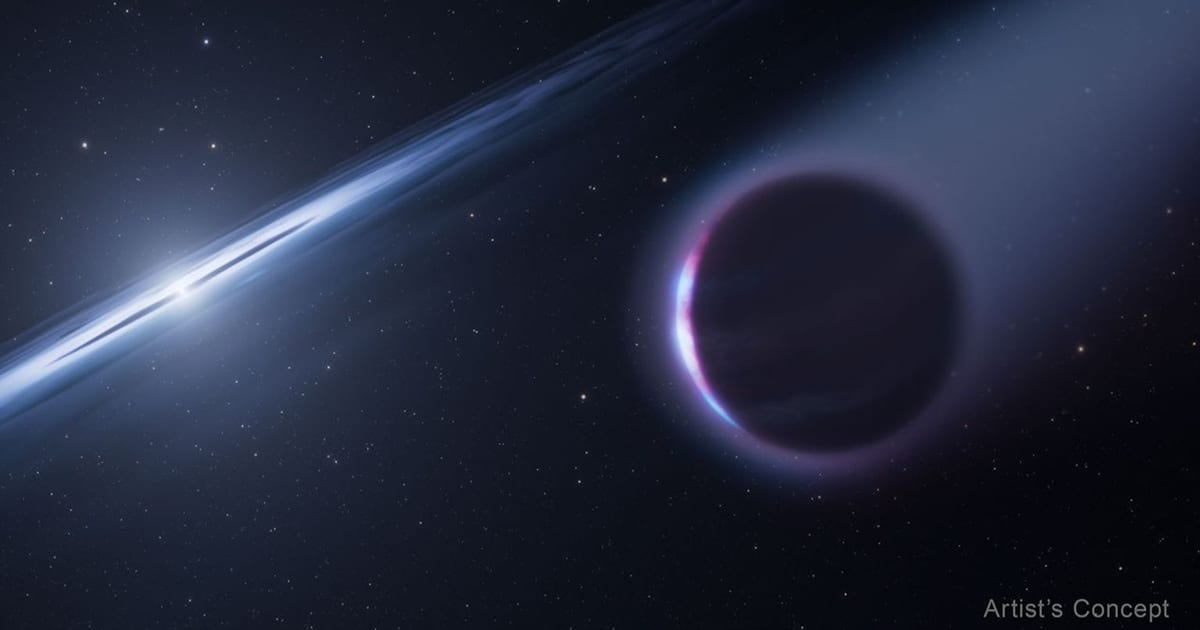
The James Webb Space Telescope has made a bewildering discovery: an exoplanet unlike any other known world, which challenges existing theories of the formation of planets. The planet, officially labelled PSR J2322-2650b, is roughly the mass of Jupiter but has been pulled into a bizarre lemon shape by the intense gravity of its host star, according to NASA.
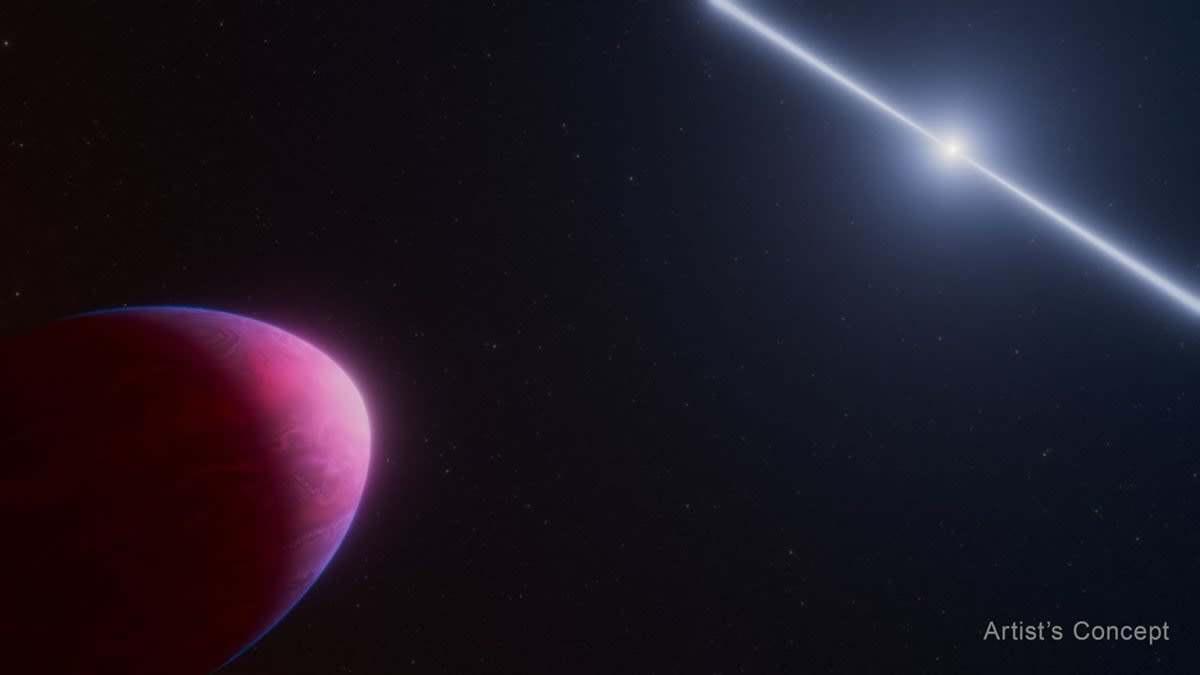
It orbits its star, a pulsar or a fast-rotating neutron star, extremely closely at a distance of only about one million miles. Due to this tight, fast orbit, the planet completes a "year" in just 7.8 hours. Scientists were surprised to find what was present in the atmosphere. Rather than the expected water or methane, for example, the atmosphere is dominated by helium and pure molecular carbon, in the forms of C₂ and C₃. “This was an absolute surprise,” said the co-author Peter Gao. "It's extremely different from what we expected."

The amount of carbon and helium in the atmosphere implies that thick, sooty clouds probably drift across the sky. Scientists theorize that, deep inside the planet, these carbon materials condense under pressure into actual diamonds. The carbon dominance of molecular carbon also suggests that almost no oxygen or nitrogen is present in the atmosphere.
Principal investigator Michael Zhang of the University of Chicago confirmed that this is a "new type of planet atmosphere that nobody has ever seen before." The host star is a dense, city-sized pulsar weighing as much as the Sun. Because the pulsar mostly emits gamma rays and other high-energy particles, which the Webb cannot detect, the atmosphere of the planet can be studied in great detail without a bright star in its way. The findings, reported in The Astrophysical Journal Letters, highlight the prowess of JWST, without which the observation would not have been possible. The ability of the telescope to observe such a cold object so far away with so much sensitivity has opened a new, puzzling chapter in exoplanet research
The planet and its star form a rare pair much like "black widow" systems, in which a pulsar slowly eats away at its small companion. This companion, however, is classified as a planet, not a star. Astronomers are now left to ponder how such an exotic planet could have formed. "It's very hard to imagine how you get this extremely carbon-enriched composition. It seems to rule out every known formation mechanism," noted Zhang.
One tentative hypothesis is that pure carbon crystals from the interior of the planet are rising to the top and mixing with helium, which, in any case, does not account for the missing oxygen and nitrogen.
Scientists are using Webb to investigate an oddball exoplanet: Jupiter-mass, gaseous, lemon-shaped, may or may not contain diamonds at its core, orbiting a pulsar. https://t.co/OThPVePaaZ pic.twitter.com/L2fiDXp7t3
— NASA Webb Telescope (@NASAWebb) December 16, 2025
The astonishing discovery of this diamond-clouded, lemon-shaped world really proves that the universe contains things far stranger than we can presently imagine. As the James Webb Space Telescope continues peering into the cosmos, scientists are ready for the next set of revelations that will surely challenge and further our understanding of how planets are born and evolve.
More on Starlust
NASA just confirmed 6,000 alien worlds—and 8,000 more waiting to be verified
Scientists find new way to spot life beyond Earth using clouds on distant exoplanets