Scientists find new way to spot life beyond Earth using clouds on distant exoplanets
Life beyond Earth has been a very fascinating topic of discussion among astronomers and space enthusiasts. Research and studies have been underway for several years to find signs of life outside our planet. Do you know that clouds on an exoplanet could help us find extraterrestrial life?

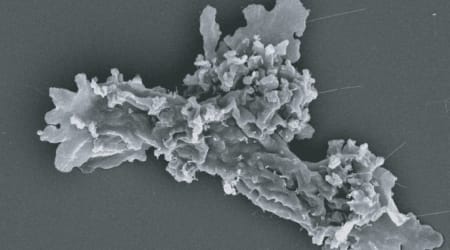
Researchers at Cornell University have made a crucial discovery that could help detect life in the clouds of exoplanets. The team studied colorful microorganisms floating in Earth’s atmosphere, creating a “color-coded key", the first-ever reflectance spectra of these organisms. While these bacteria aren’t abundant here, the discovery opens a new path for searching for life on exoplanet clouds.
“There is a vibrant community of microorganisms in our atmosphere that produces colorful biopigments, which have fascinated biologists for years. I thought astronomers should know about them,” said Carl Sagan Institute (CSI) Fellow Ligia Coelho, per the Cornell Chronicle.
Coelho led the study, published November 11 in Astrophysical Journal Letters. It analyzed seven microbes collected by University of Florida researchers who gathered biota from lower altitudes in the stratosphere (21–29 km up) using a latex-sounding balloon. The cultures were grown with the support and expertise of microbiologist Stephen Zinder, a professor of microbiology emeritus in the College of Agriculture and Life Sciences, a CSI Fellow. The reflective spectra were studied in the laboratory of Bill Philpot, a Cornell Engineering professor in civil and environmental engineering and a fellow of the CSI initiative. “Finding colorful life in Earth’s atmosphere has opened a completely new possibility for finding life on other planets,” said Lisa Kaltenegger, a professor of astronomy and CSI director, who is also the second author of the study. “Now, we have a chance to uncover life even if the sky is filled with clouds on exoplanets. We thought clouds would hide life from us, but surprisingly, they could help us find life.”
The color signatures of the microbes are reflective of the conditions they live in. That is because pigmentation protects them from harsh conditions such as radiation, dryness, or extreme temperatures. In fact, bacteria high in the Earth's atmosphere produce pigments in order to protect themselves from ultraviolet rays. Assuming possible extremes, researchers concluded that a cloudy planet full of colorful bacteria would look distinctly different from one without them, making biopigments a potentially detectable biosignature. Success, however, depends on humid conditions and advanced telescopes like NASA’s Habitable Worlds Observatory (in development) or the Extremely Large Telescope (starting in the 2030s in Chile).
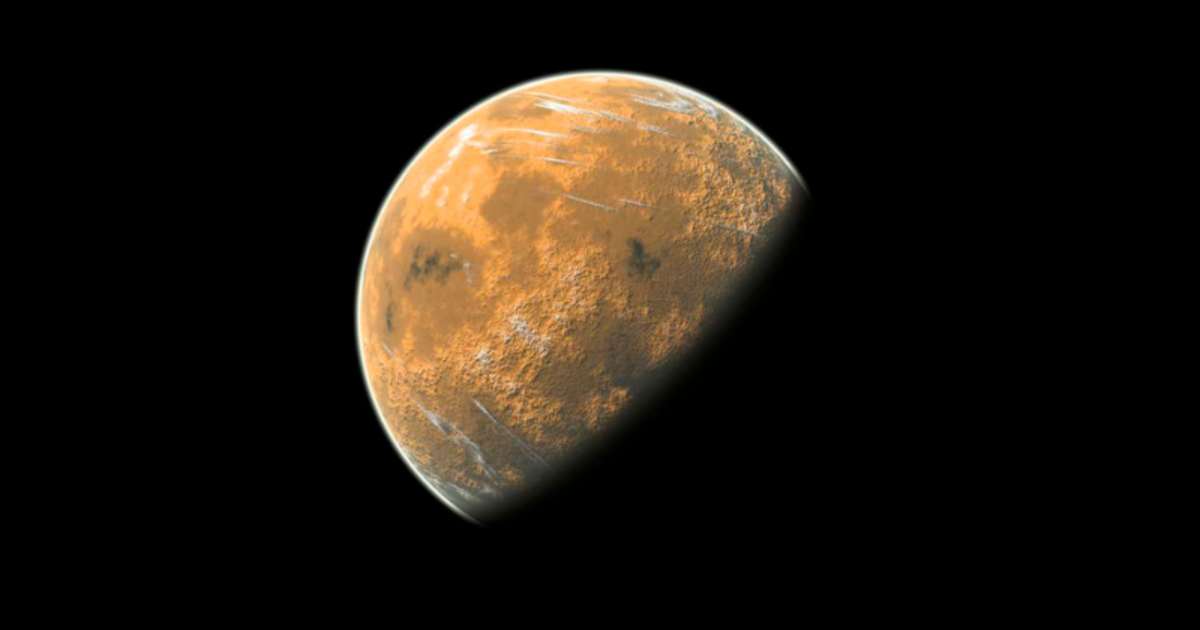
“Biopigments have a universal character on our planet. They give us tools to fight stresses such as radiation, dryness and lack of resources. We produce them, and so do bacteria, archaea, algae, plants, other animals,” Coelho said. “They are powerful biosignatures and we’ve discovered a new way to look for them – through the clouds of distant worlds. And if life looks like this, we finally have the tools to recognize it.”
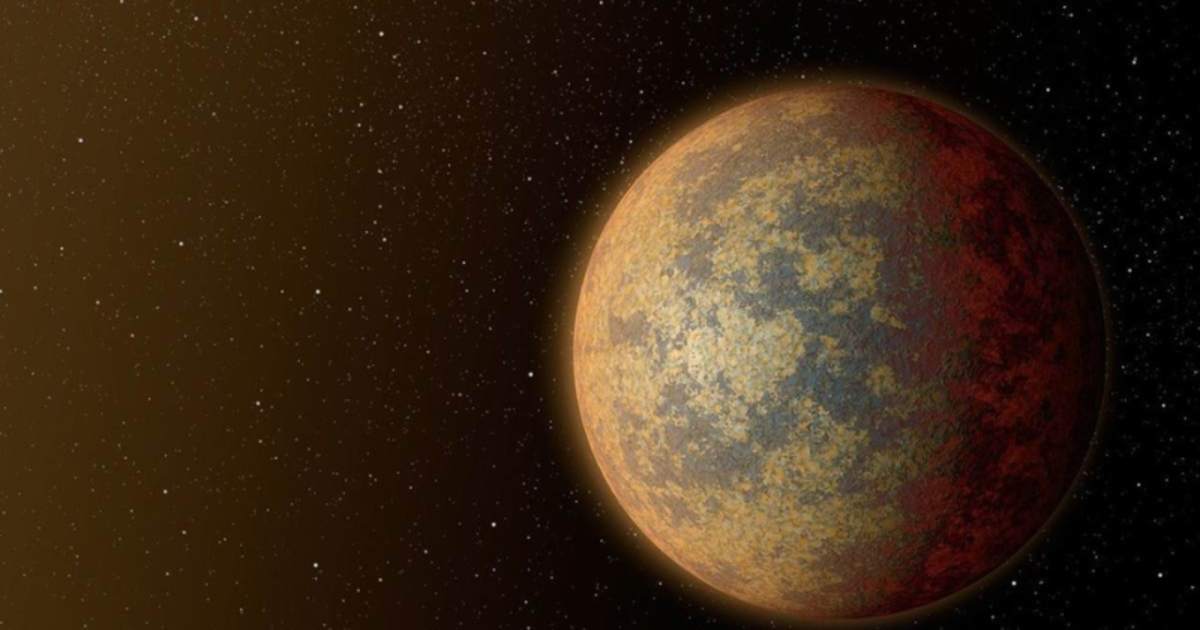
Exoplanets have always captured attention and been a fascinating topic. NASA’s official count of known exoplanets, planets beyond our solar system, is currently 6,000. These are added continuously by researchers worldwide. The tally is maintained by NASA’s Exoplanet Science Institute (NExScI) at Caltech’s IPAC in Pasadena, California. Other than confirmed numbers, more than 8,000 planets are still awaiting verification as NASA continues the search for life beyond Earth.
More on Starlust
NASA Chandra discovers 'baby' exoplanet shrinking under attack from its host star
Earth-like exoplanet 41 light-years away has no atmosphere to support life, new JWST data reveals