NASA’s Dragonfly rotorcraft gets its main structure delivered, inches closer to exploring Titan

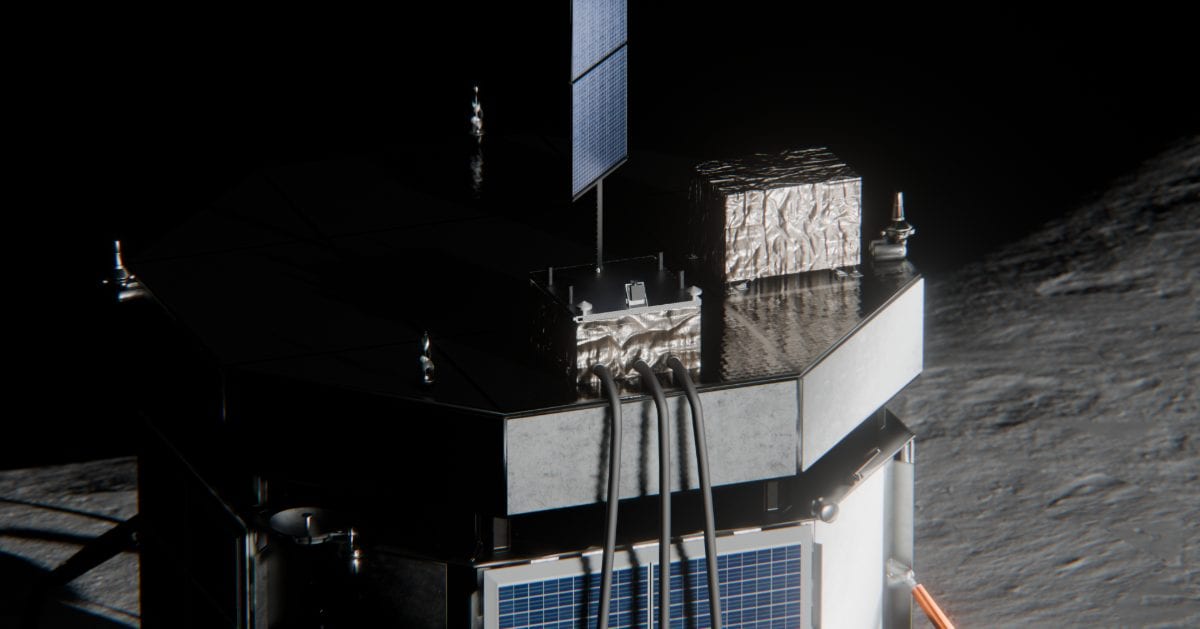
The Dragonfly spacecraft—destined for Saturn's largest moon, Titan—has had its main structure delivered earlier than scheduled by the team at Johns Hopkins Applied Physics Laboratory (APL) in Laurel, Maryland. The lander's frame assembly, which includes Dragonfly's arms for installation of its eight sets of rotors, its landing skids, and the cap for its power source, was put through structural testing for a month prior to its delivery on June 29.
NASA's Dragonfly mission has reached a major milestone. ✅
— NASA Solar System (@NASASolarSystem) July 9, 2026
After years of design, fabrication, assembly, and testing, NASA’s Dragonfly is starting to look less like a collection of spacecraft parts and more like the rotorcraft that will fly across the surface of Saturn’s hazy… pic.twitter.com/90lNnkWAv4
This fuselage of Dragonfly spans almost 13 feet long and will now be fitted with the rest of its components. This process already began on July 1, when engineers began integrating the mechanical, thermal, and electrical systems. Over the course of the month, the spacecraft's fuselage will be fitted with its "electrical nervous system," which includes the flight bulkheads as well as the wiring harness, cables, and connectors. The first phase of the rotorcraft's integration had begun in March.
NASA’s Dragonfly mission is taking shape. Johns Hopkins APL completed structural testing of the rotorcraft lander structure, clearing the way for the next phase of integration as Dragonfly prepares for its journey to Saturn’s moon Titan. https://t.co/VVJG1H0SxV@NASASolarSystem
— Johns Hopkins APL (@JHUAPL) July 9, 2026
The 34.4-inch diameter high-gain antenna, which will allow it to communicate with mission controllers on the ground and send science data to them, was integrated back in May. Its build features two metal plates—that contain hundreds of small slots that will focus the radio beam back to Earth—with electrically insulating foam between them. Larger than previously flown systems, the antenna and its gimbal have been built and tested to ensure they can survive the harsh environment of Titan, where temperatures average around minus 290 degrees Fahrenheit and there is a possibility of liquid methane rain.

Similarly, the tests that the fuselage went through from May to early June were conducted to ensure that it can survive the most critical periods of the mission, such as launch, entry into Titan's dense atmosphere, and landing. The teams at Johns Hopkins APL suspended the frame by bungee cords to preview how vibrations at the locations of the rotor interact with the main body of Dragonfly. Gordon Maahs, the Dragonfly mechanical systems engineer from APL, referred to how the rotorcraft will be deployed on Titan, with it being suspended from a parachute before taking over for an autonomous powered landing on the surface. "Suspended for a few hours during that test – even barely above the floor – was structurally akin to Dragonfly’s first flight," said Maahs in a statement. "It gets the imagination going about what actual flight will look like," he added. The test also included a "sit down" configuration to look into how the rotorcraft's landing skids would respond to Titan's surface.
In 2028, NASA’s Dragonfly spacecraft is set to launch on a mission to explore Saturn’s largest moon, Titan.
— NASA Marshall (@NASA_Marshall) February 23, 2026
Hear from the principal investigator as she discusses why Titan is such a compelling destination, and how Dragonfly will operate on the moon: https://t.co/poPZxCq3pO pic.twitter.com/YbM2FhsrFA
Dragonfly’s outer structure was also pressurized to look for any gaps or means through which the dense atmosphere of Titan—with 1.5 times more pressure than Earth's—might seep into the rotorcraft's interior. Speaking on the unusual nature of the testing process given the unique environment Dragonfly is being built for, Maahs remarked, “I’ve never seen a test like it on any other spacecraft."
More on Starlust
Heat shield for NASA's Dragonfly mission undergoes thermal testing in New Mexico desert
Gentle winds on Titan's lakes could trigger massive 10-foot waves, MIT study reveals