Gentle winds on Titan's lakes could trigger massive 10-foot waves, MIT study reveals
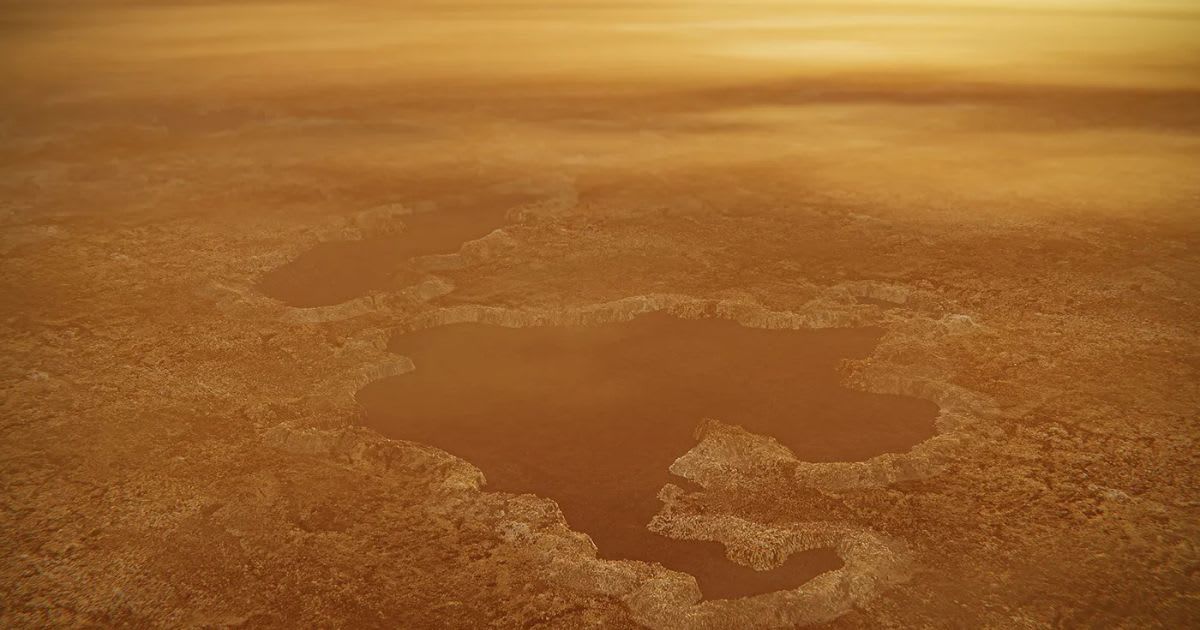
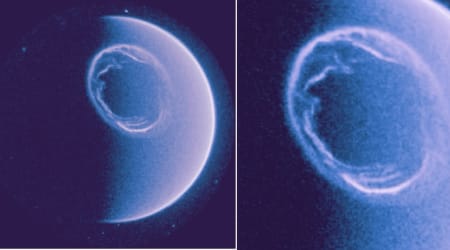
Known for its dense, planet-like atmosphere, Saturn's largest moon Titan is home to liquid lakes and oceans where a gentle breeze might just be enough to stir up big, rolling waves, according to a new study. The research was conducted by an MIT team and published in the Journal of Geophysical Research: Planets. Saturn's 274 moons vary a lot from Earth's only natural satellite in terms of their composition, boasting icy realms with rocks and subsurface oceans. Moreover, Titan is the only other planetary body in the solar system with liquid lakes. Using a model called 'PlanetWaves,' the scientists observed the behavior of waves on different planetary bodies and compared the results in the study.
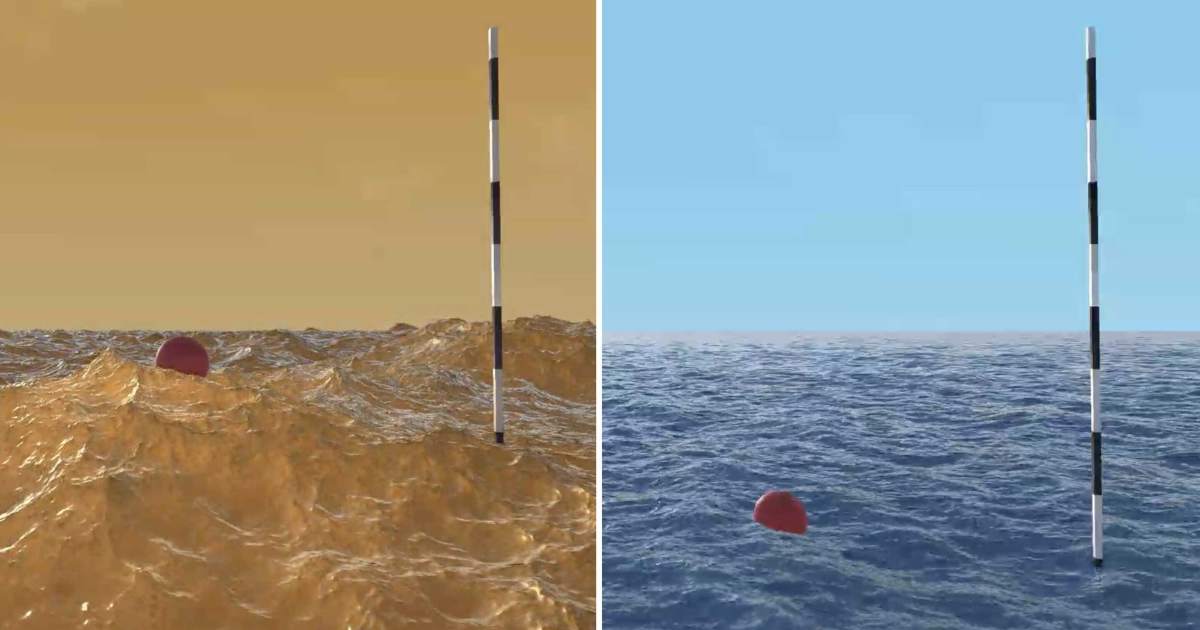
The MIT team used Earth's lakes as a point of reference where a light breeze would cause slight ripples on a typically calm day. However, the same wind on Titan might result in 10-foot-tall waves. Unlike Earth's water bodies, these lakes and seas are believed to be filled with light liquid hydrocarbons like methane and ethane. This difference in composition and other factors, like Titan's low gravity and atmospheric pressure, explain the wave's behavior.
On the shores of a methane sea: #OTD in 2007, the radar instrument aboard our Cassini spacecraft imaged the liquid hydrocarbon lakes on Saturn’s moon Titan. Our upcoming #Dragonfly mission will dispatch a robotic dual-quadcopter to Titan: https://t.co/o93W3oa1ID pic.twitter.com/geZMJKrNUC
— Cassini (@CassiniSaturn) February 23, 2020
"It kind of looks like tall waves moving in slow motion," remarked the study's lead author Una Schneck, a graduate student in MIT's Department of Earth, Atmospheric and Planetary Sciences (EAPS). "If you were standing on the shore of this lake, you might feel only a soft breeze, but you would see these enormous waves flowing toward you, which is not what we would expect on Earth," she added. Schneck explained that while previous studies may have focused on how gravity might affect wave behavior on different planetary bodies, this project quantified other key factors such as density, viscosity, and surface tension.

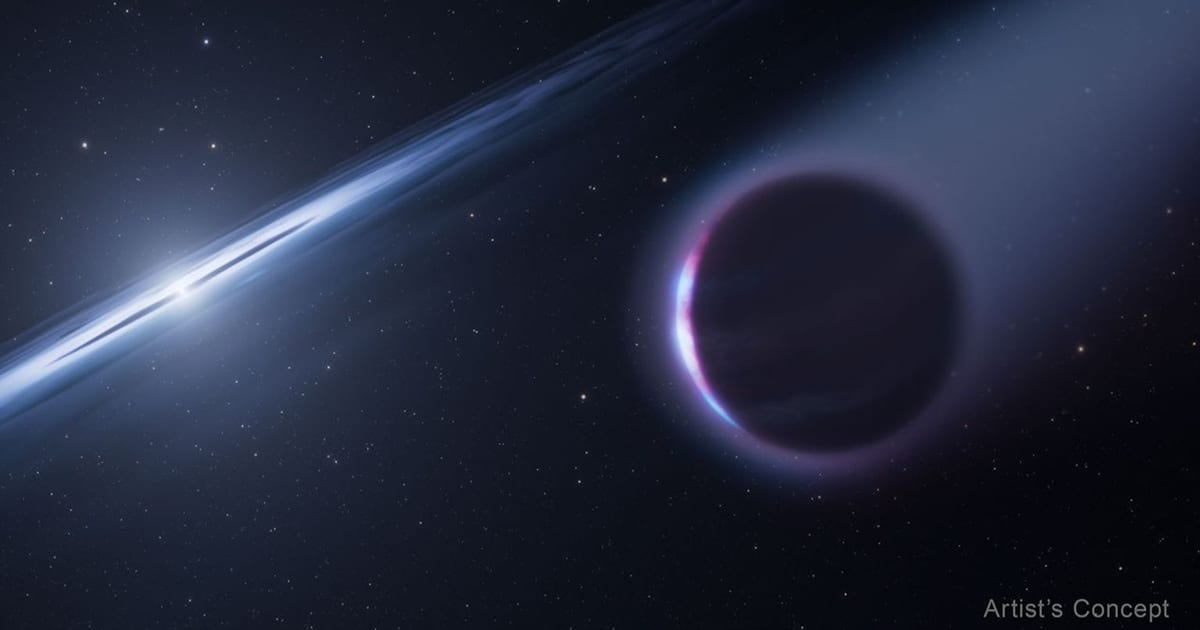
"On Earth, we get accustomed to certain wave dynamics," commented Andrew Ashton, associate scientist at the Woods Hole Oceanographic Institution (WHOI) and an author of the latest study. "But with this model, we can see how waves behave on planets with different liquids, atmospheres, and gravity, which can kind of challenge our intuition." Going beyond the solar system, the model predicts an extremely contrasting behavior of waves on certain planetary bodies. For example, the exoplanet 55-Cancri e is suspected to be a lava world covered in hot, dense liquid rock. Here, even winds with the force of hurricanes may not cause the lakes to ripple slightly. This is due to the planet's high gravitational force, as well as, a much denser and viscous surface liquid than water.
Titan: a strange world with seas of methane and ethane. Scientists are using @NASAWebb to take a close look—and developing Dragonfly, a mission to send an octocopter to Saturn’s largest moon.
— NASA (@NASA) August 23, 2024
Watch “Other Worlds” on our ad-free streaming service NASA+: https://t.co/3RSXPJjhCI pic.twitter.com/OxkWIP595t
Predicting the behavior of waves on Titan's liquid lakes is key to designing future probes and spacecraft like NASA's Dragonfly that can withstand them. Moreover, they can help understand how planetary landscapes are formed. The study's co-author Taylor Perron said, "Unlike on Earth where there is often a delta where a river meets the coast, on Titan there are very few things that look like deltas, even though there are plenty of rivers and coasts. Could waves be responsible for this? These are the kinds of mysteries that this model will help us solve." Perron is the Cecil and Ida Green Professor of Earth, Atmospheric and Planetary Sciences at MIT.
More on Starlust:
Here's how you can spot Saturn's moons: Titan, Rhea, Dione and more
Scientists recreate the ocean of Saturn's icy moon Enceladus in lab