"Never encountered objects that act like this": NASA’s Chandra reveals a new class of cosmic objects
Scientists have found an entirely new class of cosmic sources in the data obtained by NASA's Chandra X-ray Observatory. These mysterious objects emit unusually low levels of X-rays while giving off intense ultraviolet (UV) radiation. "We’ve never encountered a group of objects that act like this," said Mustafa Muhibullah of the University of Alabama, who led the study, in a statement.
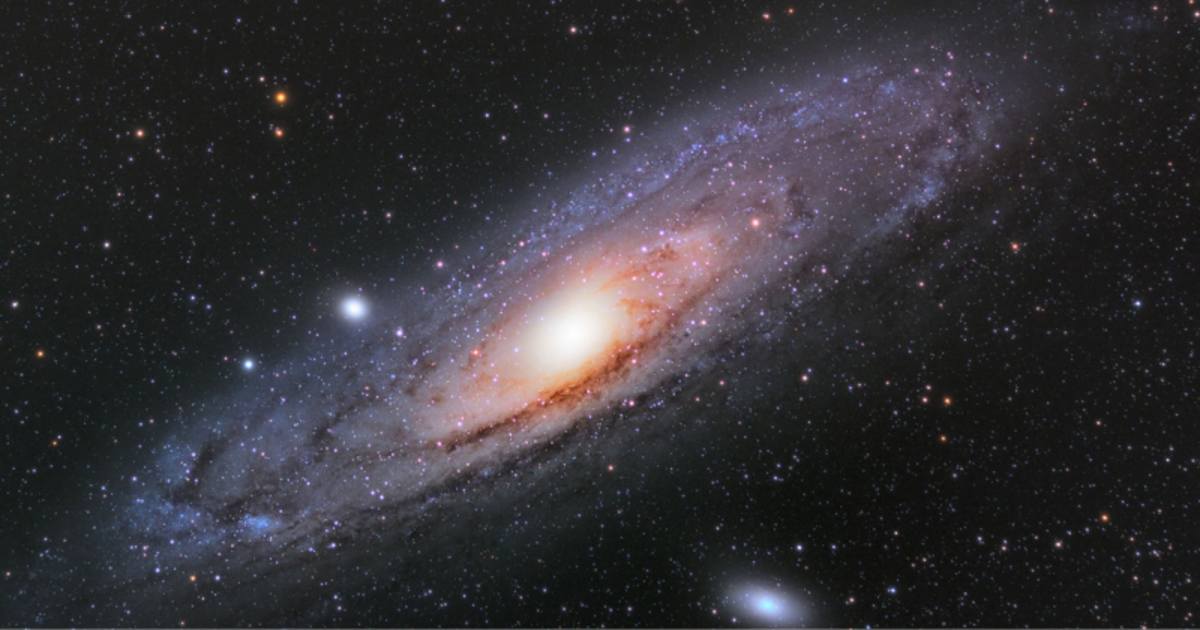
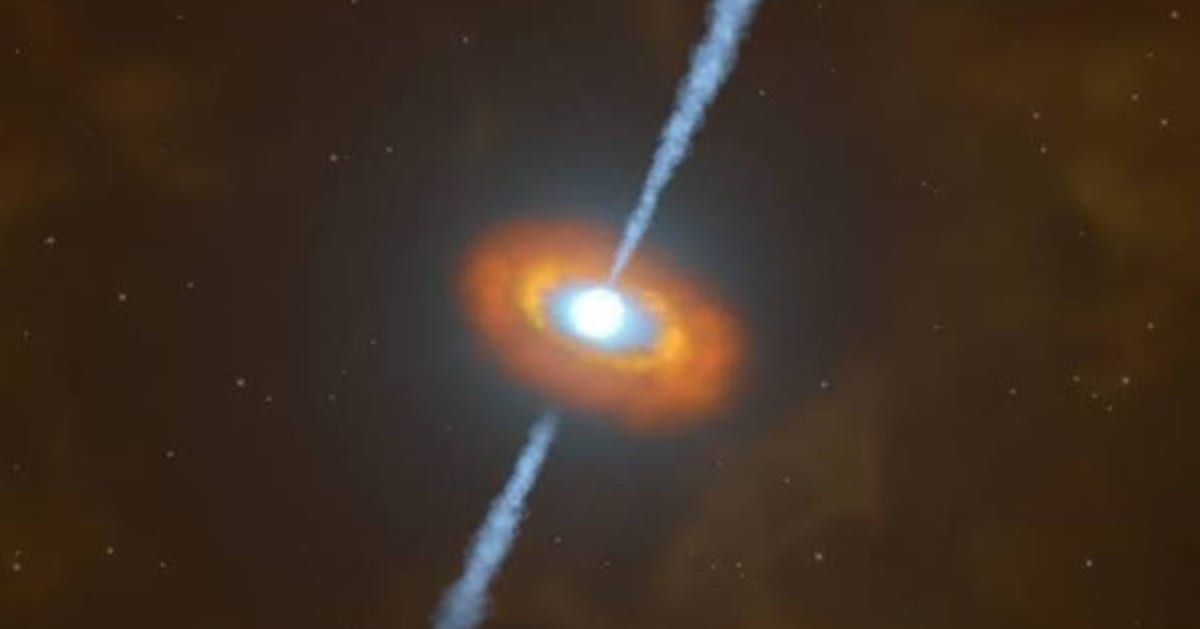
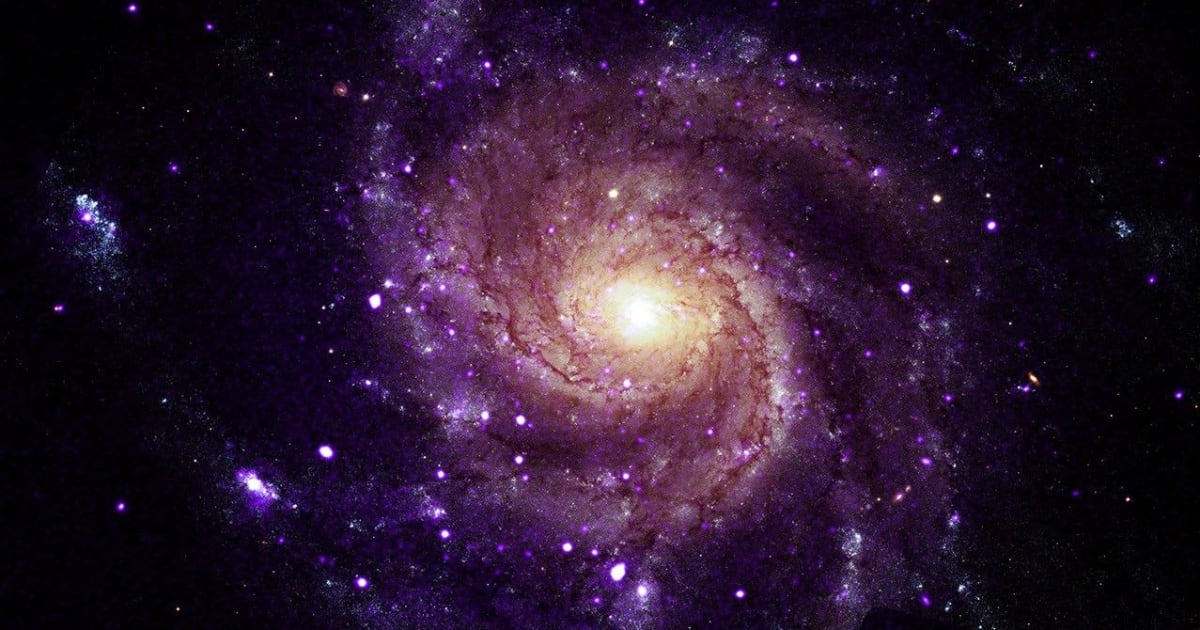
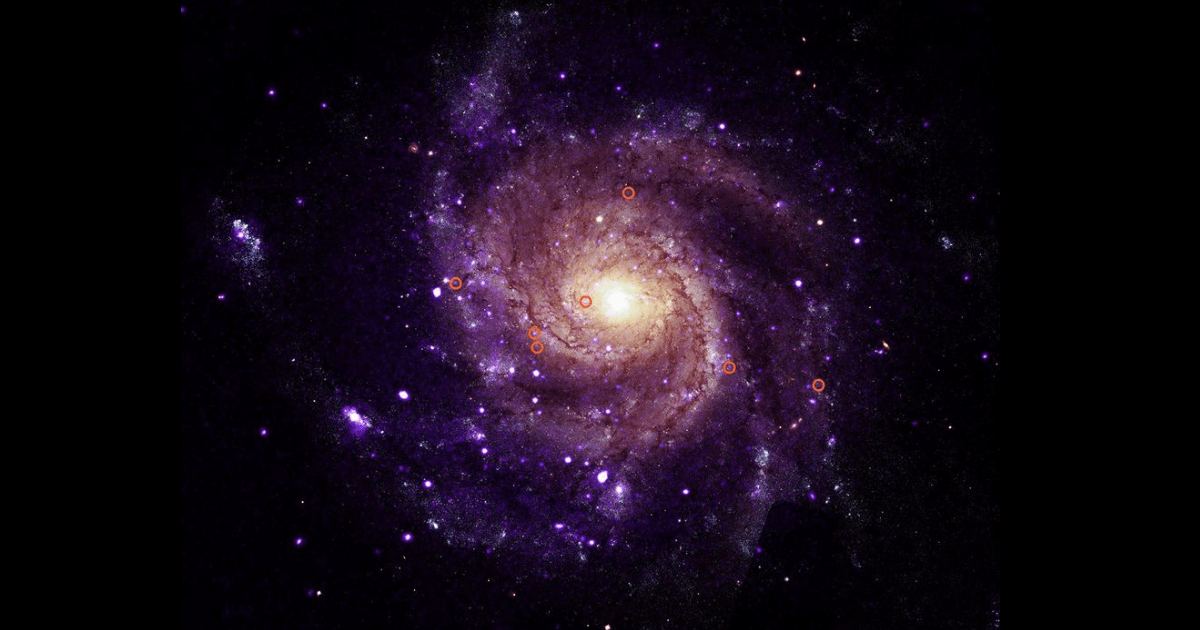
In total, 84 of these objects, named "hypersoft X-ray sources" by the scientists, were found across six different targeted galaxies. These include our neighboring Andromeda galaxy (M31) and the Pinwheel galaxy (M101), both of which are spiral galaxies, and NGC 4472, NGC 3115, NGC 4697, and NGC 3379, all of which are ellipticals. As for what these sources might be, the likely explanation is that the energy is being produced by material being pulled from a star by a closely neighboring black hole, neutron star, or white dwarf. The star's matter is understood to be heating up in the process of falling into its companion and producing the unique type of radiation. While such binary sources have been observed before, none have been known to produce such low levels of X-rays and bright ultraviolet radiation.
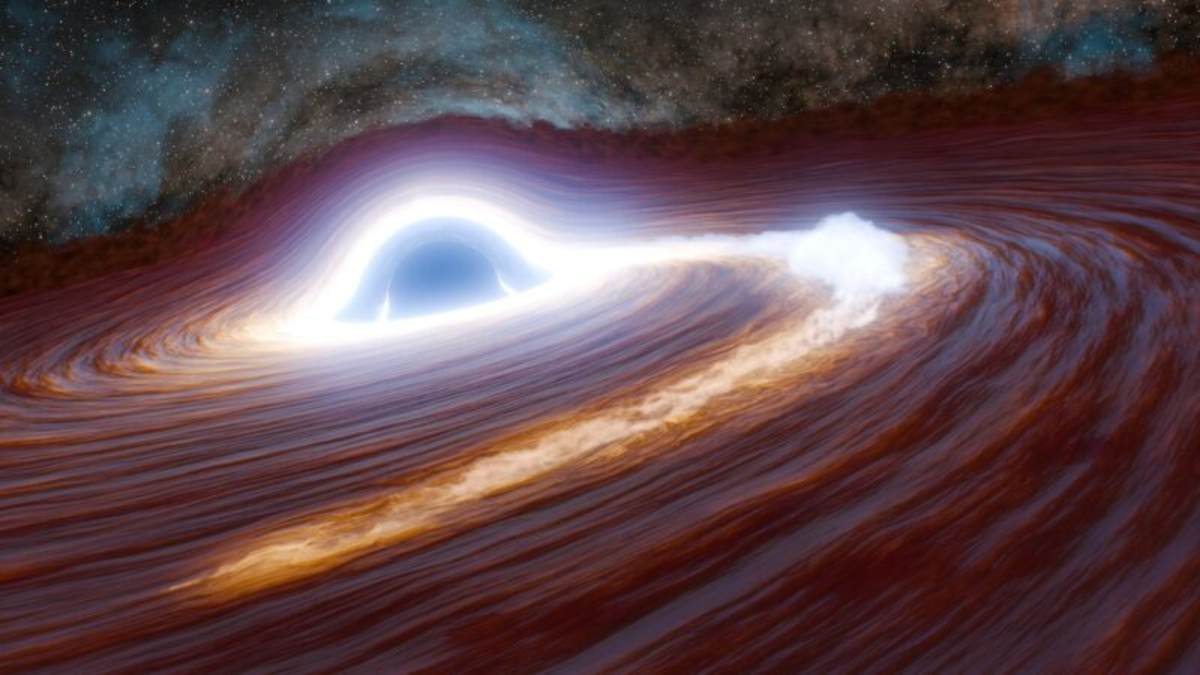
"These clandestine X-ray sources are actually among the most energetic objects in galaxies, and they could be solving two cosmic mysteries at once," said Muhibullah. The first of the mysteries these hypersoft X-ray sources might resolve is how electrons are stripped from gases between stars. This stripping process is thought to be key to understanding the life cycles of galaxies but cannot be explained by the radiation from hot and massive stars alone. Since the hypersoft X-ray sources produce intense UV radiation, this discovery could go a long way in explaining the electron stripping process that continues to perplex astronomers.
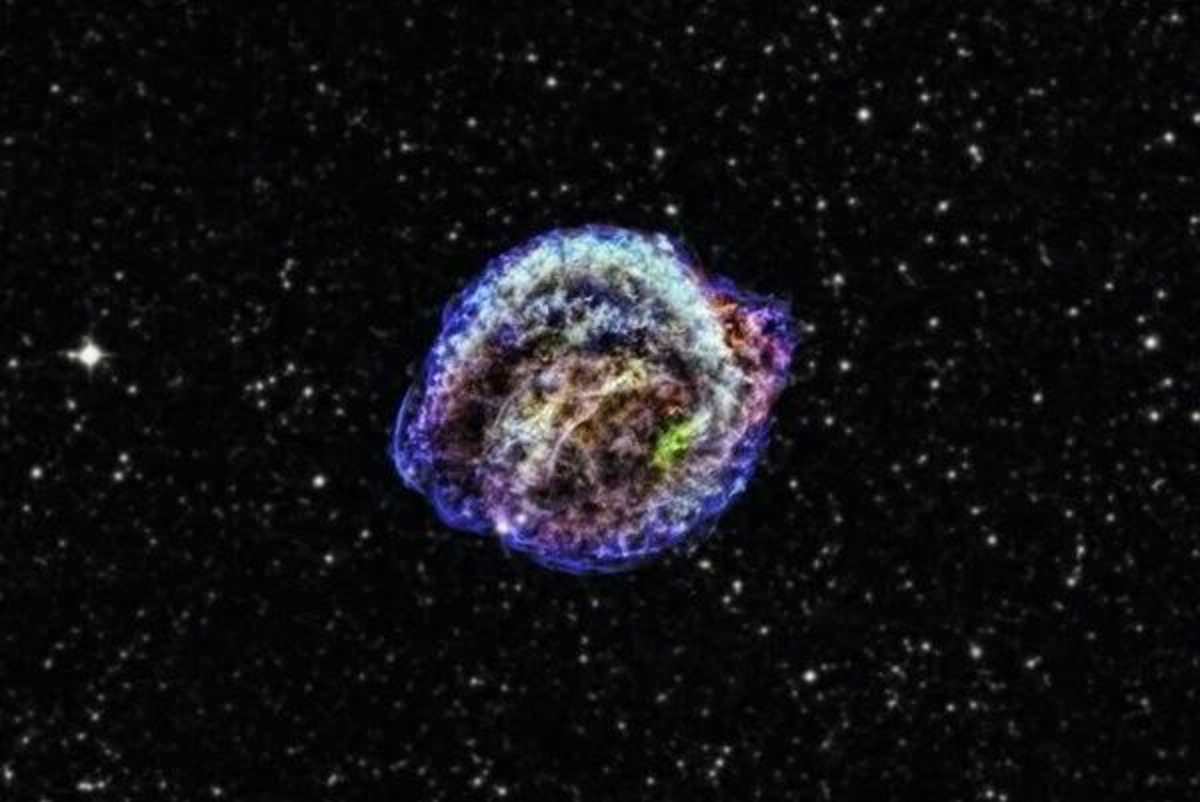
The second problem this discovery might help astronomers with is in finding which stars turn into Type Ia supernovae, which are a vital reference point for learning about the expansion of the universe. "Right now, we study them after they’ve exploded, and astronomers have struggled to understand what is actually ignited," noted Jimmy Irwin of the University of Alabama, who is also involved in authoring the research paper. Type Ia supernovae were what helped scientists establish that the universe is not just expanding but is doing so at an accelerating rate. This gave rise to the concept of the invisible force within our cosmos, which went on to be known as dark energy. "If we could find a way to spot these Type Ia supernova explosions before they go off, that would be really important," stated Irwin.
The discovery of these atypical sources of energy was not straightforward. This is because current X-ray telescopes cannot easily detect such low levels of X-ray emission. Moreover, hydrogen and helium in the interstellar medium readily absorb high-energy UV radiation, creating a barrier that is nearly impossible to look through.

The scientists found these sources among objects that appeared in the lowest X-ray-energy images in the Chandra archive but disappeared in higher-energy images. And since extreme UV lies next to the lowest-energy X-rays on the electromagnetic spectrum, the scientists were able to conclude that these sources would have to be emitting large quantities of highly energized UV radiation as well. “By combing through the Chandra archive, we were able to eliminate what used to be a blind spot for telescopes,” said co-author Rosanne Di Stefano of the Center for Astrophysics at Harvard & Smithsonian. “That’s how we found what appears to be a new class of cosmic objects with remarkable qualities.”
More on Starlust
NASA's Chandra finds two of the Milky Way's arms are 10% farther than we thought
NASA's Chandra discovers a unique object that may explain James Webb's mysterious little red dots