NASA's Chandra discovers a unique object that may explain James Webb's mysterious little red dots
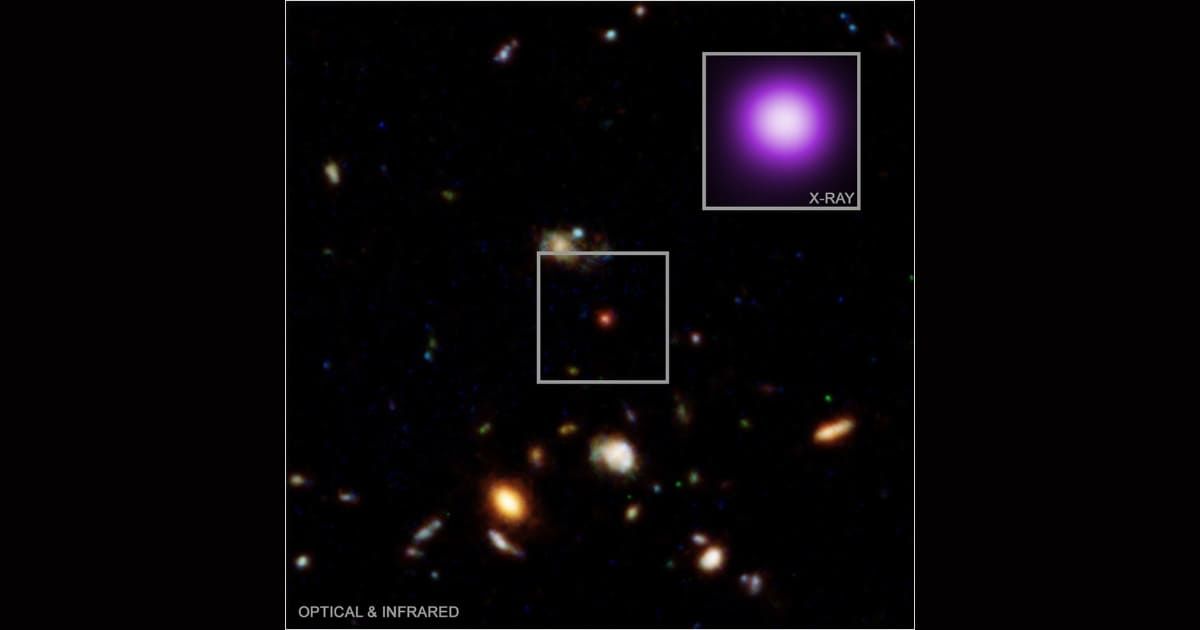
Shortly after it began its operations, NASA’s James Webb Space Telescope spotted a particularly mysterious class of objects, known as the little red dots (LRDs). While the speculations regarding the same were growing, NASA’s Chandra X-ray observatory might be the key to solving the curious case of the little red dots.
An X-ray emitting "little red dot" about 11.8 billion light-years from Earth may be key to unlocking the true nature of a mysterious class of sources that astronomers have found in the early universe. More: https://t.co/6IEOk89Guf 🔴 pic.twitter.com/X6avpADGMN
— Chandra Observatory (@chandraxray) April 28, 2026
The hundreds of tiny red objects are located roughly 12 billion light-years from our home planet, which means that they date back to the early days of the universe. The predominant opinion of scientists is that the mysterious red dots are nothing but supermassive black holes implanted within dense gases of clouds. Scientists assume that the presence of these dense gases acts as a mask against the X-rays and other lights used to identify black holes, thereby altering their typical signatures. This and the potential similarities they share with stellar atmospheres have led astronomers to call them 'black hole stars.'
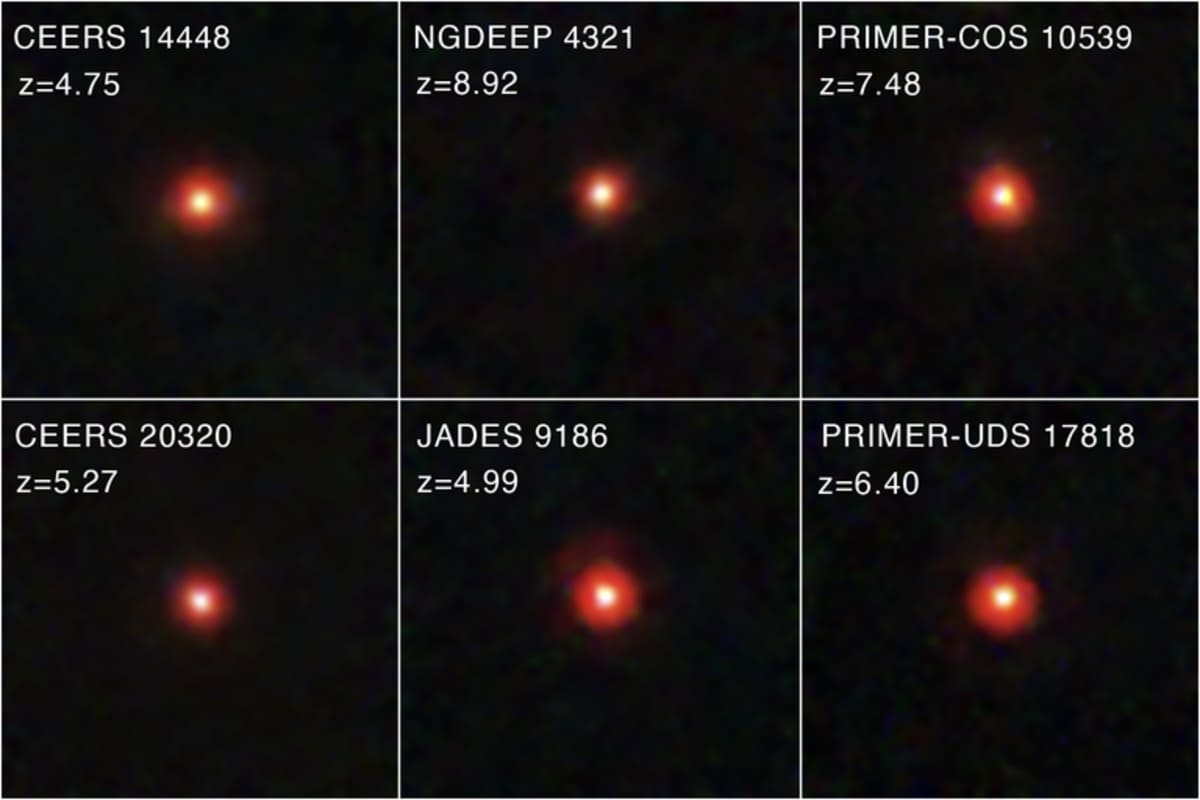
Meanwhile, Chandra’s X-ray observatory recently found an ‘X-ray dot.’ A paper detailing the findings has been published in the Astrophysical Journal Letters. The X-ray dot is located roughly 11.8 billion light-years from Earth. Officially termed as the 3DHST-AEGIS-12014, this particular dot can serve as a bridge between the supermassive black holes and black hole stars. One of the most unique properties of the ‘X-ray dot’ is that, despite exhibiting most of the LRDs’ properties, the dot glows in X-ray, unlike the mysterious little red ones. According to the researchers, this unique dot might represent the transition of a little red dot towards a supermassive black hole. The justification behind the theory is that when the expanding black hole gobbles up its dense clouds of gas, holes appear within those clouds.
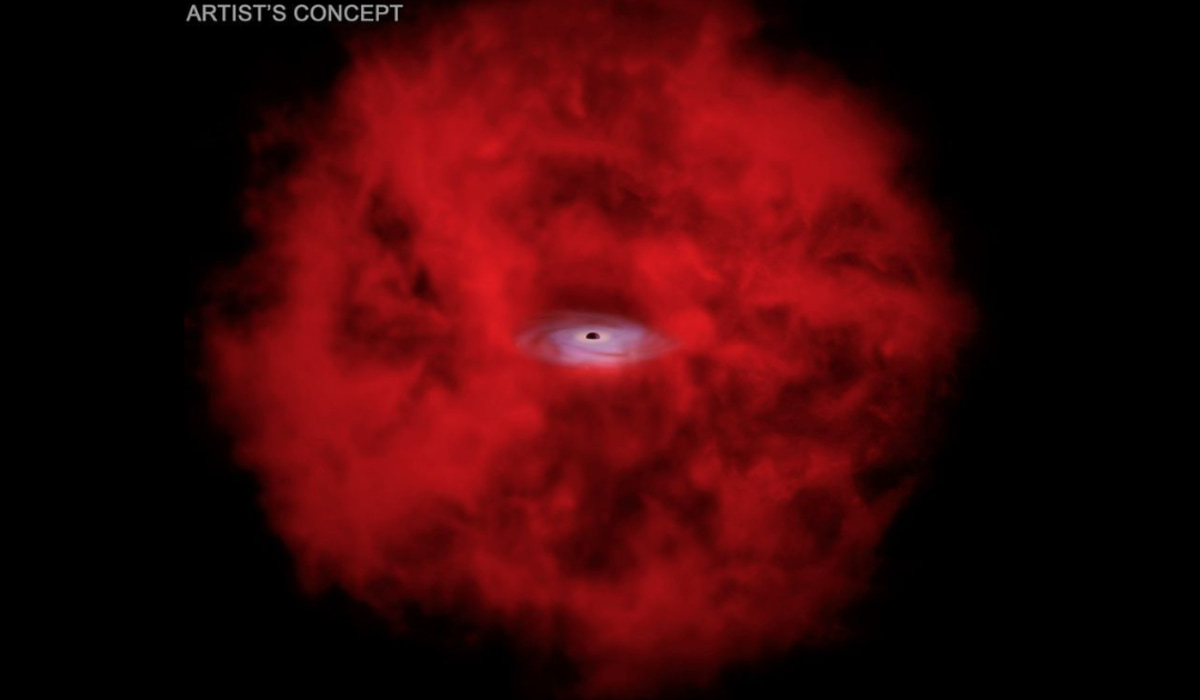
In such a situation, the X-rays from the material falling into the black holes poke out. This might be what the Chandra X-ray Observatory captured. Defining the process further, the researchers pointed out that at the end, the entirety of those dense gases is devoured, leading to the extinction of the black hole star. Speaking about the uniqueness of the study, Hanpu Liu of Princeton University in New Jersey, who co-authored the study, said, “If we confirm the X-ray dot as a little red dot in transition, not only would it be the first of its kind, but we may be seeing into the heart of a little red dot for the first time. We would also have the strongest piece of evidence yet that the growth of supermassive black holes is at the center of some, if not all, of the little red dot population."
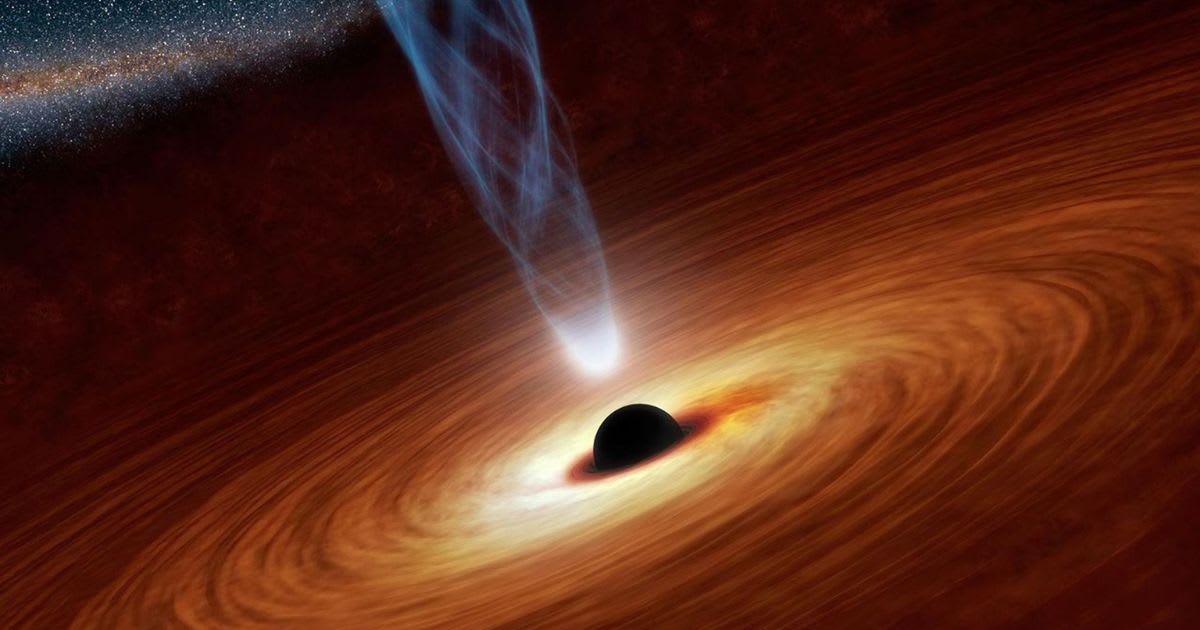
Meanwhile, in addition to the more practical theory, an alternate idea has also been listed in the paper. It states that the X-ray dot is actually a commonly found expanding supermassive black hole. However, its uniqueness might be attributed to a cover of never-before-seen exotic space dust. While this theory hasn’t been confirmed yet, the team has planned more observations in the future to find out what is really going on with the mysterious dots in outer space.
More on Starlust:
NASA experts reveal the immense power and capabilities of the next-gen Roman Space Telescope
NASA’s Chandra stitches decades of data on supernova remnant into its longest video yet