Scientists have found a new method to detect elusive supermassive black hole binaries

Elusive supermassive black hole (SMBH) binaries can be detected via the effect they have on the stars lying behind them, suggests a new study. Conducted by a team of researchers from the University of Oxford and the Max Planck Institute of Gravitational Physics (Albert Einstein Institute) (MPIGP), the study has been published in Physical Review Letters.
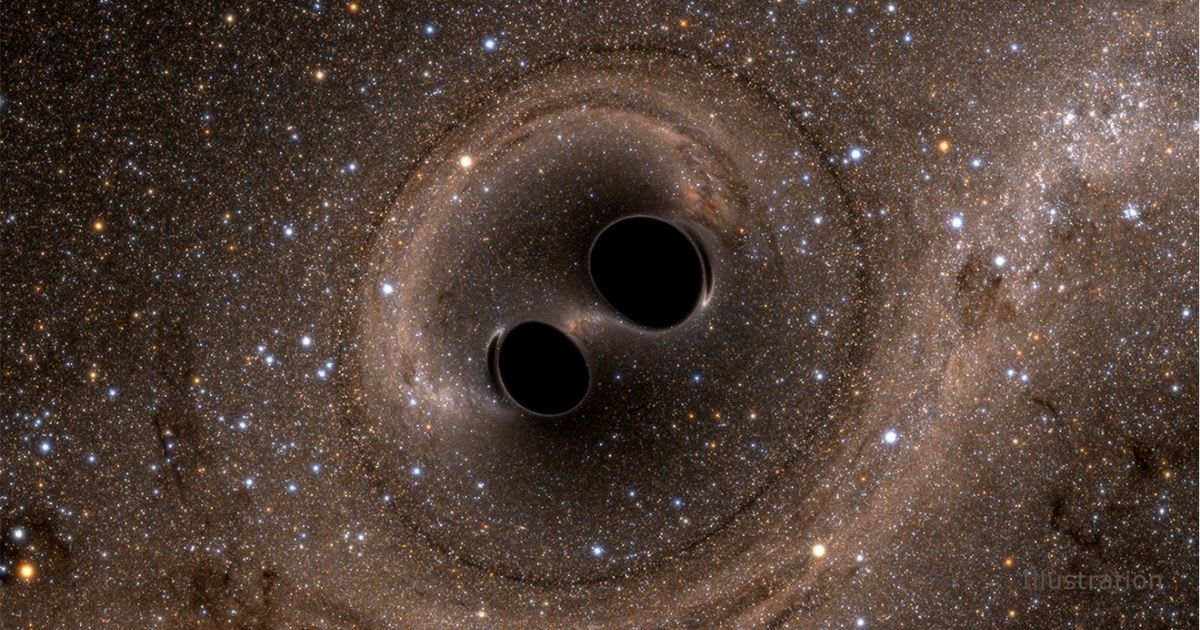
An SMBH resides at the center of most galaxies. As galaxies merge, the central black holes are locked in pairs, forming black hole binaries. Such binary systems, which are one of the most powerful sources of gravitational waves in the universe, provide insights into the composition of their host galactic nuclei as well as the evolution of galaxies and the nature of gravity. So far, most of the SMBHBs detected consist of black holes that are separated from one another by huge distances. Binaries at shorter distances are challenging to detect. The researchers, however, suggest that they can be detected using gravitational lensing.
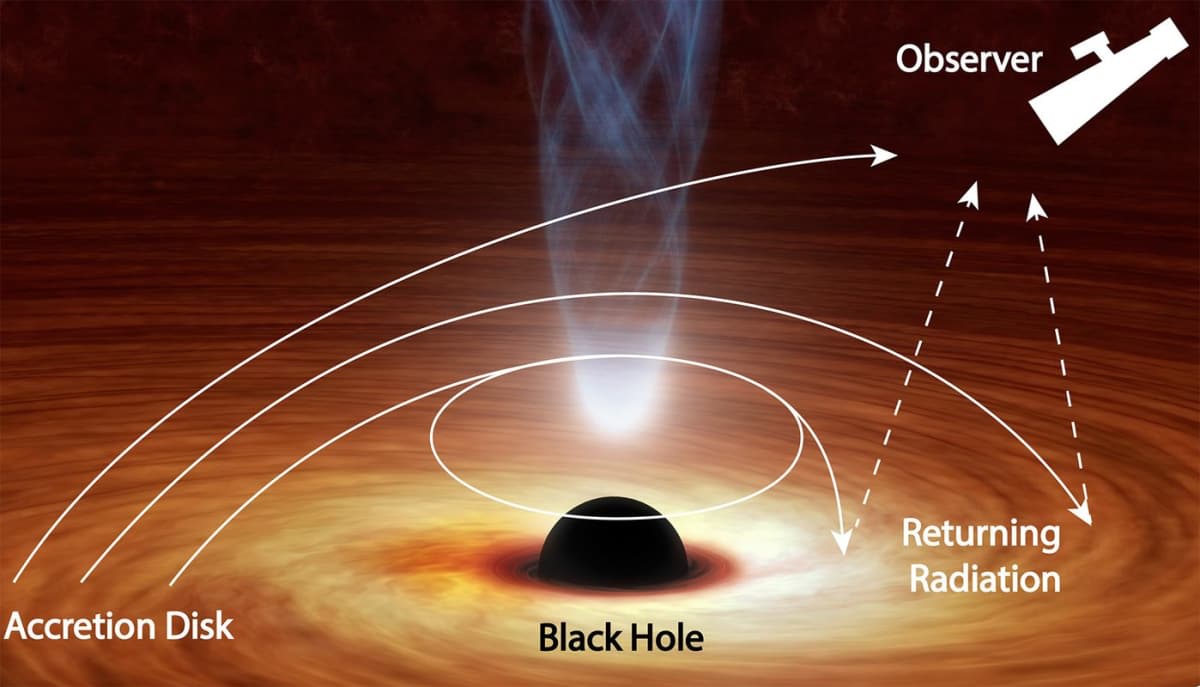
By bending light with their gravity, black holes essentially act as magnifying lenses, increasing the brightness of the stars that lie behind them. This is what is known as gravitational lensing. However, a single SMBH-induced gravitational lensing is extremely strong only when the star is located almost exactly along the line of sight. An SMBH binary, on the other hand, has double the power, which leads to quasiperiodic lensing of starlight, a phenomenon that reveals the presence of the black hole binary.
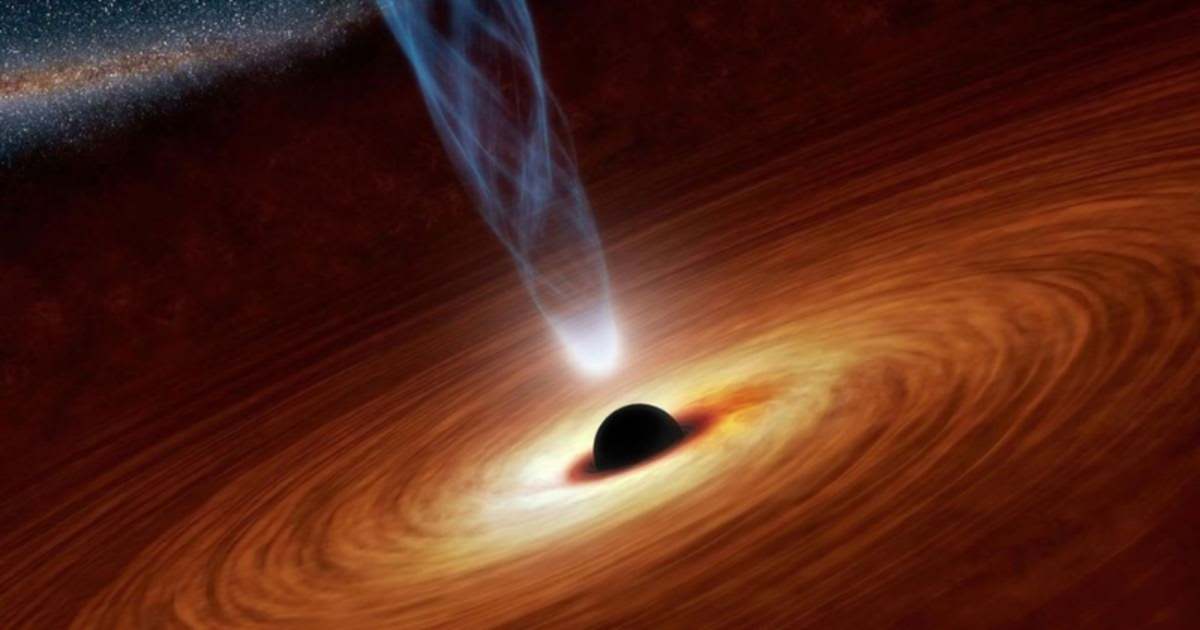
“The chances of starlight being hugely amplified increase enormously for a binary compared to a single black hole,” explained co-author Bence Kocsis from the University of Oxford’s Department of Physics in a statement. Compared to a relatively static, single black hole, binaries evolve with time. As they orbit each other, they lose energy by emitting gravitational waves. This shortens the distance between them, accelerating the orbital motion. “As the binary moves, the caustic curve rotates and changes shape, sweeping across a large volume of stars behind it. If a bright star lies within this region, it can produce an extraordinarily bright flash each time the caustic passes over it,” says Hanxi Wang, a PhD student in Kocsis’ group who led the study. “This leads to repeating bursts of starlight, which provide a clear and distinctive signature of a supermassive black hole binary."
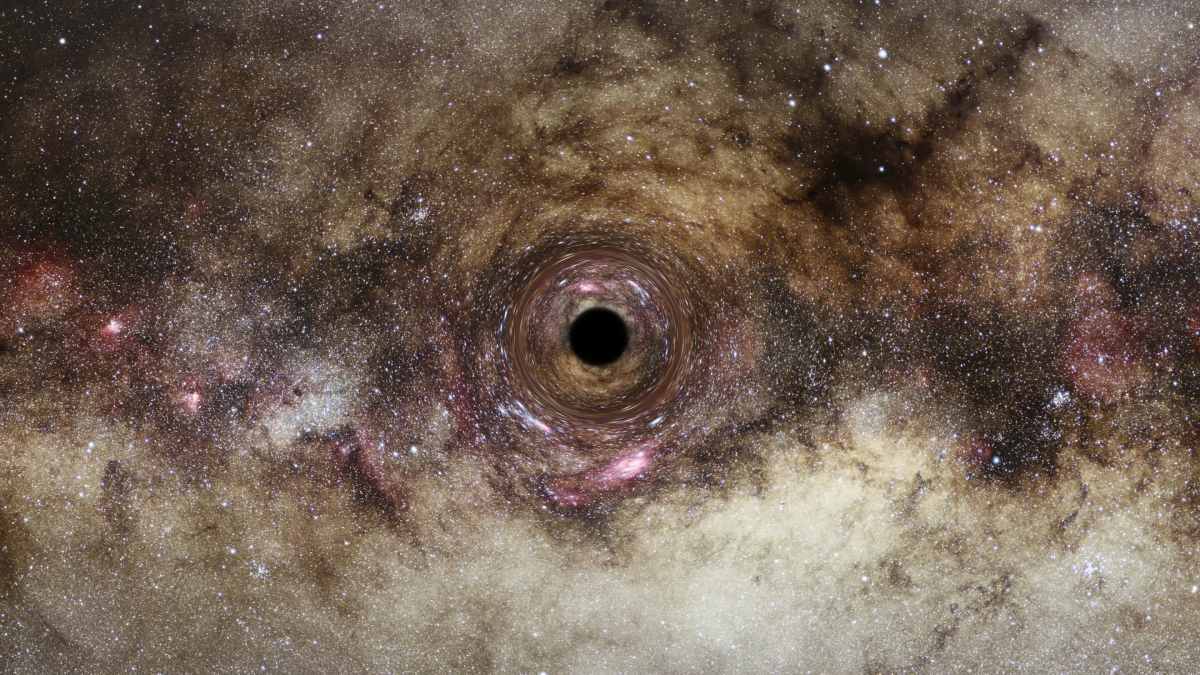
As the binary comes closer, emission of gravitational waves from them changes, altering the frequency and peak brightness of the bursts. The researchers demonstrate that decoding the timing and brightness of such bursts reveals important information about the black hole binary, including the masses of the black holes and orbital evolution. When such dramatic sequences unfold in the distance, sophisticated telescopes such as the Vera C. Rubin Observatory and the Nancy Grace Roman Space Telescope can capture such events as they constantly scan the sky. “The prospect of identifying inspiraling supermassive black hole binaries years before future space-based gravitational wave detectors come online is extremely exciting,” concluded Kocsis. “It opens the door to true multi-messenger studies of black holes, allowing us to test gravity and black hole physics in entirely new ways.”
More on Starlust
Astronomers stunned by unprecedented short and hot flares emitted by a supermassive black hole