Lunar cement alternative spent six months in space's harsh conditions and got stronger
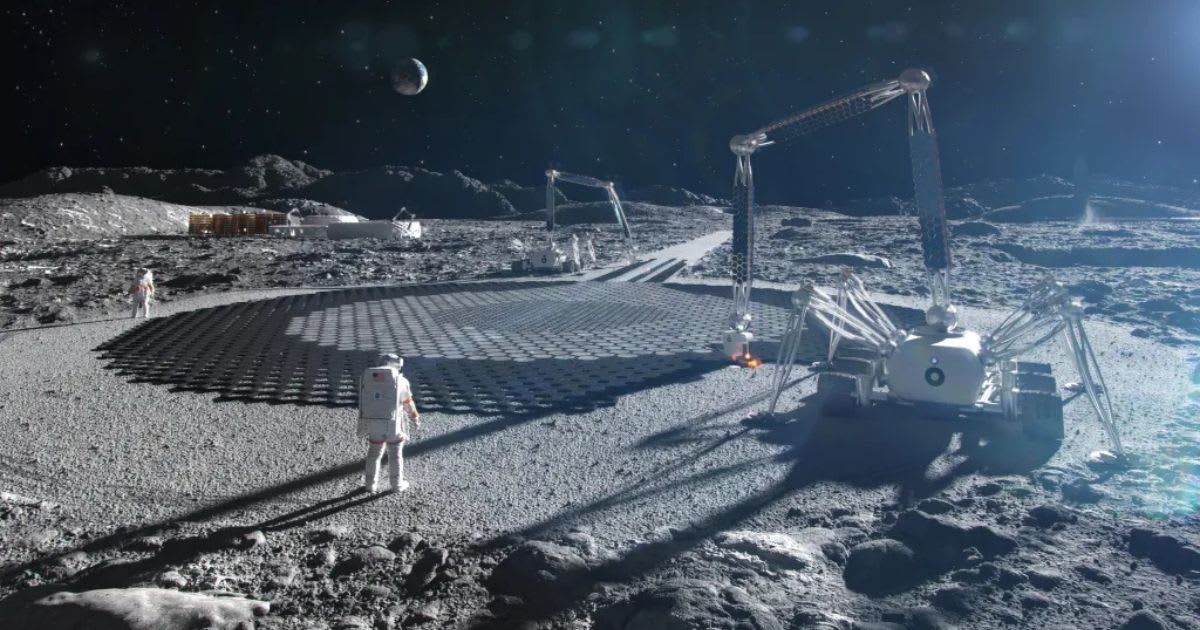
Researchers from the University of Delaware have developed materials that could be used to build infrastructure on the Moon. Samples of the materials even spent six months mounted on the outside of the International Space Station and returned with encouraging results. The findings have been detailed in a paper published in Advances in Space Research.

Transporting building materials from Earth would be a rather expensive enterprise, so the researchers chose something that will be available readily on the Moon—lunar dust or regolith. "Regolith is essentially a clay-like silicate material," said Norman Wagner, Unidel Robert L. Pigford Chair in Chemical Engineering, in a statement. "It is one of the most abundant materials on both Earth and the Moon, which makes it interesting for construction." The goal is not just to make building materials with what is available on site, but also to do so in a way that is energy-efficient. So Wagner's laboratory develops geopolymers. It is an alternative to cement that binds clays into a strong solid via chemical reactions instead of through high-temperature processes.
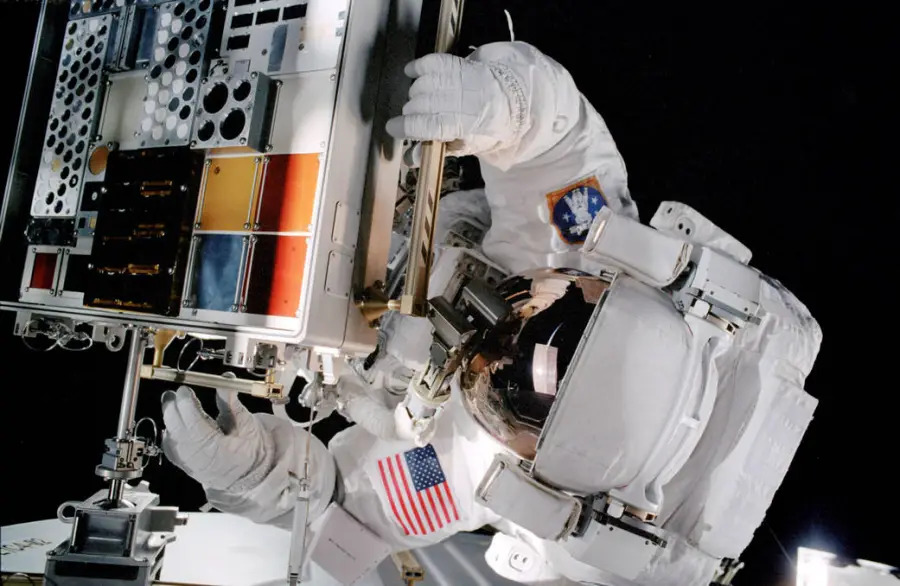
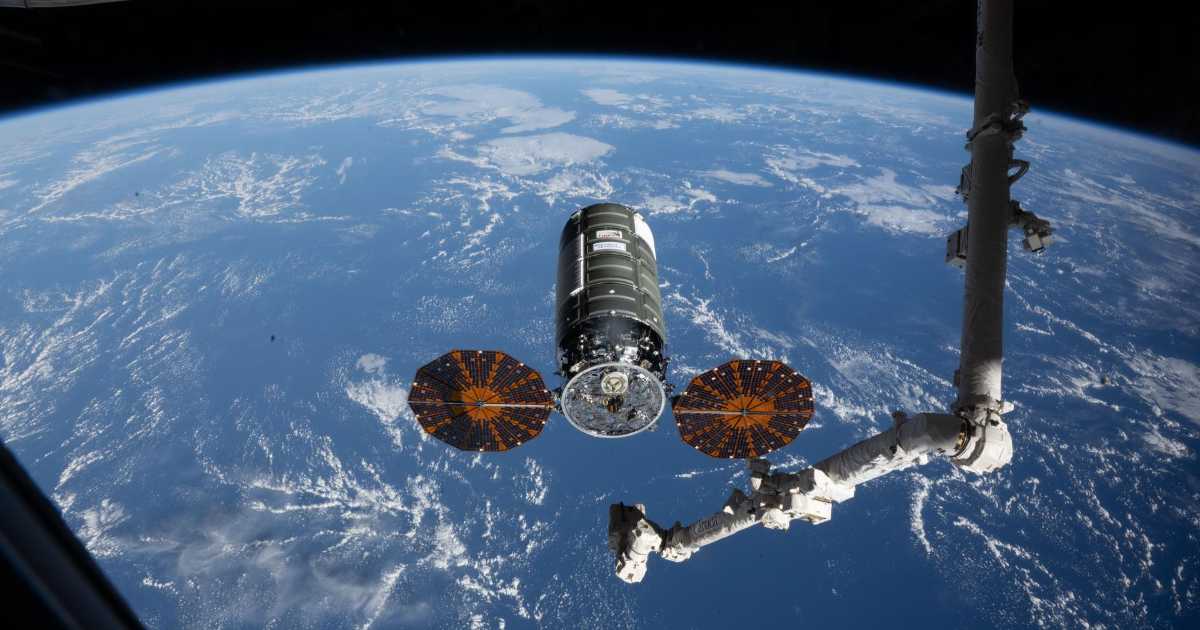
But these geopolymers wouldn't be useful if they couldn't hold their own in the hostile environment of space. So, Wagner and team sent four compositions of geopolymer binders to the International Space Station, where they were exposed to low-Earth orbit conditions as part of NASA's MISSE-20 mission. Two of these compositions were made from simulated lunar regolith, two from Martian regolith simulant, and one from high-purity metakaolin—a pozzolanic material widely used in concrete. Not only did the samples show no signs of deterioration, but some of them even showed greater measured strength than their counterparts that remained on Earth for the entire duration of about half a year. “You cannot fully understand how materials behave in space until you actually test them in space,” said Wagner. “It is a hostile environment. Temperature swings, radiation and micrometeorite impacts all matter.”

But lunar clay is not the same everywhere. Which means that the strength of the geopolymers produced will also vary, with some being weaker than the others. To address this challenge, the researchers developed a machine-learning model that could predict the strength of geopolymer materials based on the starting regolith and how it is processed. This machine learning-based study has been published in Acta Astronautica.
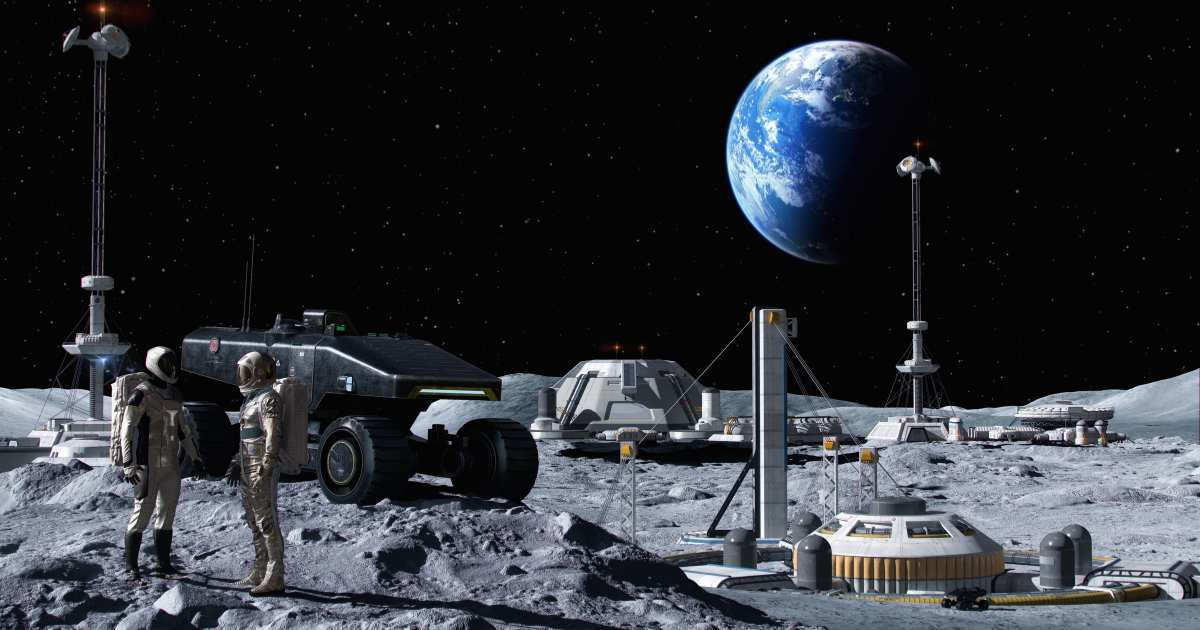
The scientists also explored how these materials behave before they harden. The materials showed a crucial stage known as the critical gel point, the moment when a workable slurry starts transforming into a solid structure. Mixing or pumping the material before this transition does not reduce its strength or alter its hardening time, they have found. This could give engineers the flexibility to deal with the materials as they see fit without worrying about any degradation in quality. This particular study has been published in a special issue of the Journal of Rheology.
More on Starlust
NASA's DAPHNE mission takes key step toward predicting space weather for future Moon and Mars crews
NASA announces four new lunar lander missions worth nearly $600 million to advance Moon Base science