Jupiter, Venus and Mercury to form a graceful arc in incredible planet parade from August 17-20
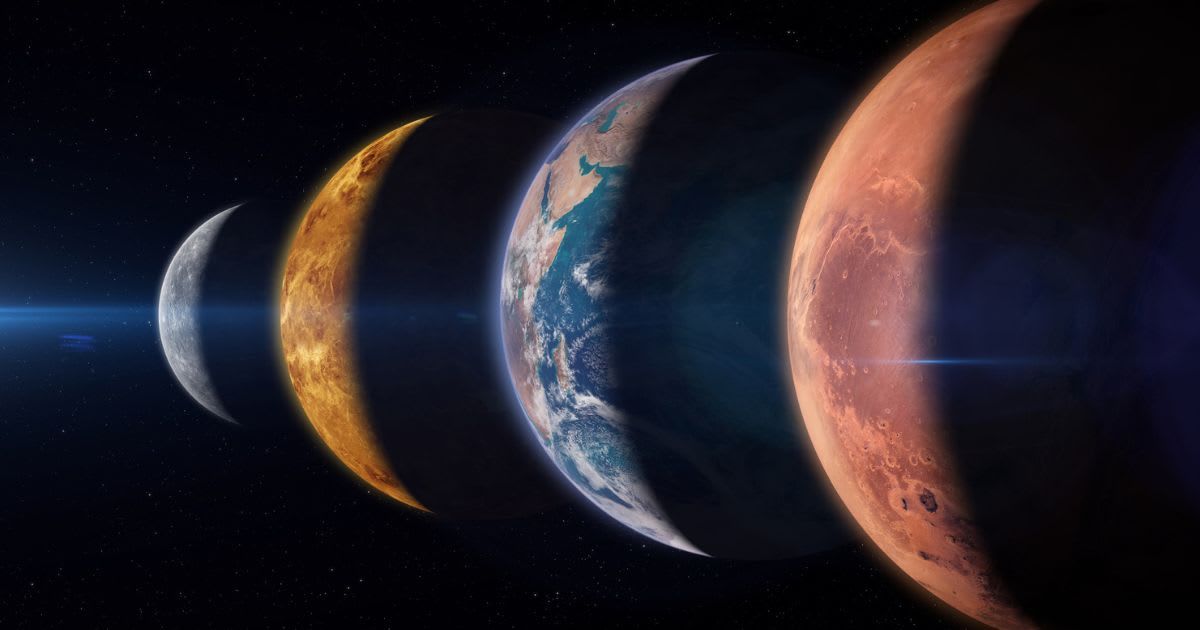
A captivating celestial event is set to unfold from August 17 to 20, as the planets Jupiter, Venus, and Mercury align in the eastern sky before sunrise. This planet parade will see the three planets form a stunning arc, visible to observers for approximately one hour each morning, according to Forbes.
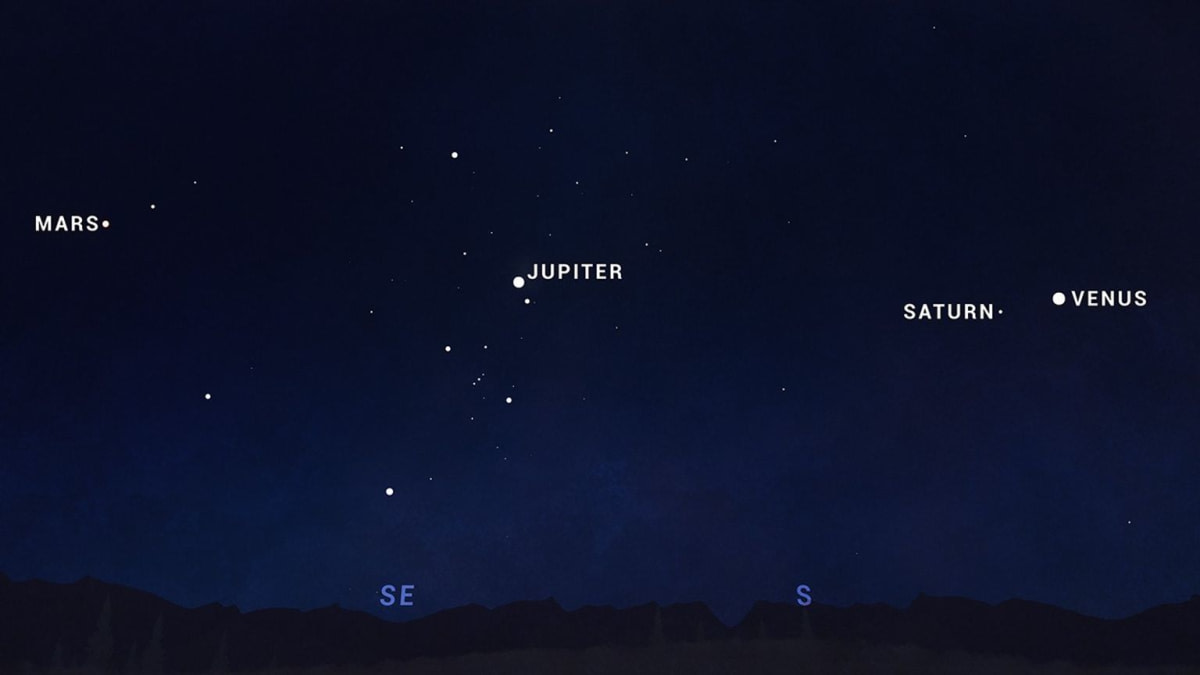
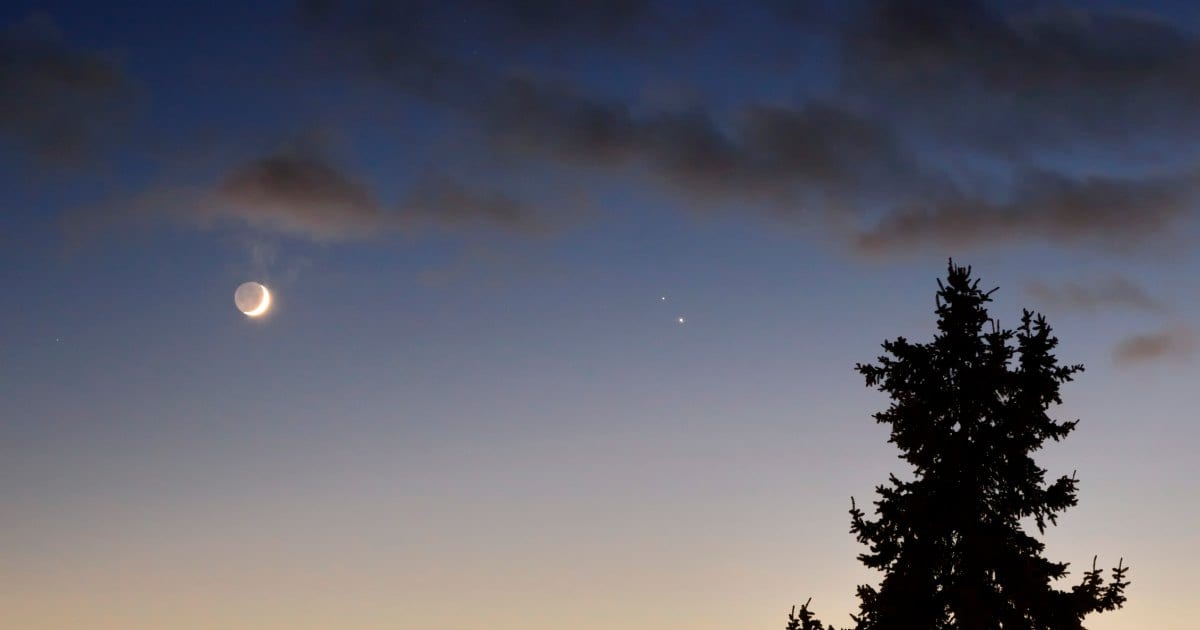
The spectacle will be further enhanced by the presence of a waning crescent moon, which will journey past the planetary trio throughout the four days. The climax of this astronomical display is expected on August 20, when a slender 9% crescent moon will appear close to Venus. Stargazers are advised to look toward the eastern horizon to catch this impressive alignment.
Leading up to the main event, skywatchers will have already witnessed a noteworthy celestial rendezvous. Throughout early August, Jupiter and Venus have been drawing progressively closer in the pre-dawn sky, reaching their closest point, or conjunction, on August 12. This impressive alignment marks a prelude to the larger planet parade, as per BBC Sky. The cosmic display will gain another participant around August 18-19 when Mercury emerges from behind the Sun, joining the lineup. On the morning of August 18, a striking "planet parade" will be visible, with Mercury, Venus, Jupiter, and the Moon all positioned in a near-straight line in the eastern sky. This extraordinary formation will be a challenge to observe, as Mercury will remain low on the horizon just before sunrise.

For the best viewing experience, observers should seek a clear view of the eastern horizon, free from light pollution. The spectacle continues on August 20, when the moon will form a distinct triangle with Jupiter and Venus. On August 21, the very thin crescent moon will be visible just above Mercury, offering one more viewing opportunity before the planets continue their journeys across the celestial sphere.
The phenomenon of a "planet parade" ot "planet alignment" occurs when multiple planets in our solar system appear to be grouped closely together in the sky, as mentioned on BBC Sky. From our perspective on Earth, this is due to all the planets orbiting the Sun along a similar, flat plane. Since we are observing from within this system, all the planets seem to follow the same path across our sky, a path astronomers call the ecliptic. While it's common for two or three planets to appear near each other, it's a rarer and more spectacular sight to see four or more planets aligned. It is important to note that these celestial bodies are not close to each other in space; their apparent proximity is simply a matter of perspective from Earth.
In addition to the dazzling planetary alignments, stargazers have another reason to turn their eyes to the heavens this month. NASA is inviting astronomers to join the "Hubble's Night Sky Challenge," an event designed to celebrate some of the celestial objects famously captured by the Hubble Space Telescope. The initiative provides a guided tour for skywatchers in both the Northern and Southern Hemispheres, offering a unique opportunity to compare their astrophotography with the iconic images taken by the Hubble. The space agency encourages enthusiasts to gather friends and family to participate in stargazing parties and share their own experiences of the cosmos.